Introduction: Why So Many Middle Schoolers Struggle With Reading
Picture this: a student sits down with a textbook chapter, reads every single word, closes the book, and then has no idea what they just read. Sound familiar? This is one of the most common problems I see in my classroom, and it happens to students at every level.
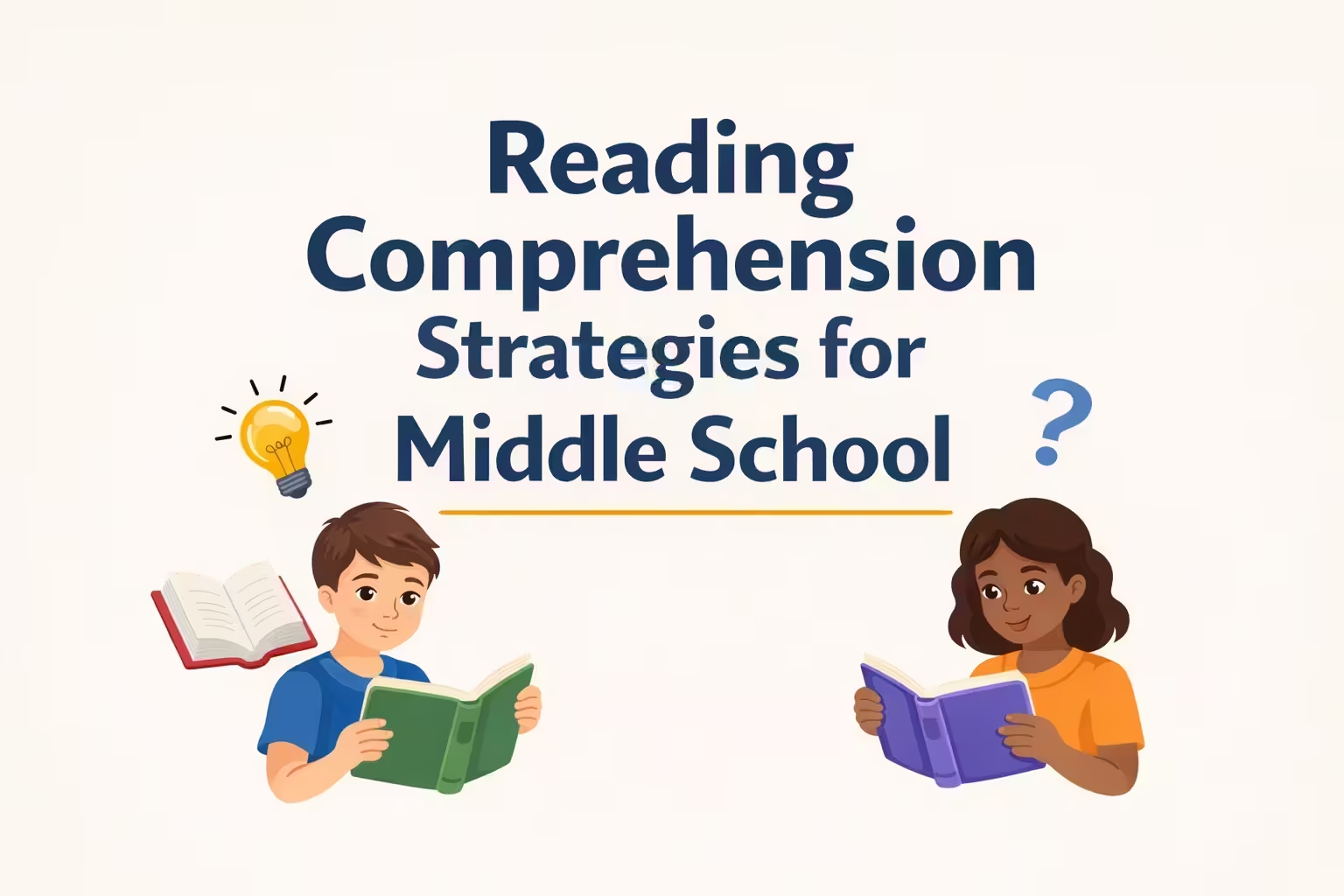
Reading comprehension strategies for middle school students are not just helpful — they are essential. At this age, students move from “learning to read” to “reading to learn.” That shift is big, and many students are not prepared for it. Suddenly, they need to understand science passages, analyze stories, and answer complex questions about what they have read. Without the right tools, this feels overwhelming.
I have spent over ten years teaching English to middle schoolers in both classroom and online settings. I have seen what works and what does not. I am sharing with you clear, practical strategies that actually help students understand what they read — not just decode words but truly make sense of text.
Whether you are a student, a parent helping at home, or a teacher looking for fresh ideas, this guide is for you.
What Is Reading Comprehension and Why Does It Matter?
Reading comprehension simply means understanding what you read. It is not about reading fast. It is not about knowing every single word. It is about making meaning from text.
When a student has strong reading comprehension skills, they can do things like summarize a passage in their own words, answer questions about what they read, make predictions about what comes next, and connect what they read to things they already know.
These skills matter in every subject — not just English class. A student who cannot understand a math word problem, a history passage, or a science article will struggle across the board. That is why building these skills in middle school is so important.
The Most Effective Reading Comprehension Strategies for Middle School
1. Preview the Text Before You Read
One of the first strategies I teach my students is to look before you leap. Before reading a passage, spend two to three minutes previewing it.
Here is what to look at during a preview: the title, all headings and subheadings, any bold or italicized words, pictures, charts, or captions, and the first sentence of each paragraph.
This simple habit activates what teachers call “background knowledge.” When your brain already has a rough idea of what a text is about, it is much easier to understand the details as you read.
A classroom example: I once had a student named Maria who always said she “just blanked out” while reading. I taught her to preview for two minutes before starting. Within three weeks, her quiz scores improved noticeably. She told me, “It feels like I already know the story before I read it.” That is exactly the point.
Quick practice: Before reading your next textbook chapter, spend two minutes just looking at headings, bold words, and any images. Write down two things you think the chapter will be about. Then read and check if you were right.
2. Ask Questions While You Read
Strong readers are curious readers. They do not just absorb information — they question it. Teaching students to ask questions as they read is one of the most powerful reading comprehension strategies available.
Encourage students to ask questions like: What is the main idea here? Why did the author say this? What does this word mean? How does this connect to what I read before? What might happen next?
These questions keep the brain active and engaged. Passive reading — where you just move your eyes across the page without thinking — is one of the main reasons students finish a passage and remember nothing.
In my online classes, I use a simple method called “Read and Pause.” Students read one paragraph, then pause and type one question into the chat before moving on. This keeps everyone actively thinking and shows me immediately who is confused.
Common mistake: Many students think asking questions means they do not understand. Actually, it is the opposite. The best readers ask the most questions.
3. Make Predictions and Check Them
Predicting is a strategy that works especially well with stories, but it also helps with informational text. When students predict what will happen or what information will come next, they become invested in the reading. They want to find out if they are right.
Here is how to teach this step by step. After reading the title and introduction, stop and ask: “What do I think this will be about?” After reading each section, ask: “What do I think comes next?” At the end, reflect: “Was my prediction correct? What surprised me?”
This strategy builds active reading habits and also helps students recognize the structure of different text types. Over time, they start to notice patterns — like how problem-solution articles are organized, or how stories typically build toward a climax.
Explore more interesting topics here:
- 8 Tips for Professional Email Etiquette in the Workplace
- 610 Strengths Examples for Resume & Reviews
- How to Describe Bruises in Writing (With Examples)
- Independent Reading Activities for Middle School ELA
- Limerick Examples: 410 Funny & Creative Poems
4. Visualize What You Read
This is one of my favorite strategies to teach because students often have no idea they can do it. Visualization means creating a picture in your mind as you read. Good readers naturally do this. Students who struggle often read without forming any mental image at all.
To build this skill, I sometimes read a descriptive paragraph aloud and then ask students to close their eyes and describe what they see. We compare our mental images. This activity always sparks great discussion and shows students that reading can be an active, creative experience.
For non-fiction texts, students can draw simple diagrams or sketches of processes, timelines, or structures they read about. Even a rough drawing activates different parts of the brain and strengthens memory and understanding.
5. Identify the Main Idea and Key Details
One of the core skills tested on every reading assessment is the ability to find the main idea. This sounds simple, but many middle schoolers confuse the main idea with a random detail they found interesting.
Teach students this formula: The main idea is what the whole passage is mostly about. Key details are facts or examples that support the main idea.
A helpful technique is the “umbrella method.” The main idea is the umbrella — it covers everything. The key details are what fall under the umbrella. If a detail does not fit under the umbrella, it is probably not a key detail.
Practice activity: Give students a short paragraph and three sentences. Ask them to identify which sentence is the main idea, which is a key detail, and which one does not belong. This builds the skill of distinguishing central points from supporting information.
6. Use Context Clues for Unfamiliar Words
Middle school texts introduce a lot of new vocabulary. One major barrier to comprehension is running into an unknown word and either panicking or skipping it entirely. Both responses cause problems.
Teach students to use context clues — the words and sentences surrounding the unfamiliar word — to make an educated guess about its meaning.
For example, read this sentence: “The exhausted student could barely keep her eyes open during the lecture.” Even if a student does not know “exhausted,” the phrase “barely keep her eyes open” tells them it means very tired.
Steps for using context clues: Read the full sentence with the unknown word, look at the words immediately before and after it, think about what meaning would make sense in context, and try substituting your guess to see if the sentence still makes sense.
Classroom application: I regularly do “word detective” warm-ups where I put a challenging sentence on the board and students work in pairs to figure out the meaning of a bold word using only context. It builds vocabulary and comprehension at the same time.
7. Summarize After Each Section
Summarizing is one of the highest-level comprehension skills. When a student can put what they read into their own words, it proves they truly understood it.
Teach students to summarize using the 3-sentence rule: one sentence for the beginning, one for the middle, and one for the end. For informational text, they summarize the main idea and two or three key details.
One mistake I see constantly is students copying sentences directly from the text and calling it a summary. A real summary uses the student’s own words. If they cannot restate it in their own words, they have not understood it yet.
Quick tip for parents: Ask your child to tell you what they read — not read it to you, but tell you. If they can explain it in their own words, they understood it. If they cannot, that is a sign they need more practice with comprehension strategies.
8. Make Text-to-Self, Text-to-Text, and Text-to-World Connections
This is a classic strategy that helps students relate to what they are reading. There are three types of connections students can make.
Text-to-self connections happen when what you read reminds you of your own life or experiences. Text-to-text connections happen when a new passage reminds you of something else you have read. Text-to-world connections happen when reading makes you think of something happening in the real world.
Making connections helps students engage with text more deeply and remember it longer. It also builds empathy, especially when reading fiction.
In my classroom: After reading a short story, I ask students to write one connection and share it with a partner. It is always one of the liveliest discussions of the week.
Common Reading Comprehension Mistakes in Middle School
After years of working with this age group, I have noticed several patterns in how students approach reading incorrectly.
The first is reading too fast. Many students think speed equals skill. In reality, racing through a passage without pausing to think is one of the biggest causes of poor comprehension. Slow down. It is okay to re-read.
The second is skipping hard words. Ignoring unknown vocabulary can completely change the meaning of a sentence. Always try context clues first, and look up words that keep blocking understanding.
The third is only reading once. Strong readers often re-read sections, especially difficult or dense parts. One read is rarely enough for complex text.
The fourth is not checking understanding as they go. Many students read an entire passage before realizing they understood very little of it. Pausing after each paragraph to check understanding prevents this.
Practical Classroom and At-Home Application
For teachers: Build strategy practice into daily routines. Even five minutes of targeted practice — like a quick visualization exercise or a main idea identification task — builds skills over time. Do not just assign reading; teach students how to read.
For parents: Create a reading routine at home. Even fifteen minutes a day of shared reading and discussion builds comprehension significantly. Ask open-ended questions like “What do you think will happen next?” or “Why do you think the character did that?”
For students: Pick one strategy from this guide and use it consistently for one week. Once it feels natural, add another. You do not have to do everything at once. Slow, consistent practice builds real skill.
Setting Realistic Expectations
Reading comprehension does not improve overnight. Be honest with yourself or your students about this. Progress takes weeks and months of consistent practice. Some students improve quickly; others need more time and support.
What matters most is the habit of applying strategies every time you read — not just during tests or assignments, but whenever you open a book or article.
Celebrate small wins. If a student who used to say “I don’t know” can now give a summary of what they read, that is real progress. Build on it.
Conclusion: Building Strong Readers One Strategy at a Time
Reading comprehension strategies for middle school are not complicated, but they do require practice and intention. The eight strategies covered in this guide — previewing, questioning, predicting, visualizing, finding the main idea, using context clues, summarizing, and making connections — give students a complete toolkit for tackling any text.
The goal is not perfection. The goal is active engagement with reading. When students stop being passive readers and start becoming thinking, questioning, connecting readers, everything changes. Their confidence grows, their grades improve, and they develop a skill they will use for the rest of their lives.
Start small. Pick one strategy. Practice it today.
Frequently Asked Questions
Q1: What is the best reading comprehension strategy for middle school students?
There is no single “best” strategy because different strategies work for different texts and learners. However, summarizing and asking questions while reading are consistently among the most effective. Start with these if you are not sure where to begin.
Q2: How long does it take to improve reading comprehension?
With consistent daily practice — even just fifteen to twenty minutes — most students see noticeable improvement within four to six weeks. Progress depends on how regularly strategies are applied.
Q3: How can parents help with reading comprehension at home?
Read with your child, ask questions about what they read, and encourage them to explain passages in their own words. Creating a calm, regular reading time at home makes a significant difference.
Q4: Do these strategies work for ESL learners?
Yes, these strategies are especially helpful for ESL learners. Using context clues for vocabulary, visualizing, and connecting text to personal experience are all particularly effective for students learning English as a second language.
Q5: How do I know if my child has a reading comprehension problem?
Signs include difficulty summarizing what they read, trouble answering questions about a passage, avoidance of reading tasks, and frustration during reading activities. If these signs persist, speaking with a reading specialist or teacher is a good next step.