Introduction
Giving a presentation in English can feel challenging, especially if English is not your first language.
Table of Contents
ToggleWhether you’re speaking at work, in a classroom, at a conference, or during an online meeting, using the right English phrases can help you communicate your ideas clearly and confidently.
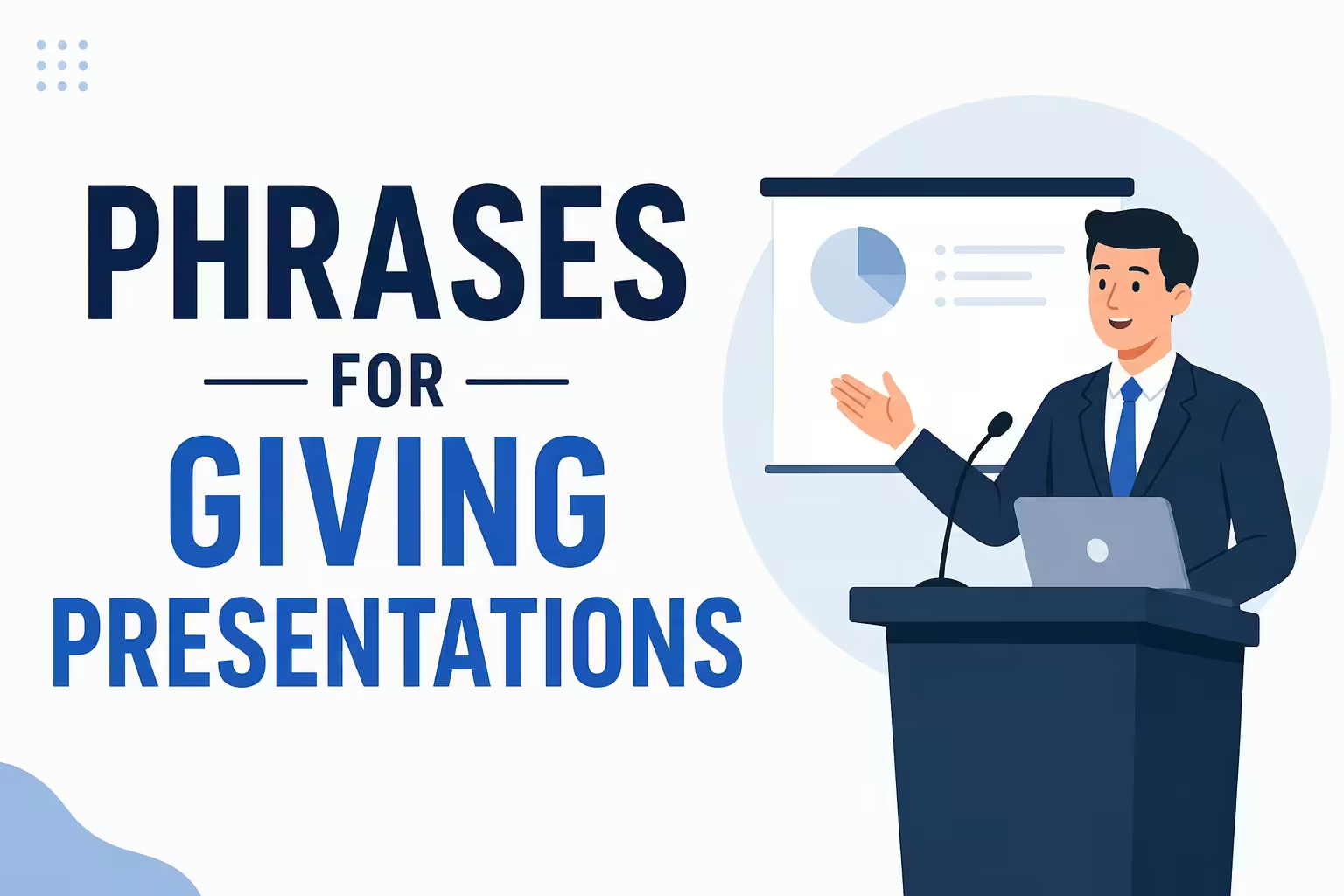
In this guide, you’ll find 250 English phrases for giving presentations that you can use from start to finish.
These practical expressions cover opening your presentation, introducing topics, explaining ideas, using visual aids, engaging your audience, answering questions, and closing your presentation effectively.
Whether you’re a student, professional, or English learner, these phrases will help you deliver presentations with greater confidence and fluency.
250 English Phrases for Giving Presentations
Opening the Presentation
- Good morning, everyone.
- Good afternoon, everyone.
- Good evening, everyone.
- Thank you for being here.
- It’s a pleasure to be here today.
- Welcome to my presentation.
- Thank you for joining us.
- I’m delighted to speak with you today.
- Let’s get started.
- I appreciate your time today.
Introducing Yourself
- My name is…
- I’m pleased to introduce myself.
- I work as…
- I’m part of the…
- I have experience in…
- It’s an honor to be here.
- Thank you for inviting me.
- I’m excited to share…
- I specialize in…
- Let me briefly introduce myself.
Introducing the Topic
- Today, I’d like to talk about…
- The topic of today’s presentation is…
- I’ll be discussing…
- My presentation focuses on…
- Today we’ll explore…
- I’d like to share…
- Our subject today is…
- Let’s begin by looking at…
- We’ll cover several important points.
- Here’s what we’ll discuss today.
Outlining the Presentation
- First, I’ll explain…
- Then, we’ll look at…
- After that, we’ll discuss…
- Finally, I’ll summarize…
- Here’s today’s agenda.
- We’ll cover three main topics.
- Let me give you an overview.
- This presentation has four parts.
- I’ll keep it brief.
- Let’s begin with the first point.
Starting the First Point
- Let’s start with…
- First of all…
- To begin with…
- Our first topic is…
- I’d like to begin by…
- Let’s take a closer look.
- Here’s the first point.
- It’s important to understand…
- Let me explain…
- Let’s explore this idea.
Explaining Information
- As you can see…
- This means that…
- In other words…
- Let me explain this further.
- Here’s an example.
- To illustrate…
- For instance…
- In simple terms…
- This is important because…
- Let me clarify.
Referring to Visuals
- Please look at this slide.
- As shown on the screen…
- This graph shows…
- This chart illustrates…
- As you can see here…
- Let’s look at the data.
- Notice the difference.
- This image explains…
- Pay attention to this figure.
- Here’s a comparison.
Giving Examples
- For example…
- Let me give you an example.
- Here’s a real-life example.
- Consider this situation.
- Imagine that…
- One good example is…
- This happened because…
- Let’s look at a case study.
- Here’s what happened.
- This illustrates the point.
Emphasizing Important Points
- This is very important.
- I’d like to emphasize…
- The key point is…
- Keep this in mind.
- Don’t forget…
- This deserves special attention.
- The most important thing is…
- I’d like to highlight…
- This is worth remembering.
- Please remember this.
Transitioning Between Topics
- Let’s move on.
- Now let’s discuss…
- This brings us to…
- Next, we’ll look at…
- Let’s continue.
- Moving on…
- The next point is…
- Let’s change focus.
- Now I’d like to talk about…
- That leads us to…
Sharing Opinions
- In my opinion…
- I believe…
- I think…
- From my perspective…
- It seems to me that…
- I strongly believe…
- I would argue that…
- My view is…
- Based on my experience…
- I recommend…
Talking About Data
- According to the data…
- Research shows that…
- The results indicate…
- Statistics reveal…
- The numbers suggest…
- Our findings show…
- The data supports…
- As the chart indicates…
- There’s a clear trend.
- The evidence suggests…
Comparing Ideas
- Compared with…
- On the other hand…
- In contrast…
- Similarly…
- Likewise…
- However…
- Nevertheless…
- At the same time…
- The difference is…
- Both options have advantages.
Encouraging Audience Participation
- What do you think?
- Does anyone have a question?
- Feel free to ask questions.
- I’d love to hear your thoughts.
- Any comments?
- Does this make sense?
- Can anyone guess?
- Please share your opinion.
- Let’s have a quick discussion.
- Any ideas?
Handling Questions
- That’s a great question.
- Thank you for asking.
- Let me answer that.
- I’ll explain.
- That’s an interesting point.
- I’m glad you asked.
- Let me think for a moment.
- I’ll come back to that.
- I don’t have that information right now.
- I’ll find out and let you know.
Managing Time
- We’re almost finished.
- We have a few minutes left.
- I’ll keep this brief.
- I’ll move on quickly.
- Let’s stay on schedule.
- I’ll skip that for now.
- We’re running out of time.
- Let’s wrap up.
- We have time for one more question.
- Thank you for your patience.
Summarizing
- To summarize…
- Let’s review.
- In conclusion…
- The main points are…
- Here’s a quick recap.
- We’ve learned that…
- To sum up…
- The key takeaway is…
- Let’s review the highlights.
- That’s the main idea.
Ending the Presentation
- Thank you for listening.
- Thank you for your attention.
- That concludes my presentation.
- Thanks for your time.
- I appreciate your attention.
- It was a pleasure speaking to you.
- I hope you found this useful.
- Thank you for being such a great audience.
- I appreciate your participation.
- Have a wonderful day.
Inviting Questions
- Are there any questions?
- I’d be happy to answer your questions.
- Does anyone have any questions?
- Feel free to ask.
- I’m happy to clarify anything.
- Any final questions?
- I’d welcome your feedback.
- Please share your thoughts.
- Let’s open the floor for questions.
- What would you like to know?
Thanking the Audience
- Thank you once again.
- Thanks for your interest.
- I appreciate your support.
- Thank you for your valuable time.
- Your attention means a lot.
- I’m grateful for your participation.
- Thank you for your thoughtful questions.
- I enjoyed sharing this with you.
- I hope we meet again.
- Have a great day.
Professional Presentation Expressions
- Let’s focus on the objective.
- Our goal today is…
- I’d like to draw your attention to…
- This is a valuable insight.
- Let’s examine this closely.
- Here’s an important observation.
- This deserves careful consideration.
- Let’s look at the bigger picture.
- We can learn a lot from this.
- This opens new opportunities.
Speaking with Confidence
- I’m confident that…
- Without a doubt…
- It’s clear that…
- There’s strong evidence that…
- We can confidently say…
- The facts speak for themselves.
- This is a proven approach.
- I’m convinced that…
- The results are encouraging.
- This gives us confidence.
Advanced Presentation Phrases
- Let’s dive deeper into this topic.
- I’d like to expand on that point.
- This raises an important question.
- Let’s explore the implications.
- We should consider the long-term impact.
- Here’s another perspective.
- Let’s connect these ideas.
- This leads us to an interesting conclusion.
- We can build on this idea.
- Let’s turn these insights into action.
Memorable Closing Expressions
- Thank you for your attention today.
- I hope you found this presentation valuable.
- I appreciate your time and participation.
- It’s been a pleasure presenting to you.
- I look forward to your feedback.
- Let’s stay connected.
- Feel free to reach out with questions.
- I wish you every success.
- Thank you, and have a fantastic day.
- I look forward to seeing you again.
Natural Presentation Fillers
- Let’s take a moment to consider this.
- As I mentioned earlier…
- Before we move on…
- I’d like to point out…
- If you look closely…
- Let’s pause for a moment.
- Here’s something interesting.
- One final thought…
- That’s all from me today.
- Thank you, and enjoy the rest of your day.
Conclusion
Learning these 250 English phrases for giving presentations will make it easier to speak confidently and professionally in front of an audience.
The more you practice these common presentation expressions, the more natural and effective your communication will become.
Practice these phrases before your next presentation, adapt them to your own topic, and use them in real-life speaking situations.
With regular practice, you’ll improve your presentation skills, increase your confidence, and communicate your ideas more clearly in English.
Bookmark this guide, share it with other English learners, and explore our other English speaking and business communication resources to continue building your fluency.
FAQs: 250 English Phrases for Giving Presentations
1. Why should I learn English phrases for giving presentations?
Learning presentation phrases helps you speak clearly, organize your ideas, and communicate confidently during business meetings, classroom presentations, seminars, and conferences.
2. Who is this guide for?
This guide is ideal for students, professionals, teachers, entrepreneurs, job seekers, public speakers, and English learners who want to improve their presentation skills.
3. What topics do these 250 phrases cover?
The phrases include:
- Starting a presentation
- Greeting the audience
- Introducing your topic
- Explaining key points
- Using visual aids
- Transitioning between ideas
- Emphasizing important information
- Handling questions
- Summarizing your presentation
- Ending with confidence
4. Are these presentation phrases suitable for beginners?
Yes. The phrases are simple, practical, and commonly used in academic and professional presentations, making them suitable for learners of all levels.
5. Can these phrases help me in business presentations?
Absolutely. Many of the expressions are commonly used in meetings, sales presentations, client presentations, webinars, and corporate training sessions.
6. How can I improve my presentation skills in English?
Practice these phrases regularly, rehearse your presentations aloud, record yourself, improve your pronunciation, and seek feedback from teachers or colleagues.
7. Can I use these phrases in online presentations?
Yes. These expressions work well for virtual meetings, webinars, Zoom presentations, Microsoft Teams meetings, and online classes.
8. How many phrases should I practice each day?
Learning and practicing 10–15 phrases daily is a great way to build confidence and remember useful presentation language.
9. Will these phrases help reduce presentation anxiety?
Yes. Being familiar with common presentation expressions can make you feel more prepared, organized, and confident when speaking in front of an audience.
10. Where can I find more English speaking resources?
You can explore our other guides on Business English, workplace English, daily English phrases, English conversation practice, vocabulary building, and English listening exercises to continue improving your communication skills.