Business English

Business English: Learn Professional Communication Skills for Workplace Success

Business English is the key to communicating confidently and professionally in today’s global workplace. Whether you’re a student preparing for your first job, a job seeker getting ready for interviews, a freelancer working with international clients, or a professional looking to advance your career, strong Business English skills can help you succeed. In this category, you’ll find practical lessons on workplace communication, business email writing, meetings, presentations, job interviews, professional vocabulary, and office conversations. Each lesson is designed with simple explanations, real-life examples, and actionable tips to help you improve your English and communicate effectively in any professional environment.

What You Will Learn in Business English

This section covers all important workplace English communication skills, including:

  • Business email writing and professional messages
  • Workplace communication and office conversation skills
  • English for meetings, discussions, and presentations
  • Job interview questions and answers in English
  • Business vocabulary and common workplace phrases
  • Formal and informal English usage
  • Telephone, video calls, and online communication
  • Client communication and negotiation skills
  • Report writing and professional documents

Each lesson includes clear explanations and practical examples so you can apply what you learn immediately in real work situations.

Why Learning Business English Is Important

Strong Business English and workplace communication skills help you:

  • Communicate clearly and confidently in professional environments
  • Write effective business emails and messages
  • Participate actively in meetings and discussions
  • Perform well in job interviews and career opportunities
  • Build strong professional and client relationships
  • Work smoothly with international teams and global clients

Improving your professional English communication skills increases your confidence, productivity, and career growth opportunities.

Learn Business English for Real-Life Workplace Use

At Love You English, we focus on practical learning. Instead of only theory, you will learn how to use English in real workplace situations such as:

  • Office conversations and daily communication
  • Professional email writing and business communication
  • Meetings, presentations, and team discussions
  • Job interviews and career conversations
  • Client communication and negotiation
  • Remote work and online meetings

This practical approach helps you use English naturally and confidently in your professional life.

Business English for Beginners to Advanced Learners

This category is useful for:

  • Students preparing for future careers
  • Job seekers improving interview skills
  • Working professionals developing workplace communication
  • Freelancers working with international clients
  • English learners aiming for career growth

All lessons are written in simple English so that learners at all levels can understand easily and improve step by step.

Improve Your Workplace English Step by Step

Learning Business English is not about memorizing difficult vocabulary. It is about understanding how to communicate clearly and professionally in real situations.

With regular practice, you can:

  • Speak confidently in professional settings
  • Write clear and effective business emails
  • Improve workplace communication skills
  • Build strong business vocabulary
  • Increase career growth opportunities

Explore the lessons below and start improving your Business English skills today. Take the first step toward better communication, stronger confidence, and greater career success.

Master Business English and open the door to global career opportunities.


Frequently Asked Questions (FAQs)

What is Business English?

Business English is a type of English used in professional and workplace settings. It includes communication skills such as writing emails, participating in meetings, giving presentations, and interacting with clients and colleagues.

Why is Business English important?

Business English is important because it helps you communicate clearly and professionally at work. It improves your confidence, helps you perform better in job interviews, and opens up more career opportunities.

How can I improve my Business English skills?

You can improve your Business English by practicing daily communication, learning workplace vocabulary, writing emails, participating in conversations, and using English in real-life professional situations.

What topics are included in Business English?

Business English includes topics such as email writing, workplace communication, meetings, presentations, job interviews, business vocabulary, client communication, and professional writing.

Who should learn Business English?

Business English is useful for students, job seekers, working professionals, freelancers, and anyone who wants to improve communication skills for career growth.

Is Business English different from general English?

Yes, Business English focuses on professional communication used in workplaces, while general English is used in everyday situations. Business English is more formal and task-oriented.

How long does it take to learn Business English?

The time required depends on your current level and practice. With regular learning and practice, you can start seeing improvement in a few weeks and become confident over time.

Can beginners learn Business English?

Yes, beginners can learn Business English. It is best to start with simple vocabulary, basic communication skills, and gradually move to advanced topics like meetings and presentations.

Explore More

For more English learning resources, visit

Love You English
.

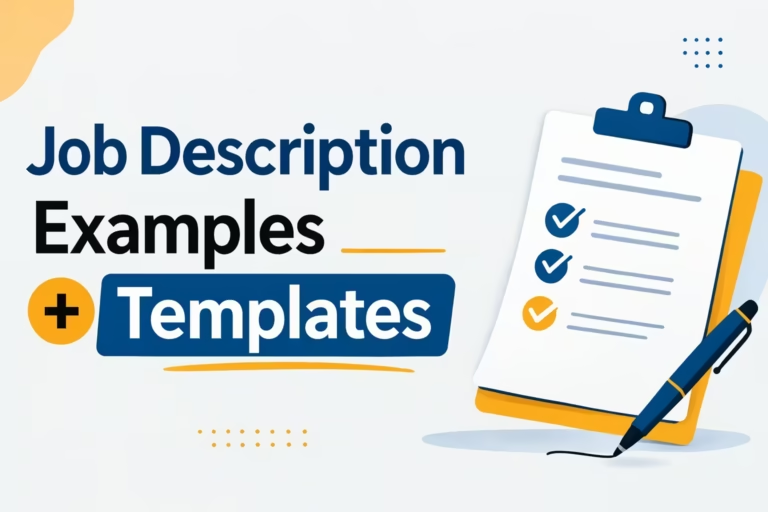
  • 150 Job Description Examples + Templates: A Complete Guide for Teachers, Trainers, and Employers

    Writing a clear job description is one of the most important steps in finding the right person for any position. Whether you’re hiring a teaching assistant, looking for a marketing manager, or searching for a customer service representative, the words you use matter. A good job description attracts qualified candidates. A poor one wastes everyone’s time. I’ve spent years helping schools, training centers, and businesses write better job descriptions. I’ve seen what works and what doesn’t. In this guide, I’ll share 150 real-world examples and ready-to-use templates that you can adapt for your needs. More importantly, I’ll explain exactly how to write job descriptions that bring you the right candidates. This guide is designed for anyone who needs to write or understand job descriptions: teachers…
  • 300 Problem Statement Examples with a Complete Writing Guide

    As an English teacher who has spent over a decade helping students write clear, effective problem statements, I’ve seen thousands of confused faces staring at blank pages. Whether you’re: A student writing your first research paper A professional drafting a business proposal A teacher guiding others Or someone preparing a funding request Crafting a strong problem statement can feel overwhelming. Many people know something is wrong—but they struggle to explain exactly what is wrong. Today, I’m sharing 300 problem statement examples across 20 real-life categories — from education and business to healthcare, environment, family, and technology. But this is more than just a list. I’ll also explain: What makes a problem statement strong Why problem statements matter in real life The simple structure you can…

  • How to Use Best Regards in Emails (+60 Examples)

    After teaching business English to over 500 students across 12 countries, I’ve noticed something interesting: many learners struggle more with email closings than with the actual message. Last month, one of my students sent a job application ending with “Cheers!” to a Fortune 500 company. We had a long conversation after that. The truth is, choosing the right email sign-off matters more than most people think. Your closing line creates a lasting impression and sets the tone for future communication. Whether you’re emailing a potential employer, writing to your professor, or corresponding with clients, the phrase you use to end your message can strengthen or weaken your relationship. In this comprehensive guide, I’ll share 60 best regards examples organized by situation, plus practical advice on…

  • How to Write a Best Man Speech (+150 Examples)

    I still remember the first time one of my students came to me in a panic. “Sir, my brother is getting married next month, and I have to give the best man speech. I don’t know where to start!” His English was good enough for daily conversation, but standing in front of 200 people and delivering a memorable speech? That terrified him. Over my fifteen years teaching spoken English and communication skills, I’ve helped dozens of students, professionals, and friends prepare their best man speeches. Some were confident English speakers who just needed structure. Others were ESL learners who worried about pronunciation and grammar. But they all shared one fear: messing up one of the most important speeches they’d ever give. Here’s what I’ve learned:…

  • 150+ Best Transition Words and Phrases for Writing

    As an English teacher with years of classroom experience, I’ve noticed something interesting: students often know what they want to say, but their ideas come out jumbled and disconnected. Their sentences bump into each other awkwardly. Their paragraphs feel choppy. Their speaking lacks natural flow. The problem? They’re missing the bridges that connect one thought to another. These bridges are called transition words and phrases, and they’re absolutely essential for clear communication. Whether you’re teaching essay writing, preparing students for presentations, or helping English learners sound more natural in conversation, transitions are the secret ingredient that brings everything together. In this guide, I’ll share over 150 transition words and phrases organized by purpose, along with real classroom examples and practical teaching tips I’ve developed over…

  • 5 Habits of Successful English Learners You Should Start Today

    Learning English successfully is not only about studying grammar or memorizing vocabulary—it is also about building the right habits. Many fluent English speakers and successful learners improve faster because they practice consistently, stay motivated, and use smart learning techniques in their daily lives. In this guide, “5 Habits of Successful English Learners You Should Start Today,” you will discover simple but powerful habits that can help you improve your speaking, listening, reading, and writing skills. These practical strategies are easy to follow and can fit into your daily routine, no matter your current English level. Whether you are a beginner, student, or ESL learner, developing the right habits can make your English learning journey more effective, enjoyable, and successful. Visit our Business English category for more…

  • English Speaking: 150 English Sentences for Phone Conversations

    Phone conversations are an important part of daily and professional communication. Many English learners feel nervous while speaking on the phone because they cannot see the other person and need to respond quickly. This blog post, “150 English Sentences for Phone Conversations,” is created to help learners speak confidently and clearly on phone calls. In this post, you will learn easy and commonly used English sentences for making and receiving phone calls, starting and ending conversations, asking for information, taking messages, and handling professional or personal calls. These sentences are perfect for beginners, ESL learners, students, and working professionals who want to improve their spoken English for phone conversations. Visit our Business English category for more detailed guides and tips. 1. Greetings and Introductions (1–20) Hello,…

  • 50 English Business Buzzwords You Hear in the Workplace for Daily Use

    In today’s professional world, understanding English business buzzwords is important for effective communication in the workplace. These buzzwords are commonly used in meetings, emails, presentations, and office conversations. If you want to sound more confident and professional at work, learning these terms can help you communicate more clearly with colleagues and clients. For English learners and professionals, knowing the right business English vocabulary can make a big difference. Words like synergy, leverage, brainstorm, and touch base are often used in modern workplaces. These expressions may sound confusing at first, but once you understand them, you can easily use them in your daily communication. In this post, you will learn 50 common English business buzzwords used in the workplace. These words will help you improve your…

  • 60+ English Phrases for Call Center Representatives (Professional Communication Guide)

    In today’s fast-paced customer service industry, clear and professional communication is essential for success. Call center representatives need to handle different types of conversations every day, including customer inquiries, complaints, requests, and support calls. Using the right words and phrases can make a big difference in creating a positive customer experience. In this guide, you will learn 60+ English phrases for call center representatives that will help you communicate confidently and professionally. These phrases are useful for greeting customers, asking questions, providing solutions, handling complaints, and closing conversations politely. This collection of English phrases for call center representatives is designed for both beginners and experienced professionals who want to improve their communication skills. Each phrase is simple, practical, and commonly used in real workplace situations….

  • 80+ Business English Negotiation Phrases for Professional Communication

    Negotiation is an essential skill in the business world. Whether you are discussing prices, making agreements, solving problems, or reaching a deal, the way you communicate can greatly influence the outcome. Using the right words and phrases helps you sound professional, confident, and respectful during business discussions. In this blog post, 80+ Business English Negotiation Phrases for Professional Communication, you will learn useful expressions that professionals commonly use during meetings, negotiations, and workplace conversations. These phrases will help you present your ideas clearly, respond politely, and build strong professional relationships while communicating effectively in English. Visit our Business English category for more detailed guides and tips. 1. Starting a Negotiation These phrases help you open the conversation in a friendly and professional way. Thank you for…