Daily Use English Sentences for Speaking

Daily Use English Sentences for Speaking Practice

Welcome to the Daily Use English Sentences section, where you can learn simple and useful English sentences for everyday conversation. This category is perfect for beginners, students, and anyone who wants to improve their spoken English step by step.

Here, you will find common English sentences used in daily life situations such as greetings, asking questions, giving opinions, shopping, traveling, and workplace communication. These sentences will help you speak English more naturally and confidently.

What You Will Learn in This Category

Daily use English sentences for real-life situations
Simple sentences for beginners
Common phrases used in conversations
Practical examples for speaking practice
Easy sentence patterns to improve fluency

Why Daily Use Sentences Are Important

Learning daily use sentences is one of the fastest ways to improve your spoken English. Instead of translating in your head, you start using ready-made sentence patterns that help you communicate easily in real-life situations.

To improve faster, you should also practice English conversation and build your English vocabulary. Understanding basic grammar will also help you form correct sentences.

Improve Your Spoken English Naturally

You can use these sentences in your daily speaking practice, role plays, and real conversations. Master business English through business english will make your speech more clear and natural.

If you want to become fluent, you should also explore our Spoken English section, where you can learn how to use these sentences in real-life communication.

Start Practicing Today

Start learning and practicing daily use English sentences today. With regular practice, you will be able to speak confidently, understand conversations easily, and improve your overall English communication skills.

Improve Your English Skills

Improve Spoken English fluency
Practice real-life English Conversations
Learn useful English Vocabulary
Understand English Grammar

For more English learning resources, visit
Love You English.

  • 100 Zero Conditional Sentences in English with Examples

    Zero Conditional Sentences are an essential part of English grammar, especially for learners who want to talk about facts, rules, and everyday truths. In this post, 100 Zero Conditional Sentences in English, you’ll find clear, practical examples that show how we use the present simple tense to describe situations that are always true. These sentences are commonly used in daily conversations, classroom instructions, science facts, and general statements. Whether you’re a student, teacher, or self-learner, this list will help you understand the structure, improve accuracy, and use Zero Conditionals confidently in spoken and written English. ✅ Structure: If + Present Simple, Present SimpleExample: If you heat ice, it melts. 🔹 100 Zero Conditional Sentences Nature & Science If you heat ice, it melts. If it…

  • 100 “Would” Sentences in English for Students and Kids for Spoken English

    The word “would” is a very useful modal verb in English. It is commonly used to talk about polite requests, preferences, imaginary situations, habits in the past, and conditional sentences. Many English learners feel confused about how and when to use “would”, but practicing simple sentences makes it easy to understand. This blog post, “100 ‘Would’ Sentences in English,” is specially created for students, beginners, and ESL learners. In this post, you will find easy and practical English sentences using “would” for daily conversations, polite speaking, grammar practice, and spoken English improvement. These sentences will help you use “would” confidently and naturally. This topic is part of our English Sentences for English learners. 100 “Would” Sentences in English for Students and Kids for Spoken English…

  • 200 Verb Sentences in English for Students to Improve English

    Verbs are one of the most important parts of English grammar. They help us talk about actions, activities, feelings, and states. Without verbs, sentences are not complete. Learning verb sentences helps students improve their speaking, writing, and grammar skills. This blog post, “200 Verb Sentences in English for Students,” is specially created for school students, beginners, and ESL learners. In this post, you will find easy and useful English sentences using common verbs. These sentences are perfect for daily practice, classroom learning, homework, and building a strong foundation in English grammar and communication. Action Verbs Action verbs express physical or mental activities. They tell us what the subject of the sentence is doing. She runs every morning before breakfast. The cat jumped onto the table….

  • English Speaking: 150 Sentences with “Might” in English

    The modal verb “might” is commonly used in English to talk about possibility, permission, and polite suggestions. Many learners find it confusing because it looks similar to words like may and could. That’s why learning “might” through real sentences is one of the easiest and most effective ways to understand it clearly. In this blog post, you will find 150 simple and practical sentences with “might” that show how it is used in daily conversations, written English, and spoken situations. These examples are ideal for students, ESL learners, teachers, and competitive exam preparation. Whether you are improving your grammar, building confidence in speaking, or teaching English, this list will help you use “might” correctly and naturally. This topic is part of our English Sentences for…

  • 150 Sentences With “Can” in English for English Speaking

    The modal verb “can” is one of the most commonly used words in English. We use “can” to talk about ability, permission, possibility, and requests in daily conversations. Whether you are a beginner, student, or ESL learner, learning how to use “can” correctly will help you speak English more confidently and naturally. In this blog post, you will find 150 simple and useful sentences with “can” that are easy to understand and remember. These examples will help you improve your grammar, speaking, and writing skills. All sentences are written in clear, everyday English, making them perfect for students, teachers, and competitive exam preparation. If you want to master the use of “can” in English, this complete sentence list will be a helpful learning resource for…

  • English Speaking: 150 English Sentences About Describing Places

    Describing places in English is an important skill for speaking, writing, exams, and daily conversations. Whether you are talking about your hometown, a tourist destination, a school, a park, or a workplace, the right sentences help you express your ideas clearly and confidently. In this blog post, “150 English Sentences About Describing Places,” you will find a wide variety of easy and useful sentences that learners can use in real-life situations. These sentences are suitable for students, beginners, ESL learners, and competitive exam preparation. They are especially helpful for speaking practice, writing tasks, IELTS, and classroom activities. By learning and practicing these sentences, you will improve your vocabulary, sentence structure, and fluency while describing different places in a natural way. Let’s explore these sentences and…

  • 100 First Conditional Sentences in English with Examples

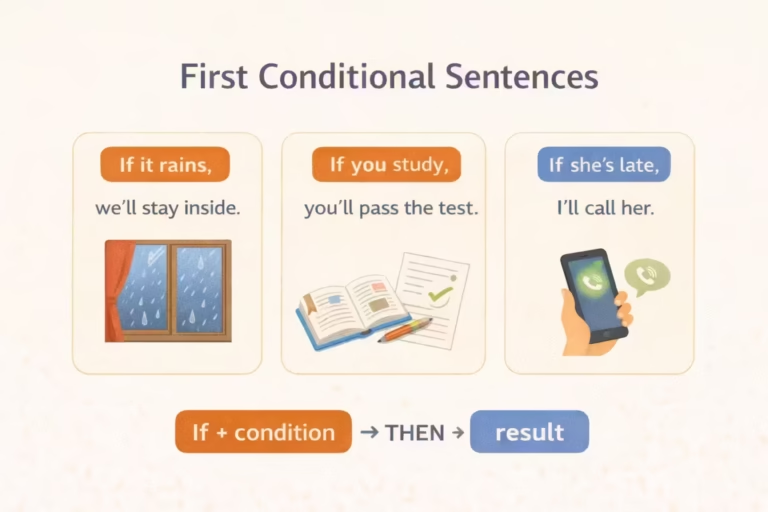
    The first conditional is used in English to talk about real and possible future situations and their results. It helps learners explain what will happen if a certain condition is met. Learning first conditional sentences makes it easier to talk about plans, warnings, promises, and everyday situations. This blog post, “100 First Conditional Sentences in English,” is specially created for students, beginners, and ESL learners. In this post, you will find easy and practical examples of first conditional sentences used in daily life. These sentences will help you understand the structure and use it correctly in speaking and writing. This post is helpful for: English beginners and ESL learners Kids, school, and college students Working professionals English teachers and future teachers General Situations If you…