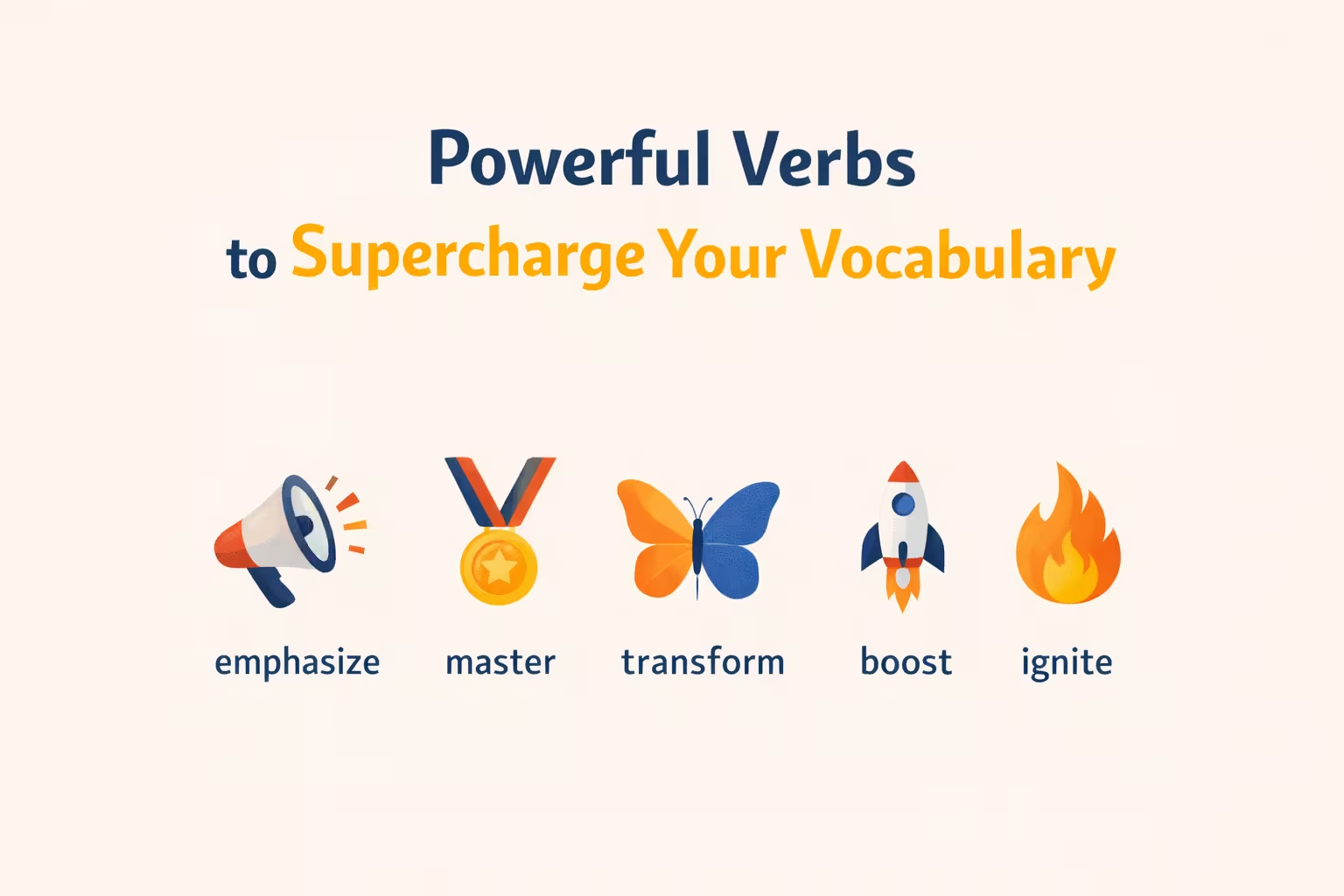
Strong verbs can completely transform the way you speak and write. Instead of using simple words like do, make, or go repeatedly, powerful verbs help you express ideas more clearly and confidently.
They make your sentences more dynamic, engaging, and professional. Whether you are writing essays, preparing presentations, or improving your spoken English, upgrading your verbs is one of the fastest ways to sound more fluent.
In this blog post, you will discover 30 powerful verbs to supercharge your vocabulary. Each verb is explained in simple language with practical examples to help you understand how to use it correctly.
Whether you are preparing for competitive exams, academic writing, or everyday conversations, these strong verbs will help you communicate more effectively and make a lasting impression.
Movement and Action
1. Galvanize More than simply motivating, to galvanize means to shock or excite someone or a group into taking action. When a leader galvanizes their team, they create an electric atmosphere of purposeful energy.
Example: “The coach’s passionate speech galvanized the players into giving their absolute best performance.”
2. Orchestrate Beyond mere planning or organizing, orchestrating implies skillfully arranging multiple elements into a harmonious whole, like a conductor leading an orchestra.
Example: “She orchestrated a complex marketing campaign that seamlessly integrated social media, traditional advertising, and grassroots outreach.”
3. Catapult While literally meaning to launch using a mechanical device, this verb powerfully describes sudden, dramatic advancement or progress.
Example: “The viral video catapulted the unknown musician to international stardom.”
4. Meander More specific than “wander,” to meander suggests a winding, indirect path like a river, often with a peaceful or contemplative quality.
Example: “His thoughts meandered through memories of childhood summers as he walked through the old neighborhood.”
Communication and Expression
5. Illuminate More sophisticated than “explain,” illuminating something means bringing clarity while suggesting the spreading of light or knowledge.
Example: “The professor’s brilliant lecture illuminated complex quantum mechanics concepts for her students.”
6. Articulate Beyond simply “saying” something, articulating involves expressing thoughts clearly and effectively.
Example: “The diplomat articulately conveyed his nation’s position on climate change.”
7. Pontificate A more precise alternative to “lecture,” pontificating suggests speaking in a dogmatic or pompous manner.
Example: “The self-proclaimed expert pontificated about wine-making despite having limited experience.”
8. Elucidate More formal than “explain,” elucidating means making something clear by providing additional details or explanation.
Example: “The researcher elucidated the connection between sleep patterns and cognitive performance.”
Impact and Influence
9. Catalyze More specific than “cause,” catalyzing implies triggering a significant change or reaction, often with lasting effects.
Example: “The publication of the study catalyzed a complete overhaul of food safety regulations.”
10. Metamorphose A more elegant alternative to “change,” metamorphosing suggests a complete and remarkable transformation.
Example: “Under the new management, the struggling cafe metamorphosed into a thriving cultural hub.”
11. Revolutionize Stronger than “change” or “improve,” revolutionizing implies bringing about fundamental, far-reaching changes.
Example: “The invention of the smartphone revolutionized how people communicate and access information.”
12. Devastate More impactful than “damage” or “hurt,” devastating suggests complete destruction or overwhelming emotional impact.
Example: “The hurricane devastated coastal communities, leaving thousands homeless.”
Thinking and Analysis
13. Scrutinize More precise than “look at” or “examine,” scrutinizing involves careful, critical observation.
Example: “The detective scrutinized the crime scene for hours, searching for overlooked evidence.”
14. Ruminate More thoughtful than “think about,” ruminating suggests deep, prolonged contemplation.
Example: “He ruminated on the job offer for days before making his decision.”
15. Synthesize More sophisticated than “combine,” synthesizing involves bringing together different elements to create something new.
Example: “The philosopher synthesized Eastern and Western concepts to develop a unique theoretical framework.”
16. Extrapolate More specific than “predict,” extrapolating means extending known information to make informed predictions.
Example: “Based on current trends, analysts extrapolated future market conditions.”
Emotion and Sensation
17. Enrapture Stronger than “please” or “delight,” enrapturing suggests creating a state of intense pleasure or joy.
Example: “The violinist’s performance enraptured the audience, leaving them spellbound.”
18. Languish More expressive than “suffer,” languishing suggests a slow weakening or loss of vitality.
Example: “The once-vibrant garden languished during the drought.”
19. Exhilarate More dynamic than “excite,” exhilarating suggests creating a feeling of energetic joy or stimulation.
Example: “The steep mountain descent exhilarated the experienced cyclists.”
20. Tantalize More specific than “tease,” tantalizing implies tormentingly arousing desire or expectation.
Example: “The aroma of freshly baked bread tantalized customers passing by the bakery.”
Creation and Destruction
21. Forge More powerful than “make” or “create,” forging suggests creating something through concentrated effort or heat.
Example: “Through years of collaboration, they forged a lasting partnership.”
22. Cultivate More nuanced than “grow” or “develop,” cultivating implies careful nurturing and development over time.
Example: “The mentor cultivated leadership skills in her promising protégé.”
23. Demolish Stronger than “break” or “destroy,” demolishing suggests complete and often systematic destruction.
Example: “The critic demolished the author’s arguments with precise logic.”
24. Erode More specific than “wear away,” eroding suggests gradual destruction through constant action.
Example: “Distrust slowly eroded the foundation of their friendship.”
Achievement and Success
25. Triumph More powerful than “succeed” or “win,” triumphing suggests achieving a significant victory.
Example: “After years of research, the team triumphed in developing a breakthrough treatment.”
26. Transcend More sophisticated than “exceed” or “surpass,” transcending suggests going beyond normal limits or expectations.
Example: “Her performance transcended technical skill to achieve true artistry.”
27. Vanquish Stronger than “defeat” or “overcome,” vanquishing suggests complete victory over an opponent or obstacle.
Example: “The startup vanquished its competitors by introducing revolutionary technology.”
28. Flourish More expressive than “succeed” or “thrive,” flourishing suggests vigorous growth and development.
Example: “Despite initial setbacks, the business flourished under new leadership.”
Resolution and Completion
29. Culminate More precise than “end” or “finish,” culminating suggests reaching a significant peak or conclusion.
Example: “Years of diplomatic efforts culminated in the signing of the historic treaty.”
30. Consummate More formal than “complete” or “finish,” consummating suggests bringing something to perfection or completion.
Example: “The merger was consummated after months of careful negotiation.”
Final thoughts:
Using strong verbs well takes practice and an understanding of when to use them.
It’s important not to cram them into every sentence but to use them wisely when they really make your point stronger.
Keep in mind that great writing mixes advanced words with clear and genuine expression.
As you start using these verbs more, notice their subtle differences and meanings.
Think about how they can improve your emails, stories, or school assignments.
With time and practice, these strong verbs will become a natural part of your writing toolkit, helping you communicate more clearly and effectively.
Whether you’re sending an important email, writing an exciting story, or giving a key presentation, knowing these advanced verbs will allow you to express yourself with more confidence and style.
The impact of using precise language is huge – it can really change how your audience understands and reacts to your message.
FAQs: Powerful Verbs in English
1. What are powerful verbs in English?
Powerful verbs are strong and descriptive action words that make your sentences more clear, engaging, and impactful.
2. Why should I use strong verbs instead of simple verbs?
Using strong verbs helps you avoid repetition and makes your speaking and writing more interesting and professional.
3. Who can use these powerful verbs?
These verbs are useful for:
- Students
- English learners
- Professionals
- Writers
4. How do powerful verbs improve spoken English?
They help you express ideas clearly and confidently, making your speech more natural and fluent.
5. Are these verbs suitable for beginners?
Yes, beginners can learn them gradually with simple meanings and examples.
6. Can powerful verbs improve writing skills?
Yes, they make essays, emails, and reports more effective and expressive.
7. What are some examples of powerful verbs?
Examples include:
- Galvanize
- Illuminate
- Transform
- Scrutinize
- Triumph
8. How can I learn powerful verbs easily?
You can:
- Learn a few verbs daily
- Use them in sentences
- Practice speaking
- Revise regularly
9. Do these verbs help in exams?
Yes, they improve vocabulary scores and writing quality in exams.
10. Can these verbs be used in daily conversation?
Yes, many of them can be used in everyday communication.
11. Should I use powerful verbs in every sentence?
No, use them naturally and only when they make your sentence clearer and stronger.
12. How do powerful verbs improve communication?
They help you express ideas more precisely and make a strong impression.
13. Can teachers use these verbs in the classroom?
Yes, teachers can use them for vocabulary lessons, writing tasks, and speaking practice.
14. How can I remember these verbs easily?
You can remember them by:
- Practicing regularly
- Writing examples
- Using them in real-life situations
15. Why is vocabulary important in English?
A strong vocabulary helps you communicate clearly, confidently, and effectively.
Recommended topics:
- English Conversation: The Café Conversation
- English Conversation: A Friendly Debate at the Bookstore
- English Conversation: A Chance Encounter at the Airport
- How to Start a Career in Content Writing: The Ultimate Beginner Guide
📚 Continue Learning English
Choose your next lesson and keep improving your English skills with our free English learning resources.