Speaking Practice

Spoken English Practice: Improve Speaking Skills and Speak English Confidently

Spoken English practice is essential for improving your speaking skills and becoming fluent in English. Whether you are a beginner or an intermediate learner, regular practice helps you speak clearly, confidently, and naturally.

In this category, you will find simple, practical, and effective spoken English lessons. These lessons are designed step by step so you can practice speaking, improve pronunciation, and communicate confidently in real-life situations.

Spoken English is not just about grammar. It is about using English naturally in conversations and expressing your ideas clearly.

What You Will Learn in Spoken English Practice

This section covers a wide range of speaking skills, including:

  • Daily speaking practice and exercises
  • Common English sentences for conversation
  • Pronunciation and fluency improvement
  • Speaking activities and practice topics
  • Real-life conversation practice
  • Confidence-building speaking techniques
  • English for daily life and workplace communication
  • Listening and speaking practice together

Each lesson includes practical examples and activities so you can practice speaking and improve your fluency step by step.

Why Spoken English Practice Is Important

Regular speaking practice helps you:

  • Speak English confidently and fluently
  • Improve pronunciation and clarity
  • Think in English while speaking
  • Respond quickly in conversations
  • Reduce hesitation and fear of speaking
  • Improve overall communication skills

The more you practice speaking, the more natural your English becomes.

Practice Spoken English for Real-Life Situations

At Love You English, we focus on practical communication. You will practice English in situations such as:

  • Daily conversations with friends and family
  • Introducing yourself and others
  • Asking and answering questions
  • Shopping, travel, and daily activities
  • Workplace and professional communication
  • Online meetings and real-life interactions

This practical approach helps you use English confidently in everyday life.

Spoken English Practice for All Levels

This category is useful for:

  • Beginners starting to speak English
  • Students improving communication skills
  • English learners building fluency
  • Professionals improving spoken English
  • Anyone who wants to speak English confidently

All lessons are written in simple English so that learners at all levels can understand easily and practice without difficulty.

Improve Your Speaking Skills Step by Step

Improving spoken English requires regular practice. By speaking daily, you can become more confident and fluent.

With consistent practice, you can:

  • Speak English confidently in any situation
  • Improve fluency and pronunciation
  • Understand conversations easily
  • Respond naturally and quickly
  • Build strong communication skills

Explore the lessons below and start practicing spoken English today. Take the first step toward speaking English fluently and confidently.

Practice daily, speak confidently, and improve your English step by step.


Frequently Asked Questions (FAQs)

What is spoken English practice?

Spoken English practice involves practicing speaking English regularly to improve fluency, pronunciation, and confidence.

Why is spoken English practice important?

It is important because it helps you speak fluently, improve communication skills, and build confidence.

How can I practice spoken English daily?

You can practice by speaking regularly, using daily sentences, practicing conversations, and speaking with others.

Can I improve spoken English without a partner?

Yes, you can practice alone by speaking aloud, recording yourself, and practicing daily exercises.

How long does it take to improve spoken English?

With daily practice, you can see improvement in a few weeks, but fluency takes consistent effort.

What are the best ways to improve speaking skills?

Regular practice, listening, speaking, and using English in real-life situations are the best ways to improve.

Is spoken English practice useful for beginners?

Yes, beginners can start with simple sentences and gradually improve speaking skills.

How can I speak English confidently?

You can build confidence by practicing daily, not fearing mistakes, and using simple and clear sentences.

Practice daily. Speak confidently. Communicate clearly.

For more English learning resources, visit
Love You English.

  • Best Methods to Improve English Speaking at Home (Step-by-Step Guide)

    Introduction Do you want to speak English fluently but feel nervous or unsure where to start? You are not alone. Millions of people around the world want to improve their English-speaking skills — and the good news is, you do not need to go to a classroom to do it. The best methods to improve English speaking at home are simple, practical, and easy to follow. Whether you are a complete beginner or already know some English, these tips will help you speak with more confidence and fluency. In this guide, you will learn exactly how to practice English at home every day — and start seeing real results. What Are the Best Methods to Improve English Speaking at Home? The best methods to improve…
  • How to Become Fluent in English in 30 Days: A Complete Step-by-Step Guide

    Introduction Have you ever dreamed of speaking English confidently without hesitation? You are not alone. Millions of people around the world want to know how to become fluent in English in 30 days. The good news is — it is possible with the right plan, daily practice, and a positive mindset. English is spoken by over 1.5 billion people worldwide. Whether you want to get a better job, travel abroad, make new friends, or simply feel more confident, learning to speak English fluently can change your life. In this guide, you will find simple, practical, and proven strategies to help you improve your English speaking skills in just 30 days. Let’s begin your journey today. What Does “How to Become Fluent in English in 30…

  • Ultimate Guide to Learning English Fast (For Beginners to Advanced) | Speak Fluently Faster

    Introduction Have you ever wished you could speak English fluently — without feeling nervous, confused, or lost for words? You are not alone. Millions of people around the world are searching for the best guide to learning English fast, and you have just found it. English is spoken by more than 1.5 billion people worldwide. It is the global language of business, travel, technology, and culture. Whether you are a complete beginner or an intermediate learner who wants to reach an advanced level, this guide is for you. In this article, you will find practical tips, real-life examples, and easy-to-follow strategies to improve your English speaking skills quickly. No confusing jargon. No boring grammar rules. Just clear, simple, and actionable advice that actually works. Let’s…

  • English Speaking Skills: The Ultimate Guide to Speak Fluently

    1. Introduction Do you want to speak English fluently but feel nervous or stuck? You are not alone. Millions of people around the world are learning English every day. Whether you are a student, a working professional, or someone who simply wants to communicate better, improving your English speaking skills is one of the most powerful things you can do for your future. English is the global language of business, education, travel, and technology. When you speak English with confidence, doors open. You get better jobs, make new friends, and connect with people from different cultures. This ultimate guide to English speaking skills will walk you through everything you need to know — from the basics to advanced techniques — in a simple, friendly, and…

  • Spoken English for Daily Life: Complete Guide with Sentences and Phrases

    1. Introduction Learning spoken English for daily life is one of the most practical skills you can develop today. Whether you are greeting a colleague, ordering food at a restaurant, making a phone call, or shopping at a store, English is used everywhere. For millions of people around the world, especially ESL (English as a Second Language) learners, speaking English confidently in everyday situations can feel challenging. But here is the good news: with the right sentences, phrases, and practice strategies, anyone can improve their daily English speaking skills. This complete guide covers everything you need — from basic greetings to professional conversations — with real-life examples, useful phrases, and practical tips. If you want to speak English naturally and confidently every single day, this…

  • ·

    Study Skills for Intermediate Level Language Learners: Your Complete Guide to Learning Smarter

    You’ve moved past the basics. You know how to introduce yourself, order food, and hold a short conversation. But somewhere between beginner and advanced, progress starts to feel slow. You study hard, but fluency still feels far away. Sound familiar? This is one of the most common experiences among study skills for intermediate level language learners — and it even has a name. Language teachers call it the “intermediate plateau.” You’re not alone, and more importantly, you’re not stuck. You just need smarter strategies, not harder work. In this guide, you’ll find practical, proven study skills that actually work for intermediate learners. These are methods I’ve used with hundreds of students over more than ten years of teaching English in classrooms, private sessions, and online…

  • ·

    Australian Slang: 100+ Words, Phrases & Meanings

    G’day! If you’ve ever watched an Australian movie or chatted with someone from Down Under, you’ve probably noticed that Aussies have their own unique way of speaking. Words get shortened, meanings get twisted, and sometimes it feels like they’re speaking a completely different language—even though it’s still English! As an English teacher who has worked with students preparing for travel, work, and study in Australia, I can tell you that understanding Australian slang is about more than just learning vocabulary. It’s about understanding culture, humor, and the relaxed, friendly way Australians communicate. Many of my students have told me they felt lost in their first weeks in Australia, not because their English was poor, but because no one taught them that “arvo” means afternoon or…

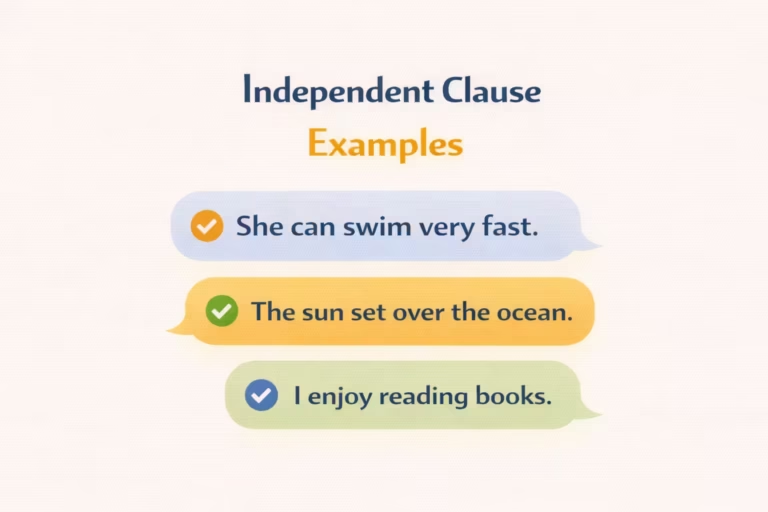
  • Independent Clause Examples: 550+ Sentences

    Understanding independent clauses is one of the most important steps in mastering English grammar. Whether you’re a teacher preparing lesson plans, a parent helping your child with homework, or someone learning English as a second language, knowing how independent clauses work will transform the way you read, write, and speak. After teaching English for over fifteen years, I’ve seen countless students struggle with sentence structure. The good news? Once you understand independent clauses, everything else becomes clearer. I am providing over 550 real examples organized by type, along with simple explanations that anyone can follow. What Is an Independent Clause? An independent clause is a group of words that contains a subject and a verb and expresses a complete thought. It can stand alone as…

  • ·

    In-Person vs Online English Courses: Which Is Best?

    “I can read and write English well, but when someone speaks to me, my mind goes blank.” I’ve heard this from hundreds of students over my years of teaching. Many people spend years studying English grammar and vocabulary, but when it’s time to have a real conversation, they freeze. This happens because speaking English is a different skill from reading or writing it. Choosing the right learning environment—whether in-person or online—can make a huge difference in how quickly and confidently you develop your spoken English. Both methods work, but they work differently. Understanding these differences will help you make the best choice for your learning style, schedule, and goals. Let me share what I’ve learned from teaching in both traditional classrooms and online platforms, so…

  • Active Voice Examples: 5,00 English Sentences + Guide

    Writing clearly matters. When your readers understand your message the first time, everyone wins. One of the simplest ways to improve your writing is to use the active voice instead of the passive voice. I’ve taught writing to students for over fifteen years. In every class, I see the same problem. New writers fill their work with passive sentences without realizing it. Their writing feels weak and confusing. When they switch to the active voice, their work transforms immediately. I will help you understand the active voice and use it confidently. You’ll learn what makes a sentence active, why it matters, and how to spot passive voice in your own writing. By the end, you’ll have the tools to write with more power and clarity….