Introduction
Have you ever felt nervous before an important meeting at work? Have you struggled to find the right words in English during a presentation or a job interview? You are not alone.
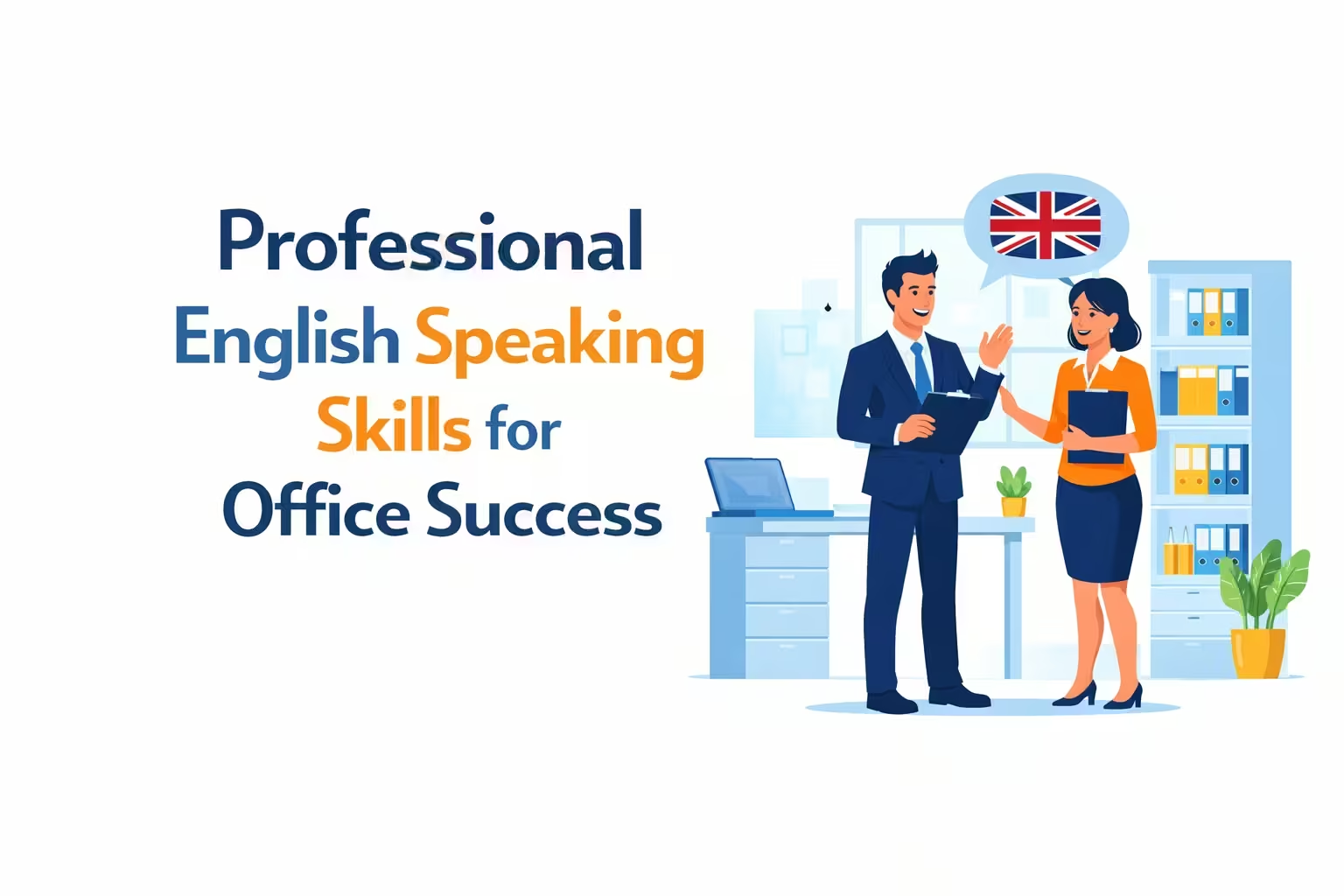
Developing professional English speaking skills for office success is one of the most powerful things you can do for your career. Whether you are an ESL learner just starting or a working professional who wants to sound more confident, this guide is for you.
In today’s global workplace, English is the language of business. Companies everywhere expect employees to communicate clearly, professionally, and confidently.
This article will show you exactly how to do that — step by step, with real examples you can start using today.
Visit our Business English category for more detailed guides and tips.
What Are Professional English Speaking Skills for Office Success?
Let’s start with a simple definition.
Professional English speaking skills for office success means the ability to speak English clearly, correctly, and confidently in a workplace environment.
This is not just about speaking English. It is about speaking English in the right way — at the right time, with the right tone, and with the right words.
Here is a simple way to understand it:
Imagine two employees. Both speak English. But one says:
“Um… I don’t know… maybe we should, like, change the plan?”
The other says:
“I suggest we revise the current plan. Here is my recommendation.”
Both communicated an idea. But the second person sounds more professional, more confident, and more credible. That is the difference that professional English speaking skills make.
In an office setting, these skills include:
- Speaking clearly during meetings
- Giving professional presentations
- Making polite requests and giving feedback
- Talking to clients and colleagues with confidence
- Writing and speaking in formal and semi-formal English
Why Are Professional English Speaking Skills Important?
Good English speaking skills are not just a nice extra. In today’s competitive workplace, they are essential.
Here is why:
1. Better Career Opportunities
Employers actively look for candidates who can communicate well. In many industries, strong English communication skills can directly lead to promotions, leadership roles, and higher salaries.
According to research from multiple global recruitment firms, communication skills consistently rank among the top three qualities employers look for — above technical skills in many cases.
2. Increased Confidence at Work
When you speak English well, you feel better about yourself. You participate more in meetings. You share your ideas without fear. You stop worrying about making mistakes and start focusing on contributing.
Confidence builds a positive loop: the more you speak, the better you get. The better you get, the more confident you become.
3. Stronger Professional Relationships
Good communication builds trust. When colleagues and managers understand you clearly, they respect your ideas. When clients hear you speak professionally, they trust your company more.
Clear communication also reduces misunderstandings, which saves time and prevents costly mistakes.
4. Greater Productivity
When team members communicate well in English, meetings are shorter, emails are clearer, and projects move faster. A team with strong English communication works more efficiently than one with constant communication gaps.
5. Global Workplace Readiness
English is the most widely used language in international business. If your company works with overseas clients, partners, or teams, English speaking skills are not optional — they are critical.
Types of Professional English Speaking Skills
To improve English speaking for office success, you need to understand the different skill areas. Each one plays an important role.
1. Fluency
Fluency means speaking smoothly without stopping too much or searching for words constantly.
It does not mean speaking fast. It means speaking at a natural, comfortable pace with a good flow.
Example of low fluency: “I… uh… want to… say that… the project is… good.”
Example of good fluency: “I would like to say that the project is going very well.”
2. Pronunciation
Pronunciation means saying words correctly so people understand you clearly.
Poor pronunciation can lead to misunderstandings, even if your grammar is perfect. Focus on:
- Word stress (e.g., “pre-SENT” vs “PRE-sent”)
- Sentence intonation (rising and falling tones)
- Vowel and consonant sounds
You do not need a perfect American or British accent. But you do need to be clear and understandable.
3. Vocabulary
Using the right words in the right situation is a key skill. In a professional setting, this means knowing:
- Formal vs informal words (e.g., “start” vs “commence,” “use” vs “utilize”)
- Industry-specific terms
- Polite expressions and phrases
- Transition words (e.g., “however,” “therefore,” “in addition”)
4. Grammar
Good grammar makes your speech clear and professional. You do not need to speak like a grammar textbook. But basic accuracy matters.
Common grammar areas to focus on for office English:
- Verb tenses (especially present perfect and past simple)
- Subject-verb agreement
- Conditional sentences (“If we do this, then…”)
- Modal verbs for politeness (“Could you please…,” “I would suggest…”)
5. Confidence
This is perhaps the most important skill of all. Confidence is not something you are born with — it is something you build through practice.
Confident speakers:
- Maintain eye contact
- Speak at a steady pace
- Use clear, direct language
- Do not apologize excessively for their English
6. Listening Skills
Speaking well also means listening well. Active listening is a critical part of workplace communication.
Good listeners:
- Pay attention without interrupting
- Ask clarifying questions (“Could you please explain what you mean by…?”)
- Summarize what they heard (“So if I understand correctly, you are saying that…”)
- Show they are listening (“I see,” “That makes sense,” “Right”)
Detailed Explanation with Real-Life Examples
Let us look at how these skills work in real office situations.
Situation 1: Attending a Meeting
Your manager asks for your opinion on a new project plan. Without professional English skills, you might say nothing out of fear. With good skills, you can respond like this:
“Thank you for sharing the plan. I think the timeline looks realistic. However, I have one concern about the budget allocation. Could we discuss that in more detail?”
This response is clear, polite, and professional. It shows you were listening and that you have something valuable to contribute.
Situation 2: Giving a Presentation
You are presenting quarterly results to your team. Instead of just reading from slides, you can engage your audience:
“Good morning, everyone. Today, I would like to walk you through our Q3 results. We had some strong wins this quarter, and I will also highlight a few areas where we can improve.”
This opening is confident, structured, and easy to follow.
Situation 3: Handling a Difficult Conversation
Your colleague made a mistake that affected your work. Instead of reacting emotionally, you handle it professionally:
“Hi Sarah, do you have a few minutes to talk? I wanted to discuss something about the report deadline. I think there may have been a miscommunication, and I would like us to find a solution together.”
This approach is calm, respectful, and solution-focused.
Situation 4: Speaking to a Client on the Phone
“Good afternoon, Mr. Johnson. This is Priya from ABC Solutions. I am calling to follow up on the proposal we sent last week. I wanted to check if you had any questions or concerns.”
Short. Clear. Professional. This is what office English should sound like.
Common Mistakes to Avoid
Many learners make the same mistakes. Knowing them helps you avoid them.
Mistake 1: Speaking too fast
Why it is wrong: Speaking fast does not make you sound more fluent. It makes you harder to understand. Slow down, breathe, and speak clearly.
Mistake 2: Overusing filler words
Words like “um,” “uh,” “like,” and “you know” make you sound unsure and unprepared. Replace them with a pause. Silence is better than a filler.
Mistake 3: Translating word for word from your native language
Each language has its own way of expressing ideas. Translating directly often creates unnatural or confusing sentences. Think in English as much as possible.
Mistake 4: Using informal language in formal situations
Saying “gonna,” “wanna,” or “yeah” to a senior manager or client is unprofessional. Know your audience and adjust your language accordingly.
Mistake 5: Avoiding speaking altogether
Many learners stay quiet because they are afraid to make mistakes. But silence hurts your career more than an occasional grammatical error. Speak up. People respect effort and confidence more than perfection.
Mistake 6: Not asking for clarification
If you do not understand something, staying quiet and guessing is dangerous in a professional setting. It is perfectly professional to say: “I am sorry, could you please repeat that?” or “Could you clarify what you mean?”
Mistake 7: Apologizing too much
Saying “Sorry for my bad English” before every sentence undermines your credibility. Trust your skills and communicate confidently.
Tips, Strategies, and Best Practices to Improve English Speaking Skills
Here are practical, easy-to-follow strategies to help you improve English speaking skills for the workplace.
Daily Habits
1. Practice speaking every day — even alone
Talk to yourself. Narrate what you are doing. Practice answers to common interview or meeting questions in front of a mirror. This builds fluency and reduces fear.
2. Listen to English in professional contexts
Watch TED Talks, business podcasts, or YouTube channels on leadership, management, or industry topics. Pay attention to how speakers structure their sentences and express their ideas.
3. Keep a vocabulary journal
Every time you learn a new professional word or phrase, write it down with an example sentence. Review your journal regularly and try to use the new words in real conversations.
4. Record yourself speaking
This is one of the most powerful techniques to improve English speaking. Record yourself answering a question, giving a short presentation, or having a mock conversation. Listen back and identify areas for improvement.
5. Read professional content aloud
Read business articles, emails, or reports aloud. This trains your mouth, improves pronunciation, and helps you absorb professional vocabulary naturally.
Study Techniques
6. Learn phrases, not just words
Instead of memorizing single words, learn complete phrases used in business settings. For example:
- “I would like to draw your attention to…”
- “As per our last discussion…”
- “I am reaching out to follow up on…”
- “Could we schedule a call to discuss this further?”
7. Role-play office scenarios
Practice common workplace conversations with a friend, colleague, or language partner. Practice job interviews, feedback meetings, client calls, and team discussions.
8. Take an online course or join a speaking group
Platforms like Coursera, LinkedIn Learning, and Toastmasters International offer excellent resources to improve business English and public speaking skills.
9. Shadow native or fluent speakers
Shadowing means listening to a speaker and repeating exactly what they say at the same time — matching their rhythm, tone, and pronunciation. It is one of the fastest ways to improve spoken English fluency.
10. Focus on one skill at a time
Do not try to fix everything at once. This week, focus on vocabulary. Next week, focus on pronunciation. Then move on to grammar. Targeted practice brings faster results.
Office-Specific Strategies
11. Prepare before important meetings
If you know a meeting topic in advance, prepare your key points in English ahead of time. Think about what questions might be asked and prepare short, clear answers.
12. Take notes in English
When you attend a meeting or training, take your notes in English — not in your native language. This forces you to process information in English and builds your professional vocabulary naturally.
13. Email in English — then speak it
Write emails in English and practice reading them aloud. This trains both your written and spoken communication at the same time.
14. Volunteer to speak in meetings
Push yourself to say at least one thing in every team meeting. Even a short comment like “I agree with that point” or “I have a question about the timeline” builds habit and confidence over time.
Real-Life Applications of Professional English Speaking Skills
Let us see where these skills make a real difference.
Job Interviews
A job interview is often the first test of your professional English. Interviewers assess not just what you say, but how you say it.
Practice answers to common questions like:
- “Tell me about yourself.”
- “What are your strengths and weaknesses?”
- “Where do you see yourself in five years?”
Use structured answers: State your point, explain it, and give an example. This is called the STAR method (Situation, Task, Action, Result) and it works extremely well in English interviews.
Client Communication
Whether by phone, video call, or in-person meeting, client communication requires professional, clear English. A good first impression in English can win business. A poor one can lose it.
Practice polite greetings, active listening responses, and professional closing statements like:
- “Thank you for your time today.”
- “I will send you a summary of our discussion by end of day.”
- “Please feel free to reach out if you have any further questions.”
Team Collaboration
Daily teamwork involves giving instructions, asking for help, sharing updates, and resolving problems — all of which require clear English communication.
Knowing how to politely disagree (“I see your point, but I think we should also consider…”), ask for help (“Would you mind reviewing this report?”), and give positive feedback (“That was an excellent suggestion”) makes you a better and more respected team member.
Presentations and Public Speaking
Presenting ideas in English to a room full of colleagues or stakeholders is challenging but incredibly rewarding. Good presentation skills require:
- A clear structure (introduction, main body, conclusion)
- Simple, direct language
- Confident body language and voice projection
- The ability to handle questions professionally
Networking Events and Business Travel
Professional English is also essential for networking — meeting new people, exchanging ideas, and building connections.
Simple conversation starters like “What industry are you in?” or “How long have you been with your company?” go a long way. And when traveling for business, being able to navigate airports, hotels, and meetings in English is a huge advantage.
Frequently Asked Questions (FAQs)
Q1: How can I improve my English speaking skills for the office quickly?
The fastest way to improve is through consistent daily practice. Speak English every day — at home, during your commute, or with colleagues. Record yourself, listen back, and identify areas to work on. Focus on learning professional phrases and vocabulary specific to your industry.
Q2: Is grammar more important than fluency in professional English?
Both matter, but fluency is often more important in spoken communication. A fluent speaker who makes minor grammar mistakes is usually easier to understand and more engaging than someone who speaks perfectly but very slowly and hesitantly. Aim for clear, natural speech first, and refine your grammar over time.
Q3: How do I sound more confident when speaking English at work?
Confidence comes from preparation and practice. Before meetings, prepare your key points. Speak slowly and clearly. Avoid filler words. Use direct language. Make eye contact. And remember — most colleagues appreciate clear communication much more than perfect English.
Q4: What are the most important professional English phrases I should learn?
Some essential professional phrases include:
- “I would like to suggest…”
- “Could you please clarify…?”
- “As per our discussion…”
- “I will follow up on this by…”
- “Thank you for bringing this to my attention.”
- “I am happy to assist with that.”
Learning and using these phrases regularly will immediately raise your professional communication level.
Q5: How do I handle a situation when I do not understand what someone said in English?
It is completely professional to ask for clarification. Use polite phrases like:
- “I am sorry, could you please repeat that?”
- “Could you speak a little more slowly, please?”
- “Just to clarify, do you mean…?”
Never pretend to understand when you do not. Guessing in a professional setting can cause serious mistakes.
Q6: Can I improve my professional English speaking skills on my own?
Absolutely. Self-study is very effective. Use tools like YouTube, podcasts, apps like ELSA Speak or BBC Learning English, and online platforms like Coursera. Practice speaking alone using role-play scenarios, mirror practice, and recording yourself. Joining an online speaking club or finding a language exchange partner will add real conversation practice to your routine.
Q7: What is the best way to expand my professional vocabulary in English?
Read business articles, industry reports, and professional emails regularly. When you find a new word or phrase, note it down and use it in a sentence of your own. Apps like Anki can help you review new vocabulary using spaced repetition — one of the most scientifically proven methods of vocabulary retention.
Conclusion
Developing professional English speaking skills for office success is a journey, not a destination. It takes time, practice, and patience. But every small step you take brings you closer to the confident, effective communicator you want to become.
Let us quickly recap what we covered in this guide:
- Professional English speaking skills help you succeed in meetings, interviews, presentations, and daily workplace conversations.
- Key skill areas include fluency, pronunciation, vocabulary, grammar, confidence, and listening.
- Real-life situations — from client calls to team meetings — all require clear, professional English.
- Common mistakes like speaking too fast, using filler words, or avoiding speech altogether can hold you back.
- Daily habits, study techniques, and consistent practice are your best tools for improvement.
Here is your call to action: Start today. Pick just one tip from this article and apply it this week. Maybe it is recording yourself speaking. Maybe it is learning five new professional phrases. Maybe it is volunteering to say one thing in your next meeting.
Small, consistent actions create big, lasting results.
If you found this guide helpful, share it with a friend or colleague who wants to improve their English at work. And explore more of our resources on spoken English tips, how to speak English fluently, and workplace communication strategies.
Your voice matters. Use it with confidence.
Enjoy more interesting topics here:
- 50 Industry-Specific Vocabulary Words with Meanings for Professional English
- Advanced Phrasal Verbs for Formal and Professional English
- English Business Collocations: Words for Professional English
- Professional English Vocabulary for Sales and Business Communication
Want to explore more? Discover similar posts in the Business English category.
📚 Continue Learning English
Choose your next lesson and keep improving your English skills with our free English learning resources.