1. Introduction
Do you want to learn English but find textbooks boring? You are not alone. Millions of people around the world struggle to stay motivated when learning a new language. ‘The good news is there is a better way. You can learn English through the media — and it is both fun and highly effective.
When you learn English through media, you use movies, TV shows, music, podcasts, books, and social media to improve your language skills naturally. ‘This method exposes you to real English — the kind that native speakers actually use every day. It helps you improve your listening, speaking, reading, and writing skills at the same time.
I will walk you through everything you need to know about using media to learn English. Whether you are a complete beginner or an intermediate learner, this article has something valuable for you.
2. What Does “Learn English Through Media” Mean?
Learning English through media means using entertainment and communication tools — such as films, songs, news, YouTube videos, podcasts, and books — as your primary learning materials instead of or alongside traditional textbooks.
This approach is also called “media-based language learning” or “immersive English learning.” The idea is simple: when you consume content in English that you enjoy, your brain absorbs the language faster and more naturally.
Think about how you learned your first language as a child. You did not study grammar rules first. You listened, watched, and imitated. Learning English through media works in a very similar way. It creates a natural learning environment, even if you are not living in an English-speaking country.
This method connects language learning with real-world contexts. You hear how people greet each other, argue, laugh, explain ideas, and tell stories — all in natural English. This kind of exposure is extremely powerful for building fluency.
3. Why Is Learning English Through Media Important?
There are many strong reasons why learning English through media has become one of the most popular and effective methods in the world.
It Makes Learning Enjoyable
The biggest challenge for most English learners is staying motivated. When you watch a show you love or listen to your favorite music in English, learning does not feel like work. Enjoyment keeps you consistent, and consistency leads to progress.
It Exposes You to Natural Language
Textbooks often teach formal or outdated English. Media, on the other hand, shows you how English is actually spoken today — including common phrases, slang, idioms, contractions, and cultural expressions.
It Improves Multiple Skills at Once
Watching an English movie, for example, helps you with:
- Listening comprehension
- Vocabulary building
- Pronunciation awareness
- Reading (if you use subtitles)
- Understanding cultural context
It Builds Real Fluency
Fluency is not just about knowing grammar rules. It is about being able to understand and respond naturally in real conversations. Media-based learning builds this kind of real, practical fluency over time.
It Is Accessible and Affordable
Most media is free or very low cost. YouTube, Spotify, Netflix, and free news websites give you access to thousands of hours of English content at any time and from anywhere in the world.
It Supports Different Learning Styles
Whether you are a visual learner, an auditory learner, or someone who learns by reading, there is a type of media that suits your style perfectly.
4. Types of Media You Can Use to Learn English
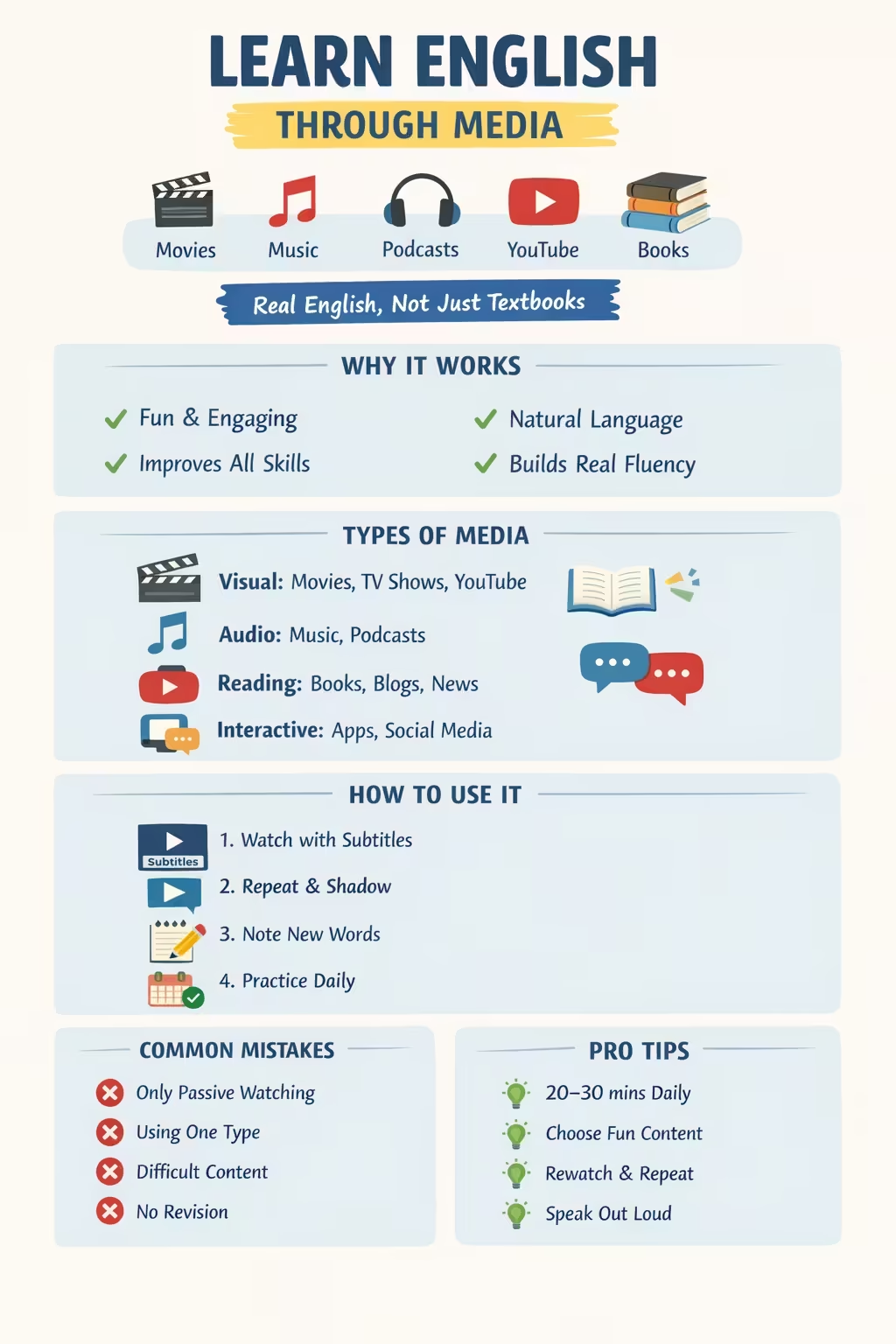
There are many different types of media you can use to improve your English. Here is an overview of the main categories:
A. Visual Media
- Movies and films
- TV shows and web series
- YouTube videos
- Documentaries
- Animated shows
B. Audio Media
- Podcasts
- Audiobooks
- Music and song lyrics
- Radio programs
- English language learning apps with audio content
C. Written Media
- English novels and short stories
- Newspapers and online news articles
- Blogs and websites
- Comic books and graphic novels
- Social media posts and captions
D. Interactive Media
- English learning apps (such as Duolingo or BBC Learning English)
- Video games with English dialogue
- English-language forums and communities (such as Reddit)
- Social media platforms (Twitter, Instagram, TikTok)
Each type of media targets different skills and suits different learning preferences. The best approach is to combine several types for a well-rounded learning experience.
5. Detailed Explanation with Examples
Let us now look at each major type of media in detail and understand exactly how to use it to learn English effectively.
5.1 Movies and TV Shows
Movies and TV shows are among the most popular tools for learning English through media. They combine visual storytelling with natural dialogue, which makes it easier to understand meaning through context.
How to Use Movies to Learn English:
- Start by watching with subtitles in your native language to understand the plot.
- Then rewatch with English subtitles to connect spoken words with written text.
- Finally, try watching without subtitles to test your listening skills.
- Pause when you hear an unfamiliar phrase. Write it down and look it up.
- Repeat short scenes to practice pronunciation by shadowing the actors.
Best Genres for Beginners:
- Animated movies (clear pronunciation, simple vocabulary)
- Sitcoms (everyday conversational English)
- Children’s TV shows (slow, clear speech)
Recommended Shows for English Learners:
- Friends (everyday American English)
- The Crown (formal British English)
- Peppa Pig (very beginner-friendly)
- Modern Family (natural conversational English)
Example Learning Moment: In an episode of Friends, a character says, “I’ll be there for you.” This is a common phrase. You can learn how “I’ll” is a contraction of “I will,” and how this phrase is used to express emotional support.
5.2 Music and Song Lyrics
Music is a powerful and deeply enjoyable way to learn English. Songs help you remember vocabulary, understand rhythm and stress in spoken English, and get familiar with emotional expression.
How to Use Music to Learn English:
- Listen to a song first without reading the lyrics.
- Then read the full lyrics while listening again.
- Look up any words or phrases you do not understand.
- Sing along to practice pronunciation and rhythm.
- Notice how the singer contracts words (e.g., “gonna” instead of “going to”).
What You Learn from Music:
- Informal vocabulary and expressions
- Rhyme and rhythm patterns in English
- Emotional vocabulary (love, loss, happiness, anger)
- Common slang and informal contractions
Recommended Artists for Learners:
- Taylor Swift (clear pronunciation, storytelling lyrics)
- Ed Sheeran (simple vocabulary, emotional themes)
- Adele (clear British pronunciation)
- Beatles (classic, slower paced)
Example Learning Moment: In Ed Sheeran’s song “Shape of You,” the phrase “I’m in love with the shape of you” teaches the use of “in love with” as a common expression. It also demonstrates informal pronunciation like dropping the ‘g’ in spoken English.
5.3 Podcasts
Podcasts are audio programs covering almost every topic imaginable. They are excellent for building listening skills and expanding vocabulary in specific areas.
How to Use Podcasts to Learn English:
- Start with podcasts specifically made for English learners.
- Listen to short episodes (5–15 minutes) at first.
- If the podcast has a transcript, read along while listening.
- Take notes on new vocabulary and phrases.
- Listen to the same episode multiple times for better retention.
Recommended Podcasts for English Learners:
- “6 Minute English” by BBC Learning English (beginner to intermediate)
- “ESLPod” — English as a Second Language Podcast
- “Speak English with Misterduncan” on YouTube and podcast platforms
- “The English We Speak” by BBC (focuses on phrases and idioms)
Advanced Option: Once you are comfortable, switch to general interest podcasts on topics you enjoy — true crime, science, history, business, or personal development. Listening to native speakers talk naturally is one of the best ways to develop advanced fluency.
5.4 YouTube Videos
YouTube is the world’s largest video platform and one of the richest resources for English learners. You can find content at every level, on every topic, and from every English-speaking country.
How to Use YouTube to Learn English:
- Subscribe to English learning channels.
- Use the auto-generated captions (subtitles) to read along.
- Slow down the playback speed if needed (use the settings button).
- Watch the same video multiple times.
- Try to summarize what you watched in English, either in writing or speaking.
Recommended YouTube Channels:
- BBC Learning English
- EnglishClass101
- Rachel’s English (American pronunciation)
- English with Lucy (British English)
- Speak English With Vanessa
5.5 Reading: Books, Blogs, and News
Reading in English is one of the best ways to improve vocabulary, grammar, and writing style. Unlike listening, reading gives you time to pause, reread, and think about what you have encountered.
How to Use Reading Media to Learn English:
- Start with graded readers — books written at different difficulty levels for language learners.
- Move on to children’s books, then young adult fiction, then adult novels.
- Read English news every day, even if it is just one short article.
- Keep a vocabulary journal. Write down new words with their meaning and an example sentence.
- After reading an article, try to summarize it in your own words.
Recommended Reading Resources:
- Graded readers from publishers like Oxford Bookworms or Penguin Readers
- BBC News or The Guardian for current events
- Simple English Wikipedia for beginner-friendly articles
- Blogs on topics you love (cooking, travel, fashion, technology)
5.6 Social Media
Social media is an often-overlooked but highly effective tool for learning English. Platforms like X, Instagram, and TikTok expose you to modern, informal English used by real people.
How to Use Social Media to Learn English:
- Follow English-speaking accounts on topics you enjoy.
- Read captions, posts, and comments carefully.
- Notice how native speakers use humor, sarcasm, and casual language.
- Try writing your own posts or comments in English.
- Use hashtags like #LearnEnglish or #EnglishTips to find helpful content.
6. Common Mistakes Learners Make
Even when using media to learn English, many learners make mistakes that slow down their progress. Here are the most common ones:
Mistake 1: Watching with Native-Language Subtitles All the Time
If you always rely on subtitles in your mother tongue, your brain will focus on those instead of the English audio. Transition to English subtitles as soon as you can.
Mistake 2: Passive Watching Without Engagement
Simply watching movies without actively noticing vocabulary, grammar, or pronunciation will not lead to significant improvement. You must engage with the content.
Mistake 3: Only Using One Type of Media
Using only movies or only music limits your skill development. Try to combine visual, audio, and reading media for balanced progress.
Mistake 4: Choosing Content That Is Too Difficult
If you cannot understand at least 70–80% of the content, it becomes frustrating rather than helpful. Choose material that slightly challenges you but is mostly understandable.
Mistake 5: Not Reviewing What You Learn
Hearing a new word once is rarely enough to remember it. You need to review and use new vocabulary multiple times in different contexts.
Mistake 6: Being Embarrassed to Imitate Accents or Speak Aloud
Many learners are shy about trying to speak like native speakers. But imitation — called “shadowing” — is one of the most powerful pronunciation practice tools available.
Mistake 7: Ignoring Cultural Context
Language and culture are deeply connected. When you encounter cultural references in media, take the time to learn about them. It will help you understand and use English much more naturally.
7. Tips and Best Practices
Here are the top strategies for getting the maximum benefit from learning English through media:
Tip 1: Set a Daily Learning Goal
Even 20–30 minutes of focused media-based learning every day is more effective than 3 hours on weekends. Consistency is the key.
Tip 2: Use the “Shadowing” Technique
Shadowing means listening to a sentence in English and then immediately repeating it out loud, trying to copy the speaker’s tone, rhythm, and pronunciation. This is one of the best ways to improve spoken fluency.
Tip 3: Keep a Vocabulary Journal
Every time you encounter a new word or phrase in media, write it down. Include the word, its meaning, and the sentence where you heard or read it. Review your journal weekly.
Tip 4: Choose Media You Actually Enjoy
The more you enjoy the content, the more motivated you will be to keep learning. Do not force yourself to watch shows or read topics that bore you just because they are “educational.”
Tip 5: Use Multiple Exposures
Do not just watch a movie once and move on. Re-watch favorite scenes. Read an article, then listen to an audio version. Multiple exposures to the same language help it stick.
Tip 6: Join English-Speaking Online Communities
Platforms like Reddit, Discord, or language exchange apps like Tandem allow you to interact with native English speakers and other learners. This combines passive learning from media with active practice.
Tip 7: Try Dictation Practice
Play a short audio clip (10–30 seconds) and try to write down exactly what you hear. This combines listening and writing practice and is excellent for spotting gaps in your comprehension.
Tip 8: Watch the Same Episode or Video in Multiple Languages
If a show you love is available in both your native language and English, watch it in English first, then compare. This builds comprehension and confidence.
Tip 9: Use Learning Apps as a Supplement
Apps like Duolingo, BBC Learning English, or Elsa Speak can complement your media-based learning by giving you structured vocabulary and pronunciation exercises.
Tip 10: Be Patient and Celebrate Small Wins
Progress in language learning is gradual. Celebrate every milestone — the first time you understand a joke without subtitles, the first time you finish a full article, the first conversation you have in English. These moments matter.
8. Real-Life Applications
Learning English through media is not just a study strategy — it has real, practical benefits in everyday life. Here are some examples of how media-based English learning applies in the real world:
For Students: Students who regularly consume English media tend to score higher on English exams. Reading English news articles and academic YouTube channels builds the vocabulary needed for writing essays and taking tests.
For Job Seekers: Many employers in global companies require strong English communication skills. Watching business-related YouTube channels, TED Talks, and English-language podcasts on leadership and workplace topics gives job seekers a competitive advantage.
For Travelers: Understanding English movies, TV shows, and social media prepares you for real conversations with people from different countries. You will recognize accents, slang, and cultural references that make travel much easier and more enjoyable.
For Remote Workers: If you work online or with international clients, strong English skills are essential. Following English-language industry blogs, listening to business podcasts, and watching professional YouTube content keeps you informed and articulate.
For Parents: Parents who want their children to grow up bilingual can use English cartoons, songs, and children’s books as natural, fun learning tools from a very early age.
For Self-Improvement Enthusiasts: Countless self-help books, motivational YouTube channels, and personal development podcasts are available only or primarily in English. Learning the language through this type of media also brings access to a world of ideas and knowledge.
9. Frequently Asked Questions (FAQs)
Q1: Can I really learn English just by watching TV shows and movies?
Yes, you can make significant progress by watching English TV shows and movies — but only if you do it actively. Passive watching (just sitting and staring) will not help much. You need to pay attention to vocabulary, pause and replay confusing parts, take notes, and use subtitles strategically. Combine media watching with speaking and writing practice for the best results.
Q2: What is the best media type for absolute beginners to learn English?
For absolute beginners, the best starting points are children’s cartoons and animated shows (clear speech, simple vocabulary), beginner podcasts like BBC 6 Minute English, graded readers, and short YouTube videos made specifically for English learners. These resources use simple language and speak slowly, which makes them ideal for those just starting out.
Q3: How long does it take to become fluent in English using media-based learning?
The time depends on your current level, how much time you spend each day, and how actively you engage with the material. Many learners report noticeable improvement within 3–6 months of consistent daily practice. Full conversational fluency often takes 1–2 years of dedicated effort. The key factor is consistency, not speed.
Q4: Should I use subtitles when watching English shows?
Yes — but use them strategically. Beginners can start with subtitles in their native language to understand the story. Then switch to English subtitles to connect sound with text. As you improve, challenge yourself to watch without subtitles. Avoid staying in the native-language subtitle phase for too long, as it can prevent you from truly listening to the English.
Q5: What are the best free resources to learn English through media?
There are many excellent free resources available. BBC Learning English (bbclearningenglish.com) offers free lessons, podcasts, and videos. YouTube has thousands of free English learning channels. Spotify has free podcasts for English learners. Simple English Wikipedia is great for reading practice. TED.com offers talks with English transcripts and subtitles at no cost.
Q6: Can music really help me learn English grammar?
Yes, music can reinforce grammar patterns naturally. Songs often repeat grammatical structures in memorable ways. For example, love songs frequently use conditional sentences (“If I were you…”) and present perfect tense (“I have never felt this way before”). While you should not rely on music alone for grammar study, it is a wonderful reinforcement tool.
Q7: Is social media a good tool for learning English?
Absolutely. Social media exposes you to modern, informal, real-world English. Following English-speaking creators, reading comments, and engaging in discussions all build comprehension and vocabulary. Just be aware that social media language is often very informal and full of slang, so balance it with more formal reading and listening resources.
10. Conclusion
Learning English through media is one of the smartest, most enjoyable, and most effective approaches to language learning available today.
Instead of sitting with a grammar textbook and memorizing rules, you immerse yourself in real English — the way it sounds, the way it flows, and the way it feels when used naturally by real people.
Throughout this guide, we have explored how movies, TV shows, music, podcasts, YouTube, books, and social media can all be powerful tools for building English fluency.
We have looked at how to use each one strategically, what common mistakes to avoid, and how to build habits that create lasting progress.
The most important thing to remember is this: enjoyment and consistency matter more than perfection. Find the media you love.
Make English part of your daily life. Challenge yourself gently but regularly. And trust the process — because every episode you watch, every song you understand, and every article you read is moving you closer to fluency.
Your action step today: Choose one type of media from this guide — a podcast, a YouTube channel, or a TV show — and commit to spending 20 minutes with it in English today. Start small. Stay consistent. Your English will surprise you.
Explore more interesting topics here:
- Spoken English for Daily Life: Complete Guide with Sentences and Phrases
- Daily English Vocabulary: 1000+ Words to Improve Your English Fast
- The Secret to Teaching Middle School Grammar: A Teacher’s Proven Method
- Best English Conversation Topics for Daily Use: Common Dialogues and Useful Phrases
- Social Media Slang and Abbreviations Explained in English
- Essay for Students and Children: Should Social Media Be Regulated?
- English Conversations About Electronic Media (Everyday English Dialogue Practice)
Want to learn more? Visit our Spoken English Practice for similar topics.
📚 Continue Learning English
Choose your next lesson and keep improving your English skills with our free English learning resources.