Starting a job in America can feel overwhelming, especially if you come from a different cultural background. You might wonder: Is it okay to call my boss by their first name? Should I send emails after work hours? How casual is too casual?
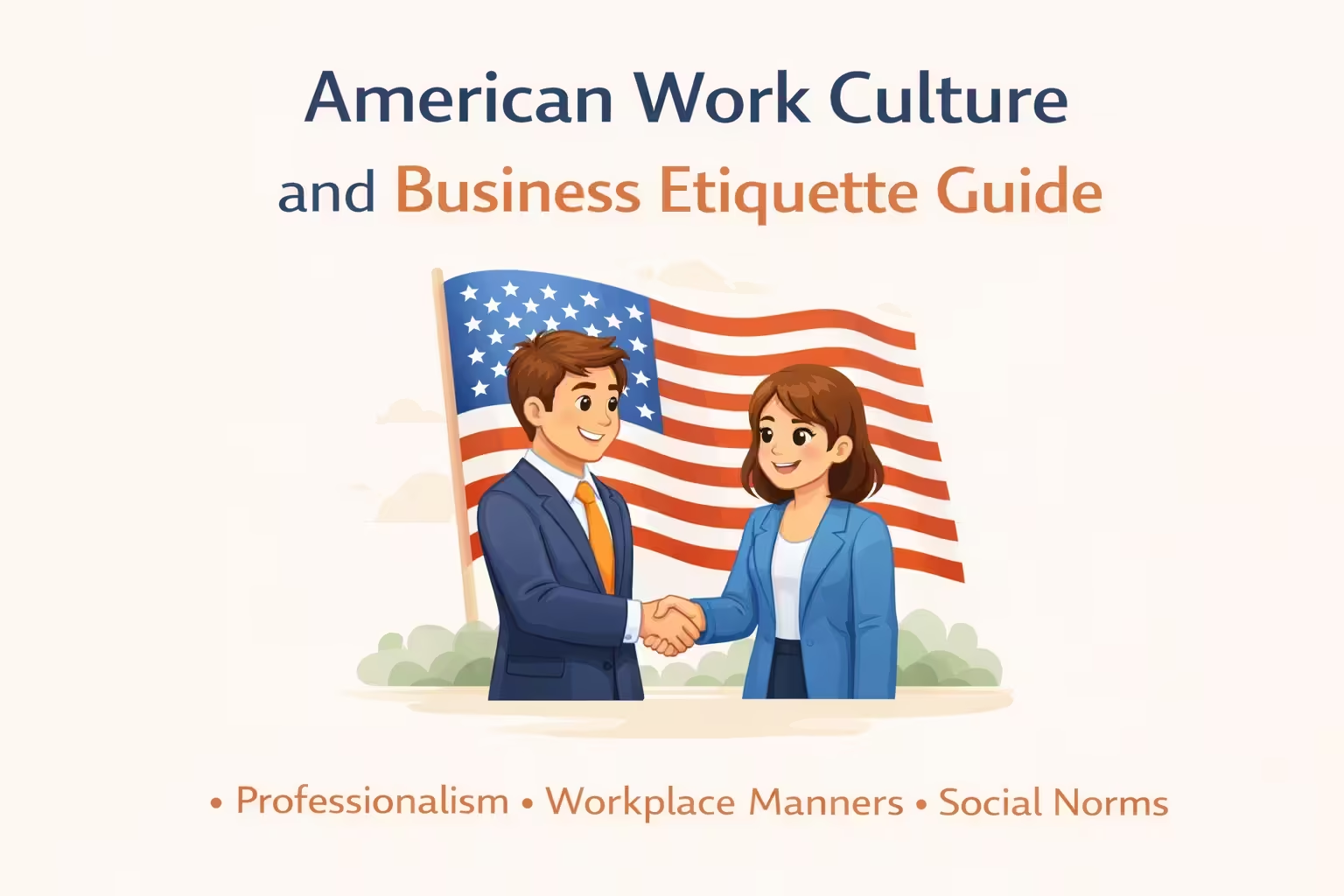
Understanding American work culture isn’t just about following rules—it’s about building relationships, communicating effectively, and feeling confident in your professional environment.
Whether you’re a new employee, an international professional, or someone helping others prepare for American workplaces, this guide will walk you through the essential aspects of American business etiquette.
The good news? American work culture values directness, friendliness, and respect for time. Once you understand these core principles, navigating your workplace becomes much easier.
Visit our Business English category for more detailed guides and tips.
Understanding American Work Culture Values
Individualism and Personal Achievement
American workplaces celebrate individual contribution. Your colleagues and managers want to know what you accomplished, not just what your team did.
In practice, this means:
- During meetings, speak up about your own work and ideas
- It’s normal to say “I completed this project” rather than only “We completed this project”
- Self-promotion is expected, not considered rude
Real example: Maria, a software developer from Colombia, learned this the hard way. In her first performance review, her manager asked what she had accomplished that quarter. Maria talked only about her team’s success. Her manager appreciated her team spirit but needed to hear about her specific contributions for her evaluation.
What you can do: Keep a simple list of your accomplishments each week. When asked about your work, share specific examples: “I streamlined the reporting process, which saved the team five hours each week.”
Direct Communication
Americans typically value straightforward, clear communication. This doesn’t mean being rude—it means being honest and transparent.
Common phrases you’ll hear:
- “Let me be direct with you…”
- “To be honest…”
- “Here’s the bottom line…”
Real example: When Jin from South Korea needed to decline extra work, he said, “I’ll try to make it work,” even though his schedule was completely full. His manager assumed he agreed. Later, when Jin couldn’t deliver, it created confusion. His manager would have preferred hearing: “I’m at full capacity right now. Can we discuss priorities or deadlines?”
What you can do: Practice saying “no” politely but clearly. Try phrases like: “I can’t take that on right now, but I could help next week” or “My plate is full, but let’s prioritize what’s most important.”
Professional Relationships and Hierarchy
First Names and Casual Address
Most American workplaces use first names, even with senior executives. This surprises many international professionals who come from more formal cultures.
When you start a new job:
- Listen to how others address your boss and follow that lead
- If someone introduces themselves with their first name only, use it
- If you’re uncertain, it’s fine to ask: “What would you like me to call you?”
Real example: Priya from India spent two weeks calling her manager “Mr. Johnson” while everyone else said “Mike.” Finally, Mike told her with a smile, “Please, just call me Mike!” The formality had actually created distance rather than showing respect.
Building Workplace Relationships
Americans generally separate work relationships from personal friendships, though workplace friendships do develop naturally.
Common practices:
- Brief personal conversation is normal (“How was your weekend?”)
- Sharing basic information about family or hobbies builds connection
- However, very personal topics (finances, health issues, relationship problems) are usually kept private
What this looks like: Your coworker might mention taking their kids camping over the weekend, but won’t share detailed parenting struggles. You might say you enjoy cooking, but won’t necessarily invite colleagues to your home immediately.
Communication Etiquette
Email Communication
American business emails have a specific style that balances friendliness with efficiency.
Key email practices:
- Keep emails brief and focused
- Use a clear subject line that tells the recipient what the email is about
- Start with a simple greeting: “Hi Sarah,” or “Hello team,”
- End with your name or a simple sign-off like “Thanks,” or “Best,”
Real example of an effective email:
Subject: Question about Friday’s deadline
Hi Roberto,
I’m working on the marketing report due Friday. Could we extend the deadline to Monday? I’m waiting on data from the sales team.
Let me know if that works.
Thanks, Jennifer
Common mistakes to avoid:
- Don’t write extremely long emails when a short one will do
- Avoid being too formal (“Dear Sir/Madam, I hope this letter finds you well”)
- Don’t send emails late at night unless urgent (it can create pressure for others to respond)
Meeting Etiquette
Meetings are central to American business culture, and there are unspoken rules that help them run smoothly.
Before the meeting:
- Arrive on time (being 5-10 minutes late without notice is considered disrespectful)
- For virtual meetings, log in a minute or two early
- Review the agenda if one was sent
During the meeting:
- It’s expected that you’ll participate and share ideas
- Taking notes shows engagement
- If you disagree, express it respectfully: “I see it differently” or “Have we considered…”
- Silence can be interpreted as not having opinions or not paying attention
Real example: Chen from China attended meetings for three months without speaking. His manager finally asked if everything was okay. Chen explained that in his culture, junior employees listen and learn. His manager appreciated this but explained: “Here, we need your input. Your perspective is valuable, and your silence makes me think you’re not engaged.”
What you can do: Prepare one question or comment before each meeting. Even something simple like “Could you explain more about…” shows active participation.
Phone and Video Call Etiquette
Professional phone practices:
- Answer with your name: “This is David” or “David speaking”
- Get to the point relatively quickly after brief pleasantries
- If you need to put someone on hold, ask first: “May I put you on hold for a moment?”
Video call specifics:
- Keep your camera on when possible (it shows engagement)
- Mute yourself when not speaking to avoid background noise
- Position your camera at eye level
- Choose a neutral, professional background
Time Management and Punctuality
Respecting Time
Americans take punctuality very seriously in professional settings. Time is literally considered money in business culture.
What punctuality means:
- Arrive at meetings within 5 minutes of start time
- If running late, send a quick message: “Running 5 minutes behind, sorry!”
- Start and end meetings on time
- Meet project deadlines unless you’ve communicated challenges early
Real example: Ahmed scheduled a meeting for 2:00 PM. At 2:15, only three people had arrived, so he decided to wait for others. By 2:25, those who arrived on time were frustrated. They had other commitments at 3:00. Ahmed learned to start meetings on time, even if not everyone has arrived.
Work Hours and Boundaries
American work culture has been shifting toward better work-life balance, though expectations vary by company and industry.
Common expectations:
- Standard business hours are typically 9 AM to 5 PM or similar
- Lunch breaks are often 30-60 minutes
- Many companies now respect boundaries around after-hours communication
- Using vacation time is encouraged (though practices vary)
What you can do: Observe your specific workplace culture. Do people send emails at 9 PM? Do they leave right at 5 PM? Follow the norms of your particular environment.
Professional Dress and Appearance
Understanding Dress Codes
American workplaces range from very casual to very formal, depending on the industry.
Common dress code terms:
- Business formal: Suit and tie for men, suit or formal dress for women (law firms, finance)
- Business casual: Slacks/khakis and collared shirt; no tie needed (most office jobs)
- Casual: Jeans are okay, avoid torn clothing (tech companies, creative industries)
Real example: Lisa started working at a tech startup and wore business suits her first week. She quickly noticed everyone else wore jeans and company t-shirts. Her manager kindly mentioned, “You can definitely dress more casually if you’d like.” Lisa appreciated the flexibility and adjusted to match the company culture.
What you can do:
- Ask during the interview process: “What’s the typical dress code?”
- Dress slightly more formally your first week and adjust based on what you observe
- When unsure, business casual is usually a safe choice
Workplace Courtesy and Common Practices
Small Talk and Socializing
Small talk serves an important purpose in American workplaces—it builds rapport and makes communication easier.
Safe small talk topics:
- Weather (“Can you believe this heat?”)
- Weekend plans or activities (“Any fun plans this weekend?”)
- Sports, especially local teams
- Popular TV shows or movies
- Food and restaurants
Topics to avoid:
- Politics and religion (unless you know someone well)
- Very personal matters (salary, health issues, relationship problems)
- Gossip about colleagues
- Age or weight
Real example: Every Monday, Sofia’s team gathered around the coffee machine chatting about their weekends. For months, Sofia grabbed her coffee and went straight to her desk. She felt the chatter was unproductive. Eventually, her manager mentioned that these informal conversations helped build team trust. Sofia started joining for just five minutes, and her work relationships improved significantly.
Giving and Receiving Feedback
Americans typically expect and give feedback regularly, which can feel uncomfortable if you’re from a culture where criticism is given very indirectly.
When receiving feedback:
- Listen without defending yourself immediately
- Take notes to show you’re taking it seriously
- Ask clarifying questions: “Can you give me an example?”
- Thank the person, even if the feedback is hard to hear
When giving feedback:
- Focus on specific behaviors, not personality
- Use “I” statements: “I noticed…” rather than “You always…”
- Offer solutions or ask how you can help
- Give positive feedback too, not just criticism
Real example: When Marcus received feedback that his reports needed more data, his first instinct was to explain why he wrote them that way. Instead, he paused and asked, “What specific data points would be most helpful?” This turned a potentially defensive conversation into a productive one.
Navigating Office Politics and Ethics
Being Professional Without Getting Too Personal
American workplaces appreciate friendly professionalism, but there are boundaries.
Good professional practices:
- Support colleagues publicly
- Handle disagreements privately
- Keep complaints focused on problems, not people
- Stay neutral in office conflicts when possible
What to avoid:
- Complaining frequently about management or colleagues
- Sharing confidential information
- Taking sides in conflicts that don’t involve you
- Discussing your salary with coworkers (though this is legally protected, it’s often considered sensitive)
Understanding “Yes” and “No”
Americans use polite language that can sometimes seem indirect, despite the culture of directness.
Phrases that actually mean “no”:
- “Let me think about that” (often means no, but politely)
- “That might be challenging” (probably means no)
- “We’ll see” (unlikely to happen)
Phrases that mean “maybe”:
- “I’ll try” (genuine attempt, but no guarantee)
- “Possibly” (open but not committed)
Clear “yes”:
- “Absolutely”
- “Yes, I can do that”
- “That works for me”
Practical Tips for Daily Success
Starting Your Day
- Greet colleagues you encounter: “Good morning” or “Hi”
- Check your calendar first thing
- Respond to urgent emails within a few hours when possible
During Your Workday
- If you need help, ask—it’s not considered weakness
- When collaborating, clarify roles and deadlines: “Just to confirm, I’ll handle X by Thursday, and you’ll do Y by Friday?”
- Take your designated breaks—working through lunch every day isn’t always viewed positively
Communication Habits
- Confirm receipt of important emails: “Got it, thanks!”
- Use “reply all” thoughtfully—only when everyone needs the information
- For urgent matters, follow up an email with a quick message or call
Building Your Professional Reputation
- Do what you say you’ll do
- If you make a mistake, admit it quickly and offer a solution
- Volunteer for projects that interest you
- Show appreciation: “Thanks for your help with this”
Virtual Work Environment
- Keep your status updated (available, in a meeting, away)
- Respond to messages within a reasonable timeframe (same day for most workplaces)
- Use video when possible for important conversations
- Respect that people may have different schedules when working remotely
Common Mistakes and How to Avoid Them
Over-Apologizing
Many international professionals apologize excessively, which can undermine your confidence.
Instead of: “I’m so sorry to bother you, I’m really sorry, but I have a small question, sorry…”
Try: “Hi Sarah, do you have a moment for a quick question?”
Not Speaking Up
Silence can be misinterpreted as lack of interest or disagreement.
What you can do: Even if you’re processing information, show engagement: “That’s interesting, I’m thinking about…” or “Let me consider that and get back to you.”
Taking Things Too Personally
American directness isn’t meant to be rude—it’s meant to be efficient.
Remember: Feedback is usually about improving work, not criticizing you as a person. Try to separate your identity from your work product.
Conclusion
American work culture can feel confusing at first, with its mix of casual friendliness and high performance expectations. But remember these core principles: be direct but respectful, value everyone’s time, communicate clearly, and contribute your ideas.
You don’t need to transform your personality or abandon your cultural background. The most successful professionals find ways to be authentic while adapting to workplace norms. It’s okay to ask questions when you’re unsure—Americans generally appreciate when someone asks rather than guesses.
Give yourself time to learn and observe. Watch how respected colleagues handle situations. Notice what communication styles work well in your specific workplace. Most importantly, be patient with yourself. Cultural adaptation is a skill that develops over time.
Your unique perspective and background are assets. As you become more comfortable with American work culture, you’ll find your own professional style that honors both who you are and where you work.
Remember: Everyone was new once. Everyone made mistakes while learning. And everyone appreciates a colleague who shows up with good intentions, works hard, and treats others with respect—which, at the end of the day, is what American work culture values most.
Frequently Asked Questions (FAQs)
1. What are the core values of American work culture?
American work culture emphasizes individual achievement, direct communication, respect for time, professionalism, collaboration, and accountability.
2. Is it acceptable to call my manager by their first name?
Yes. In most American workplaces, employees use first names, even with managers and senior leaders. If you’re unsure, ask how they prefer to be addressed.
3. How direct should I be when communicating?
Be clear, honest, and respectful. If you cannot complete a task or meet a deadline, communicate it early and suggest possible solutions.
4. What is the expected email etiquette in the U.S. workplace?
Keep emails concise, use clear subject lines, begin with a simple greeting, and end with a professional sign-off. Avoid overly formal language and unnecessarily long emails.
5. What are the expectations during meetings?
Arrive on time, participate actively, share your ideas, ask questions when needed, and respectfully express different opinions.
6. Why is punctuality important in American workplaces?
Being on time demonstrates professionalism and respect for others’ schedules. If you’re running late, notify the relevant people as soon as possible.
7. What is considered appropriate workplace dress?
Dress codes vary by industry. Common categories include business formal, business casual, and casual. When in doubt, start with business casual and adjust based on your workplace.
8. Is small talk important at work?
Yes. Brief conversations about topics like the weather, hobbies, or weekend plans help build professional relationships and create a positive work environment.
9. How should I handle workplace feedback?
Receive feedback with an open mind, ask clarifying questions, and focus on improving. When giving feedback, be respectful, specific, and solution-oriented.
10. What topics should I avoid discussing at work?
Avoid sensitive topics such as politics, religion, salaries, personal financial matters, and office gossip unless appropriate for the situation.
11. How should I build a strong professional reputation?
Meet deadlines, communicate clearly, admit mistakes honestly, volunteer for opportunities, and appreciate colleagues’ contributions.
12. What are common mistakes international professionals make?
Common mistakes include over-apologizing, remaining silent during meetings, avoiding direct communication, and taking constructive feedback personally.
13. How should I communicate in a remote work environment?
Keep your status updated, respond to messages promptly, join meetings on time, use video when appropriate, and respect colleagues’ working hours.
14. Is it okay to ask for help?
Yes. Asking thoughtful questions is viewed positively and demonstrates your willingness to learn and collaborate.
15. What is the key to succeeding in American work culture?
Be respectful, communicate clearly, value others’ time, contribute your ideas confidently, remain adaptable, and maintain a positive, professional attitude.
Explore more interesting topics here:
- Best English Conversation Topics for Daily Use
- Learn English Through Media: Fun and Effective Methods
- Internships in the US and Canada: How to Find and Apply Successfully
- On-Campus vs Off-Campus Housing: Which Is Better for Students?
- Complete Guide to Business English Communication (Emails, Meetings, Calls)
Want to explore more? Discover similar posts in the Business English category.
📚 Continue Learning English
Choose your next lesson and keep improving your English skills with our free English learning resources.