Introduction
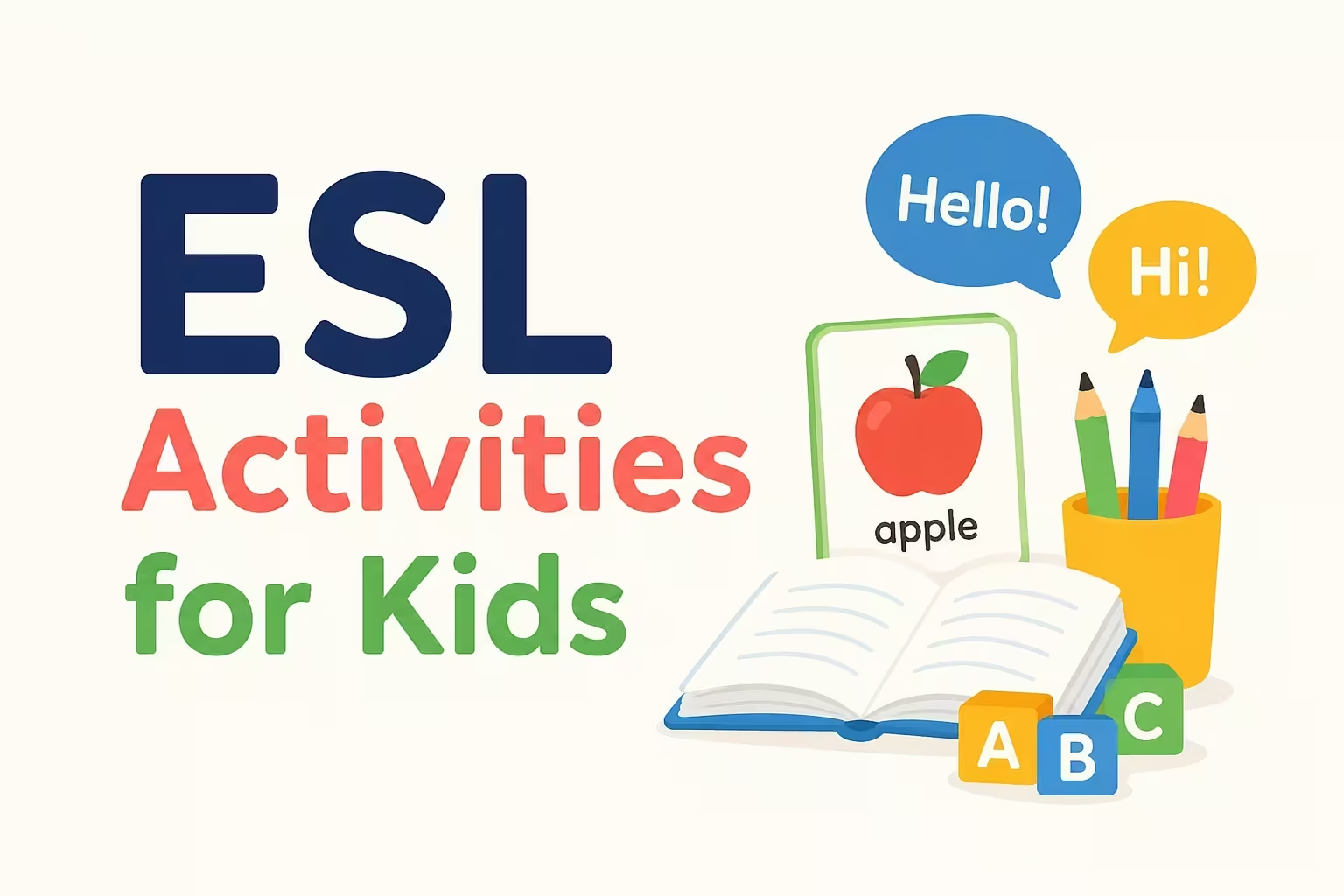
Are you looking for ESL activities that make kids actually want to learn English? You are in the right place.
Teaching English as a second language can feel challenging. Kids get bored easily. They lose focus fast. But the right activity can change everything.
In this guide, you will find 50 Fun ESL Activities for Kids That Actually Work — tested, proven, and loved by teachers and students around the world.
These activities help children improve English speaking skills, build vocabulary, and gain real confidence. Whether you teach in a classroom or at home, these ideas are simple, practical, and fun.
Let’s dive in.
What Are “50 Fun ESL Activities for Kids That Actually Work”?
ESL stands for English as a Second Language. ESL activities are learning exercises designed for children who are learning English — but it is not their first language.
The phrase “activities that actually work” means these are not just fun games. They are carefully chosen to produce real results. They help kids:
- Speak more clearly
- Understand English faster
- Feel confident using new words
- Enjoy the learning process
These activities combine play, creativity, movement, and language — all at the same time. That is what makes them so powerful.
Think of them as “learning in disguise.” Kids think they are playing. But they are actually building strong English skills without even realizing it.
Why Are ESL Activities Important for Kids?
Good ESL activities do much more than teach words. Here is why they matter so much:
1. They Build Confidence
Many children are afraid to speak English. They worry about making mistakes. Fun activities remove that fear. When kids feel safe and relaxed, they speak more freely.
2. They Improve Daily Communication
Learning English opens doors. Kids can talk to friends from other countries, understand movies, read books, and one day succeed in job interviews and travel experiences.
3. They Develop Listening Skills
Many activities involve listening carefully. This trains the ear to recognize English sounds, rhythm, and pronunciation — key parts of spoken English fluency.
4. They Make Grammar Feel Natural
Instead of memorizing grammar rules, kids learn through use. They absorb correct sentence structures naturally, just like they learned their first language.
5. They Support Long-Term Learning
Children who enjoy learning English continue learning outside the classroom. Fun activities create a love for the language — and that love lasts a lifetime.
Types and Categories of English Skills These Activities Cover
The 50 activities in this guide are organized to target the most important areas of English learning. Here is a quick overview:
1. Fluency
Fluency means speaking smoothly and naturally — without long pauses or searching for words. Activities like storytelling, role play, and conversation games build fluency fast.
2. Pronunciation
Pronunciation means saying words correctly. Songs, tongue twisters, and listening games train children to produce the right English sounds.
3. Vocabulary
Vocabulary is the number of words a child knows. Word games, flashcard activities, and reading exercises help kids grow their word bank every day.
4. Grammar
Grammar is the set of rules that makes English make sense. Through fun writing games and sentence-building activities, kids learn grammar the natural way.
5. Confidence
Confidence means feeling good about speaking English in front of others. Drama activities, show-and-tell, and presentations slowly build this skill.
6. Listening Skills
Good listening is the foundation of good speaking. Songs, audiobooks, and listening games sharpen a child’s ability to understand spoken English.
The 50 Fun ESL Activities for Kids That Actually Work
Here are all 50 activities, grouped by skill type for easy use.
Speaking and Fluency Activities
1. Show and Tell
Ask each child to bring an object from home and talk about it for one minute. This builds spoken English confidence and vocabulary at the same time.
2. Role Play Scenarios
Give kids simple real-life situations — like ordering food, visiting a doctor, or buying something at a shop. Let them act it out. This is one of the best ways to improve English speaking skills in a natural setting.
Example dialogue:
“Can I have a burger, please?” “Of course! Would you like fries with that?”
3. Story Starter Game
The teacher says the first sentence of a story. Each student adds one sentence. The story grows in surprising ways! This activity builds fluency, creativity, and listening at the same time.
4. Two Truths and a Lie
Each child says three sentences — two true, one false. Other students guess which one is the lie. Kids must speak clearly and listen carefully.
5. Telephone (Whisper Game)
Whisper a sentence from child to child. The last person says the sentence out loud. This is excellent for pronunciation and listening skills.
6. Hot Seat
One student sits in the “hot seat.” The class asks questions and the student must answer in English. A classic spoken English activity that builds fast-thinking fluency.
7. Interview a Friend
Pair students up. They interview each other like journalists — asking questions about hobbies, family, and likes. Then each student presents their partner to the class.
8. News Reporter
Give students a simple “news story” card. They must report the news to the class using their best English. This improves formal speaking and pronunciation.
9. Opinion Circles
Ask a simple question like “Is homework good or bad?” Students stand in a circle and share their opinion. Every child must speak at least once. This is great for spoken English practice.
10. Picture Description
Show a picture. Ask the student to describe what they see — people, colors, actions, feelings. This builds descriptive vocabulary and sentence structure.
Vocabulary Building Activities
11. Word of the Day
Introduce one new word every day. Write it on the board, explain the meaning, and use it in three sentences. Ask students to use it too.
12. Vocabulary Bingo
Create bingo cards with English words instead of numbers. Read out definitions or use the words in sentences. The first child to get a line wins!
13. Flashcard Memory Match
Place word cards and picture cards face down. Students turn over two cards at a time. If they match, the student keeps the pair and uses the word in a sentence.
14. Word Association Game
Say one word. The next student must say a related word. For example: “dog → pet → home → family.” This trains the brain to think in English.
15. Scrabble Junior or Word Building
Give students letter tiles and ask them to build as many words as possible. This is excellent for spelling, vocabulary, and creative thinking.
16. Word Wall
Create a large wall display of new vocabulary words organized by topic (animals, food, weather, etc.). Students add new words each week.
17. Vocabulary Notebooks
Each child keeps a personal vocabulary book. They draw a picture, write the word, and write a sentence. A simple daily habit that builds vocabulary steadily.
18. Synonym Swap
Write a sentence on the board. Ask students to replace one word with a synonym. For example: “She is happy” becomes “She is joyful / cheerful / glad.”
19. Category Sort
Give students a list of 20 words. Ask them to sort the words into categories (for example: food, sports, animals). A quick activity that sharpens vocabulary and thinking skills.
20. Word Ladder
Start with one word and change one letter at a time to create new words. Example: CAT → BAT → BAD → BED. Simple, fun, and great for spelling.
Listening Activities
21. Listen and Draw
Read a short description out loud. Students draw what they hear. For example: “There is a big red house next to a tall tree.” This trains careful listening in a creative way.
22. Song Activities
Play an English song with missing lyrics on a worksheet. Students listen and fill in the blanks. Songs are one of the most powerful tools for improving pronunciation and listening skills.
23. Story Listening
Read a short story aloud. Then ask comprehension questions. Did the students understand the main idea? The characters? The ending?
24. Follow the Instructions
Give multi-step instructions and see if students can follow them. “Stand up, turn around, clap three times, and sit down.” This combines listening with physical response — perfect for young learners.
25. Audio Book Sessions
Play a recorded audiobook. Students listen and follow in their own books. This links hearing and reading — a powerful combination for language development.
26. Dictation Practice
Read sentences slowly. Students write what they hear. Then they check their own work. Dictation improves both listening and spelling at the same time.
27. Sound Discrimination
Play pairs of similar-sounding words (ship/sheep, cat/cut, bit/beat). Students identify which word they hear. This sharpens phonological awareness.
28. Listen and Respond
Make true/false statements about a topic the class has studied. Students hold up a “true” or “false” card. Fast, simple, and effective.
29. Mini Podcast Listening
Find a short, age-appropriate English podcast. Students listen, take notes, and share one thing they learned. This builds real-world listening skills.
30. Environmental Sounds Game
Play a recording of everyday sounds — a dog barking, rain, a car horn. Students guess what each sound is and write a sentence about it.
Reading and Writing Activities
31. Sentence Scramble
Write the words of a sentence on separate cards. Shuffle them. Students must arrange the words in the correct order. This is great for grammar and sentence structure.
32. Comic Strip Creation
Give students a blank comic strip template. They draw a scene and write dialogue bubbles in English. Combines creativity with writing practice.
33. Mini Book Writing
Each student creates a small 4-page book about themselves — their family, their favorite food, their school. Simple sentences, real language, personal meaning.
34. Fill in the Story
Give students a story with missing words (a “cloze” activity). They fill in the blanks using a word bank. Good for grammar and vocabulary together.
35. Letter Writing
Students write a short letter to a real or imaginary friend. What did they do last weekend? What do they want to do? A wonderful spoken English writing activity.
36. Pen Pal Program
Connect your class with another ESL class in a different city or country. Students write letters or emails to each other. Real communication — real motivation!
37. Caption Writing
Show pictures from magazines or printed from the internet. Students write captions for each picture. One or two sentences is enough.
38. Journal Writing
Students keep a daily journal in English. They write 3–5 sentences about their day. Over time, they see their own progress — and that builds confidence.
39. Rewrite the Ending
Read a short story to the class. Then ask students to write a different ending. This builds imagination and writing fluency.
40. Word Problems in English
Use simple math word problems in English. “Tom has 5 apples. He gives 2 to his friend. How many does he have?” This connects language with logic.
Games and Interactive Activities
41. Charades
Students act out a word or phrase without speaking. Others guess in English. A classic game that builds vocabulary and listening in a fun way.
42. 20 Questions
One student thinks of a person, place, or thing. Others ask yes/no questions to guess the answer. This builds question structure and critical thinking.
43. Board Games in English
Snakes and Ladders, Monopoly Junior, or simple ESL board games require students to speak English throughout. Learning through play is highly effective.
44. Simon Says
“Simon says touch your nose!” A classic game for young learners that teaches body vocabulary, listening, and following instructions.
45. Pictionary
Students draw a word on the board while their team guesses in English. Perfect for vocabulary review and speaking fluency at the same time.
46. English Treasure Hunt
Hide clues around the classroom or school. Each clue is written in English. Students must read and understand each clue to find the next one.
47. Debate for Kids
Give simple debate topics like “Cats are better than dogs” or “School should start later.” Students must argue their side in English. Builds confidence and spoken fluency fast.
48. Spelling Bee
A timeless classic. Students spell words out loud. This improves spelling, pronunciation, and confidence together.
49. English Trivia
Create quiz questions about English vocabulary, grammar, or general knowledge. Teams compete. Learning through competition is exciting and memorable.
50. Digital English Games
Use trusted platforms like Kahoot, Quizlet, or Wordwall to create digital games. Students love screens. Use that to your advantage and make English practice feel like playtime.
Common Mistakes to Avoid When Using ESL Activities
Even the best activities can fail if used the wrong way. Here are the most common mistakes — and how to avoid them:
- Using activities that are too difficult. If children cannot understand the task, they feel frustrated and give up. Always match the activity to the child’s level.
- Not giving clear instructions. Demonstrate the activity before you begin. Show, do not just tell.
- Skipping the language focus. Fun is important — but every activity must have a clear language goal. What skill is this activity teaching?
- Correcting every single mistake. Over-correction kills confidence. Let kids speak freely during activities. Correct gently and privately when needed.
- Using the same activity too often. Repetition is good — but doing the same game every class becomes boring. Rotate activities regularly.
- Not giving enough speaking time to every student. In large classes, some kids hide. Make sure every child gets a turn to speak in English.
- Ignoring shy students. Some children are naturally quiet. Use pair work and small group activities to help them build confidence before speaking in front of the class.
Tips and Best Practices for Using ESL Activities
Here are the most effective strategies for getting the best results from your ESL activities:
1. Start Simple, Then Build
Begin with easy activities. As children gain confidence, move to more complex ones. Progress should feel natural — not forced.
2. Create a Safe Space
Make your classroom a place where mistakes are welcome. Celebrate effort, not perfection. Say things like: “Good try! Let’s say it this way…”
3. Use English Only Time
Set 10–15 minutes each day where only English is allowed in the classroom. Even simple phrases count: “Can I have a pencil?” “Yes, of course.”
4. Connect Activities to Real Life
The best way to help kids improve English speaking skills is to connect lessons to things they already know and care about — their family, food, games, and friends.
5. Repeat New Words Many Times
Research shows that children need to hear and use a new word 7–10 times before they remember it. Build repetition into every lesson.
6. Use Visual Aids
Pictures, flashcards, videos, and real objects help kids understand meaning without translation. This builds stronger, faster English learning.
7. Mix Individual and Group Work
Some activities work best alone (journal writing, vocabulary notebooks). Others shine in groups (role play, debates). Use both to develop well-rounded learners.
8. Make It a Daily Habit
Even 15–20 minutes of focused English activity each day produces remarkable results over time. Consistency is more powerful than long, irregular sessions.
Real-Life Applications of These ESL Activities
These are not just classroom exercises. The skills children build through these activities have real value in everyday life:
At School
Students who practice spoken English regularly perform better in English exams. They read faster, write more clearly, and understand their teachers better.
Children who feel confident in English make friends more easily — especially in multicultural environments or international schools.
During Travel
Kids who have practiced real-life English scenarios (ordering food, asking for directions, checking into a hotel) feel comfortable and independent when they travel to English-speaking countries.
In Future Job Interviews
Strong English communication skills are among the top things employers look for worldwide. Children who build these skills early have a huge advantage in their future careers.
While Watching Movies and TV
When children improve their listening skills through ESL activities, they begin to enjoy English-language media without subtitles. This creates a powerful cycle of learning.
On the Internet
Most of the internet is in English. Children with strong English skills can access more information, better resources, and global communities.
Frequently Asked Questions (FAQs)
Q1. What are the best ESL activities for beginners?
The best ESL activities for beginner kids include Simon Says, Listen and Draw, Flashcard Memory Match, and simple Song Activities. These are low-pressure, highly visual, and easy to understand — perfect for children who are just starting to learn English.
Q2. How can I help my child improve English speaking skills at home?
You can use many of these 50 fun ESL activities at home. Try daily vocabulary notebooks, storytelling games, or watching English cartoons together. Even short daily conversations in English make a big difference over time.
Q3. How many ESL activities should I use per class?
Aim for 2–3 activities per class session. One warm-up activity, one main activity, and one short review game is a great structure. Keep each activity focused on one clear language skill.
Q4. Are these activities suitable for all ages?
Most of these activities work well for children aged 4–12. Some (like debates, pen pal programs, and news reporting) work better for older children (8–12). Adjust the difficulty to match the age group.
Q5. How do I keep kids motivated during ESL activities?
Keep activities short and varied. Use rewards (sticker charts, praise, team points). Celebrate every small success. When children feel they are making progress, they stay motivated. The key is to make English feel fun — not like a chore.
Q6. Can ESL activities help kids with pronunciation?
Absolutely! Tongue twisters, songs, sound discrimination games, and the telephone (whisper) game are all specifically excellent for improving pronunciation. Regular exposure to spoken English also naturally improves how children sound.
Q7. What should I do if a child refuses to speak English during activities?
Never force a child to speak. Instead, lower the pressure. Use pair work, give sentence starters, or allow the child to point or use gestures first. Gradually build their comfort level. Confidence grows slowly — and that is perfectly fine.
Conclusion
Learning English should never feel like hard work — especially for children.
These 50 Fun ESL Activities for Kids That Actually Work prove that the best learning happens when children are engaged, comfortable, and having fun.
From role play and storytelling to songs, games, and debates, each activity in this guide is designed to build real, lasting English skills.
Remember the key principles:
- Start simple and build gradually
- Create a safe, positive learning environment
- Practice every day — even for just 15 minutes
- Connect English to real life
- Celebrate every step forward
Whether you are a teacher looking for fresh classroom ideas or a parent wanting to help your child improve English at home — these activities are your starting point.
Now it is your turn. Pick three activities from this list and try them this week. Watch how quickly your child’s confidence and English skills grow.
If you found this guide helpful, share it with other parents and teachers. And keep exploring — because the best English lesson is always the one your child actually enjoys.
Happy teaching. Happy learning!
Explore more topics here:
- English Dialogue About Favorite Asian Travel Destinations
- Essay for Students and Children: Should College Athletes Be Paid?
- 200 Daily Office English Sentences to Speak Fluently
- 30 Advanced English Adjectives to Elevate Your Vocabulary
- How to Understand English Texts Without Translating
📚 Continue Learning English
Choose your next lesson and keep improving your English skills with our free English learning resources.