Understanding independent clauses is one of the most important steps in mastering English grammar. Whether you’re a teacher preparing lesson plans, a parent helping your child with homework, or someone learning English as a second language, knowing how independent clauses work will transform the way you read, write, and speak.
After teaching English for over fifteen years, I’ve seen countless students struggle with sentence structure. The good news? Once you understand independent clauses, everything else becomes clearer. I am providing over 550 real examples organized by type, along with simple explanations that anyone can follow.
What Is an Independent Clause?
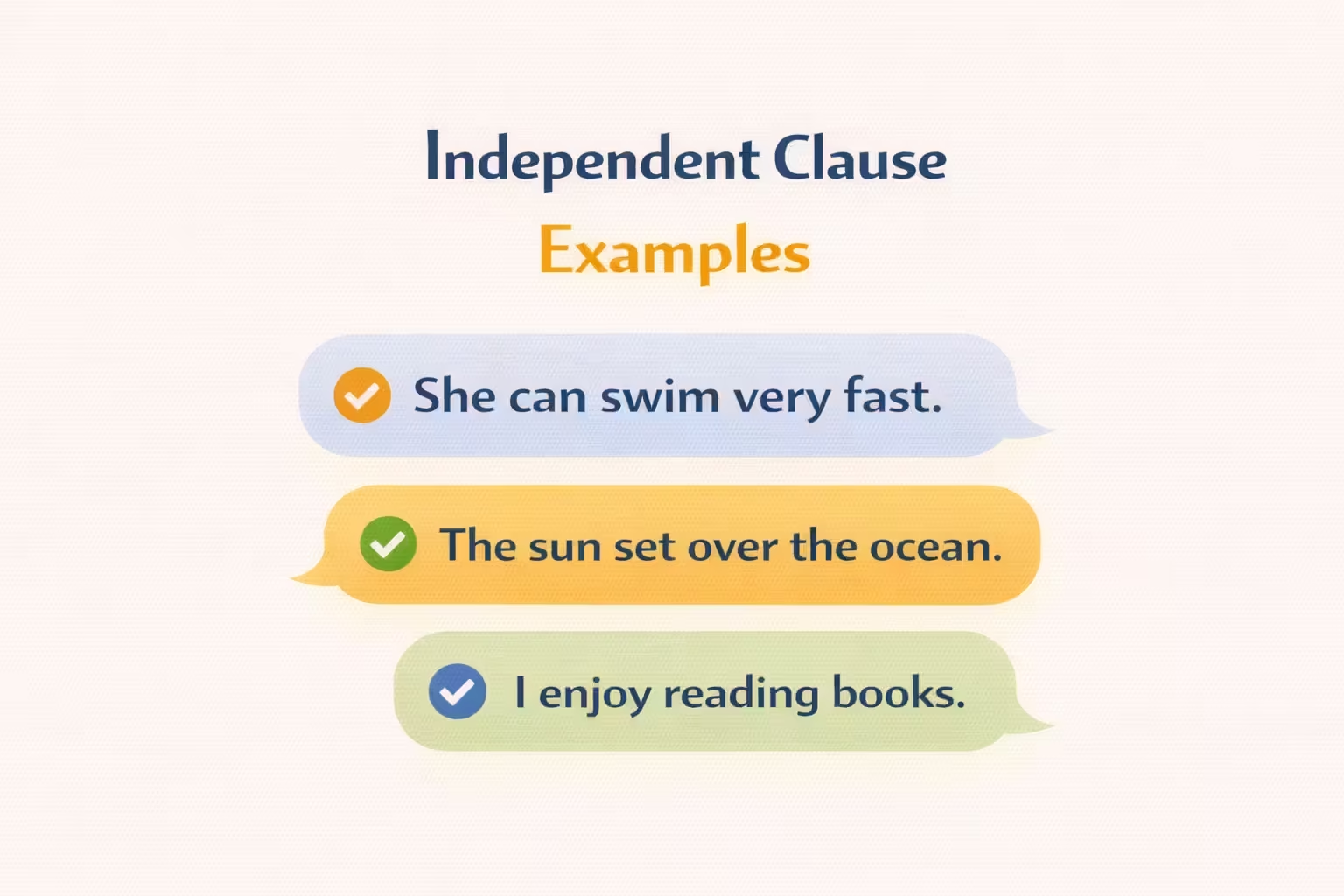
An independent clause is a group of words that contains a subject and a verb and expresses a complete thought. It can stand alone as a sentence because it makes sense by itself.
Think of it this way: if you say something and your listener doesn’t need to ask “and then what?” or “what happened?”—you’ve used an independent clause.
Simple example:
- The dog barked.
This works because we have a subject (the dog), a verb (barked), and a complete idea. We don’t need more information.
Why This Matters
In my classroom, I often meet students who write fragments or run-on sentences. They don’t realize that understanding independent clauses helps them avoid these mistakes. When you recognize what makes a clause independent, you gain control over your writing and speaking.
Teachers, this is especially valuable when working with ESL learners. Many languages structure sentences differently than English. Teaching independent clauses gives your students a solid foundation they can build on.
The Basic Structure
Every independent clause follows this pattern:
Subject + Verb (+ Object/Complement)
The subject tells us who or what. The verb tells us the action or state of being. Sometimes we add an object or complement to complete the meaning.
Let’s look at examples of each part:
Subject only + Verb:
- Birds fly.
- Children play.
- Rain falls.
- Stars shine.
- Babies cry.
Subject + Verb + Object: 6. Sarah reads books. 7. Tom drives cars. 8. We eat breakfast. 9. They watch movies. 10. I love music.
Subject + Verb + Complement: 11. The soup tastes delicious. 12. My sister is a doctor. 13. The flowers smell wonderful. 14. He seems tired. 15. The test was difficult.
Simple Declarative Statements
These are the most common independent clauses. They make statements about facts, opinions, or observations.
- The sun rises in the east.
- Coffee contains caffeine.
- My birthday is in July.
- Elephants are large animals.
- The library opens at nine.
- Winter comes after autumn.
- Chocolate melts in heat.
- The Earth orbits the sun.
- Water boils at 100 degrees Celsius.
- Monday is the first day of the week.
- Cats have sharp claws.
- The concert starts at eight.
- My neighbor owns three dogs.
- The store sells fresh vegetables.
- Traffic moves slowly during rush hour.
- The museum displays ancient artifacts.
- Her voice sounds beautiful.
- The movie lasts two hours.
- Penguins live in cold climates.
- The restaurant serves Italian food.
- My car needs new tires.
- The teacher explains the lesson clearly.
- Books provide knowledge.
- Exercise improves health.
- The clock shows the correct time.
- Roses come in many colors.
- The river flows through the valley.
- My phone battery dies quickly.
- The bakery makes fresh bread daily.
- Children need proper nutrition.
- The airport handles international flights.
- Mountains reach great heights.
- The ocean covers most of Earth.
- My grandmother tells wonderful stories.
- The calculator performs complex operations.
Explore more interesting topics here:
- Best English Conversation Topics for Daily Use
- Learn English Through Media: Fun and Effective Methods
- 150 Basic English Sentences Every Kid Should Learn
- Top 10 Reasons to Learn English and Improve Your Life
- English Conversation at the Coffee Shop
Action-Based Independent Clauses
These clauses focus on actions people or things perform. They’re excellent for describing events and activities.
- Maria runs every morning.
- The chef prepares the meal.
- Students complete their homework.
- The mechanic fixes cars.
- Birds build nests in spring.
- My brother plays guitar.
- The artist paints landscapes.
- Workers construct the new building.
- The dog chases the ball.
- Farmers harvest crops in autumn.
- The wind blows the leaves.
- My mother bakes cookies.
- The team practices every afternoon.
- The rain washes the streets.
- Dancers perform on stage.
- The machine prints documents.
- Children learn through play.
- The gardener trims the hedges.
- Swimmers dive into the pool.
- The scientist conducts experiments.
- Writers create stories.
- The cleaner mops the floor.
- Musicians rehearse before concerts.
- The photographer captures moments.
- Athletes train for competitions.
- The librarian organizes books.
- Volunteers help at the shelter.
- The postman delivers mail.
- Chefs taste their creations.
- The driver parks the car.
- Teachers grade assignments.
- The tailor sews custom clothing.
- Programmers write code.
- The dentist examines teeth.
- Architects design buildings.
- The barber cuts hair.
- Nurses care for patients.
- The pilot flies the plane.
- Researchers analyze data.
- The electrician repairs wiring.
- Carpenters build furniture.
- The plumber fixes leaks.
- Editors review manuscripts.
- The translator converts languages.
- Accountants manage finances.
- The jeweler creates rings.
- Engineers solve problems.
- The florist arranges bouquets.
- Veterinarians treat animals.
- The guide leads tours.
State of Being Clauses
These independent clauses describe conditions, states, or qualities rather than actions.
- The weather is cold today.
- My sister seems happy.
- The room feels stuffy.
- That building looks old.
- The situation appears complicated.
- Your idea sounds interesting.
- The cake smells amazing.
- This fabric feels soft.
- The proposal seems reasonable.
- The painting looks authentic.
- Your explanation sounds clear.
- The water tastes fresh.
- The problem appears simple.
- His excuse sounds weak.
- The atmosphere feels tense.
- That story seems true.
- The solution looks promising.
- Her advice sounds wise.
- The air smells clean.
- The theory appears valid.
- The argument seems logical.
- This chair feels comfortable.
- The evidence looks convincing.
- Your concern seems justified.
- The outcome appears positive.
- The plan sounds feasible.
- The surface feels rough.
- That answer seems correct.
- The situation looks serious.
- Her performance appears flawless.
- The offer sounds generous.
- The texture feels smooth.
- His reaction seems genuine.
- The forecast looks accurate.
- The explanation appears thorough.
- The music sounds peaceful.
- The material feels durable.
- The complaint seems valid.
- The temperature feels perfect.
- The decision appears final.
- The drink tastes bitter.
- The argument sounds persuasive.
- The fabric feels luxurious.
- The response seems appropriate.
- The environment looks clean.
- The suggestion sounds practical.
- The surface feels sticky.
- The reasoning appears sound.
- The atmosphere smells fragrant.
- The conclusion seems inevitable.
Questions as Independent Clauses
Questions can be independent clauses when they express complete thoughts. These are useful for interactive writing and dialogue.
- Where is the nearest hospital?
- Who owns this property?
- What time does the store close?
- Why did the meeting end early?
- How does this machine work?
- When will the results arrive?
- Which option costs less?
- Whose book is this?
- How many people attended?
- What color do you prefer?
- Where did you study?
- Who called yesterday?
- Why is the door locked?
- When does the sale begin?
- How far is the beach?
- Which route is faster?
- What happened at the conference?
- Where should we meet?
- Who teaches that class?
- Why does water freeze?
- When will they return?
- How much does it cost?
- Which book did you choose?
- What causes the problem?
- Where can I park?
- Who wrote this article?
- Why is the sky blue?
- When did she leave?
- How often do you exercise?
- Which restaurant serves lunch?
- What makes you happy?
- Where will the event occur?
- Who manages the department?
- Why does this matter?
- When should I arrive?
- How long will it take?
- Which candidate won?
- What determines success?
- Where did they go?
- Who needs assistance?
- Why does he complain?
- When can we start?
- How old is that building?
- Which method works best?
- What inspired the design?
- Where does she work?
- Who discovered electricity?
- Why should we care?
- When does school start?
- How did you know?
Commands and Imperatives
Commands are independent clauses with an implied subject (you). They’re complete thoughts even though the subject isn’t stated.
- Close the door.
- Read the instructions carefully.
- Please wait here.
- Turn left at the corner.
- Take your medicine.
- Listen to the announcement.
- Follow the guidelines.
- Submit your assignment.
- Watch your step.
- Check your email.
- Sign the document.
- Save your work.
- Call me later.
- Drive safely.
- Study for the exam.
- Clean your room.
- Water the plants.
- Lock the windows.
- Answer the question.
- Finish your meal.
- Wear a helmet.
- Pay attention.
- Hurry up.
- Slow down.
- Speak clearly.
- Think carefully.
- Try again.
- Start now.
- Stop immediately.
- Look both ways.
- Ask for help.
- Share your ideas.
- Respect others.
- Practice daily.
- Stay focused.
- Take notes.
- Review the material.
- Confirm your appointment.
- Update your information.
- Protect your privacy.
- Verify the facts.
- Consider the consequences.
- Choose wisely.
- Plan ahead.
- Learn from mistakes.
- Celebrate your success.
- Trust the process.
- Believe in yourself.
- Keep trying.
- Never give up.
Negative Independent Clauses
These clauses express negation or denial. They’re essential for accurate communication.
- I don’t understand the question.
- She doesn’t like coffee.
- They haven’t finished yet.
- We won’t attend the party.
- He isn’t feeling well.
- The store doesn’t open on Sundays.
- My phone doesn’t work properly.
- They didn’t receive the message.
- I haven’t seen that movie.
- She won’t change her mind.
- The restaurant doesn’t serve breakfast.
- We don’t have enough time.
- He hasn’t replied to my email.
- I can’t find my keys.
- They don’t speak Spanish.
- She doesn’t know the answer.
- The program won’t install correctly.
- We haven’t met before.
- I don’t remember his name.
- The door doesn’t lock properly.
- They didn’t believe the story.
- She hasn’t traveled abroad.
- We won’t arrive on time.
- He doesn’t eat meat.
- I haven’t finished reading.
- The machine doesn’t function anymore.
- They don’t sell that product.
- She won’t compromise.
- We haven’t decided yet.
- I don’t agree with that opinion.
- The event didn’t go as planned.
- He hasn’t recovered fully.
- They don’t accept credit cards.
- She doesn’t enjoy cooking.
- We won’t tolerate rudeness.
- I haven’t heard from them.
- The experiment didn’t succeed.
- He doesn’t trust strangers.
- They haven’t confirmed the date.
- She won’t reveal her secret.
- We don’t need assistance.
- I didn’t notice the mistake.
- The plan doesn’t make sense.
- They haven’t apologized.
- He won’t admit his fault.
- She doesn’t watch television.
- We didn’t expect this result.
- I haven’t explored that option.
- The weather doesn’t look promising.
- They don’t appreciate the effort.
Present Tense Examples
Present tense independent clauses describe current actions, habits, or general truths.
- I work at a hospital.
- The train arrives at noon.
- She teaches mathematics.
- We live in the city.
- The store sells electronics.
- They enjoy hiking.
- He studies every evening.
- The cat sleeps all day.
- I drink tea every morning.
- The sun provides energy.
- She writes in her journal.
- We attend weekly meetings.
- The printer needs ink.
- They travel frequently.
- He collects stamps.
- The baby cries often.
- I prefer the window seat.
- The company produces software.
- She volunteers at the shelter.
- We recycle our waste.
- The clock ticks loudly.
- They celebrate birthdays together.
- He plays tennis professionally.
- The garden attracts butterflies.
- I appreciate your help.
- The museum offers free admission.
- She manages the team effectively.
- We support local businesses.
- The system processes requests quickly.
- They donate to charity.
- He experiments with recipes.
- The river provides drinking water.
- I listen to podcasts.
- The organization promotes equality.
- She advises new employees.
- We conserve energy.
- The festival attracts thousands.
- They monitor progress closely.
- He designs websites.
- The policy protects consumers.
- I recommend this book.
- The sensor detects motion.
- She coordinates events.
- We value honesty.
- The app simplifies tasks.
- They investigate complaints.
- He respects different opinions.
- The program benefits students.
- I understand your concern.
- The device measures temperature.
Past Tense Examples
Past tense independent clauses describe completed actions or past states.
- I visited Paris last year.
- The movie ended at midnight.
- She graduated from university.
- We finished the project yesterday.
- The company expanded globally.
- They moved to a new house.
- He learned to swim.
- The storm damaged many homes.
- I met her at the conference.
- The team won the championship.
- She wrote a bestselling novel.
- We celebrated our anniversary.
- The government passed new laws.
- They discovered a solution.
- He recovered from the illness.
- The restaurant closed permanently.
- I received your package.
- The experiment produced results.
- She changed her career.
- We attended the wedding.
- The volcano erupted suddenly.
- They solved the mystery.
- He apologized sincerely.
- The bridge collapsed during the earthquake.
- I forgot my password.
- The artist displayed her work.
- She achieved her goals.
- We explored the countryside.
- The technology revolutionized communication.
- They rescued the animals.
- He invested wisely.
- The news shocked everyone.
- I recognized her immediately.
- The teacher inspired her students.
- She overcame her fears.
- We witnessed history.
- The fire destroyed the building.
- They negotiated a settlement.
- He created a masterpiece.
- The discovery changed science.
- I completed the course.
- The accident occurred at noon.
- She earned their respect.
- We booked the tickets online.
- The campaign raised awareness.
- They reached an agreement.
- He broke the record.
- The message spread quickly.
- I enjoyed the performance.
- The decision affected everyone.
Future Tense Examples
Future tense independent clauses describe actions or states that will happen.
- I will start tomorrow.
- The conference will begin soon.
- She will graduate next spring.
- We will announce the results.
- The store will close early.
- They will arrive by evening.
- He will present his findings.
- The weather will improve.
- I will call you later.
- The project will require funding.
- She will lead the initiative.
- We will discuss this matter.
- The system will update automatically.
- They will launch the product.
- He will retire next year.
- The concert will feature local artists.
- I will consider your proposal.
- The team will compete internationally.
- She will teach the advanced class.
- We will meet at the office.
- The program will expand services.
- They will investigate thoroughly.
- He will continue his research.
- The event will attract visitors.
- I will finish by Friday.
- The company will hire more staff.
- She will organize the conference.
- We will implement changes.
- The government will review policies.
- They will provide updates regularly.
- He will demonstrate the technique.
- The exhibition will showcase talent.
- I will forward the information.
- The school will offer scholarships.
- She will coordinate the effort.
- We will support this cause.
- The museum will feature new exhibits.
- They will monitor the situation.
- He will evaluate the options.
- The technology will transform industries.
- I will verify the details.
- The festival will celebrate culture.
- She will mentor new members.
- We will adapt to changes.
- The organization will promote awareness.
- They will develop strategies.
- He will contribute his expertise.
- The initiative will benefit communities.
- I will respond promptly.
- The program will address concerns.
Clauses with Modal Verbs
Modal verbs express possibility, ability, permission, or obligation. These add nuance to independent clauses.
- You can park here.
- She might come later.
- They should exercise regularly.
- I could help tomorrow.
- We must leave now.
- He may arrive early.
- You should see a doctor.
- She can speak five languages.
- They might cancel the event.
- I must finish this task.
- We could try another approach.
- He should apologize.
- You may enter now.
- She must work late.
- They can solve this problem.
- I might visit next month.
- We should celebrate.
- He could win the competition.
- You must wear safety gear.
- She may need assistance.
- They should review the document.
- I can understand your perspective.
- We might postpone the meeting.
- He must pay the fine.
- You could achieve great things.
- She should rest more.
- They may request extensions.
- I must remember this lesson.
- We can overcome obstacles.
- He might reconsider his decision.
- You should protect your interests.
- She could become a leader.
- They must respect boundaries.
- I may change my mind.
- We should acknowledge mistakes.
- He can manage difficult situations.
- You might discover new opportunities.
- She must maintain standards.
- They could benefit from training.
- I should prioritize tasks.
- We may encounter challenges.
- He must honor commitments.
- You can trust this process.
- She might prefer alternatives.
- They should communicate clearly.
- I could learn from this experience.
- We must work together.
- He may offer suggestions.
- You should embrace change.
- She can inspire others.
Complex Subject Independent Clauses
These clauses have more detailed or compound subjects but remain independent.
- My youngest brother lives abroad.
- The talented musician performs weekly.
- All the students passed the test.
- Her entire family attended the reunion.
- Both candidates debated last night.
- Every participant received a certificate.
- The old wooden bridge needs repairs.
- Several employees requested leave.
- My best friend started a business.
- The head of the department resigned.
- Many visitors enjoyed the exhibition.
- The original manuscript disappeared mysteriously.
- Each team member contributed ideas.
- The local community supported the initiative.
- Some researchers questioned the findings.
- The ancient temple attracts pilgrims.
- Most voters supported the measure.
- The senior management approved the budget.
- Few people understood the complexity.
- The entire neighborhood lost power.
- Several witnesses testified in court.
- My former colleague sent greetings.
- The youngest participant won the prize.
- All the evidence pointed to innocence.
- The experienced guide led the expedition.
- Many cultures celebrate similar traditions.
- The final decision rests with the board.
- Some students struggle with mathematics.
- The new policy affects everyone.
- Most experts agree on this point.
- The historical documents revealed secrets.
- Every citizen deserves respect.
- The talented chef opened a restaurant.
- Several countries signed the agreement.
- My older sister works in finance.
- The entire process requires patience.
- Both options have advantages.
- The beautiful garden blooms year-round.
- Many organizations promote sustainability.
- The leading researcher published findings.
- All the details matter.
- The successful entrepreneur shared insights.
- Few opportunities compare to this.
- The dedicated teacher changed lives.
- Several factors influence the outcome.
- The local hospital expanded services.
- Many generations passed down traditions.
- The creative team developed concepts.
- Each decision carries consequences.
- The entire experience taught valuable lessons.
How Teachers Can Use These Examples
From my experience in classrooms, I recommend introducing independent clauses gradually. Start with simple subject-verb combinations, then add objects and complements. Let your students practice identifying subjects and verbs first—this builds confidence.
Practical Teaching Tips:
Create sorting activities where students categorize clauses by type. This hands-on approach works better than worksheets alone. I’ve seen reluctant learners engage when they can physically move cards or use digital sorting tools.
Use real-world examples from newspapers, advertisements, or social media posts. Students connect better when they see how grammar applies to everyday communication.
For ESL learners, visual aids help tremendously. Draw simple diagrams showing subject-verb relationships. Use different colors for different sentence parts. Many of my students who struggled with abstract explanations understood immediately when concepts became visual.
Common Challenges and Solutions
Challenge: Students write sentence fragments instead of independent clauses.
Solution: Teach the “complete thought” test. If you can say it and someone understands without asking questions, it’s complete. Practice with oral exercises before written work.
Challenge: Confusing independent and dependent clauses.
Solution: Show that independent clauses can stand alone, while dependent clauses cannot. Use the words “independent means free” as a memory aid.
Challenge: Overcomplicating simple concepts.
Solution: Return to basics. Sometimes we teachers explain too much. Keep it simple: subject + verb + complete thought = independent clause.
Why This Foundation Matters
Understanding independent clauses prepares students for more complex grammar. Once they master this concept, they can:
- Build compound sentences by joining independent clauses
- Create complex sentences by adding dependent clauses
- Vary sentence structure in their writing
- Avoid common grammar mistakes
- Express themselves more clearly
I’ve watched students transform their writing after mastering this concept. Their sentences become clearer, their ideas flow better, and their confidence grows.
Final Thoughts for Learners
If you’re learning English, don’t feel overwhelmed by these 550+ examples. You already use independent clauses when you speak—you just might not have known the term. This guide simply names what you’ve been doing naturally.
Start by recognizing independent clauses in your daily reading. Notice them in conversations. Practice creating simple ones before attempting complex variations. Progress takes time, and that’s perfectly normal.
For parents helping children, remember that grammar doesn’t need to feel like punishment. Make it a game. Can your child identify five independent clauses during dinner conversation? Can they create three original examples about their favorite hobby?
Independent clauses are the foundation of English communication. Master them, and everything else becomes easier. Whether you’re teaching, learning, or simply refreshing your knowledge, these examples provide a practical reference you can return to again and again.
Keep practicing, stay patient with yourself or your students, and remember that every expert was once a beginner. The journey to English mastery starts with understanding these basic building blocks—and now you have over 550 examples to guide your way.