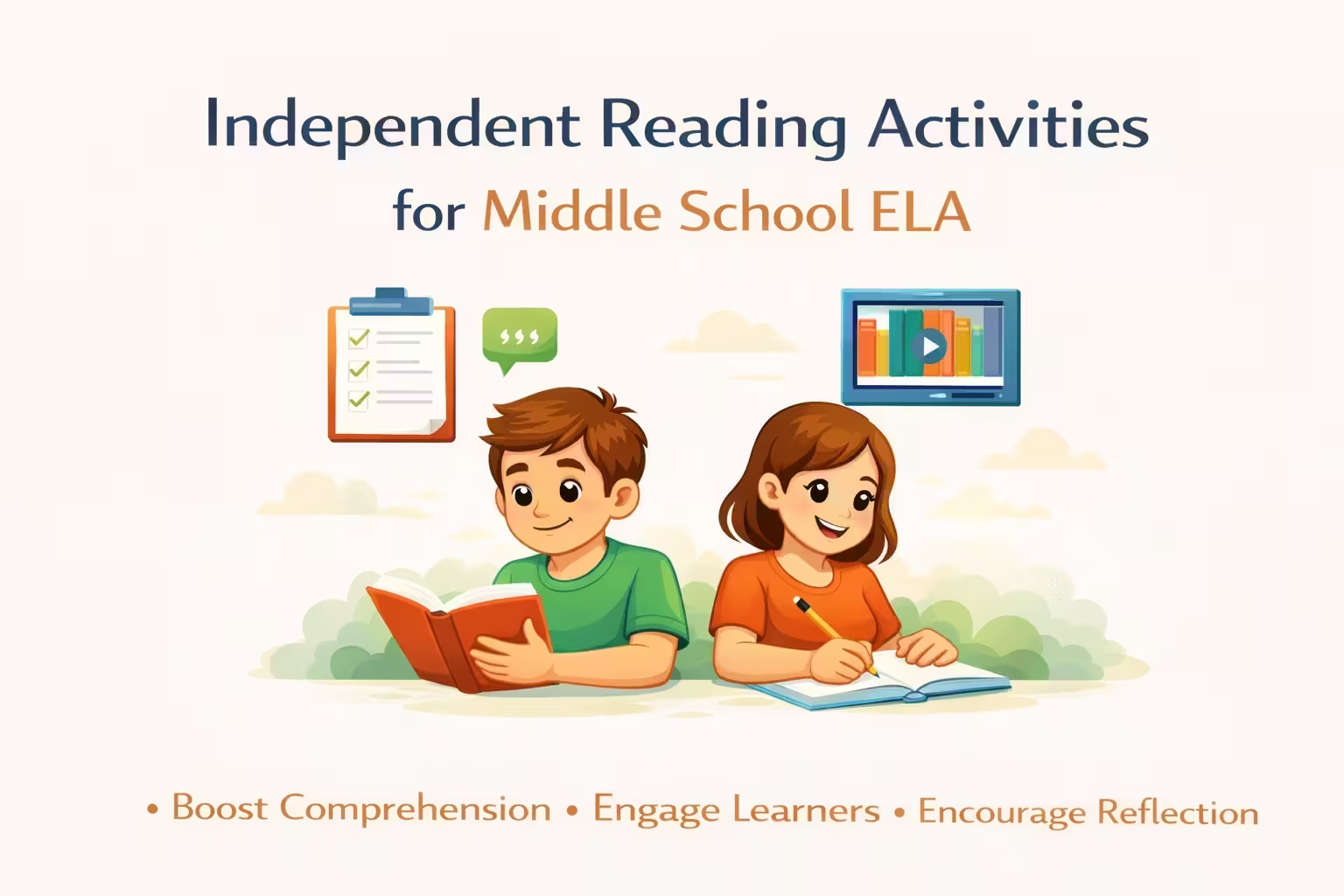
As a middle school English teacher for over a decade, I’ve watched countless students transform from reluctant readers into book lovers. The secret? Making independent reading activities for middle school ELA engaging, choice-driven, and meaningful. When students read independently with purpose, they build vocabulary, improve comprehension, and develop critical thinking skills that last a lifetime.
In this guide, I’ll share proven independent reading strategies that work in real classrooms—both online and offline. These aren’t complicated lesson plans requiring hours of prep. They’re practical, student-centered activities that middle school English Language Arts teachers can implement tomorrow.
Why Independent Reading Matters in Middle School ELA
Middle school is a critical time for reading development. Students transition from “learning to read” to “reading to learn.” Unfortunately, this is also when many students lose interest in reading altogether.
I remember Marcus, a seventh-grader who told me on the first day of school, “I hate reading.” Six months later, he was recommending graphic novels to his classmates. What changed? He discovered reading activities that gave him choice, voice, and purpose.
Independent reading activities help students:
- Build reading stamina and fluency
- Explore personal interests through books
- Practice comprehension strategies independently
- Develop a lifelong reading habit
- Improve writing skills through exposure to different styles
The key is making independent reading feel less like work and more like discovery.
Setting Up a Successful Independent Reading Program
Before diving into specific activities, let’s talk about the foundation. A strong independent reading program needs three elements: choice, time, and accountability.
Give Students Real Choice
In my first year teaching, I assigned the same novel to everyone. Big mistake. Half my class struggled with the reading level. The other half finished in two days and sat bored.
Now I use a classroom library with diverse reading levels and genres. Students choose books that genuinely interest them—fantasy, sports biographies, graphic novels, realistic fiction, even magazines. When students pick their own books, engagement skyrockets.
Stock your classroom with:
- High-interest, low-level books for struggling readers
- Diverse characters and authors
- Multiple formats (graphic novels, audiobooks, short stories)
- Books reflecting student interests (sports, gaming, music, social issues)
Protect Independent Reading Time
Consistency matters. I dedicate 15-20 minutes every class period to silent sustained reading. Students know this time is sacred. No interruptions. No assignments. Just reading.
At first, some students resisted. They’d forgotten how to just read for pleasure. After two weeks, most students settled in. By month two, they complained when we had to skip reading time for assemblies.
Create Gentle Accountability
Students need accountability without pressure. I don’t quiz them on every book or require detailed reports. Instead, I use low-stakes check-ins that keep students honest without killing their love of reading.
Engaging Independent Reading Activities for Middle School Students
Now let’s explore specific middle school reading activities that work. I’ve tested all of these in real classrooms with real middle schoolers.
1. Reading Response Journals
Reading journals are simple but powerful. Students write brief responses after reading—just 5-10 minutes of reflection.
How it works in my classroom:
Students keep a dedicated notebook. After independent reading time, they choose one prompt:
- What surprised you today?
- Make a prediction about what happens next
- Connect something from your book to your own life
- Describe a character’s choice—would you make the same decision?
- What questions do you have?
I don’t grade these journals for correctness. I check that students are writing thoughtfully and engaging with their books. Every few weeks, I write personal responses in their journals. Students love getting “letters” from their teacher about their books.
Why this works: Writing helps students process what they read. It also gives you insight into their comprehension without formal assessments.
2. Book Talks and Recommendations
Nothing sells a book like enthusiasm from a peer. Monthly book talks turn students into reading ambassadors.
The setup:
Students prepare a 2-3 minute informal talk about a book they loved (or hated—honest reviews are valuable too). They share:
- Quick plot summary (no spoilers!)
- Favorite character or scene
- Who would enjoy this book
- Rating out of 5 stars
I model this first, talking about a book I recently read with genuine enthusiasm. Students see that reading isn’t just a school thing—real people read and talk about books.
Student benefit: Practicing spoken English in a low-pressure setting. They’re talking about something they know well (their own reading experience), which builds confidence. Plus, these book talks create a classroom reading community.
3. Genre Exploration Challenges
Many middle schoolers stick to one genre—usually fantasy or realistic fiction. Genre challenges gently push students outside their comfort zones.
My quarterly challenge:
Students must read at least one book from four different genres:
- Fiction (realistic, historical, or science fiction)
- Nonfiction (biography, memoir, or informational)
- Poetry or drama
- Student’s choice
I create a tracking sheet where students log their books. When they complete the challenge, they earn small rewards (bookmark, extra credit points, or choosing our next read-aloud).
Real classroom moment: Emma only read realistic fiction about friendship drama. For the challenge, she reluctantly tried a graphic novel memoir. It became her favorite book of the year and opened her up to an entire new format.
4. Character Analysis Through Creative Projects
Instead of traditional book reports, let students explore characters creatively.
Project options:
- Create a social media profile for a character (Instagram-style with posts, comments, and photos)
- Write a diary entry from the character’s perspective
- Design a character playlist explaining why each song fits
- Draw a character map showing relationships and conflicts
- Write a “where are they now” update set 10 years after the book ends
Students choose their project based on their strengths. Visual learners create artwork. Writers craft diary entries. Music lovers build playlists.
Teaching tip: Provide clear rubrics focusing on character understanding, not art skills. A stick-figure drawing with thoughtful explanations scores higher than a beautiful poster with shallow analysis.
5. Reading Partnerships and Book Clubs
Reading doesn’t have to be solitary. Small book clubs bring independent reading into a social context.
How I organize book clubs:
Four students choose the same book (or books on similar themes). They meet weekly for 10-15 minutes to discuss set chapters. I provide discussion question cards:
- How did the setting affect the character’s choices?
- What’s the main conflict in these chapters?
- What would you do in this situation?
- Make a prediction and explain your reasoning
I rotate between groups, listening and occasionally joining conversations. The goal isn’t perfect literary analysis—it’s genuine discussion about books.
Online adaptation: This works beautifully in virtual classrooms using breakout rooms. Students video chat about their books while I pop in and out of rooms.
6. Reading Goals and Progress Tracking
Middle school students respond well to visible progress. Reading trackers help them see growth.
Simple tracking methods:
Students set personal reading goals—number of books, pages, or minutes. They track progress on:
- A paper bookmark listing books completed
- A digital reading log in Google Sheets
- A classroom reading chart showing anonymous progress (privacy matters!)
Every month, we celebrate milestones. Students who meet their goals share what worked. Students who struggled problem-solve barriers—not enough time, books were too hard, distractions at home.
Honest teacher moment: Some students won’t meet goals. That’s okay. The conversation about WHY is valuable. Maybe they’re reading slowly because they’re really thinking deeply. Maybe they need audiobooks to supplement. Adjust and try again.
7. Vocabulary Collection and Word Walls
Strong readers encounter new words constantly. Help students notice and own new vocabulary.
My vocabulary system:
Students keep a “words worth knowing” section in their reading journals. When they find interesting words, they record:
- The word
- The sentence from the book
- Their guess at the meaning (context clues practice!)
- The actual definition
Once a week, students share favorite words. We add them to our classroom word wall. Students love finding obscure words that stump their classmates.
Why this matters for ELA: Vocabulary grows through reading exposure, not just memorizing lists. When students find words in real books they care about, those words stick.
Explore more interesting topics here:
- 5 Whys Approach in Education (Teaching Guide)
- Teaching Speaking Skills: Activities to Boost Fluency
- The Basics of English Teaching
- Top 5 Innovative ELT Teaching Methods
- ESOL Jobs: Teaching English to Speakers of Other Languages
8. Thematic Reading Connections
Help students see that books talk to each other. Thematic connections deepen reading comprehension.
Monthly themes in action:
Choose broad themes: courage, identity, justice, belonging, change. Students select independent reading books connecting to the theme. They annotate or journal about how their book explores the theme.
At month’s end, we hold a “theme share” discussion. Students who read completely different books—a sports biography, a fantasy novel, a realistic fiction story—discover surprising connections.
Example from my classroom: During our “identity” month, one student read a book about a biracial teen, another read about a soccer player finding his place on a new team, and another read a fantasy about a shapeshifter. All three explored who you are when others try to define you.
9. Author Studies and Book Series
Once students find an author or series they love, encourage them to dive deep.
Author study activities:
- Read multiple books by the same author and compare themes, characters, or writing styles
- Research the author’s life and make connections to their writing
- Write a letter to the author (some actually write back!)
- Create an author profile poster for the classroom
Series reading builds stamina. Students motivated to find out what happens next will push through challenging sections.
10. Reading and Listening Combined
Audiobooks aren’t cheating—they’re another way to access stories. For struggling readers, English language learners, or students with reading disabilities, audiobooks are essential.
Audiobook strategies:
Students can listen to audiobooks while following along in the physical book. This supports:
- Fluency development through modeling
- Pronunciation of unfamiliar words
- Comprehension through multiple input channels
I have several students who listen at slightly increased speed (1.25x) to stay focused. Others listen during sports practice or while drawing. Reading is reading, regardless of format.
Supporting Struggling Readers in Independent Reading
Not every student arrives at middle school reading at grade level. That’s reality. Here’s how to support them without lowering expectations.
High-Interest, Accessible Texts
Stock books with engaging plots and accessible language. Publishers now offer “hi-lo” books—high interest, low reading level. These look age-appropriate but use simpler vocabulary and sentence structures.
Graphic novels are incredible for reluctant readers. The pictures support comprehension. The manageable text chunks feel less overwhelming. Students who struggle with novels often thrive with graphic formats.
Conferencing and Check-Ins
I meet individually with struggling readers every two weeks. These 5-minute conferences help me:
- Ensure they’re in books at the right level (not too hard, not too easy)
- Ask comprehension questions to gauge understanding
- Celebrate progress and problem-solve challenges
- Build relationships
Students open up during conferences. They’ll admit they don’t understand something or that the book is too hard. They’re less likely to admit this in front of peers.
Reading Partners and Support
Pair struggling readers with stronger readers for occasional partner reading. The struggling reader reads aloud for fluency practice. The partner helps with unknown words and checks comprehension.
This isn’t about strong students tutoring weak ones. It’s about collaborative reading. I structure activities so both students benefit—the partner practices listening skills and asking questions.
Adapting Independent Reading for Online Learning
Online teaching presents unique challenges for independent reading activities for middle school ELA. Here’s what works in virtual classrooms.
Virtual Reading Communities
Use discussion boards or class forums for asynchronous book discussions. Students post about their reading throughout the week. Others respond with questions or comments.
Platforms like Padlet or Flipgrid let students record short video book talks. The visual component helps maintain engagement. Students also practice spoken English—important for ESL learners who need speaking practice.
Digital Reading Logs
Google Forms or shared spreadsheets work perfectly for tracking reading. Students log:
- Date
- Pages or chapters read
- Brief summary or reaction
I can see logs in real-time and leave comments. Parents can view their child’s progress too.
Accountability Without Surveillance
Some teachers worry students won’t actually read at home. Here’s my philosophy: trust students, but verify gently.
I don’t require cameras on during silent reading time in Zoom. That feels invasive. Instead, I use quick comprehension checks—not to catch cheaters, but to support learning. A student who can’t summarize their reading needs help, not punishment.
Creating a Reading Culture in Your Classroom
Individual activities matter, but culture matters more. Here’s how to build a classroom where reading is valued.
Model Your Own Reading
I always read during independent reading time. Students see me with a book, completely absorbed. I share what I’m reading. I admit when books disappoint me. I talk about giving books 50 pages before deciding to quit.
When students see reading as something adults do for pleasure, not just something teachers assign, it shifts their perception.
Celebrate Reading Publicly
Create space to celebrate reading:
- Display book covers students are reading on a bulletin board
- Share exciting plot points during announcements (no spoilers!)
- Invite students to recommend books to the class
- Take photos of students with favorite books
Make reading visible and valued.
No Shame, Only Support
Some students arrive at middle school reading below grade level. Others hate reading because past experiences were negative. Never shame students about their reading level or preferences.
Instead, celebrate growth. A student who read two books this semester when they read zero last semester deserves recognition. A student who finished a graphic novel series just proved they can stick with a story arc—that’s progress.
Assessing Independent Reading Without Killing Joy
Assessment is necessary but tricky. Grade too heavily, and reading becomes work. Grade too lightly, and some students won’t engage.
Portfolio-Based Assessment
Students compile a reading portfolio each semester:
- Reading log showing books completed
- 3-5 reading journal entries showing thoughtful reflection
- One creative project demonstrating deep understanding of a book
- Self-reflection on growth as a reader
I grade the portfolio holistically. Did the student read consistently? Do entries show engagement and thinking? Has the student grown?
Focus on Process, Not Perfection
I care more about effort and growth than perfect literary analysis. A student who struggled through two books with determination gets a higher grade than a strong reader who coasted through five books with minimal engagement.
Student Self-Assessment
Middle schoolers can evaluate their own reading habits. Quarterly self-assessment questions:
- How many books did you complete? Are you satisfied with this number?
- What reading goals did you set? Did you meet them?
- What challenges did you face as a reader?
- What strategies helped you succeed?
- What will you do differently next quarter?
This metacognition helps students own their reading development.
Conclusion: Building Lifelong Readers Through Independent Reading
Independent reading activities for middle school ELA work when they’re student-centered, choice-driven, and authentic. You don’t need fancy programs or expensive resources. You need time, books, and genuine belief that every student can become a reader.
After years of teaching middle school reading strategies, I’ve learned this: students rise to our expectations. When we protect reading time, provide choice, and create accountability without pressure, students read. When we build a classroom culture where reading matters, students become readers.
Start small. Choose two or three activities from this list. Protect 15 minutes of class time for independent reading. Stock your classroom library. Have conversations about books. Celebrate progress.
Marcus, my former “I hate reading” student, recently messaged me from high school. He wanted to recommend a book series. He’s still reading. That’s the goal—not perfect comprehension scores or grade-level achievement—but students who choose to read, in school and beyond.
That’s what effective independent reading activities for middle school accomplish. They build readers for life.