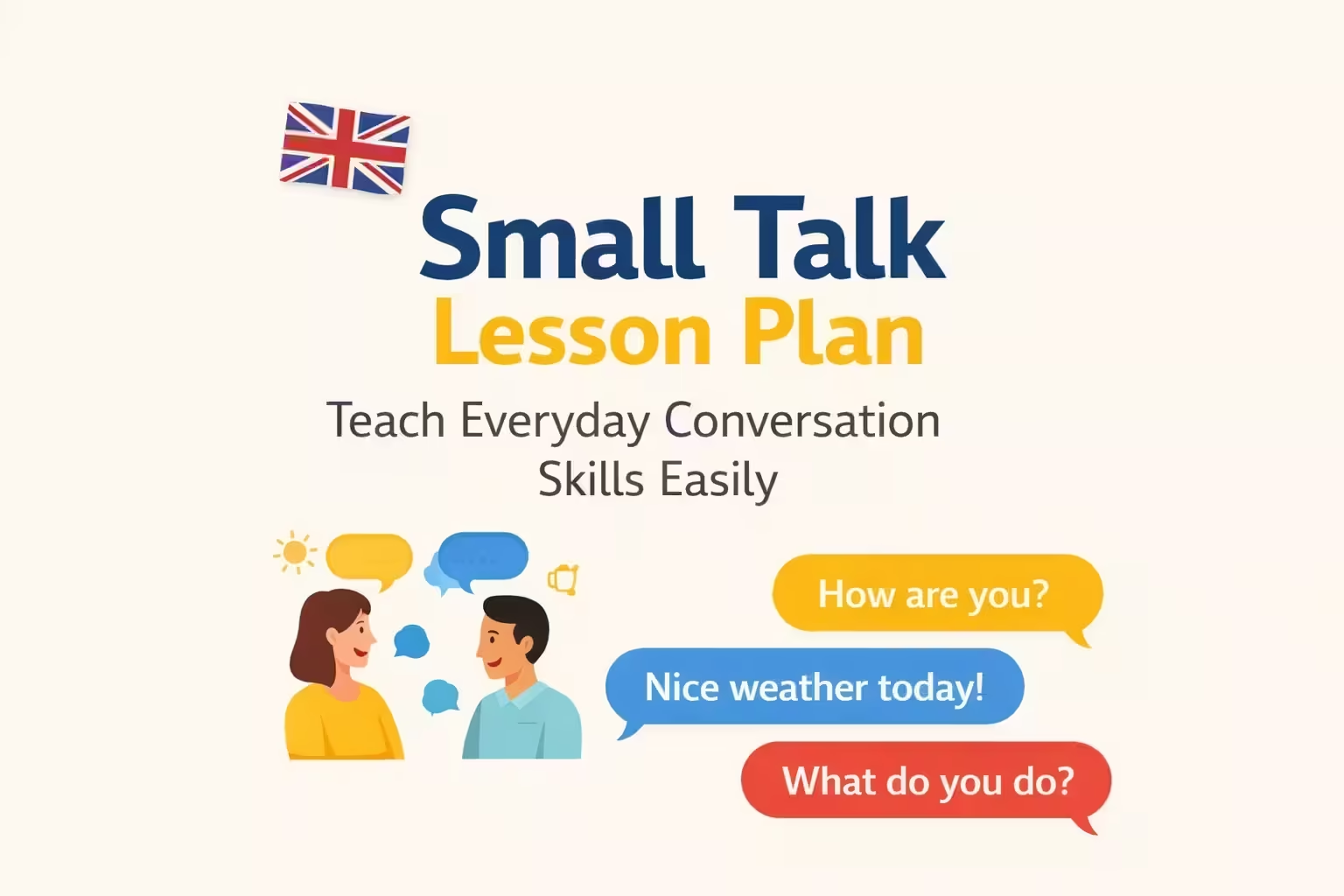
Have you ever watched a student freeze up the moment someone says, “So, how was your weekend?” It happens all the time. They know grammar. They’ve studied vocabulary. But when it comes to real, natural conversation, they go blank. That’s exactly why a well-designed small talk lesson plan can be one of the most valuable things you teach.
Small talk is the glue of social interaction. It opens doors, builds relationships, and makes people feel comfortable. For ESL learners, students preparing for job interviews, or anyone looking to improve their spoken English, learning small talk is not optional — it’s essential.
In this guide, I’ll walk you through a complete, ready-to-use small talk lesson plan that works in real classrooms, online sessions, and self-study. After 10+ years of teaching spoken English, I’ve seen what works and what doesn’t. This lesson plan is built on those real experiences.
What Is Small Talk and Why Does It Matter?
Small talk is light, friendly conversation about everyday topics. It’s not deep or serious. It’s the kind of talk you have while waiting for the elevator, during the first five minutes of a meeting, or when you bump into a neighbor.
Topics usually include the weather, weekend plans, work or school, sports, food, and local events. These conversations are short, easy, and meant to be comfortable — not stressful.
Why do learners struggle with it?
Many students think small talk is simple. And in theory, it is. But in practice, it requires quick thinking, natural vocabulary, cultural awareness, and confidence. Most language courses focus on grammar and writing. Small talk gets ignored. That’s a big problem because it’s often the first thing people judge you on.
In my classes, I’ve met students with near-perfect grammar who couldn’t hold a 30-second casual conversation. That’s what made me start building structured small talk lessons.
Learning Objectives for a Small Talk Lesson Plan
Before you teach anything, you need clear goals. Here’s what a good small talk lesson should help students do:
- Start a conversation with a stranger or acquaintance
- Use common small talk phrases naturally
- Ask follow-up questions to keep the conversation going
- Respond to questions without sounding scripted
- End a conversation politely and comfortably
These objectives apply whether you’re teaching teenagers, adults, ESL beginners, or professionals preparing for the workplace.
Step-by-Step Small Talk Lesson Plan
Step 1: Warm-Up Activity (10 Minutes)
Start with something fun and low-pressure. The goal is to get students talking without feeling like they’re being tested.
Try this: Ask students to write down three things they did last week. Then pair them up and give them two minutes to share their list with their partner — but only using questions. One person asks, the other answers.
This simple activity does two things. It warms up their speaking muscles and reminds them that conversation is a two-way street. Questions drive small talk forward.
Teacher tip: Walk around and listen. Don’t correct in the moment. Just observe. You’ll learn a lot about where your students struggle, and you can address those issues later in the lesson.
Step 2: Introduce Common Small Talk Topics and Phrases (15 Minutes)
Now it’s time to give students the language tools they need. Write these core topics on the board and give example phrases for each.
Weather:
- “It’s been so hot lately, hasn’t it?”
- “I heard it’s going to rain all week.”
Weekend plans or activities:
- “Did you do anything fun this weekend?”
- “I finally tried that new restaurant downtown.”
Work or school:
- “How’s work been keeping you?”
- “Are you enjoying your course so far?”
General check-in:
- “How are things going?”
- “You look well! Been up to anything interesting?”
Focus on natural phrasing. Avoid overly formal sentences that no native speaker would actually say. One of the most common mistakes I see in textbooks is teaching phrases like “I am doing quite well, thank you” when real speakers say “Pretty good, thanks!”
Activity: Give students a handout with ten small talk starters. Ask them to mark which ones sound natural and which ones sound too formal. Discuss as a class. This builds awareness of real spoken English.
Explore more interesting topics here:
- In-Person vs Online English Courses: Which Is Best?
- How to Answer “What Is Your Dream Job?” A Comprehensive Guide
- How to Grade Essays Faster Without Losing Quality
- 40 Ways to Describe Breathing in Creative Writing
- 8 Tips for Professional Email Etiquette in the Workplace
Step 3: Model a Full Small Talk Conversation (10 Minutes)
Students need to hear what good small talk sounds like before they practice it themselves.
Act out a short conversation with a student volunteer, a co-teacher, or even use an audio or video clip. Aim for something 60 to 90 seconds long. Here’s a simple example you can use in class:
Alex and Sam meet in the office kitchen.
Alex: “Hey Sam, how’s it going?”
Sam: “Pretty good, thanks! Busy week though. You?”
Alex: “Same here. Did you watch the game last night?”
Sam: “I missed it! Who won?”
Alex: “It was close, but City took it in the last five minutes.”
Sam: “Nice! Anyway, I should get back. Good chatting!”
Alex: “You too. Have a good one!”
After the roleplay, ask the class: What topics came up? How did they start the conversation? How did they end it? How long did it last?
This analysis step is important. It helps students see the structure of small talk even when it sounds effortless.
Step 4: Teach the Three-Part Formula for Small Talk (10 Minutes)
This is a technique I’ve used with hundreds of students, and it works every time. Small talk almost always follows a simple three-part structure:
1. Open — Start with a greeting or question
2. Connect — Ask a follow-up question or share something brief
3. Close — End the exchange politely
When students feel lost in conversation, it’s usually because they don’t know where they are in this structure. Teaching it explicitly gives them a mental map to follow.
Write the formula on the board and go back to the model conversation from Step 3. Show students where each part begins and ends. Then ask them to identify the three parts in a new example.
Step 5: Guided Pair Practice (15 Minutes)
Now students practice with a partner using scenario cards. Prepare simple situation cards in advance. Each card describes a context.
Examples:
- You’re at a friend’s birthday party and meet someone you don’t know.
- You run into a classmate before a lecture.
- You’re in line at a coffee shop and the person next to you mentions the wait.
- You’re at a work networking event and introduce yourself to a colleague.
Students take turns starting and responding. The conversation should last at least 60 seconds. Remind them to use the three-part formula and the phrases from Step 2.
Teacher tip: Set a timer. When students know they need to talk for 60 seconds, they push through the awkward silences instead of giving up. That pushing-through is where real fluency development happens.
Step 6: Common Mistakes and How to Fix Them (10 Minutes)
This is one of the most valuable parts of any lesson. Here are the mistakes I see most often — and what to do about them.
Mistake 1: Giving one-word answers Student: “Did you have a good weekend?” Learner: “Yes.”
Fix it by teaching the expand and return technique. Answer, add one detail, then ask a question back.
Better answer: “Yes, I went hiking on Saturday. It was great! Do you like hiking?”
Mistake 2: Using overly formal language Phrases like “I would like to inquire about your weekend activities” are correct but unnatural. Encourage students to listen to real conversations and notice how informal they are.
Mistake 3: Running out of things to say This usually happens when students focus too hard on themselves. Teach them that the secret to good small talk is being curious about the other person. More questions, less monologue.
Mistake 4: Ending the conversation awkwardly Silence, then walking away is a common exit strategy. Teach polite closing phrases: “Anyway, I won’t keep you,” “It was nice catching up,” “Let’s chat more later.”
Step 7: Solo Confidence Practice (Optional, 5–10 Minutes)
For students who feel nervous about speaking in front of others, solo practice is a game changer. Ask students to record a 60-second voice memo on their phone where they practice a small talk scenario alone — as if they’re talking to someone.
This helps with pronunciation, fluency, and confidence. In online classes, you can ask students to submit a short voice note as homework. It also gives you great material for individual feedback.
How to Adapt This Lesson Plan for Different Learners
For beginners: Focus only on two or three phrases per topic. Keep conversations very short. Use visuals and translations if needed.
For intermediate learners: Add more complex follow-up questions. Introduce small talk in professional settings like job interviews and workplace scenarios.
For advanced learners: Focus on tone, humor, and cultural nuance. Discuss why certain topics are safe in some cultures but awkward in others. Talk about the role of small talk in networking and career growth.
For online classes: Use breakout rooms for pair practice. Use the chat box for students to type phrases before saying them out loud. Record roleplay examples for students to review.
Practice Activities You Can Use Again and Again
Great lessons give students tools they can keep using. Here are a few activities that work well as homework or ongoing classroom tasks.
Small Talk Journal: Each day, students write down one small talk conversation they had or overheard. What was the topic? What phrases were used? How did it end?
Conversation Starters Card Deck: Create or print a set of cards with small talk openers. Students draw a card and must respond naturally. This is great for warming up class sessions.
Real-World Challenge: Ask students to start one small talk conversation with a native speaker or fluent English speaker each week. They report back to the class on what happened.
Listen and Repeat: Give students short audio clips of casual conversations. They listen, identify small talk phrases, and practice saying them with the same tone and rhythm.
Why Confidence Matters More Than Perfection
After all these years teaching, the biggest barrier I’ve seen isn’t grammar or vocabulary. It’s fear. Students are afraid of saying something wrong, sounding stupid, or not understanding the response.
Here’s the honest truth: people don’t expect you to be perfect. They expect you to be friendly. A warm smile, a genuine question, and a little patience go further than perfect grammar ever will.
I always tell my students: “Small talk is not a test. It’s a gift you give someone.” When you show interest in another person, they almost always respond positively — even if your English isn’t perfect.
Set realistic expectations with your students. Progress takes time. The goal is consistent, comfortable conversation, not flawless performance.
Conclusion: Your Small Talk Lesson Plan in Action
A strong small talk lesson plan gives students more than vocabulary and phrases. It gives them confidence, structure, and real-world skills they can use immediately.
To recap, an effective lesson includes a warm-up, clear phrases and topics, a conversation model, the three-part formula, guided practice, and an honest look at common mistakes. Adapt it for your learners, keep the atmosphere relaxed, and remind students that the point is connection — not perfection.
Whether you’re a teacher building a unit on conversational English, a student practicing on your own, or a job seeker preparing for professional networking, this lesson plan will help you have better, more natural conversations.
Start small. Practice often. And remember — every great conversation begins with a simple “Hey, how’s it going?”
FAQs About Small Talk Lessons
Q: How long should a small talk lesson be?
A single focused lesson can be done in 45 to 60 minutes. But small talk is best reinforced over time, so returning to it regularly in shorter warm-up activities works very well.
Q: What are the best topics for small talk in English?
The safest and most common topics are weather, weekend activities, local events, food, work or school, and travel. Avoid controversial topics like politics or religion in casual conversations.
Q: How do I help shy students practice small talk?
Pair work and low-stakes games help. You can also use solo recording tasks so shy students practice without an audience before moving to group practice.
Q: Can small talk skills help with job interviews?
Absolutely. Most interviews begin with two to three minutes of casual conversation before the formal questions start. Being comfortable with small talk makes a strong first impression.
Q: How often should students practice small talk?
Even five minutes of practice per day makes a big difference over time. Consistency matters more than long sessions. Short daily practice beats one long weekly session every time.