I’ve been teaching English communication skills for years, and one question makes even confident speakers suddenly freeze: “What is your dream job?”
Whether you’re sitting in a job interview, chatting at a networking event, or answering a common conversation question in English class, this seemingly simple question can feel surprisingly difficult to answer well.
Here’s why students and professionals struggle with this question:
- They worry their answer sounds unrealistic or silly
- They’re not sure how honest to be
- They don’t know how much detail to share
- They freeze when trying to translate their thoughts into clear English
The good news?
With the right approach and some practice, you can answer this question confidently and naturally.
In this guide, I’ll share practical strategies I’ve taught in real classrooms that help people at all English levels give strong, authentic answers.
Why This Question Is Asked
Before we learn how to answer, let’s understand why people ask this question.
In job interviews, employers want to know:
- What motivates you
- Whether you’re ambitious and goal-oriented
- If this job fits your career path
- How long you might stay with the company
In casual conversations, people ask because:
- It’s an interesting way to get to know someone
- It reveals your passions and values
- It’s more meaningful than small talk about weather
Understanding the purpose helps you shape your answer appropriately.
The Basic Formula for a Good Answer
After teaching hundreds of students, I’ve found this simple structure works best:
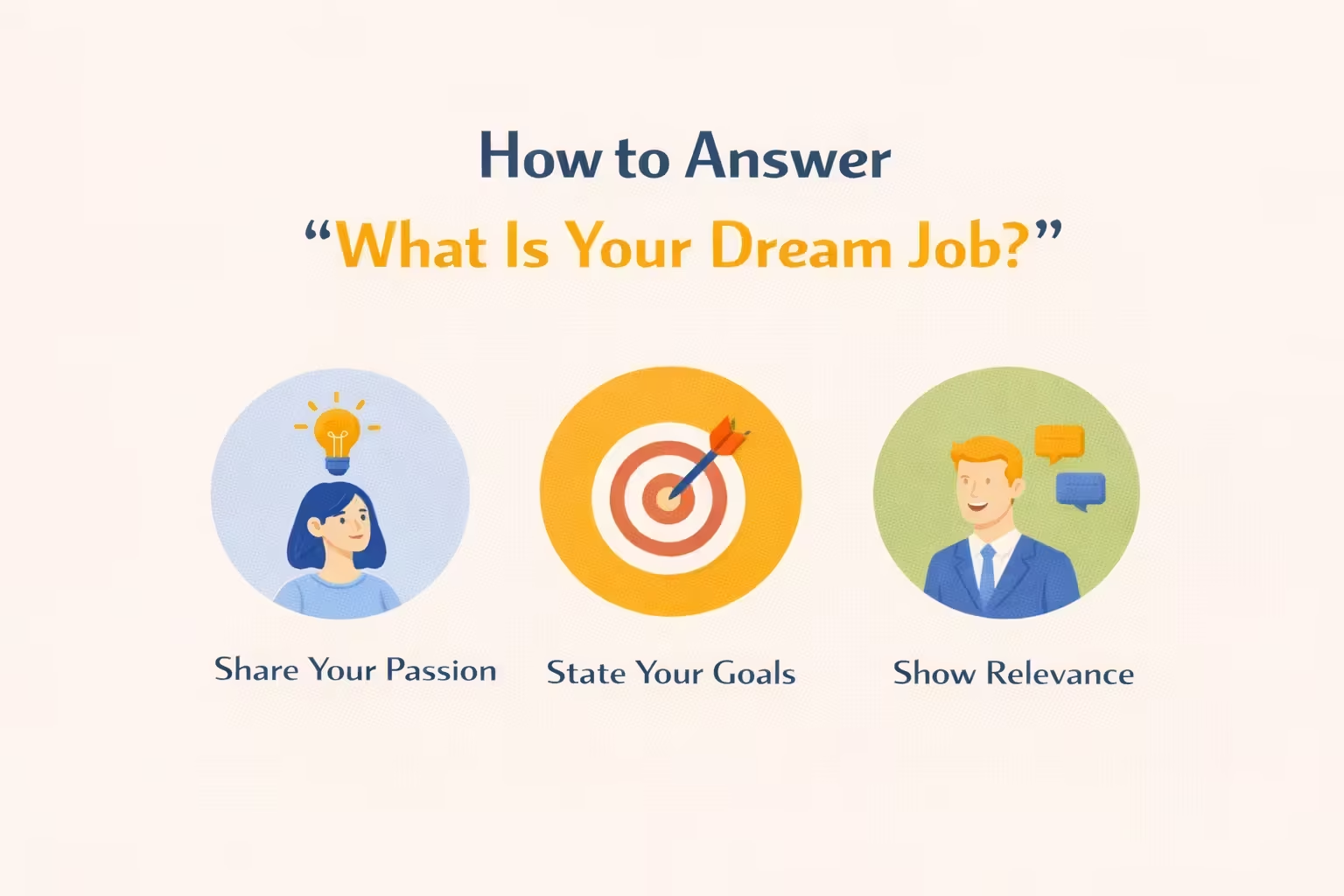
1. State your dream job clearly 2. Explain why it appeals to you 3. Connect it to your current path (if relevant)
Let’s break down each part with examples.
Part 1: State Your Dream Job Clearly
Start with a straightforward statement. Don’t apologize or sound uncertain.
Good examples:
- “My dream job is to be a marine biologist.”
- “I’d love to run my own bakery someday.”
- “My dream is to become a software engineer at a tech company that creates educational apps.”
What to avoid:
- “Um, I don’t know, maybe something like…” (sounds unsure)
- “This might sound weird, but…” (undermines your answer before you start)
- Starting with a long explanation before stating the job
Part 2: Explain Why It Appeals to You
This is where your answer becomes interesting and personal. Share 2-3 specific reasons.
Example: “My dream job is to be a wildlife photographer. I’ve always loved nature and animals, and I enjoy the challenge of capturing perfect moments. I also like the idea of traveling to different places and sharing the beauty of wildlife with others through my photos.”
Notice how this answer:
- Mentions personal interests (nature, animals)
- Explains what’s appealing about the work itself (capturing moments, challenge)
- Adds a meaningful purpose (sharing beauty with others)
Part 3: Connect It to Your Current Path
This step is especially important in job interviews. Show that you’re taking practical steps, not just daydreaming.
Example: “That’s why I’m studying environmental science right now and doing volunteer work with a local conservation group. Every experience is helping me build skills for my future career.”
This shows you’re serious and proactive.
Real Classroom Examples: Common Mistakes and Improvements
Let me share some actual student answers I’ve heard and how we improved them together.
Example 1: Too Vague
Student’s first attempt: “My dream job is something that makes me happy.”
The problem: This doesn’t answer the question. What job would make you happy?
Improved version: “My dream job is to be a graphic designer. I love creating visual content, and it makes me happy when I see my designs help businesses communicate their message clearly.”
Example 2: Too Unrealistic Without Context
Student’s first attempt: “I want to be a famous singer and perform at Madison Square Garden.”
The problem: In a job interview, this sounds disconnected from reality and the position you’re applying for.
Improved version (for an interview): “I’m passionate about music, and my dream would be to work in the music industry, perhaps in artist management or music production. I love the creative process and helping musicians share their work with audiences.”
Note: The same answer could be perfect in casual conversation! Context matters.
Example 3: Too Complicated
Student’s first attempt: “Well, I think I would like to work in a position where I could utilize my interpersonal communication skills and leverage my background in customer relations to facilitate positive outcomes in a corporate environment…”
The problem: Using too many complex words makes you sound unnatural and rehearsed.
Improved version: “My dream job is to be a customer success manager at a growing company. I enjoy helping people solve problems, and I like building long-term relationships with clients.”
Simple and clear always wins.
Adapting Your Answer to Different Situations
The same question requires different approaches depending on the context.
In a Job Interview
Focus on:
- Realistic career goals
- How this job fits your path
- Skills you want to develop
- Alignment with the company’s mission
Example: “My dream job is to become a marketing director who helps brands tell meaningful stories. That’s why I’m excited about this marketing coordinator role—it would give me hands-on experience in campaign development and let me learn from your experienced team.”
What this does well:
- Shows ambition but not unrealistic expectations
- Connects the dream to the current opportunity
- Demonstrates you’ve thought about your career path
In Casual Conversation
You can be:
- More personal and creative
- Less worried about practicality
- More exploratory
Example: “Honestly, my dream job would be to travel the world and write about different cultures and cuisines. I love trying new foods and learning about how people live in different places. Right now I just blog about it as a hobby, but who knows—maybe one day!”
Notice: This answer is warm, personal, and doesn’t need to justify every detail.
In English Class Practice
Focus on:
- Clear, correct English
- Using a variety of vocabulary
- Explaining your reasons thoroughly
Your teacher wants to hear you practice speaking naturally, so take your time and use complete sentences.
Tips for Non-Native English Speakers
From my teaching experience, here are the most helpful tips for ESL learners:
Use Simple, Confident Language
You don’t need fancy vocabulary. Clear beats complicated every time.
Instead of: “I aspire to procure a position in the culinary arts sector.” Say: “I want to become a chef.”
Practice the Key Phrases
Memorize these useful phrases:
- “My dream job is…”
- “I would love to…”
- “My ideal career would be…”
- “What I’d really like to do is…”
Prepare Your “Why” in Advance
Before any interview or conversation, write down 3 reasons why you like your dream job. Practice saying them out loud.
Don’t Apologize for Your English
Avoid saying:
- “Sorry, my English is not good, but…”
- “I don’t know how to say this correctly…”
Instead, just speak. Most people appreciate the effort and won’t judge small mistakes.
It’s Okay to Pause and Think
If you need a moment, use these natural expressions:
- “Let me think…”
- “That’s a good question…”
- “Well, I’d say…”
These give you time to organize your thoughts.
Sample Answers for Different Dream Jobs
Here are complete examples you can use as models:
Creative Field
“My dream job is to be an illustrator for children’s books. I’ve loved drawing since I was a child, and I believe good illustrations can make stories come alive for young readers. I’m currently taking online courses in digital illustration and building my portfolio. It would be wonderful to combine my artistic skills with my love of storytelling.”
Technical Field
“I dream of becoming a data scientist. I enjoy solving complex problems using data, and I find it fascinating how data can reveal patterns and help companies make better decisions. I’m learning Python and statistics right now, and I hope to work on projects that have a real impact on people’s lives.”
Service Field
“My dream job is to be a school counselor. I had an amazing counselor when I was in high school who really helped me during a difficult time, and I want to do the same for other students. I love working with young people and helping them navigate challenges. That’s why I’m pursuing my degree in counseling psychology.”
Business Field
“I’d love to run my own sustainable fashion brand one day. I’m passionate about environmental issues, and I believe the fashion industry needs to change. My dream is to create beautiful clothes that don’t harm the planet. Right now, I’m learning about ethical manufacturing and building connections in the sustainable fashion community.”
Flexible Answer (When You’re Uncertain)
“I’m still exploring my options, but I know I want a job where I can help people and be creative. Right now, I’m interested in healthcare communications—maybe creating educational materials that help patients understand medical information better. I’m drawn to roles where I can make a positive difference while using my writing and design skills.”
Why this works: It’s honest about uncertainty while still showing direction and self-awareness.
Common Pitfalls to Avoid
In my teaching practice, I see students make these mistakes repeatedly:
Saying “I Don’t Know”
The problem: This shuts down the conversation and sounds uninterested.
Better approach: Even if you’re unsure, share what kind of work interests you or what you value in a job.
Being Too Modest
Some cultures teach people to be very humble, but in English-speaking professional contexts, it’s okay to express ambition.
Instead of: “Oh, I don’t have any big dreams. Any job is fine.” Say: “I’m working toward becoming a project manager because I enjoy organizing complex tasks and leading teams.”
Memorizing a Script Word-for-Word
The problem: Memorized answers sound robotic and don’t adapt to the conversation.
Better approach: Prepare key points and phrases, but speak naturally and respond to follow-up questions.
Making It All About Money
The problem: “My dream job pays a lot of money” sounds shallow.
Better approach: If compensation matters to you, frame it differently: “I want to build a career where my specialized skills are valued, which would also provide financial stability for my family.”
Handling Follow-Up Questions
After you answer, people often ask for more details. Be ready for questions like:
“What steps are you taking to achieve that?” Share what you’re learning, studying, or practicing.
“Why does that interest you?” Tell a brief story or share a personal connection.
“Is that realistic?” Stay positive. Acknowledge challenges but emphasize your commitment.
“What if that doesn’t work out?” Have a backup plan or related alternative ready to mention.
Practice Activities
Here’s how I help students practice in class, and you can try these at home:
Activity 1: Write and Speak
- Write your answer (2-3 sentences)
- Read it aloud 5 times
- Put the paper away and speak from memory
- Record yourself and listen
Activity 2: Partner Practice
Find a practice partner (or use a mirror) and take turns asking and answering. Practice responding naturally, not reciting.
Activity 3: Adapt Your Answer
Practice giving three different versions:
- Formal (for an interview)
- Casual (for a friend)
- Detailed (for a class presentation)
This helps you become flexible and natural.
Activity 4: Add Personal Details
Start with a basic answer, then gradually add:
- A reason why
- A personal story
- A connection to your current situation
- What you’re doing to move toward it
Each time you practice, try to make your answer richer and more personal.
Building Confidence in Your Answer
Many students tell me they feel nervous answering this question. Here’s what helps:
Remember: There’s No Wrong Answer
Your dream job doesn’t have to be impressive or unusual. It just needs to be honest and thoughtful.
You Can Change Your Mind
What you say today doesn’t lock you into a permanent decision. Dreams evolve, and that’s perfectly normal.
Focus on Communication, Not Perfection
The goal is to communicate your ideas clearly, not to speak perfect English without any mistakes.
Practice Reduces Anxiety
The more you practice saying your answer out loud, the more natural and confident it becomes.
Conclusion
Answering “What is your dream job?” doesn’t have to be stressful. With a clear structure—state your dream job, explain why it appeals to you, and connect it to your current path—you can give a strong, confident answer in any situation.
Remember these key points:
- Keep your language simple and natural
- Be honest and thoughtful
- Adapt your answer to the situation
- Practice speaking your answer out loud
- Don’t apologize for your English or your dreams
Whether you’re preparing for a job interview or just want to improve your conversation skills, practicing this question helps you speak more confidently about yourself and your future.
Your dream job says something about who you are and what you value. When you can express that clearly in English, you’re not just answering a question—you’re sharing a meaningful part of yourself with others.
Now it’s your turn. What is your dream job? Take a few minutes, use the tips in this guide, and practice your answer. The more you practice, the more natural and confident you’ll become.
Good luck, and remember: every conversation is a chance to improve your English and move closer to your goals!
Frequently Asked Questions (FAQs)
1. Why do interviewers ask, “What is your dream job?”
Interviewers ask this question to understand your career goals, motivations, long-term interests, and whether the role aligns with your future aspirations.
2. How should I answer the “What is your dream job?” question?
A strong answer should:
- Clearly state your dream job.
- Explain why it interests you.
- Connect it to your current education, skills, or career path.
3. Should I be honest about my dream job during an interview?
Yes. Be honest, but also show how your dream job relates to the position you’re applying for. Employers appreciate authentic and realistic career goals.
4. What if I don’t know my dream job yet?
It’s perfectly acceptable to say you’re still exploring your options. Focus on the type of work, industry, or skills you’re interested in developing rather than naming a specific job title.
5. How long should my answer be?
Keep your response between 30 and 90 seconds. Provide enough detail to explain your motivation without giving an overly long answer.
6. What should I avoid when answering this question?
Avoid:
- Saying “I don’t know.”
- Giving unrealistic or unrelated answers.
- Focusing only on salary.
- Speaking negatively about other careers.
- Sounding uncertain or unprepared.
7. Can I mention a dream job that is different from the position I’m applying for?
Yes, but explain how the current role fits into your long-term career plan and how it will help you develop relevant skills and experience.
8. What if my dream job changes over time?
That’s completely normal. Career goals often evolve as you gain experience, discover new interests, and learn more about different industries.
9. How can English learners answer this question confidently?
Use simple vocabulary, practice your answer aloud, prepare key phrases, and focus on communicating your ideas clearly rather than trying to sound overly advanced.
10. What are some useful English phrases for answering this question?
Helpful phrases include:
- “My dream job is…”
- “I’d love to become…”
- “I’ve always wanted to…”
- “I’m passionate about…”
- “My long-term goal is…”
11. Should I explain why I chose my dream job?
Yes. Sharing your reasons makes your answer more personal and memorable. Explain what motivates you, what you enjoy, and how your interests connect to your career goals.
12. Is this question only asked in job interviews?
No. People may also ask about your dream job during English speaking practice, networking events, college interviews, scholarships, or casual conversations to learn more about you.
13. How can I prepare for follow-up questions?
Be ready to explain:
- Why you chose that career.
- What steps you’re taking to achieve it.
- Which skills you’re developing.
- How your current role supports your future goals.
14. Who can benefit from practicing this interview question?
This question is useful for students, recent graduates, job seekers, English learners, internship applicants, and professionals preparing for interviews or networking conversations.
15. What is the key to giving a strong answer?
The key is to be genuine, confident, and well-prepared. Clearly explain your dream job, share your motivation, connect it to your current path, and speak naturally using simple, professional English.
Explore more interesting topics here:
📚 Continue Learning English
Choose your next lesson and keep improving your English skills with our free English learning resources.