Have you ever left a conversation replaying it in your head, wishing you’d said something differently? You’re not alone.
Table of Contents
ToggleWhether it’s a tense email at work, an awkward silence on a video call, or a misunderstanding with someone you love, communication struggles touch every part of life.
The good news? Communication isn’t a talent you’re born with. It’s a skill — and like any skill, you can learn it, practice it, and get remarkably good at it.
In this guide, you’ll learn:
- What effective communication really means (and why it matters more in 2026)
- The core skills that separate great communicators from average ones
- Step-by-step techniques for listening, speaking, and writing clearly
- How to communicate well in a world of AI tools, hybrid work, and shorter attention spans
- Common mistakes people make — and how to fix them
- Answers to the most common questions about improving communication
Let’s get into it.
What Is Communication, Really?
Communication is the process of sharing information, ideas, or feelings so that another person understands you the way you intended. It sounds simple. It rarely is.
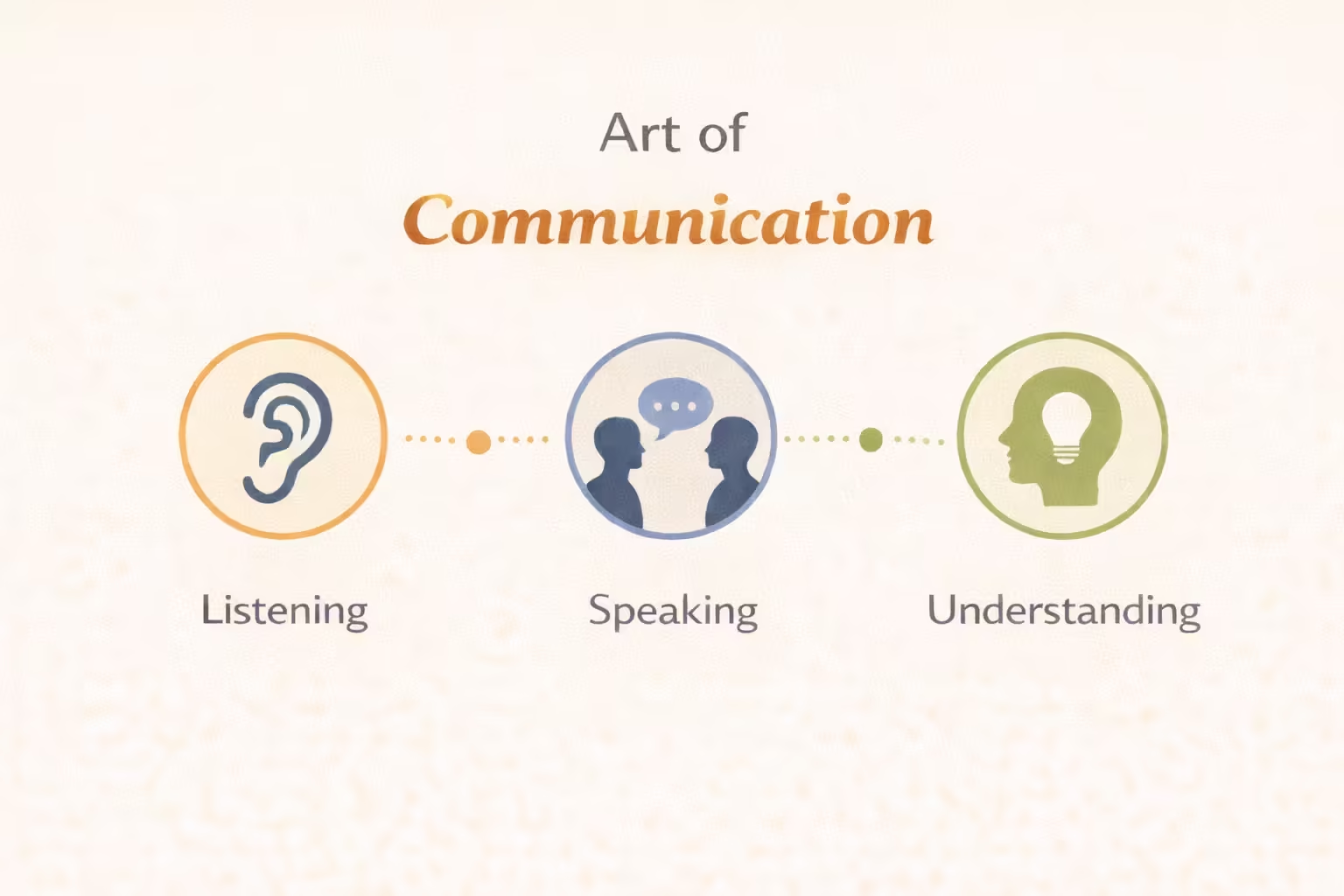
Good communication has two equal halves:
- Expression — clearly sharing your thoughts, whether through speech, writing, or body language.
- Reception — accurately understanding what someone else is trying to tell you.
Most people focus on the first half and forget the second. That’s usually where things go wrong.
Why Communication Skills Matter More Than Ever in 2026
Work and life have changed fast. A few reasons communication now matters even more:
- Hybrid and remote work means more of your communication happens in writing or on video, where tone is easy to lose.
- AI-generated messages are everywhere, so genuine, human communication stands out and builds trust.
- Shorter attention spans mean clarity and brevity aren’t optional — they’re expected.
- Global teams require cultural awareness and simple, jargon-free language.
Quick summary: Communication is a two-way skill involving speaking and listening. In 2026, remote work, AI tools, and global teams make clear, human communication more valuable than ever.
The 7 Core Pillars of Great Communication
Great communicators aren’t necessarily the loudest or most charismatic people in the room. They’re the ones who consistently practice these seven skills.
1. Active Listening
Active listening means fully focusing on the speaker instead of planning your next response.
How to practice it:
- Put away your phone and make eye contact.
- Nod or use short verbal cues (“I see,” “Go on”).
- Paraphrase what you heard: “So what you’re saying is…”
- Resist the urge to interrupt, even when you disagree.
2. Clarity
Clarity means saying exactly what you mean, without vague or overly complex language.
Try this: Instead of saying, “We should probably think about maybe revisiting the budget at some point,” say, “Let’s review the budget by Friday.”
3. Empathy
Empathy is understanding and acknowledging another person’s feelings, even if you don’t agree with their point of view.
A simple empathetic phrase like “That sounds frustrating” can defuse tension instantly.
4. Confidence (Without Arrogance)
Confident communicators speak with a steady tone, maintain posture, and avoid over-apologizing. Confidence isn’t about being the loudest — it’s about believing your input has value.
5. Nonverbal Awareness
Studies on communication suggest that tone of voice and body language often carry more weight than the actual words used, especially in emotional conversations.
Watch for:
- Facial expressions that match your words
- Open posture (uncrossed arms, facing the person)
- Appropriate eye contact
6. Emotional Regulation
Great communicators pause before reacting. If a conversation gets heated, taking a breath — or even asking for a short break — prevents words you might regret.
7. Adaptability
The way you talk to your boss shouldn’t be the same way you talk to your best friend. Adapting your tone, vocabulary, and formality to your audience is a hallmark of a skilled communicator.
Quick summary: Mastering communication means combining listening, clarity, empathy, confidence, body language, emotional control, and adaptability — not just talking well.
Step-by-Step: How to Improve Your Communication Skills
Improvement doesn’t happen overnight, but with consistent practice, most people notice a real difference within a few weeks.
Step 1: Audit Your Current Habits
For one week, notice patterns:
- Do you interrupt people?
- Do you avoid difficult conversations?
- Do your emails ramble?
Awareness is the first step to change.
Step 2: Practice the “Pause Before You Speak” Rule
Before responding, take a one-second pause. This tiny gap prevents reactive, poorly thought-out replies and gives your brain time to choose better words.
Step 3: Use the “Say It in One Sentence” Trick
Before a meeting, email, or important conversation, summarize your main point in a single sentence. If you can’t, your message probably isn’t clear yet.
Step 4: Ask More Open-Ended Questions
Closed questions (“Did you like it?”) get one-word answers. Open questions (“What did you think about it?”) invite real conversation.
Step 5: Get Comfortable With Feedback
Ask a trusted friend or colleague, “How do I come across in conversations?” Honest feedback is uncomfortable but incredibly valuable.
Step 6: Practice Public Speaking — Even Informally
You don’t need a stage. Practice by:
- Explaining a topic to a friend
- Recording yourself and watching it back
- Joining a local speaking group
Quick summary: Improve communication by auditing your habits, pausing before you speak, simplifying your message, asking better questions, seeking feedback, and practicing speaking regularly.
Communication in Writing: Emails, Texts, and Messages
A huge amount of communication in 2026 happens through screens, not face-to-face conversation. Written communication has its own rules.
Table: Written Communication Do’s and Don’ts
| Do | Don’t |
|---|---|
| Keep emails short and scannable | Write walls of text without breaks |
| Use a clear subject line | Leave the subject line vague or blank |
| Read your message before sending | Send while emotional or angry |
| Match tone to the platform (formal email vs. casual chat) | Use the same tone everywhere |
| Use bullet points for multiple items | Bury key points in long paragraphs |
A Simple Framework for Clear Emails
- Purpose — State why you’re writing in the first sentence.
- Details — Provide necessary context, briefly.
- Action — Say exactly what you need from the reader and by when.
Example: “Hi Sam, I’m writing to confirm our meeting time. Can we do 2 PM Thursday instead of 10 AM? Let me know by tomorrow.”
Quick summary: Written communication should be short, scannable, and purpose-driven. Always reread before sending, especially emotional messages.
Communication in the Age of AI and Video Calls
Technology has reshaped how we connect. Here’s how to adapt.
Video Call Etiquette
- Look at the camera, not the screen, when speaking — it mimics eye contact.
- Mute when not talking to avoid background noise.
- Use visible nods and expressions since body language is harder to read on screen.
Using AI Tools Without Losing the Human Touch
AI writing tools can help you draft messages faster, but overusing them can make your communication feel generic. A good rule of thumb:
- Use AI to organize your thoughts or catch errors.
- Always personalize the final message in your own voice.
- Never let AI handle emotionally sensitive conversations for you.
Quick summary: Adapt communication habits for video calls and AI tools, but keep your personal voice front and center — authenticity builds trust.
Common Communication Mistakes (And How to Fix Them)
| Mistake | Why It Hurts | The Fix |
|---|---|---|
| Interrupting others | Signals you value your ideas over theirs | Practice pausing before responding |
| Multitasking during conversations | Makes others feel unimportant | Put devices away during talks |
| Avoiding difficult conversations | Problems grow bigger over time | Address issues early, calmly |
| Using vague language | Creates confusion and rework | Be specific about expectations |
| Ignoring body language | Words and actions may contradict | Match tone, face, and posture |
| One-size-fits-all tone | Feels impersonal or tone-deaf | Adjust tone to the audience |
How to Handle Difficult Conversations
Difficult conversations — asking for a raise, giving feedback, resolving conflict — trigger anxiety for most people. A simple structure helps:
- Prepare — Know your main point before you start.
- Start softly — Open with context, not accusations. (“I wanted to talk about the project timeline” instead of “You missed the deadline again.”)
- Listen first — Let the other person share their perspective before you respond.
- Focus on solutions — Shift from blame to “How can we fix this going forward?”
- Follow up — A short follow-up message confirms understanding and shows respect.
Quick summary: Handle tough conversations by preparing your point, opening gently, listening fully, and focusing on solutions rather than blame.
Building Long-Term Communication Habits
Mastery comes from consistency, not one big effort. Try these habits:
- Daily reflection: Spend two minutes each evening thinking about one conversation that went well and one that could have gone better.
- Read widely: Reading exposes you to new vocabulary and sentence structures, which naturally improves how you express ideas.
- Practice storytelling: People remember stories far better than facts. Practice explaining ideas with a short example or anecdote.
- Seek diverse conversations: Talking with people from different backgrounds sharpens adaptability and empathy.
Final Thoughts: Communication Is a Lifelong Practice
Mastering communication isn’t about becoming a perfect speaker or never misunderstanding anyone again. It’s about becoming more aware — of your words, your listening habits, and the people you’re talking to.
Start small. Pick one skill from this guide — maybe active listening, or writing shorter emails — and practice it this week. Small, consistent changes compound into real mastery over time.
Good communication opens doors: stronger relationships, better teamwork, and more confidence in every conversation you have. The best part? You already have everything you need to start improving today.
FAQs About Mastering the Art of Communication
1. Why are communication skills important in 2026?
Communication skills are important because people work remotely, use digital platforms, and interact with global teams more than ever before.
2. What is communication?
Communication is the process of sharing ideas, thoughts, emotions, and information with others.
3. What are the main types of communication?
The main types include:
- Verbal communication
- Non-verbal communication
- Active listening
4. Why is active listening important?
Active listening helps people understand others better and respond thoughtfully and respectfully.
5. What does having a growth mindset mean in communication?
A growth mindset means believing communication skills can improve through practice, learning, and feedback.
6. How can technology improve communication skills?
Technology provides tools like video calls, messaging apps, online courses, and AI assistants for communication practice.
7. Which platforms are commonly used for video communication?
Common video communication platforms include:
- Zoom
- Microsoft Teams
- Google Meet
8. How can emotional intelligence improve communication?
Emotional intelligence helps people understand emotions, empathize with others, and respond calmly in conversations.
9. Why is cultural awareness important in communication?
Cultural awareness helps prevent misunderstandings and improves relationships with people from different backgrounds.
10. How can body language affect communication?
Body language, facial expressions, eye contact, and tone of voice can strongly influence how messages are understood.
11. Why are writing skills important in the digital age?
People communicate frequently through emails, reports, social media, and messages that require clear and professional writing.
12. How can learners improve public speaking skills?
Learners can improve public speaking by:
- Preparing carefully
- Practicing regularly
- Recording themselves
- Engaging audiences confidently
13. Why is authenticity important in communication?
People trust and connect more easily with honest, sincere, and genuine communication.
14. How can someone practice communication skills regularly?
People can practice by:
- Joining speaking groups
- Talking to different people
- Participating in discussions
- Using online platforms
15. What is the main message of the article?
The article explains that mastering communication requires continuous learning, understanding others, adapting to modern communication tools, and practicing regularly.
You may also like:
- Top Online Resources to Improve Your English Skills
- 7 Surprising Benefits of Learning English
- The Complete Guide to English Collocations
- 150 Basic English Sentences Every Kid Should Learn
Want to improve more? Explore our Spoken English Practice section for practical tips and lessons.
📚 Continue Learning English
Choose your next lesson and keep improving your English skills with our free English learning resources.