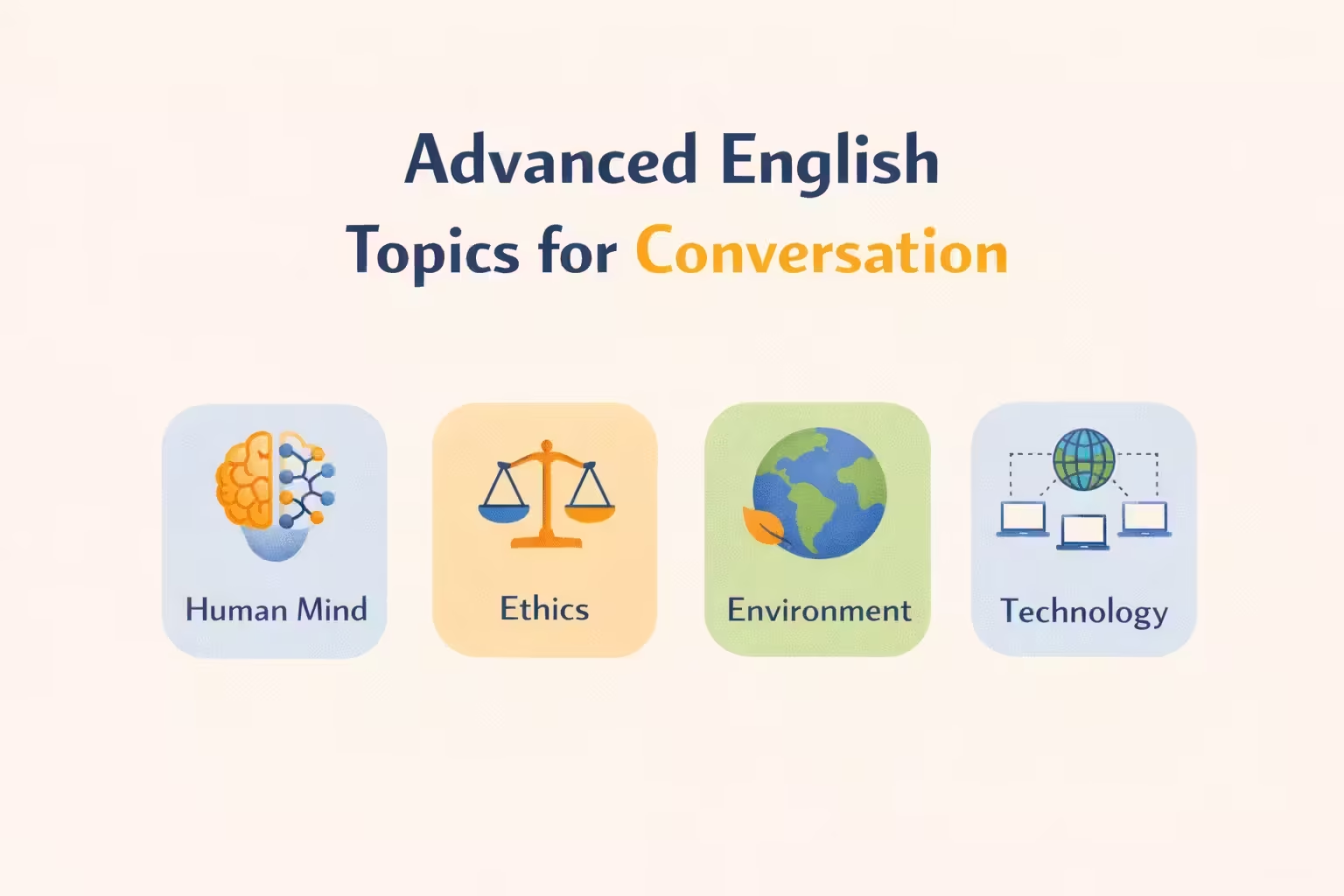
Reaching an advanced level in English means going beyond basic small talk and discussing deeper, more complex ideas.
Table of Contents
ToggleIf you want to sound fluent and confident, you need challenging and meaningful advanced English topics for conversation that push you to think critically and express opinions clearly.
These discussions help improve vocabulary, fluency, and the ability to support arguments with strong examples.
In this guide, you will discover engaging and thought-provoking conversation topics suitable for advanced English learners.
From global issues and technology trends to cultural differences and personal development, these topics will help you practice sophisticated vocabulary and natural speaking skills.
Whether you are preparing for IELTS speaking, academic discussions, or professional communication, these advanced conversation topics will help you take your English fluency to the next level.
This topic is part of our English Conversation Practice for English learners.
Current Events and News Topics:
- What’s a recent news story or current event that has caught your attention, and why?
- How do you stay informed about current events and news topics? Any favorite news sources?
- Can you share an opinion or perspective on a controversial current event that’s been dominating headlines?
- Have you ever been directly affected by a major current event or news story? How did it impact you?
- Do you think social media platforms effectively disseminate news, or do they contribute to misinformation?
- Are there any global issues or crises that you’re particularly passionate about raising awareness for?
- How do you navigate conversations with people who have differing opinions on current events?
- What’s one positive news story or development that you’ve come across recently?
- Do you think the media accurately represents the diversity of perspectives on current events? Why or why not?
- Are there any upcoming events or developments that you’re eagerly following in the news?
Cultural Differences and Similarities:
- Can you share an experience where you encountered a cultural difference that surprised or fascinated you?
- What’s one aspect of a different culture that you admire or find particularly interesting?
- Have you ever traveled to a country with a vastly different culture from your own? What was your experience like?
- How do you think cultural differences contribute to enriching our understanding of the world?
- Can you share a tradition or custom from your own culture that you cherish?
- Do you believe that cultural exchange and globalization are erasing unique cultural identities, or do they promote diversity?
- Have you ever faced challenges or misunderstandings due to cultural differences? How did you navigate them?
- What’s one thing you wish more people understood about your culture?
- Can you share a cultural practice or belief that you find difficult to explain to outsiders?
- How do you think exposure to different cultures can influence personal growth and empathy?
Technology Advancements and Their Impact:
- What’s one technological advancement in recent years that has significantly impacted your daily life?
- How do you think technology has changed the way we communicate and interact with one another?
- Can you share a positive aspect of technology that you’re grateful for?
- Do you think technology has made our lives more convenient or more complicated? Why?
- Have you ever experienced the downside of technology addiction or over-reliance on digital devices?
- How do you stay informed about the latest technological trends and advancements?
- Can you share a prediction about the future of technology that excites or concerns you?
- What’s one piece of technology that you wish existed but hasn’t been invented yet?
- How do you think advancements in artificial intelligence will shape the future of society and work?
- Do you believe that technological progress should be regulated to address ethical and societal concerns?
Explore more English topics here:
- 100+ Conversation Questions for the ESL / EFL Classroom
- 150 Amazing Small Talk Questions
- 100 Common English Questions and Answers
- 80 ESL Conversation Questions About Making Friends
- 80 ESL Conversation Questions About Healthy Eating Habits
Food and Culinary Experiences:
- What’s your favorite dish or cuisine, and what memories does it evoke for you?
- Can you share a memorable dining experience you’ve had while traveling?
- How do you think food reflects cultural identity and heritage?
- Have you ever tried cooking a dish from a different culture? How did it turn out?
- Can you recommend a must-try food or dish from your own culture?
- Do you enjoy experimenting with new ingredients or recipes in the kitchen?
- Have you ever had a food-related mishap or funny kitchen story? What happened?
- What’s one food trend or culinary innovation that you’re excited about?
- How do you think food brings people together and fosters connections?
- Can you share a childhood food memory that holds sentimental value for you?
Personal Anecdotes or Memorable Experiences:
- Can you share a funny or embarrassing personal anecdote that still makes you laugh?
- What’s a memorable experience from your childhood that shaped who you are today?
- Have you ever had a serendipitous encounter or experience that felt like fate?
- Can you recall a moment when you stepped out of your comfort zone and it led to a positive outcome?
- What’s one lesson you’ve learned from a challenging or difficult experience in your life?
- Do you have a favorite family tradition or ritual that you look forward to each year?
- Can you share a heartwarming act of kindness that someone has done for you?
- What’s a spontaneous adventure or road trip that turned into an unforgettable experience?
- Have you ever experienced a moment of pure joy or bliss? What were the circumstances?
- Can you recall a moment when you felt a strong sense of pride or accomplishment?
Music Preferences and Concert Experiences:
- What genre of music resonates with you the most, and why?
- Can you share a memorable concert experience that left a lasting impression on you?
- How does music influence your mood or emotions on a daily basis?
- Do you have a favorite music artist or band that you’ve been following for years?
- Have you ever discovered a new favorite song or artist at a live music event?
- Can you recall a song that holds sentimental value or brings back fond memories?
- What’s your go-to playlist or song for lifting your spirits on a tough day?
- Do you prefer attending small, intimate concerts or large-scale music festivals? Why?
- Have you ever tried creating your own music or learning to play an instrument?
- Can you recommend a lesser-known music artist or band that deserves more recognition?
- Environmental Sustainability and Conservation Efforts:
- What inspired you to become more conscious about environmental sustainability and conservation?
- Can you share a simple lifestyle change you’ve made to reduce your environmental footprint?
- How do you incorporate sustainability practices into your daily routine?
- Have you ever participated in a volunteer effort or community project focused on environmental conservation?
- What’s one environmental issue that you’re particularly passionate about addressing?
- Can you recommend eco-friendly products or brands that you support?
- How do you educate others about the importance of environmental sustainability?
- Have you ever visited a destination known for its conservation efforts or eco-tourism initiatives?
- What role do you think businesses and governments should play in promoting environmental sustainability?
- Can you share a success story or example of positive change resulting from conservation efforts?
FAQs About Advanced English Topics for Conversation
1. What are advanced English conversation topics?
Advanced English conversation topics are discussion subjects designed for learners who want to practice deeper, more complex communication in English. These topics often include current events, culture, technology, personal development, and global issues.
2. Why are advanced conversation topics important?
They help learners improve fluency, critical thinking, vocabulary, and the ability to express opinions clearly and confidently in English.
3. Who should practice advanced English discussion topics?
Advanced ESL learners, IELTS candidates, university students, professionals, and anyone aiming for fluent English communication can benefit from these topics.
4. What kinds of topics are included in advanced English discussions?
Common topics include:
- Current events and news
- Technology and AI
- Cultural differences
- Environmental sustainability
- Food and culinary experiences
- Personal development
- Music and entertainment
- Social and global issues
5. How do advanced topics improve speaking fluency?
They encourage learners to:
- Speak for longer periods
- Organize ideas clearly
- Use advanced vocabulary
- Give opinions and examples
- Develop natural conversation skills
6. Are these topics suitable for beginners?
These topics are generally more suitable for intermediate and advanced learners because they require deeper thinking and more detailed responses.
7. How can learners practice advanced conversation topics effectively?
Learners can:
- Join discussion groups
- Practice debates
- Record their answers
- Speak with partners
- Write responses before speaking
- Learn topic-specific vocabulary
8. Why are current events popular discussion topics?
Current events help learners discuss real-world issues, develop opinions, and improve awareness of global news and social matters.
9. How do cultural discussion topics help English learners?
Cultural topics improve understanding of diversity, traditions, communication styles, and global perspectives while encouraging respectful conversations.
10. What role does technology play in advanced English conversations?
Technology topics help learners discuss modern issues such as artificial intelligence, social media, digital communication, and future innovations.
11. Can advanced conversation topics help with IELTS speaking?
Yes, these topics are highly useful for IELTS Speaking Parts 2 and 3 because they require detailed opinions, explanations, and examples.
12. How do these topics improve vocabulary?
Learners are exposed to advanced words and expressions related to:
- Society
- Environment
- Technology
- Culture
- Education
- Business
- Media and communication
13. Why is expressing opinions important in advanced English?
Expressing opinions helps learners communicate naturally, participate in discussions confidently, and improve argumentative speaking skills.
14. How can learners give better answers during discussions?
Learners should:
- Give reasons and examples
- Speak clearly
- Organize ideas logically
- Use connecting words
- Avoid one-word answers
15. Are personal experience topics useful for speaking practice?
Yes, personal anecdotes and life experiences make conversations more natural, emotional, and engaging while improving storytelling skills.
16. How do environmental topics improve communication skills?
Environmental discussions encourage learners to explain problems, suggest solutions, and discuss global responsibilities using advanced vocabulary.
17. What are the benefits of discussing music and entertainment topics?
These topics make conversations enjoyable and help learners describe emotions, memories, preferences, and cultural experiences.
18. How often should learners practice advanced speaking topics?
Regular practice several times a week helps learners improve fluency, confidence, and the ability to think quickly in English.
19. What mistakes should learners avoid during advanced discussions?
Common mistakes include:
- Giving very short answers
- Repeating simple vocabulary
- Avoiding opinions
- Speaking without examples
- Focusing too much on grammar perfection instead of communication
20. What is the main goal of practicing advanced English conversation topics?
The main goal is to help learners communicate fluently, confidently, and naturally in academic, professional, and real-life English discussions.
📚 Continue Learning English
Choose your next lesson and keep improving your English skills with our free English learning resources.