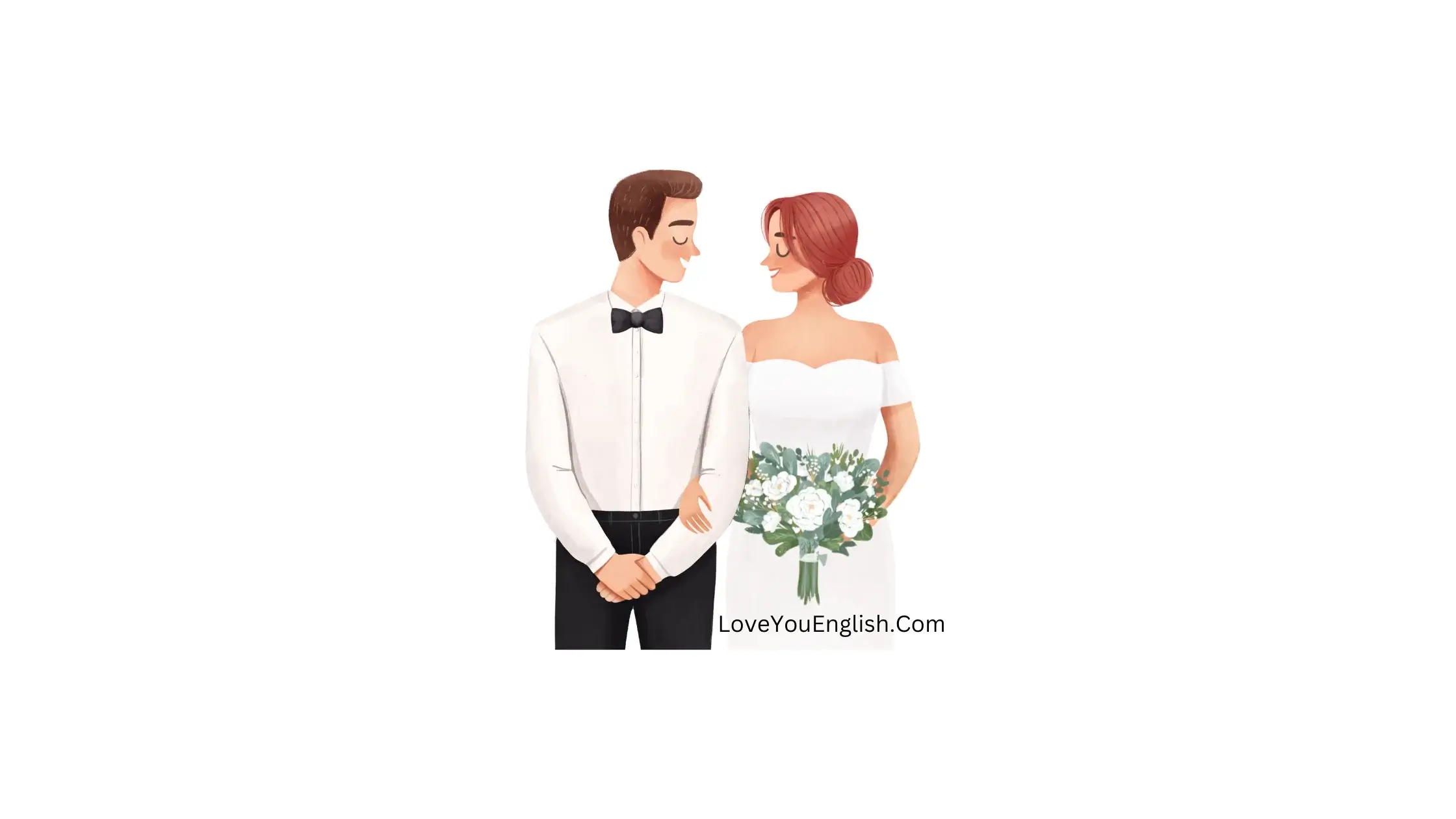
Weddings are joyful social events where people meet new guests, talk about the couple, enjoy food, music, and celebrations.
Table of Contents
ToggleKnowing how to speak politely and naturally at a wedding helps you make conversations easily and feel confident in social gatherings.
These spoken English conversations at a wedding use simple, real-life language that is perfect for English learners, ESL students, and beginners who want to improve everyday spoken English.
This topic is part of our English Conversation Practice for English learners.
Spoken English Conversations at A Wedding
Emma: Hi there! I’m Emma. I don’t think we’ve met before. Are you a friend of the bride or groom?
John: Hi, Emma! I’m John. I’m a friend of the groom. I went to college with him. What about you?
Emma: Oh, nice to meet you! I’m a friend of the bride. We used to work together. It’s so great to see everyone here for their big day, isn’t it?
John: Absolutely! The place looks amazing. I love the decorations. Did you help with them?
Emma: A little bit. I helped with the flowers and setting up the tables. It was a lot of work, but it’s worth it to see how happy they look.
John: It really is beautiful. I’m glad I could make it. I heard the ceremony was lovely. Did you get to see it?
Emma: Yes, I did. It was so touching. The vows they wrote for each other were so heartfelt. What did you think of the ceremony?
John: I thought it was wonderful. I was tearing up a little. It’s so nice to see two people so in love.
Emma: I know what you mean. It’s always special to witness a couple’s big day. Did you get a chance to talk to the groom before the ceremony?
John: I did. He was a bit nervous but excited. He kept saying he couldn’t wait to marry her. What about you? Did you get to chat with the bride?
Emma: Yes, I talked to her for a bit before the ceremony. She was so calm and radiant. She kept saying she was just ready for the day to begin.
John: That’s great to hear. They seem like such a great match. Do you know how they met?
Emma: Yes, they met at a coffee shop. The bride was reading a book, and the groom came over to ask her about it. They started talking and hit it off right away.
John: That’s a lovely story. It’s nice to hear how simple things can lead to such a big thing.
Emma: Definitely. And now here we are at their wedding! Have you tried the food yet? I heard it’s really good.
John: Not yet, but I’m planning to. I’m looking forward to trying it. What about you? Have you had a chance to eat?
Emma: I had a little bit of the appetizers, but I’m saving room for the main course. I heard the chicken is supposed to be amazing.
John: That sounds great. I’m excited to try it. Oh, here comes the cake! Did you see the cake before?
Emma: Yes, I saw it earlier. It’s so pretty. I love the design. I can’t wait to have a slice.
John: Me too. I heard they went all out with the cake. I bet it’s going to taste as good as it looks.
Emma: I’m sure it will. Oh, look at the bride and groom dancing! They look so happy.
John: They do. It’s nice to see them enjoying the day. Do you think we should join the dance floor soon?
Emma: I think so! It looks like fun. Let’s finish our conversation and then we can go dance.
John: Sounds like a plan. I’m glad we got to chat. It’s nice meeting new people at weddings.
Emma: I agree. It’s been nice talking to you, John. Let’s get out there and enjoy the rest of the evening!
John: Absolutely! Let’s go have some fun.
Emma and John join the dance floor, enjoying the rest of the wedding celebration.
Spoken English Conversations at A Wedding
Alice: Hi there! I’m Alice. Are you a guest here?
Ben: Hi, Alice! I’m Ben. Yes, I’m a guest. I’m actually a cousin of the groom. What about you?
Alice: Oh, nice to meet you, Ben! I’m a friend of the bride. We went to high school together. How do you know the groom?
Ben: We grew up together. We used to play soccer every weekend. It’s great to see him getting married. How do you know the bride?
Alice: We met in high school and stayed friends ever since. It’s been a long time, so it’s amazing to see her find someone so perfect for her.
Ben: That’s wonderful. I’m sure she’s happy to have you here on her big day. Have you had a chance to talk to her much?
Alice: I had a quick chat with her before the ceremony. She was so excited but also a bit nervous. How about you? Did you see the groom before the ceremony?
Ben: Yes, I saw him. He was definitely nervous but also smiling a lot. I think he was just really looking forward to the day.
Alice: I think it’s normal to be a bit nervous. It’s a big moment. The ceremony was so beautiful, though, don’t you think?
Ben: Yes, it was. The vows they exchanged were so heartfelt. I had to wipe a tear or two. What did you think of the vows?
Alice: I thought they were very touching. You could see how much they love each other. I loved how they wrote their own vows.
Ben: Me too. It made the ceremony feel very personal and special. Have you had any of the food yet?
Alice: I had a bit of the salad and some of the bread. The salad was fresh and the bread was delicious. Have you tried anything?
Ben: I had some of the appetizers. The shrimp cocktails were fantastic. I’m looking forward to the main course.
Alice: I heard the steak is supposed to be really good. I’m saving room for it. I’m also excited about the cake. Did you see it?
Ben: Yes, I saw it earlier. It looks amazing. I love the flowers on it. I’m definitely looking forward to a slice.
Alice: Same here. It’s such a beautiful cake. I’m sure it will taste as good as it looks. So, are you planning to stay late at the reception?
Ben: Yes, I plan to stay for the whole evening. I’m looking forward to the dancing and just enjoying the party. What about you?
Alice: I’m planning to stay too. I want to make the most of the night. I’ve heard the music is going to be great.
Ben: That’s right. I heard the DJ is really good. It should be a lot of fun. Are you a good dancer?
Alice: I like to think I’m not too bad. I enjoy dancing, so I’m excited to hit the dance floor. How about you? Do you like to dance?
Ben: I’m not the best dancer, but I enjoy it. I’m sure I’ll be out there dancing at some point. It’s always fun to dance at weddings.
Alice: Definitely! It’s one of the best parts of a wedding. Oh, here come the drinks. Do you want to get something to drink?
Ben: Yes, I’ll have a glass of red wine. What about you?
Alice: I’ll go with a champagne. It’s a celebration after all!
Ben: Sounds perfect. Let’s get our drinks and then maybe we can head to the dance floor.
Alice: Great idea! It was nice talking to you, Ben. Let’s enjoy the rest of the evening.
Ben: Nice talking to you too, Alice. Here’s to a great wedding!
Alice: Cheers to that!
Alice and Ben clink glass.
Key Phrases for Conversations at a Wedding (Easy & Natural)
Meeting someone new
-
Hi, I don’t think we’ve met before.
-
Are you a friend of the bride or groom?
-
Nice to meet you.
-
How do you know the couple?
Talking about the ceremony
-
The ceremony was beautiful.
-
The vows were very touching.
-
It was so emotional.
-
They look so happy together.
Talking about the bride & groom
-
The bride looks stunning.
-
The groom looks so happy.
-
They make a great couple.
-
They seem perfect for each other.
Talking about decorations & venue
-
The decorations look amazing.
-
The place looks beautiful.
-
I love the flowers and setup.
-
Everything is so well organized.
Talking about food & drinks
-
Have you tried the food yet?
-
The appetizers are delicious.
-
I’m saving room for the cake.
-
What are you drinking?
Talking about music & dancing
-
The music is great.
-
Are you planning to dance?
-
Let’s hit the dance floor.
-
The DJ is really good.
Friendly & polite expressions
-
It’s great to see everyone here.
-
I’m glad I could make it.
-
It was nice talking to you.
-
Let’s enjoy the rest of the evening.
Celebration phrases
-
Cheers to the couple!
-
Here’s to a happy marriage!
-
Let’s celebrate their big day.
FAQs About Wedding Conversations in English
What are wedding conversations in English?
Wedding conversations are simple and polite discussions people have during a wedding event, such as introducing themselves, talking about the couple, food, and celebrations.
Why is this topic useful for English learners?
This topic helps learners practice real-life social English used in events like weddings, making it easier to communicate confidently in gatherings.
Is this topic suitable for beginners?
Yes, the language used is simple, natural, and easy to understand, making it perfect for beginners and ESL learners.
What kind of vocabulary can learners learn from this topic?
Learners can learn vocabulary related to weddings, such as bride, groom, ceremony, reception, vows, decorations, and celebration.
What situations are covered in wedding conversations?
The conversations include meeting new people, talking about the bride and groom, discussing the ceremony, food, music, and dancing.
How can these conversations improve speaking skills?
They help learners improve fluency, confidence, and the ability to speak politely and naturally in social situations.
How can I practice these conversations effectively?
You can practice by reading aloud, role-playing with a partner, repeating dialogues, and using the phrases in real-life situations.
What are some common phrases used at weddings?
Common phrases include “Nice to meet you,” “The ceremony was beautiful,” “They look so happy,” and “Let’s enjoy the evening.”
Can learning these conversations help in daily communication?
Yes, these conversations teach polite expressions and social interaction skills that are useful in everyday life.
What skills can learners develop from this topic?
Learners can develop skills like introducing themselves, making small talk, expressing emotions, and using polite language in conversations.