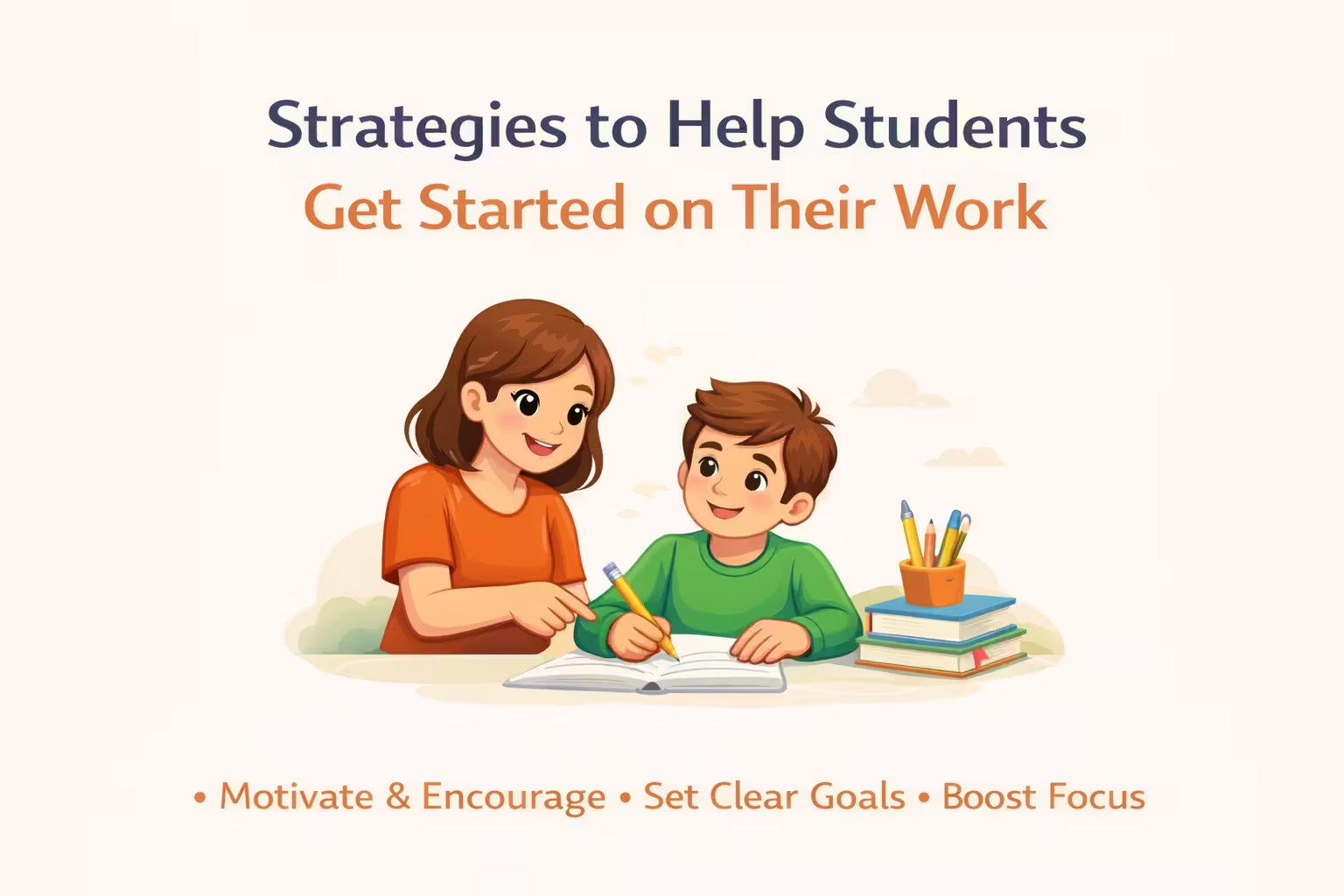
Getting started is often the hardest part of any task. As an English teacher who has worked with hundreds of students in both classroom and online settings, I’ve seen this struggle countless times. Students sit with blank pages, unopened books, or unstarted assignments, feeling overwhelmed and unsure where to begin. The good news? Learning how to help students get started on their work is a skill that anyone can develop with the right strategies.
Whether you’re a teacher looking for ways to motivate your class, a parent supporting a struggling learner, or a student trying to overcome procrastination, these ten practical strategies will make starting work easier and less stressful. I’ve used these methods with English learners, exam preparation students, and even adult job seekers—and they work.
1. Break Big Tasks into Tiny Steps
One of the biggest reasons students can’t get started on their work is that the task feels too large. When I taught IELTS writing classes, many students would stare at the essay question for ten minutes without writing a single word. The assignment felt massive and intimidating.
The solution is simple: break the work into the smallest possible steps. Instead of “write an essay,” the steps become:
- Read the question carefully
- Underline key words
- Brainstorm three main ideas
- Write one sentence for the introduction
- Write the first body paragraph
Each step takes only a few minutes. When students see these tiny actions instead of one huge task, starting becomes much easier. This strategy helps students get started on their work by removing the fear of the “big project.”
I remember one online student named Maria who couldn’t begin her speaking practice assignments. Once we broke it down to “record yourself saying one sentence about your favorite food,” she started immediately. The tiny step removed the pressure, and soon she was recording full conversations.
2. Use the “Two-Minute Rule”
This strategy is incredibly effective for reluctant starters. The rule is simple: commit to working for just two minutes. Tell yourself, “I’ll only do this for two minutes, then I can stop if I want.”
What usually happens? Students start the work and keep going beyond two minutes. The hardest part—starting—is already done. The brain relaxes once it realizes the commitment is small.
I use this with pronunciation practice. Many students avoid speaking practice because they feel nervous. I tell them, “Just read these three sentences out loud. That’s it. Two minutes.” Almost always, they continue for ten or fifteen minutes because starting was the only real barrier.
This approach works because it removes the pressure of completion. You’re not promising to finish the whole assignment. You’re just beginning. That mental shift makes a huge difference when trying to help students get started on their work.
3. Create a Consistent Starting Routine
Our brains love patterns. When we do the same thing every time before starting work, our mind learns to shift into “work mode” more easily.
In my classroom, we always started listening practice the same way: I would play soft background music for 30 seconds, students would close their eyes and take three deep breaths, then we would begin. This simple routine signaled to their brains that focused work was about to start.
Students can create their own starting routines:
- Organize the desk and put away phones
- Write the date and subject at the top of the page
- Set a timer for the work session
- Say out loud: “I’m ready to start”
The specific actions don’t matter as much as doing them consistently. After several repetitions, the routine itself becomes a trigger that helps students get started on their work automatically.
Explore more interesting topics here:
- How to Teach Spoken English Effectively
- The Basics of English Teaching
- How to Teach the Present Simple Tense
- 150 Job Description Examples + Templates: A Complete Guide for Teachers, Trainers, and Employers
- Best Online Learning Platforms 2026: Complete Guide
- 150 Inspirational Phrases for Teachers
4. Use Visual Timers and Time Blocking
Many students struggle with starting because they don’t know how long the work will take. The task feels endless. Visual timers solve this problem beautifully.
I discovered this while teaching young learners. I would set a large, colorful timer where everyone could see it and say, “We’re going to practice vocabulary for exactly 15 minutes.” Seeing the time counting down made students feel in control. They knew when the work would end, so starting felt safer.
Time blocking takes this further. Instead of “do homework tonight,” students schedule specific blocks:
- 4:00-4:20 PM: Math problems
- 4:25-4:45 PM: Read English chapter
- 4:50-5:10 PM: Practice speaking sentences
These blocks are short and specific. Students can see exactly when they start and when they finish. This clarity removes the anxiety that often prevents students from beginning their work.
5. Start with the Easiest Part First
Many people believe you should tackle the hardest task first. For students who struggle to get started, this advice often backfires. The difficult task feels so overwhelming that they never begin at all.
Instead, I teach students to start with the easiest part of the assignment. Get some momentum. Build confidence. Create a feeling of progress.
When teaching essay writing, I never start with the introduction (which students find hardest). We start with the body paragraphs, where they already have ideas. Once they’ve written something—anything—starting the introduction feels much easier.
I had a student named Raj who couldn’t begin his English homework for weeks. We tried starting with just copying three example sentences from the textbook. Simple work. No thinking required. But it got him to open the book and pick up a pen. The next day, he added his own sentence. Small victories created bigger ones.
6. Remove Distractions Before You Begin
Students often can’t get started on their work because their environment is full of competing attractions. Phones buzzing, TVs playing, social media notifications—these all make starting difficult.
In my online classes, I always ask students to show me their workspace at the beginning. If I see a phone on the desk or a TV in the background, we fix it before starting. Creating a distraction-free zone isn’t optional—it’s essential.
Here’s what actually helps:
- Put phones in another room (not just face-down on the desk)
- Close all browser tabs except those needed for work
- Tell family members you’re working for the next 30 minutes
- Use noise-canceling headphones or quiet background music
The goal is to make starting your work the easiest and most attractive option in your environment. When distractions are removed, resistance to starting naturally decreases.
7. Use Accountability Partners or Study Buddies
Humans are social creatures. We’re more likely to start work when someone else knows we’re supposed to be working. This is why accountability partners are so powerful.
In my conversation practice classes, I pair students together. They agree to send each other a voice message practicing English every day. Neither wants to disappoint the other, so they both start their practice more consistently.
Parents can use this strategy at home. Instead of leaving a student alone to start homework, sit nearby doing your own work—reading, answering emails, or paying bills. The presence of someone else working creates a productive atmosphere.
Teachers can create accountability by having students share one thing they’ll start working on today. When students say their commitment out loud to the group, they’re much more likely to follow through.
8. Celebrate Starting, Not Just Finishing
We often praise students only when they complete work. But for students who struggle to begin, we need to celebrate the act of starting itself.
I learned this from a teenage student who had terrible procrastination habits. Instead of focusing on her finished assignments, I started celebrating when she opened her notebook. When she wrote the first sentence. When she attempted the first problem—even if incorrect.
This shifted her mindset. Starting became its own achievement worthy of recognition. Once starting felt rewarding, she did it more often.
Parents and teachers can say:
- “I’m proud that you began working, even though it felt hard”
- “You got started within five minutes today—that’s progress!”
- “Starting is often the hardest part, and you did it”
These statements recognize the genuine difficulty of beginning and reward the behavior we want to encourage. Over time, students internalize this positive association with starting their work.
9. Connect Work to Personal Goals and Interests
Students resist starting work that feels pointless or disconnected from their lives. When we help them see the connection between the assignment and their personal goals, motivation increases dramatically.
I had a student preparing for job interviews who hated grammar exercises. She would avoid starting them for days. Then I explained exactly how subject-verb agreement mistakes would affect her interview performance. I showed her real examples of professionals losing credibility due to grammar errors.
Suddenly, the exercises weren’t just random school work—they were tools for her career success. She started completing them without prompting.
Teachers can make these connections explicit:
- “This vocabulary will help you understand English movies without subtitles”
- “Practicing pronunciation now means people will understand you better when you travel”
- “This writing skill is exactly what you’ll need for university applications”
When students understand why the work matters for their real life, starting becomes easier because they genuinely want the results.
10. Use Starter Sentences and Templates
Sometimes students can’t begin because they don’t know what the first action should look like. Providing starter sentences or templates removes this barrier completely.
In my writing classes, I give students sentence frames:
- “In my opinion, _____ because _____”
- “The main reason is _____”
- “For example, when I was _____, I learned that _____”
These aren’t limiting—they’re launching pads. Students fill in the blanks, and suddenly they’ve started writing. The blank page is no longer blank, and the overwhelming feeling disappears.
For speaking practice, I provide conversation starters:
- “One interesting thing about my day was…”
- “If I could change one thing, I would…”
- “The most challenging part of learning English is…”
Templates work because they reduce the cognitive load required to begin. Students don’t have to create everything from scratch. They can focus their energy on ideas and content rather than structure.
I remember teaching an adult learner who froze every time I asked her to speak freely. But when I gave her a starter phrase, words flowed naturally. The template gave her confidence to begin, and soon she didn’t need them anymore.
Making Starting a Habit
Helping students get started on their work isn’t about finding one perfect solution. It’s about understanding that starting is genuinely difficult and requires specific strategies to overcome that difficulty.
The ten strategies I’ve shared come from real classroom experiences—watching what actually works with real students facing real challenges. Some students respond better to time-blocking, others need accountability partners. Some benefit from breaking tasks into tiny steps, while others need to remove distractions first.
The key is experimenting with different approaches until you find what works for each individual student. Be patient with the process. Progress takes time, and building new starting habits doesn’t happen overnight.
As teachers, parents, and learners, we need to remember that getting started is a skill, not a personality trait. Students who struggle to begin aren’t lazy or unmotivated—they simply haven’t learned the right strategies yet. With practice and support, anyone can become better at starting their work.
Start small. Try one strategy from this list today. Help one student take that first step. Celebrate the beginning, not just the ending. Over time, these small moments of starting will build into consistent habits of productivity and success.
Remember: every completed assignment, every learned skill, every achievement—all of them began with a single decision to start. Make that decision easier, and everything else follows.