Business English

Business English: Learn Professional Communication Skills for Workplace Success

Business English is the key to communicating confidently and professionally in today’s global workplace. Whether you’re a student preparing for your first job, a job seeker getting ready for interviews, a freelancer working with international clients, or a professional looking to advance your career, strong Business English skills can help you succeed. In this category, you’ll find practical lessons on workplace communication, business email writing, meetings, presentations, job interviews, professional vocabulary, and office conversations. Each lesson is designed with simple explanations, real-life examples, and actionable tips to help you improve your English and communicate effectively in any professional environment.

What You Will Learn in Business English

This section covers all important workplace English communication skills, including:

  • Business email writing and professional messages
  • Workplace communication and office conversation skills
  • English for meetings, discussions, and presentations
  • Job interview questions and answers in English
  • Business vocabulary and common workplace phrases
  • Formal and informal English usage
  • Telephone, video calls, and online communication
  • Client communication and negotiation skills
  • Report writing and professional documents

Each lesson includes clear explanations and practical examples so you can apply what you learn immediately in real work situations.

Why Learning Business English Is Important

Strong Business English and workplace communication skills help you:

  • Communicate clearly and confidently in professional environments
  • Write effective business emails and messages
  • Participate actively in meetings and discussions
  • Perform well in job interviews and career opportunities
  • Build strong professional and client relationships
  • Work smoothly with international teams and global clients

Improving your professional English communication skills increases your confidence, productivity, and career growth opportunities.

Learn Business English for Real-Life Workplace Use

At Love You English, we focus on practical learning. Instead of only theory, you will learn how to use English in real workplace situations such as:

  • Office conversations and daily communication
  • Professional email writing and business communication
  • Meetings, presentations, and team discussions
  • Job interviews and career conversations
  • Client communication and negotiation
  • Remote work and online meetings

This practical approach helps you use English naturally and confidently in your professional life.

Business English for Beginners to Advanced Learners

This category is useful for:

  • Students preparing for future careers
  • Job seekers improving interview skills
  • Working professionals developing workplace communication
  • Freelancers working with international clients
  • English learners aiming for career growth

All lessons are written in simple English so that learners at all levels can understand easily and improve step by step.

Improve Your Workplace English Step by Step

Learning Business English is not about memorizing difficult vocabulary. It is about understanding how to communicate clearly and professionally in real situations.

With regular practice, you can:

  • Speak confidently in professional settings
  • Write clear and effective business emails
  • Improve workplace communication skills
  • Build strong business vocabulary
  • Increase career growth opportunities

Explore the lessons below and start improving your Business English skills today. Take the first step toward better communication, stronger confidence, and greater career success.

Master Business English and open the door to global career opportunities.


Frequently Asked Questions (FAQs)

What is Business English?

Business English is a type of English used in professional and workplace settings. It includes communication skills such as writing emails, participating in meetings, giving presentations, and interacting with clients and colleagues.

Why is Business English important?

Business English is important because it helps you communicate clearly and professionally at work. It improves your confidence, helps you perform better in job interviews, and opens up more career opportunities.

How can I improve my Business English skills?

You can improve your Business English by practicing daily communication, learning workplace vocabulary, writing emails, participating in conversations, and using English in real-life professional situations.

What topics are included in Business English?

Business English includes topics such as email writing, workplace communication, meetings, presentations, job interviews, business vocabulary, client communication, and professional writing.

Who should learn Business English?

Business English is useful for students, job seekers, working professionals, freelancers, and anyone who wants to improve communication skills for career growth.

Is Business English different from general English?

Yes, Business English focuses on professional communication used in workplaces, while general English is used in everyday situations. Business English is more formal and task-oriented.

How long does it take to learn Business English?

The time required depends on your current level and practice. With regular learning and practice, you can start seeing improvement in a few weeks and become confident over time.

Can beginners learn Business English?

Yes, beginners can learn Business English. It is best to start with simple vocabulary, basic communication skills, and gradually move to advanced topics like meetings and presentations.

Explore More

For more English learning resources, visit

Love You English
.

  • 9 Elevator Pitch Examples to Ensure You Stand Out

    I’m going to show you nine different elevator pitch examples that work really well, and we’ll also give you some tips on how to make your own pitch awesome. Today in the fast-moving business world, it’s super important to be able to talk about what makes you special really quickly. That’s where the elevator pitch comes in! It’s a short and awesome way to tell people who you are, what you do, and why it’s important. Whether you’re trying to get investors for your business, impress a potential boss, or make new connections, having a great elevator pitch can help you out big time. By the end, you’ll be all set to make a killer elevator pitch that makes you stand out from the crowd….


  • How to Make a Business Appointment in English

    Making a business appointment in English is an important communication skill in the professional world. Whether you want to schedule a meeting with a client, talk to your manager, or arrange a discussion with a business partner, knowing the right words and expressions can help you sound confident and professional. Many English learners feel nervous when they need to request a meeting, especially in formal situations such as emails, phone calls, or workplace conversations. In this guide, you will learn how to make a business appointment in English using simple and polite language. I will cover useful phrases, common expressions, and practical examples that you can use when requesting a meeting, confirming an appointment, or rescheduling if needed. These expressions are widely used in business…

  • How to Improve Your Business English? Try These 15 Tips

    If you’re ready to level up your skills, here are 15 practical, engaging, and totally doable tips to improve your Business English—starting today. Imagine walking into a high-stakes meeting, confidently delivering a pitch, and sealing the deal—all because your Business English was spot-on. Sounds like a dream, right? Well, it doesn’t have to be. Whether you’re negotiating with international clients, drafting emails to colleagues, or aiming to climb the corporate ladder, mastering Business English can set you apart in today’s globalized world. It’s not just about grammar or vocabulary; it’s about communicating with clarity, professionalism, and a touch of personality. This topic is part of our English Learning for English learners. 1. Read Business News Daily Let’s kick things off with something simple yet powerful:…

  • 30 Useful English Business Idioms with Meanings and Examples

    Business English is not only about formal vocabulary and professional emails—it also includes idioms that native speakers use in meetings, presentations, and workplace conversations. Understanding business idioms can help you sound more confident, follow discussions more easily, and communicate more naturally in professional settings. Many of these expressions are common in offices, corporate environments, and even job interviews. In this blog post, you will discover 30 useful English business idioms explained in simple and clear language. Each idiom is defined so you can understand its meaning and use it correctly at work. Whether you are preparing for interviews, improving workplace communication, or expanding your professional vocabulary, these business idioms will help you speak English more fluently and confidently. This topic is part of our English…

  • ·

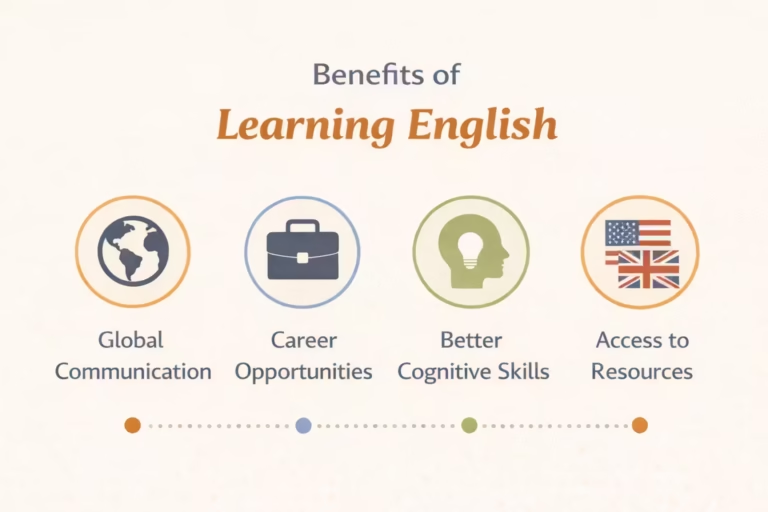
    7 Surprising Benefits of Learning English for Students and Professionals

    English is often called a “global language,” but knowing that fact and understanding what it actually means for your life are two different things. If you’ve ever wondered whether the time and effort of learning English is really worth it, this article will give you a clear, honest answer. Beyond the obvious advantages—like being able to travel more easily or watch shows without subtitles—there are surprising benefits that touch your career, your brain health, and even how you think. In this guide, you’ll learn seven research-backed and real-world benefits of learning English, practical examples of how they show up in daily life, and answers to common questions students and professionals ask about language learning. Why English Specifically Matters English is the most widely used language…