English Reading & Writing Skills

English Reading & Writing Skills: Improve Comprehension and Writing for Better Communication

English reading and writing skills are essential for academic success, professional growth, and effective communication. Whether you are a student or an English learner, improving these skills helps you understand information clearly and express your ideas confidently.

In this category, you will learn reading and writing skills in a simple, clear, and practical way. These lessons are designed step by step to help you improve comprehension, vocabulary, sentence structure, and writing ability.

Strong reading and writing skills are not just for exams. They help you communicate clearly in everyday life and professional situations.

What You Will Learn in English Reading & Writing Skills

This section covers a wide range of important skills, including:

  • Reading comprehension and understanding texts
  • Paragraph writing and sentence formation
  • Creative and descriptive writing skills
  • Formal and informal writing
  • Letter and email writing
  • Vocabulary development through reading
  • Grammar and sentence structure in writing
  • Writing for exams and academic purposes

Each lesson includes clear explanations and practical examples so you can improve your reading and writing step by step.

Why Reading and Writing Skills Are Important

Strong reading and writing skills help you:

  • Understand texts and information easily
  • Express ideas clearly in writing
  • Improve vocabulary and grammar
  • Perform better in school and exams
  • Communicate effectively in professional settings
  • Develop critical thinking and creativity

Improving these skills helps you become a confident and effective communicator.

Learn Reading and Writing for Real-Life Use

At Love You English, we focus on practical learning. You will learn how to use reading and writing skills in real situations such as:

  • Reading articles, stories, and academic texts
  • Writing emails, letters, and messages
  • Creating paragraphs and essays
  • Understanding instructions and information
  • Communicating clearly in written form

This practical approach helps you apply your skills in real-life situations.

English Reading & Writing Skills for All Levels

This category is useful for:

  • Beginners learning basic reading and writing
  • Students preparing for exams
  • English learners improving comprehension
  • Professionals improving written communication
  • Anyone who wants to improve English skills

All lessons are written in simple English so that learners at all levels can understand easily and improve step by step.

Improve Your Reading and Writing Step by Step

Improving reading and writing skills requires regular practice. By reading more and writing regularly, you can improve your understanding and expression.

With regular practice, you can:

  • Read and understand English easily
  • Write clear and well-structured sentences
  • Improve vocabulary and grammar
  • Express ideas confidently in writing
  • Develop strong communication skills

Explore the lessons below and start improving your English reading and writing skills today.

Read regularly, write clearly, and improve your English step by step.


Frequently Asked Questions (FAQs)

What are reading and writing skills in English?

Reading and writing skills involve understanding written texts and expressing ideas clearly through writing.

Why are reading and writing skills important?

They are important because they help you understand information, improve communication, and perform better in academics and work.

How can I improve my reading skills?

You can improve reading skills by reading regularly, understanding vocabulary, and practicing comprehension exercises.

How can I improve my writing skills?

You can improve writing by practicing regularly, learning sentence structure, and writing paragraphs and essays.

Are these skills important for exams?

Yes, reading and writing skills are essential for school exams, competitive exams, and academic success.

Can beginners improve reading and writing skills?

Yes, beginners can start with simple texts and basic writing and gradually improve with practice.

How long does it take to improve these skills?

Improvement takes time, but with regular practice, you can see progress in a few weeks.

What is the best way to practice reading and writing?

The best way is to read daily, write regularly, and apply what you learn in real-life situations.

Clear reading leads to better understanding.

Strong writing leads to confident expression.

For more English learning resources, visit
Love You English.

  • ·

    Essay Writing for Middle School: 5 Types Students Should Master

    As an English teacher with over a decade of classroom experience, I’ve watched countless middle school students struggle with essay writing. The good news? Once students understand the five main types of essays, their confidence and writing skills improve dramatically. In my classes, both online and offline, I’ve seen students transform from hesitant writers to confident communicators by practicing these essential essay types. Middle school is the perfect time to master different types of essays. This is when students build the foundation for high school, college, and even workplace writing. Whether you’re a parent helping with homework, a teacher planning lessons, or a student trying to improve your grades, understanding these five essay types will make writing assignments much easier. Let me share the five…
  • ·

    Study Skills for Intermediate Level Language Learners: Your Complete Guide to Learning Smarter

    You’ve moved past the basics. You know how to introduce yourself, order food, and hold a short conversation. But somewhere between beginner and advanced, progress starts to feel slow. You study hard, but fluency still feels far away. Sound familiar? This is one of the most common experiences among study skills for intermediate level language learners — and it even has a name. Language teachers call it the “intermediate plateau.” You’re not alone, and more importantly, you’re not stuck. You just need smarter strategies, not harder work. In this guide, you’ll find practical, proven study skills that actually work for intermediate learners. These are methods I’ve used with hundreds of students over more than ten years of teaching English in classrooms, private sessions, and online…

  • ·

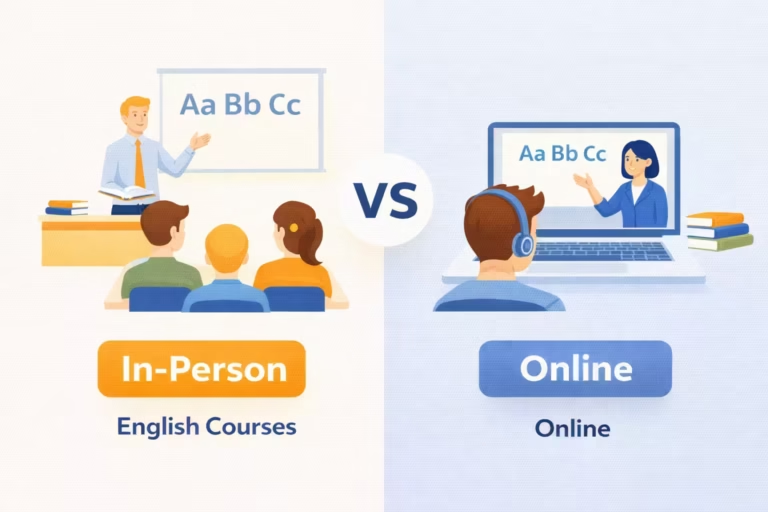
    In-Person vs Online English Courses: Which Is Best?

    “I can read and write English well, but when someone speaks to me, my mind goes blank.” I’ve heard this from hundreds of students over my years of teaching. Many people spend years studying English grammar and vocabulary, but when it’s time to have a real conversation, they freeze. This happens because speaking English is a different skill from reading or writing it. Choosing the right learning environment—whether in-person or online—can make a huge difference in how quickly and confidently you develop your spoken English. Both methods work, but they work differently. Understanding these differences will help you make the best choice for your learning style, schedule, and goals. Let me share what I’ve learned from teaching in both traditional classrooms and online platforms, so…

  • 40 Ways to Describe Breathing in Creative Writing

    Have you ever struggled to describe a character gasping for air, sighing in relief, or breathing heavily after a chase? You’re not alone. Many writers find it challenging to capture something as simple yet essential as breathing on the page. As an English writing instructor, I’ve spent years helping students bring their stories to life through vivid descriptions. One of the most common challenges I see in student manuscripts is flat, repetitive breathing descriptions. They write “he breathed heavily” or “she took a deep breath” over and over, missing opportunities to show emotion, build tension, and create atmosphere. Learning how to describe breathing in writing transforms your storytelling. Breathing reveals character emotions, creates mood, and pulls readers deeper into scenes. This guide provides 40 practical…

  • How to Describe Bruises in Writing (With Examples)

    Have you ever struggled to describe a bruise in your story, medical report, or creative writing assignment? You’re not alone. After teaching English writing for over twelve years, I’ve noticed students often repeat the same basic words: “blue,” “purple,” or “painful.” While these words aren’t wrong, they don’t create vivid pictures in readers’ minds. Learning how to describe bruises in writing effectively helps you create more realistic characters, write better medical documentation, craft compelling fiction, and improve your overall descriptive writing skills. Whether you’re a student working on a creative writing piece, an ESL learner building vocabulary, or a professional documenting injuries, this guide will teach you practical techniques with clear examples you can use immediately. Why Accurate Bruise Description Matters in Writing In my…

  • Limerick Examples: 410 Funny & Creative Poems

    As an English teacher with over a decade of classroom experience, I’ve watched countless students light up when they discover limericks. These playful five-line poems are magical teaching tools—they make grammar fun, boost creativity, and help learners remember vocabulary through rhythm and rhyme. Whether you’re a parent looking for educational activities, a teacher planning lessons, or simply someone who loves wordplay, limericks offer something special for everyone. In this comprehensive guide, I’ll share 410 limerick examples organized by age group and theme, plus practical tips I’ve used successfully in both offline and online classes. You’ll discover how these short poems can transform language learning from a chore into pure joy. What Is a Limerick? (Simple Explanation) A limerick is a short, funny poem with exactly…

  • Positive Feedback Examples: 400 Inspiring Ideas

    Giving positive feedback is one of the most powerful tools in teaching, parenting, and personal development. When done well, it builds confidence, motivates learners, and creates a supportive environment where people feel safe to try, fail, and grow. But here’s the challenge many teachers and parents face: we know we should give positive feedback, but we often struggle to find the right words. We end up repeating “Good job!” or “Well done!” until these phrases lose their meaning. As an experienced English teacher, I’ve learned that specific, meaningful feedback makes all the difference. Generic praise feels empty. Specific recognition feels genuine and encouraging. This guide provides 400 positive feedback examples across different situations. Whether you’re a new teacher, an ESL trainer, a parent supporting your…

  • How to Make an Inference in 6 Easy Steps

    By an experienced English teacher and spoken English trainer with 10+ years of classroom experience You Already Know How to Make an Inference — You Just Don’t Know It Yet Here’s something that happens in my classroom almost every week. A student walks in, looks at me holding a stack of papers, and whispers to their friend, “I think we have a quiz today.” Nobody told them. It wasn’t written on the board. But they figured it out from the clues in front of them. That’s an inference. Learning how to make an inference is one of the most useful thinking skills you will ever develop. It helps you understand what you read, what you hear, and what happens around you — even when not…

  • How to Answer “What Are Your Strengths?” Naturally in English

    “So, tell me about your strengths.” Five simple words that can make even confident speakers freeze up. I’ve watched countless students practice their English fluently in class, only to stumble when asked this common interview question. Why? Because talking about yourself in English—especially your good qualities—requires a special kind of confidence that goes beyond grammar rules. Whether you’re preparing for a job interview, a university admission, or simply want to introduce yourself professionally, knowing how to discuss your strengths clearly and naturally is essential. But here’s the challenge: you need to sound confident without bragging, be specific without rambling, and speak naturally without memorizing scripts. In my years of teaching spoken English, I’ve helped hundreds of learners transform from nervous, script-dependent speakers into confident communicators…

  • ·

    How to Help Your Children with Their Tutoring Lessons

    As a teacher who has worked with hundreds of students in both classroom and online settings, I can tell you one simple truth: children learn best when their parents are involved. But here’s the challenge—many parents want to help their children with their tutoring lessons but don’t know where to start. You don’t need to be an expert in every subject. You don’t need a teaching degree. What you need is the right approach, some patience, and a willingness to support your child’s learning journey. In this guide, I’ll share practical strategies I’ve used successfully with parents over my years of teaching. These methods work whether your child is learning English, math, science, or any other subject through tutoring sessions. Understanding Your Role in Your…