Month: April 2024

  • English Dialogues: At a Restaurant / Grocery Story (Speaking Practice)

    English Dialogues: At a Restaurant / Grocery Store help learners communicate confidently while ordering food, shopping for groceries, and interacting politely with staff. These everyday situations require common English phrases such as asking for items, checking prices, ordering meals, making payments, and saying thank you. Practicing these dialogues prepares learners for real-life situations at restaurants and grocery stores. These dialogues are ideal for daily spoken English practice, travel English, and ESL role-play activities. They use easy vocabulary, short sentences, and practical expressions, making them suitable for beginners and intermediate learners. By practicing restaurant and grocery store conversations, learners can improve their fluency, confidence, and ability to communicate naturally in everyday English. This topic is part of our English Dialogues for English learners. English Dialogues: At…

  • Fun Ways to Learn to Read and Write English

    Fun Ways to Learn to Read and Write Learning to read and write is one of the most important skills for children and beginners, but it does not have to be boring. Fun Ways to Learn to Read and Write explores creative and enjoyable methods that make language learning exciting and stress-free. This topic focuses on games, stories, activities, and daily practice ideas that help learners build reading and writing skills naturally. It is especially useful for parents, teachers, and early learners who want effective yet playful learning techniques. By using fun methods, learners stay motivated, improve faster, and develop confidence. This article shows that when learning feels enjoyable, reading and writing become lifelong skills rather than difficult tasks. The Dance of Reading Let’s begin…

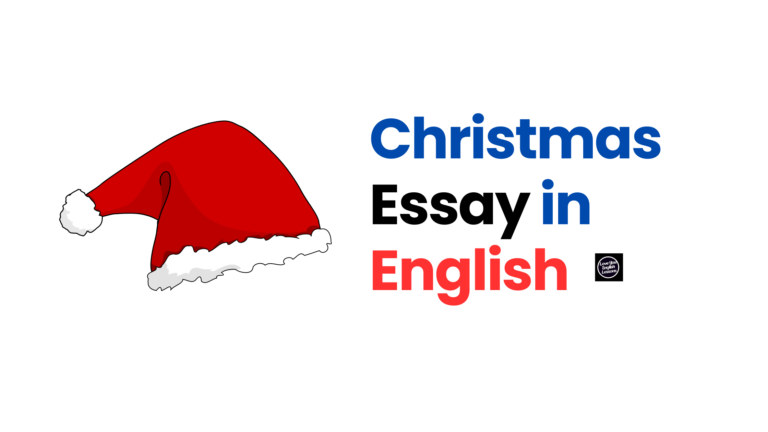
  • Essay About Christmas for Students and Children

    Essay About Christmas for Students and Children explains the joy and significance of Christmas, a festival celebrated around the world with love, happiness, and togetherness. This essay helps students understand why Christmas is celebrated, who Santa Claus is, and how the festival spreads the message of kindness, sharing, and peace. Written in clear and easy language, this essay is ideal for school students, kids, and English learners. It is useful for exams, homework, and classroom activities while making learning about festivals fun and meaningful. Essay About Christmas for Students and Children Christmas is a special time of year that brings joy to many people around the world. It’s a holiday that comes every December 25th, and it’s a day when families and friends come together…

  • 150 Everyday English Sentences – GOING – DOING – BEING

    Going, doing, and being are some of the most commonly used words in everyday English. In this post, 150 Everyday English Sentences – Going, Doing, Being, you will learn how these words are used naturally in daily conversations to talk about plans, actions, activities, and states. The sentences are simple, practical, and easy to understand, making them perfect for students, beginners, and ESL learners. Practicing these examples will help you improve your spoken English, sentence fluency, and confidence in real-life situations. This post is helpful for: English beginners and ESL learners Kids, school, and college students Working professionals English teachers and future teachers This topic is part of our English Sentences for English learners. 150 Everyday English Sentences – GOING – DOING – BEING Everyday…

  • English Speaking: 150 English Sentences with “Since” and “For”

    “Since” and “for” are commonly used in English to talk about time and duration, especially with the present perfect tense. In this post, 150 English Sentences with “Since” and “For”, you will learn how to use these two words correctly through clear and practical examples. These sentences will help you understand the difference between a point in time (since) and a period of time (for). Whether you are a student, ESL learner, or exam aspirant, this list will improve your grammar accuracy, sentence structure, and spoken English fluency. This topic is part of our English Sentences for English learners. ✅ Rules Quick Recap Since = starting point of time (when something began).👉 Example: I have lived here since 2010. For = duration of time (how…

  • ·

    How to Talk About Culture in English

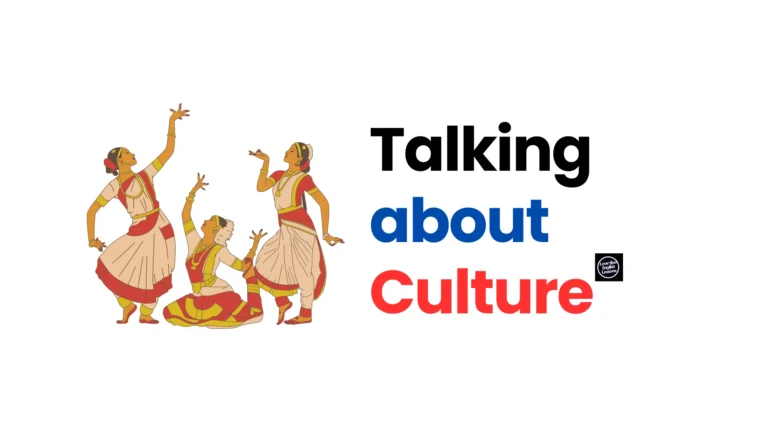
    Talking about culture is an important and meaningful part of English communication. Culture comes up often in daily conversations, exams, interviews, travel discussions, classroom topics, and international communication. When you know the right words, you can express ideas about traditions, values, food, festivals, and lifestyles with confidence. In this topic, you’ll learn how to talk about culture in English using simple, clear, and commonly used vocabulary. These expressions help you describe your own culture, understand other cultures, and compare cultural differences respectfully and naturally. This lesson will help you: Talk about traditions, customs, and festivals Describe cultural values and beliefs Compare different cultures politely Improve speaking and writing skills for exams and conversations Sound more confident and fluent in discussions Whether you’re preparing for IELTS/ESL…

  • English Nouns: Definition, Types, and Examples (Complete Grammar Guide)

    English Nouns: Definition, Types, and Examples English Nouns: Definition, Types, and Examples explains one of the most basic and important parts of English grammar. Nouns name people, places, things, and ideas, and they appear in almost every sentence. This topic clearly defines nouns and explains different types such as common nouns, proper nouns, abstract nouns, and collective nouns. With simple explanations and examples, it helps learners understand how nouns work in sentences. Written for beginners and school students, this guide is also useful for ESL learners who want a strong grammar foundation. Learning nouns correctly improves sentence structure, writing skills, and overall language confidence. What is a Noun? A noun is a word that names a person, place, thing, or idea. Think of nouns as…

  • What Is a Pronoun? Definition, Types & Examples

    What Is a Pronoun? Definition, Types & Examples is a beginner-friendly guide to one of the most important grammar topics in English. Pronouns help avoid repetition and make sentences smooth and clear. This topic explains different types of pronouns—such as personal, possessive, reflexive, and relative—with easy examples. Written in simple English, it is ideal for school students, ESL learners, and exam preparation. Understanding pronouns improves both writing and speaking skills and helps learners form correct sentences with confidence. What are Pronouns? A pronoun is a word that takes the place of a noun in a sentence. Nouns are words that name people, places, things, or ideas. For example, in the sentence “John is my friend,” the word “John” is a noun. Instead of saying “John”…

  • 20 English Phrasal Verbs with “COME,” with Meaning and Example Sentences

    Phrasal verbs are a very important part of everyday English, and the verb “come” is used in many common phrasal verbs. These phrasal verbs often have meanings that are different from the original verb, which can confuse English learners. Learning phrasal verbs with “come” helps learners understand real spoken English and use natural expressions in daily conversations. This blog post, “20 Phrasal Verbs with ‘COME,’ Along with Their Meanings,” is specially created for students, beginners, and ESL learners. In this post, you will learn useful phrasal verbs formed with “come”, along with their simple meanings. These phrasal verbs are commonly used in everyday speaking and writing. This topic is part of our English Phrasal Verbs for English learners. What Are Phrasal Verbs? Before we start,…

  • English Phrasal Verbs with “CALL,” (With Meanings and Examples)

    Phrasal verbs are an essential part of everyday English, and the verb “call” is used in many common and useful phrasal verbs. These phrasal verbs often have meanings that are different from the original verb, which can be confusing for English learners. Learning phrasal verbs with “call” helps learners understand real spoken English and communicate more naturally. This blog post, “Phrasal Verbs with ‘CALL’ Along with Their Meanings,” is specially created for students, beginners, and ESL learners. In this post, you will learn commonly used phrasal verbs formed with “call”, along with their simple meanings. These phrasal verbs are frequently used in daily conversations, phone calls, and professional situations. This topic is part of our English Phrasal Verbs for English learners. What Are Phrasal Verbs?…