Month: March 2026

  • ·

    Essay Writing for Middle School: 5 Types Students Should Master

    As an English teacher with over a decade of classroom experience, I’ve watched countless middle school students struggle with essay writing. The good news? Once students understand the five main types of essays, their confidence and writing skills improve dramatically. In my classes, both online and offline, I’ve seen students transform from hesitant writers to confident communicators by practicing these essential essay types. Middle school is the perfect time to master different types of essays. This is when students build the foundation for high school, college, and even workplace writing. Whether you’re a parent helping with homework, a teacher planning lessons, or a student trying to improve your grades, understanding these five essay types will make writing assignments much easier. Let me share the five…
  • ·

    Study Skills for Intermediate Level Language Learners: Your Complete Guide to Learning Smarter

    You’ve moved past the basics. You know how to introduce yourself, order food, and hold a short conversation. But somewhere between beginner and advanced, progress starts to feel slow. You study hard, but fluency still feels far away. Sound familiar? This is one of the most common experiences among study skills for intermediate level language learners — and it even has a name. Language teachers call it the “intermediate plateau.” You’re not alone, and more importantly, you’re not stuck. You just need smarter strategies, not harder work. In this guide, you’ll find practical, proven study skills that actually work for intermediate learners. These are methods I’ve used with hundreds of students over more than ten years of teaching English in classrooms, private sessions, and online…

  • American Etiquette Guide: Dining, Tipping, Greetings, and Social Rules

    When Maria, a new English teacher from Spain, moved to Chicago to teach ESL classes, she thought her excellent English skills would be enough. But during her first week, she found herself confused at a restaurant when the server kept refilling her coffee without asking, unsure how much to tip her hairdresser, and worried she’d offended a colleague by asking about their salary. “I can teach English grammar,” she told me later, “but I wasn’t prepared for all these unwritten social rules!” Maria’s experience is common. Understanding American etiquette isn’t just about being polite—it’s about feeling confident in everyday situations and helping your students navigate real American life. Whether you’re a teacher preparing international students, a parent guiding your children, or someone new to American…

  • 250 Short Bio Examples (+ Free Templates)

    Writing a short bio can feel surprisingly difficult. Whether you’re creating a profile for work, updating your social media, or introducing yourself on a website, finding the right words to describe yourself in just a few sentences is a real challenge. I’ve helped hundreds of students and professionals write their bios over the years, and I’ve learned that most people struggle with the same thing: how to sound professional without being boring, and how to be interesting without seeming boastful. In this guide, I’ll share 250 real examples of short bios across different situations, plus simple templates you can customize for your own use. These examples come from my experience working with teachers, business professionals, students, and creative people who all needed to introduce themselves…

  • Best Resources to Teach English as a Second Language

    Teaching English as a second language is one of the most rewarding jobs you can have. Over my 15 years as an ESL teacher, I’ve worked with students from 15+ countries, taught in classrooms from Tokyo to Mumbai, and helped thousands of learners gain confidence in speaking English. The question I hear most often from new teachers and self-learners is simple: “What are the best resources to teach English as a second language?” The answer depends on your teaching situation, your students’ goals, and whether you’re teaching online or in person. In this guide, I’ll share the proven resources I use every day in my classes, explain why they work, and show you how to use them effectively. These aren’t just random tools I found…

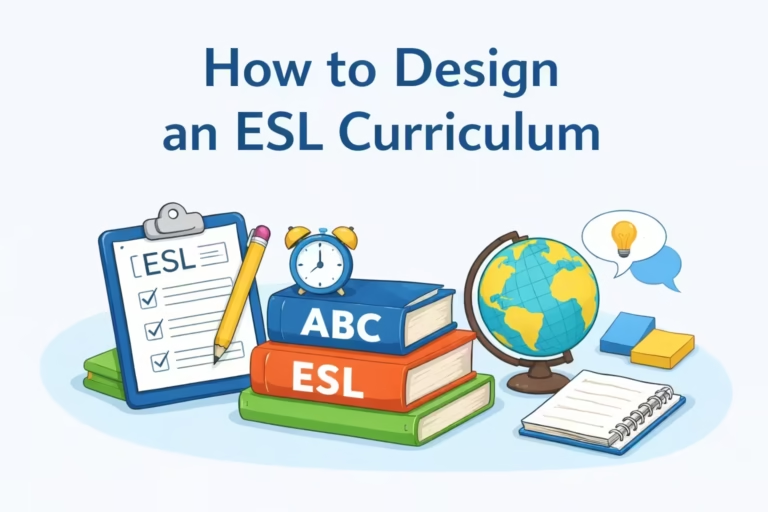
  • How to Design an ESL Curriculum for Beginner to Advanced Learners

    Introduction: Why ESL Curriculum Planning Matters Have you ever walked into an English class with no real plan — and felt the lesson fall apart in front of you? The topic drifts. Students look confused. Some finish early, others fall behind. By the end, you wonder if anyone actually learned anything. That is exactly the problem that strong ESL curriculum planning solves. ESL curriculum planning is the process of deciding what to teach, when to teach it, and how to teach it. When it is done well, every lesson has a clear purpose. Students build skills step by step. Progress becomes visible. And teaching becomes far less stressful. Whether you are a new English teacher, an experienced trainer moving your classes online, or a parent…

  • ·

    Australian Slang: 100+ Words, Phrases & Meanings

    G’day! If you’ve ever watched an Australian movie or chatted with someone from Down Under, you’ve probably noticed that Aussies have their own unique way of speaking. Words get shortened, meanings get twisted, and sometimes it feels like they’re speaking a completely different language—even though it’s still English! As an English teacher who has worked with students preparing for travel, work, and study in Australia, I can tell you that understanding Australian slang is about more than just learning vocabulary. It’s about understanding culture, humor, and the relaxed, friendly way Australians communicate. Many of my students have told me they felt lost in their first weeks in Australia, not because their English was poor, but because no one taught them that “arvo” means afternoon or…

  • 5 Ways to Help Students Build Reflection Skills

    Learning doesn’t stop when the lesson ends. The real magic happens when students take time to think about what they’ve learned, how they learned it, and what they can do better next time. This process is called reflection, and it’s one of the most powerful tools for growth in education. As an English teacher with years of experience in both classroom and online settings, I’ve seen firsthand how reflection skills transform average learners into confident, independent students. When students develop strong reflection skills, they don’t just memorize information—they understand it deeply, remember it longer, and apply it more effectively in real-life situations. In this article, I’ll share five practical ways to help students build reflection skills. These methods work for all ages and learning environments,…

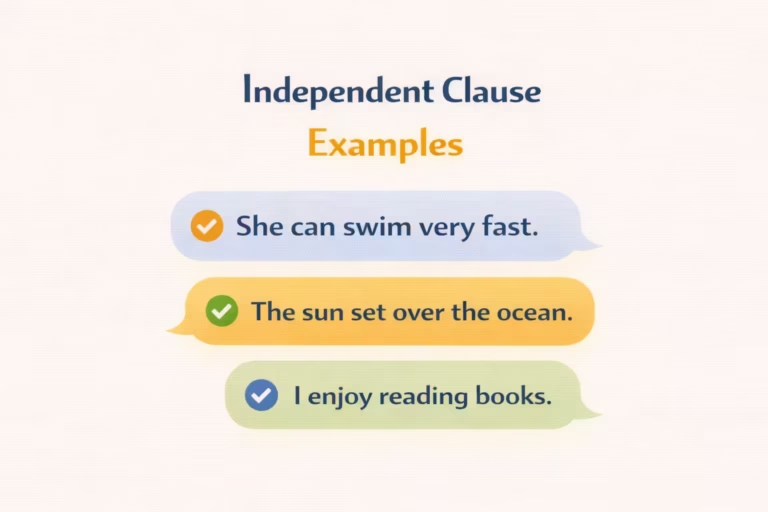
  • Independent Clause Examples: 550+ Sentences

    Understanding independent clauses is one of the most important steps in mastering English grammar. Whether you’re a teacher preparing lesson plans, a parent helping your child with homework, or someone learning English as a second language, knowing how independent clauses work will transform the way you read, write, and speak. After teaching English for over fifteen years, I’ve seen countless students struggle with sentence structure. The good news? Once you understand independent clauses, everything else becomes clearer. I am providing over 550 real examples organized by type, along with simple explanations that anyone can follow. What Is an Independent Clause? An independent clause is a group of words that contains a subject and a verb and expresses a complete thought. It can stand alone as…

  • ·

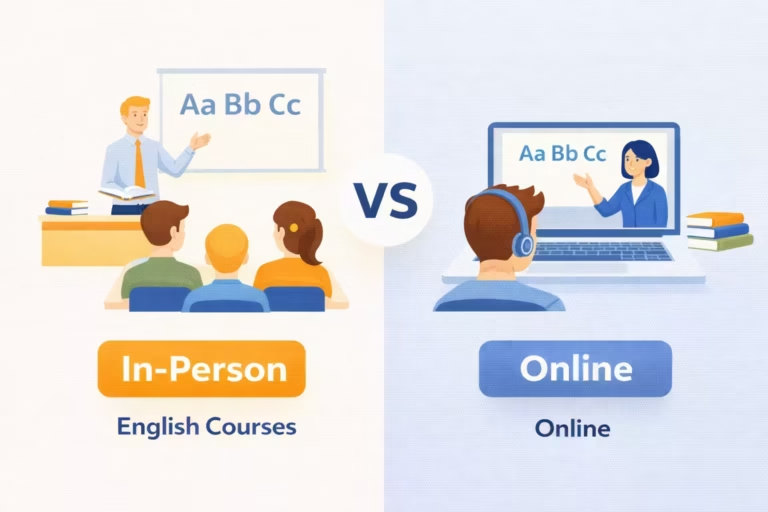
    In-Person vs Online English Courses: Which Is Best?

    “I can read and write English well, but when someone speaks to me, my mind goes blank.” I’ve heard this from hundreds of students over my years of teaching. Many people spend years studying English grammar and vocabulary, but when it’s time to have a real conversation, they freeze. This happens because speaking English is a different skill from reading or writing it. Choosing the right learning environment—whether in-person or online—can make a huge difference in how quickly and confidently you develop your spoken English. Both methods work, but they work differently. Understanding these differences will help you make the best choice for your learning style, schedule, and goals. Let me share what I’ve learned from teaching in both traditional classrooms and online platforms, so…