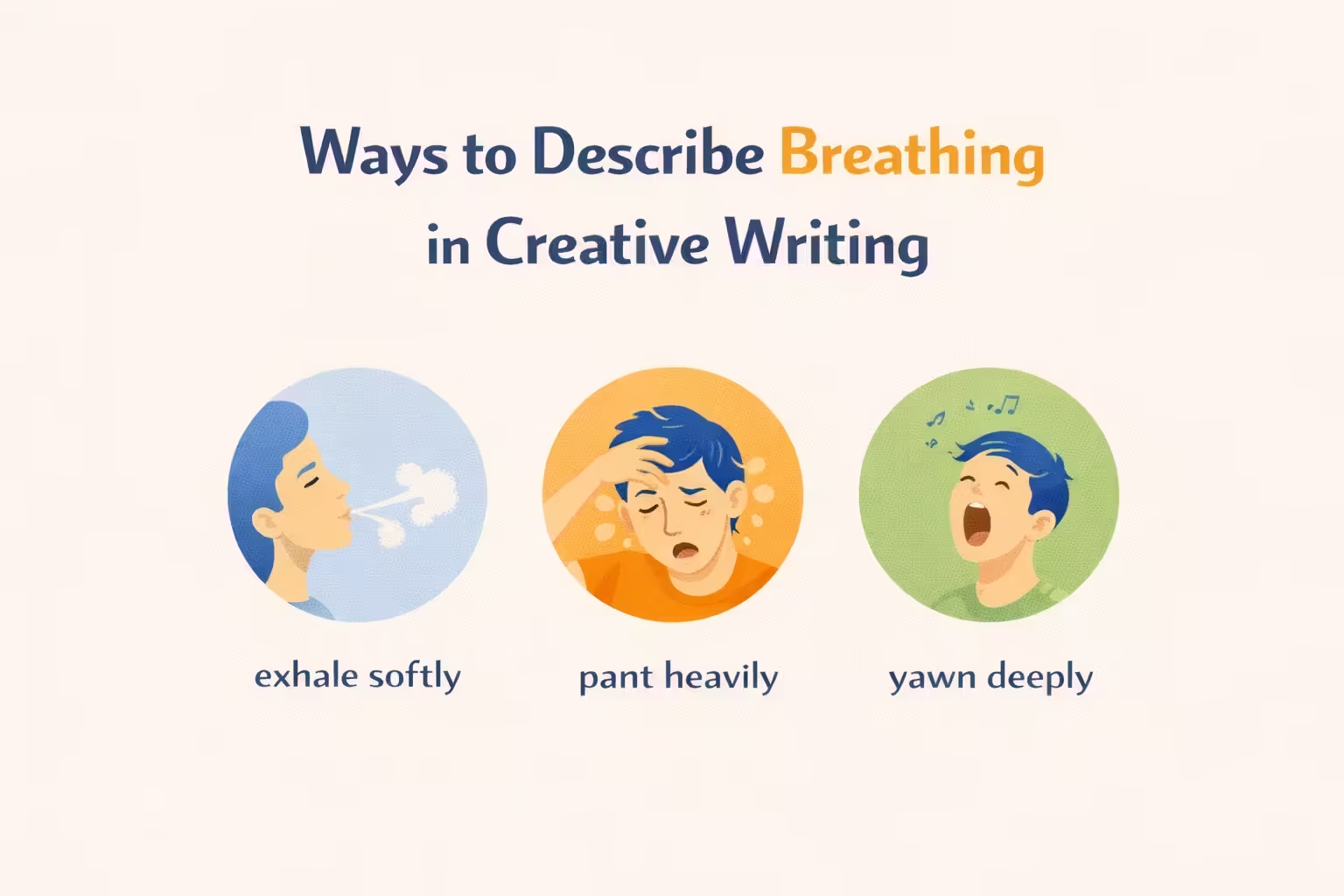
Have you ever struggled to describe a character gasping for air, sighing in relief, or breathing heavily after a chase? You’re not alone. Many writers find it challenging to capture something as simple yet essential as breathing on the page.
As an English writing instructor, I’ve spent years helping students bring their stories to life through vivid descriptions.
One of the most common challenges I see in student manuscripts is flat, repetitive breathing descriptions. They write “he breathed heavily” or “she took a deep breath” over and over, missing opportunities to show emotion, build tension, and create atmosphere.
Learning how to describe breathing in writing transforms your storytelling. Breathing reveals character emotions, creates mood, and pulls readers deeper into scenes.
This guide provides 40 practical tips and examples to help you master this essential writing skill.
Why Breathing Descriptions Matter in Writing
Before diving into techniques, let’s understand why breathing deserves your attention as a writer.
In my creative writing workshops, I ask students to close their eyes and remember a moment of fear. Without fail, they describe their breathing first—fast, shallow, stuck in their throat. Breathing is our body’s emotional barometer, and readers instinctively understand its language.
When you describe breathing well, you accomplish several things simultaneously. You reveal what characters feel without stating emotions directly. You control pacing and tension in scenes. You create sensory experiences that make readers feel present in the moment. You distinguish characters through unique breathing patterns and habits.
Poor breathing descriptions sound like medical reports. Good ones feel like lived experiences.
Understanding Different Types of Breathing
Before you can describe breathing effectively, you need to recognize different breathing patterns and what they communicate.
Normal Breathing
Most of the time, characters breathe without thinking. You don’t need to mention every breath—only when breathing changes or carries meaning. Normal breathing is steady, quiet, and unconscious. Reserve descriptions for moments when breathing shifts from this baseline.
Emotional Breathing
Emotions change how we breathe immediately. Fear makes breathing quick and shallow. Sadness creates heavy, irregular breaths. Anger produces sharp, forceful exhalations. Relief brings long, slow exhales. Each emotion has a breathing signature.
Physical Breathing
Exercise, injury, illness, and exertion create distinct breathing patterns. A marathon runner breathes differently than someone climbing stairs after years of inactivity. These details build believable characters and situations.
Environmental Breathing
Cold air, pollution, altitude, water, and confined spaces all affect breathing. These descriptions ground readers in settings while advancing plot.
Explore more interesting topics here:
- Best English Conversation Topics for Daily Use
- Learn English Through Media: Fun and Effective Methods
- 150 Basic English Sentences Every Kid Should Learn
- Top 10 Reasons to Learn English and Improve Your Life
- English Conversation at the Coffee Shop
40 Tips and Examples for Describing Breathing in Writing
Let me share specific techniques I’ve collected from published authors, student successes, and my own writing practice. I’ve organized these from basic to advanced.
Show, Don’t Tell Emotions Through Breathing
Tip 1: Replace emotion words with breathing patterns
Instead of writing “Sarah felt anxious,” show her anxiety through breath.
Weak: Sarah was nervous about the interview.
Strong: Sarah’s breath came in short, shallow sips as she waited outside the interview room.
Tip 2: Use breathing to reveal hidden emotions
Characters can lie with words but not with breath.
Example: “I’m fine,” Marcus said, but his breath hitched between words, betraying the tears he held back.
Tip 3: Contrast calm words with agitated breathing
This creates dramatic irony and tension.
Example: “No problem at all,” she smiled, though her chest rose and fell rapidly beneath her pressed blouse.
Create Atmosphere and Mood
Tip 4: Match breathing descriptions to scene tone
Horror, romance, and comedy each require different breathing vocabulary.
Horror example: Each breath scraped through her throat like broken glass.
Romance example: His breath warmed her neck, soft and steady as ocean waves.
Tip 5: Use breathing to slow or quicken pace
Long, flowing breath descriptions slow readers down. Short, choppy ones speed up.
Slow pace: He drew in a long, measured breath, held it for a count of five, then released it gradually through pursed lips.
Fast pace: Breath. Run. Breath. Footsteps behind. Breath catching. Lungs burning.
Tip 6: Layer breathing with other sensory details
Combine breath descriptions with sound, temperature, or physical sensations.
Example: Her breath fogged the cold window glass as she pressed her forehead against it, each exhale erasing then revealing the street below.
Use Specific, Concrete Language
Tip 7: Choose precise verbs
Replace generic “breathing” with specific actions: gasped, wheezed, panted, gulped, sipped, heaved, rasped.
Generic: He breathed hard after running.
Specific: He gulped air like a drowning man reaching surface.
Tip 8: Add sound to breathing descriptions
Breathing makes noise—use it.
Examples: Her breath whistled through clenched teeth. His snores rattled the bedroom walls. The baby’s breath made tiny whistling sounds through her nose.
Tip 9: Include physical sensations
How does breathing feel in the body?
Example: Each breath stabbed his ribs like knife points. The cold air burned tracks down her throat into her lungs.
Avoid Common Breathing Clichés
Tip 10: Skip “breath I didn’t know I was holding”
This phrase appears in thousands of manuscripts. Find fresh alternatives.
Overused: I released the breath I didn’t know I was holding.
Fresh: Air rushed from my lungs, leaving me dizzy.
Tip 11: Limit “took a deep breath”
This phrase works occasionally but becomes invisible through overuse.
Overused: She took a deep breath before entering.
Better: She filled her lungs completely, held it three counts, then pushed through the door.
Tip 12: Vary “breathed heavily”
Find ten different ways to express this before repeating.
Alternatives: His chest heaved. She panted like a dog. Air rasped through his throat. Her breathing came in ragged bursts.
Match Breathing to Character
Tip 13: Give characters signature breathing habits
Unique breathing patterns distinguish characters.
Example: Detective Morris always exhaled through his nose when lying—a tell his partner learned to recognize.
Tip 14: Use breathing to show physical condition
Age, fitness, health, and habits affect breathing.
Young athlete: She bounded up three flights without her breathing changing rhythm.
Elderly character: Each step required a pause, a wheezing intake, before continuing.
Tip 15: Show character background through breathing
Training, trauma, and life experience shape how people breathe.
Example: Years of yoga left her breathing deep and controlled even during arguments, while his military training kicked in—shallow tactical breaths that kept him alert.
Build Tension and Suspense
Tip 16: Use held breath for anticipation
Stopped breathing creates immediate tension.
Example: She froze, breath trapped in her chest, as footsteps approached her hiding spot.
Tip 17: Accelerate breathing as danger increases
Let breathing patterns mirror rising stakes.
Example: Her breathing quickened—normal, then faster, then gasping—as the door handle turned.
Tip 18: Create silence through breath focus
Describing quiet breathing makes readers feel the silence.
Example: The library held only the sound of his breathing and the whisper of turning pages.
Describe Breathing During Action
Tip 19: Keep it brief during fast action
Long descriptions kill action scene momentum.
Too long: As he sprinted down the alley, his breathing became increasingly labored and difficult, each inhalation seeming to provide less oxygen than the last.
Better: He ran. Lungs screaming. Can’t stop.
Tip 20: Use breathing to mark action beats
Breathing becomes a metronome for fight or chase scenes.
Example: Punch. Breath. Duck. Gasp. Kick. Wheeze. Each exchange cost more air than the last.
Tip 21: Show exhaustion through breathing breakdown
When characters hit their limit, breathing becomes desperate.
Example: His breathing turned ragged, then desperate, then he simply opened his mouth and hoped air would find its way in.
Integrate Breathing with Dialogue
Tip 22: Interrupt speech with breath
Real people pause to breathe—characters should too.
Example: “I can’t—” She gasped. “—I can’t believe you did that.”
Tip 23: Show effort through breathless speech
Physical strain changes how characters talk.
Example: “Which…” He panted between words. “…way…” Gulp of air. “…did they go?”
Tip 24: Use breathing as dialogue tags
Sometimes breathing replaces “he said.”
Example: “Leave me alone.” The words came out on an exhausted exhale.
Create Intimacy and Connection
Tip 25: Describe synchronized breathing
Shared breathing suggests closeness.
Example: Their breathing synchronized as they lay together, rising and falling in unconscious rhythm.
Tip 26: Use breath in romantic moments
Breathing creates intimacy without explicit content.
Example: She felt his breath catch as her fingers traced his jaw.
Tip 27: Show awareness through breathing
Characters notice breathing when someone matters.
Example: He’d learned her breathing patterns—awake, asleep, anxious, content. Tonight something was different.
Describe Unusual Breathing Situations
Tip 28: Underwater or holding breath
Special situations require specific descriptions.
Example: Her lungs began to burn, then scream, then beg as she searched for the surface.
Tip 29: Breathing in extreme temperatures
Hot and cold air feel different.
Cold: Each breath felt like inhaling knives.
Hot: The air sat thick in his lungs, too heavy to provide relief.
Tip 30: Altitude or thin air
Reduced oxygen creates distinct sensations.
Example: At this elevation, breathing felt like trying to get full from cotton candy—lots of effort, little satisfaction.
Use Metaphors and Comparisons
Tip 31: Compare breathing to familiar experiences
Metaphors help readers connect immediately.
Examples: Breathing like a broken engine. Breath as shaky as her hands. Each inhale felt like breathing through a straw.
Tip 32: Use breathing in similes
Quick comparisons create vivid images.
Examples: He panted like a dog. Her breath misted like dragon smoke. Air wheezed through his lungs like wind through a cracked window.
Tip 33: Create original comparisons
The best metaphors feel fresh and specific to your story.
Example: Her panic breathing reminded him of his grandmother’s old vacuum cleaner—loud, desperate, never quite working right.
Show Internal vs External States
Tip 34: Contrast controlled breathing with inner chaos
Surface calm versus internal storm.
Example: She forced her breathing to remain even while her thoughts raced in panic circles.
Tip 35: Use breathing to show loss of control
When characters break, breathing breaks first.
Example: His carefully measured breaths dissolved into gasps as the news hit.
Tip 36: Describe deliberate breathing techniques
Characters who practice breath control reveal personality.
Example: She counted—four in, hold for seven, eight out—the breathing exercise her therapist taught her.
Layer Meaning in Breathing Descriptions
Tip 37: Use breathing to foreshadow
Unusual breathing can hint at coming problems.
Example: Dad’s breathing had sounded different all week, though Mom kept saying he was fine.
Tip 38: Create callback moments
Reference earlier breathing descriptions for emotional impact.
Example: He breathed the same shallow, frightened breaths she remembered from the hospital—and she knew they’d run out of time.
Tip 39: Show passage of time through breathing
Breathing normalizing shows recovery or elapsed time.
Example: Hours later, her breathing had finally steadied, the panic attack leaving only exhaustion behind.
Tip 40: End scenes with breathing
A final breath image can provide powerful closure.
Example: She released the breath she’d held through his entire speech and closed the door behind her forever.
Practical Exercises to Improve Your Breathing Descriptions
In my writing classes, I assign specific exercises to build this skill. Try these yourself:
Exercise One: Emotion Breathing Chart
List ten emotions. For each, write three different ways to describe how breathing changes. Avoid the word “breathed” entirely. Use physical sensations, sounds, and rhythms instead.
Exercise Two: Scene Rewrite
Take a scene from your current project. Identify three places where breathing descriptions would strengthen emotion or tension. Add them, focusing on showing rather than telling.
Exercise Three: Observation Practice
Watch people in real life or films. Notice how breathing changes during conversations, stress, laughter, and sadness. Write descriptions of what you observe without naming the emotion.
Exercise Four: Breathing Beats
Write a one-page action scene using breathing as your only physical description. Each paragraph should include at least one breathing reference that advances the action or builds tension.
Common Mistakes to Avoid
After reviewing hundreds of student manuscripts, I’ve identified recurring problems with breathing descriptions.
Mistake One: Overusing breathing descriptions
Not every moment needs breathing. Use it strategically for emotional beats, scene transitions, and tension building. If you mention breathing more than once per page, you’re probably overdoing it.
Mistake Two: Forgetting breathing entirely
The opposite problem—never mentioning breath even in intense scenes. This makes writing feel flat and theoretical rather than physical and immediate.
Mistake Three: Using medical terminology
Unless your character is a doctor, avoid clinical breathing descriptions. “Respiratory rate increased” tells us nothing about the experience. “She couldn’t catch her breath no matter how fast she gasped” shows the struggle.
Mistake Four: Inconsistent breathing logic
Characters who sprint for pages without breathing, then gasp dramatically in calm moments. Make sure breathing matches physical reality.
Mistake Five: Relying on the same three descriptions
If every character “takes a deep breath” and “breathes heavily,” readers stop seeing these phrases. Build a varied vocabulary.
How to Practice Describing Breathing in Your Writing
Improvement comes from deliberate practice combined with reading awareness.
Read published books specifically looking for breathing descriptions. Mark passages that work well. Notice what published authors do that makes breathing feel natural rather than forced. I keep a running list of effective breathing descriptions in my notebook—currently over two hundred examples from various genres.
Write breathing-focused character sketches. Choose five different emotions. For each, write a paragraph showing a character experiencing that emotion through breathing and other physical details without naming the emotion. Share with readers and see if they identify the feelings correctly.
Revise existing work specifically for breathing. Go through a completed chapter. Highlight everywhere you currently mention breathing. Remove weak ones. Strengthen good ones. Add strategic new ones where emotion or tension needs support.
Set a breathing goal for each writing session. Before drafting, decide “This scene needs three breathing descriptions that show increasing panic” or “This dialogue needs breathing to show the character’s lying.” Intention creates better results than hoping descriptions appear naturally.
Final Thoughts on Describing Breathing in Writing
Learning how to describe breathing in writing takes practice, but the effort pays off in more vivid, emotionally resonant storytelling. Each time you capture breathing authentically, you pull readers deeper into your character’s experience.
Start small. In your next writing session, add just one strong breathing description. Pay attention to how it changes the scene’s emotional impact. Build from there, gradually expanding your breathing vocabulary and awareness.
Remember that breathing descriptions serve your story—they’re not decorative additions but functional tools for showing emotion, building tension, creating atmosphere, and revealing character. Use them purposefully and they’ll become one of your most reliable writing techniques.
The best breathing descriptions feel invisible yet essential, like breathing itself. Readers won’t consciously notice them but will feel more connected to your characters and more immersed in your scenes. That’s the goal—not showy writing, but deeper reader experience.
Now take a deep breath (see what I did there?) and practice these techniques in your own work. Your writing will become more vivid, your characters more real, and your readers more engaged. Happy writing!
📚 Continue Learning English
Choose your next lesson and keep improving your English skills with our free English learning resources.