Have you ever asked a class what a dove represents and gotten blank stares in return?
Or tried to explain why the green light in The Great Gatsby isn’t just a light — and watched confusion spread across every face in the room? If so, you already know the challenge.
Symbolism is one of the most important literary concepts students need to understand, but it’s also one of the hardest to teach well.
I will show you exactly how to teach symbolism in a way that makes sense, sticks in students’ minds, and actually makes reading more enjoyable.
Whether you’re teaching in a physical classroom or online, whether your students are in middle school or high school, this guide gives you real strategies, activities, and examples you can use starting tomorrow.
Find the similar topics in Teaching Resources category.
What Is Symbolism? Start With the Simple Definition
Before you can teach symbolism, you need to explain it clearly and simply. This sounds obvious, but many teachers skip this step or rush through it. That’s a mistake.
Here is the definition I use in my classroom, and it works every time: A symbol is something that stands for something else.
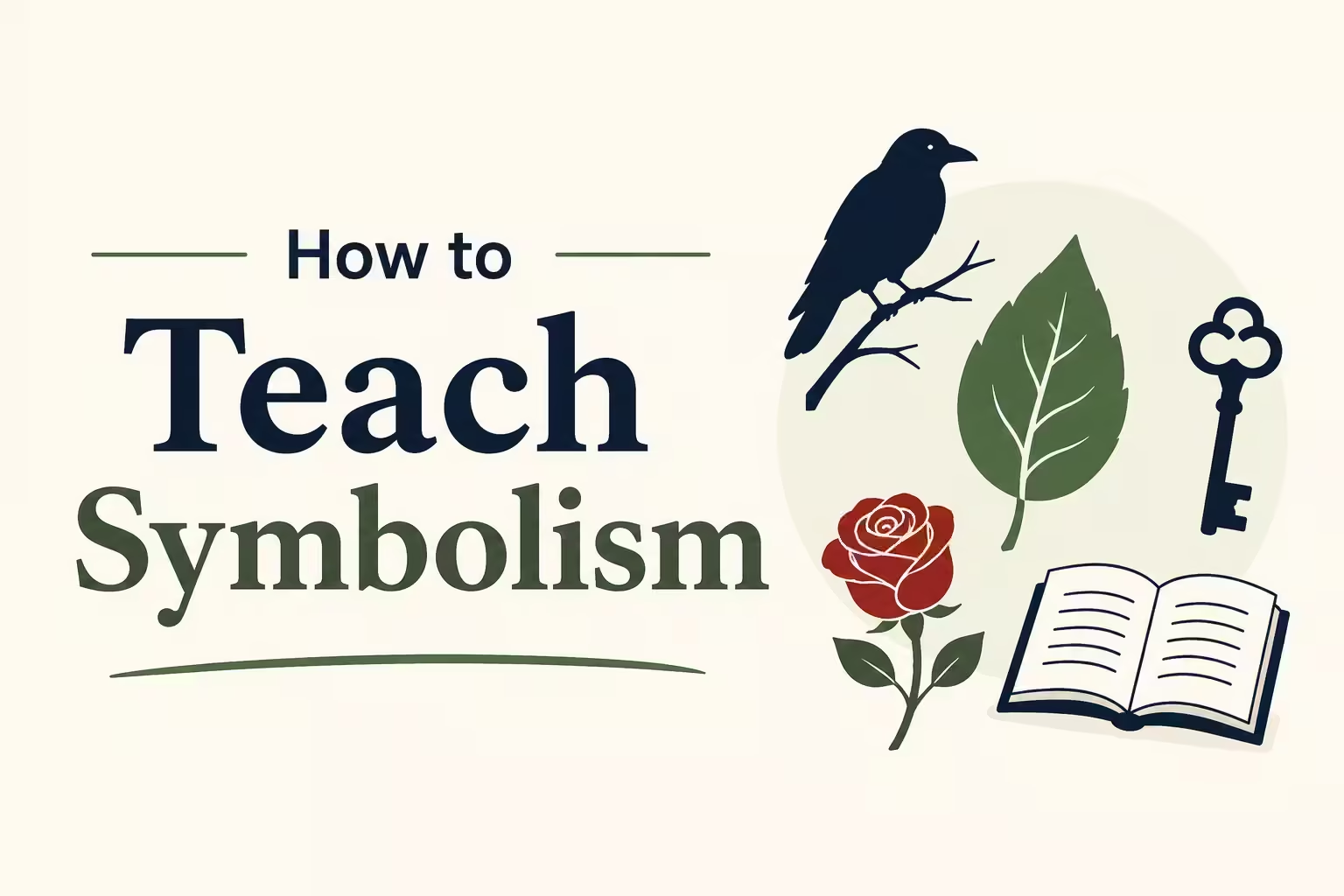
That’s it. Don’t overcomplicate it. A red rose stands for love. A skull stands for death. A broken chain stands for freedom. Once students grasp this basic idea, everything else becomes easier to build on.
I always follow this definition with a question: “Can you think of something in real life that stands for something else?” Students immediately start naming things. Traffic lights. National flags. A thumbs up. Team logos. This opening discussion takes about five minutes, but it does something powerful — it shows students that they already understand symbols. They just didn’t know that’s what they were called.
This moment of recognition is where teaching symbolism really begins.
Why Teaching Symbolism Matters
Symbolism is not just a literary trick that authors use to impress English teachers. It’s one of the main tools writers use to add layers of meaning to their stories. When students understand symbolism, they stop reading on the surface and start reading deeply. They begin to ask: “Why did the author choose this? What does it really mean?”
That skill — reading with analytical thinking — is useful far beyond English class. It helps students interpret news articles, advertisements, political speeches, films, and everyday conversations. Symbolism is everywhere, not just in books.
I tell my students this directly. I say, “Learning to spot symbols in a novel is the same skill that helps you notice when an advertisement is trying to manipulate you, or when a politician is using an image to trigger an emotion.” That connection to real life makes students take the concept seriously.
How to Teach Symbolism: Start With the Real World
The most effective way to introduce symbolism in the classroom is to start outside the classroom. Before touching a single text, spend time helping students recognize symbols in their everyday lives.
Here’s an activity I’ve used successfully for years, both in person and online.
The Symbol Scavenger Hunt
Ask students to look around — in the classroom, at home, on their phones — and find five things that are symbols. They should write down what the symbol is and what it represents. Give them ten minutes.
When they share their answers, you get a rich, diverse list. Students mention national flags, religious symbols, brand logos, emojis, road signs, and sports team mascots. Every one of these is a valid symbol, and every one opens a discussion.
This activity does three things. It proves that students already understand symbolic thinking. It makes the concept concrete before it becomes literary. And it creates enthusiasm — students enjoy this exercise because it connects learning to their own world.
For online classes, I run this as a timed activity in breakout rooms. Students share their lists via a shared document and then we discuss as a full group. It works just as well digitally as it does in a physical classroom.
Moving From Real Life to Literature
Once students are comfortable with everyday symbols, it’s time to bridge toward literary symbolism. This step is crucial. Don’t jump straight from “a dove means peace” to analyzing Lord of the Flies. Build the bridge gradually.
I use picture books or short illustrated stories at this stage, even with older students. Picture books are not babyish — they are intentionally visual and symbolic, which makes them perfect teaching tools. Books like The Giving Tree or The Lorax are full of clear, accessible symbolism that students can identify and discuss without the added pressure of complex language.
Ask students: “What do you think the tree in The Giving Tree represents? Why does the author show the boy taking more and more from the tree as he gets older?”
Students immediately engage with this. They suggest generosity, parents, nature, love, sacrifice. Multiple interpretations emerge — and that’s your next teaching point: symbols can have more than one meaning, and that’s okay.
This is something many students find surprising and liberating. They’ve been trained to look for one right answer. Symbolism teaches them that thoughtful analysis can yield multiple valid interpretations as long as they’re supported by evidence from the text.
How to Teach Symbolism Step by Step in Any Text
Now that students understand what symbolism is and have practiced recognizing it, here is the step-by-step process I use when teaching literary symbolism in any text.
Step 1: Read the Text With an Open Eye
During the first read, ask students not to focus on symbolism at all. Just understand the story. Who are the characters? What happens? What is the setting?
This matters because students who are hunting for symbols on a first read often miss the story entirely. Comprehension comes before analysis.
Step 2: Identify Repeated Images or Objects
After the first read, ask students: “Did anything appear more than once? Did the author keep mentioning a specific object, color, animal, or place?”
Repetition is one of the strongest signals that something is symbolic. If an author mentions a character’s broken watch three times, that watch probably means something. Make this a habit of mind for students: notice what repeats.
Step 3: Ask “Why This?” Questions
This is the heart of symbolic thinking. For any image or object students notice, teach them to ask: “Why did the author choose this specific thing? What associations does this object carry in our culture or in the story?”
A bird in a cage means something very different from a bird flying free. A candle burning down means something different from a candle just lit. The specific choice the author makes carries meaning.
Step 4: Connect the Symbol to the Theme
Symbols don’t exist on their own — they’re connected to what the story is really about. After identifying a symbol and discussing what it might represent, ask: “How does this symbol connect to the bigger ideas in the story?”
This step is where literary analysis thinking really develops. It’s also where students often need the most support, so model it explicitly before asking them to do it independently.
Step 5: Support the Interpretation With Evidence
Finally, teach students that a symbol interpretation must be supported by the text. It’s not enough to say “I think the bird represents freedom.” They need to say: “I think the bird represents freedom because every time the character feels trapped, the author describes birds flying outside the window, and when she finally escapes, she compares herself to a bird.”
That’s a complete, evidence-based literary analysis thought. And it starts with understanding symbolism.
Common Mistakes Students Make With Symbolism
After ten years of teaching symbolism in classrooms and online, I’ve seen the same mistakes come up again and again. Here’s what to watch for and how to address each one.
Over-symbolizing everything. Some students, once they learn about symbolism, start seeing symbols in everything — including things the author didn’t intend. A character drinking water might just be thirsty. Teach students that a symbol needs to be repeated, emphasized, or connected to theme. One mention of an object doesn’t make it a symbol.
Under-symbolizing everything. The opposite problem. Some students refuse to look beneath the surface. They say, “It’s just a flower, it doesn’t mean anything.” These students need more practice with the “Why this?” question and more exposure to how authors make deliberate choices.
Stating a symbol without explaining it. This is the most common mistake in written analysis. Students write: “The bird is a symbol of freedom.” Full stop. No explanation, no evidence. Teach students to always explain their thinking and connect it to the text.
Confusing symbolism with metaphor or simile. These are related but different concepts. A metaphor makes a direct comparison in language. A symbol is an object within the story that carries meaning. Many students mix these up. Address the distinction explicitly and give examples of each.
Assuming there’s only one right answer. As mentioned earlier, students often expect a single correct interpretation. Reassure them that symbolism allows for multiple valid readings. What matters is the quality of the reasoning, not conformity to a single answer.
Practical Classroom Activities for Teaching Symbolism
Here are four activities that have consistently worked well in both in-person and online classes.
Activity 1: Symbol Journals
Ask students to keep a running journal as they read a text. Every time they notice something that might be symbolic, they write it down with a brief explanation. This builds the habit of noticing and encourages students to think as they read, not only after.
Activity 2: Symbol Gallery Walk
Write different symbols from a text on large pieces of paper and post them around the room. Students walk around, add sticky notes with their interpretations, and then the class discusses. In online settings, use a digital tool like Padlet or Jamboard to achieve the same effect.
Activity 3: Create Your Own Symbol
Ask students to create a symbol for themselves — a simple drawing of an object that represents something about who they are. They present their symbol to the class and explain the connection. This deeply personal activity reinforces the concept while building confidence and communication skills.
Activity 4: Symbol Analysis Paragraph
Give students a specific symbol from a text and ask them to write one well-developed paragraph explaining what it represents and how it connects to theme. Provide a simple sentence starter framework for students who need support:
“In [title], [object] is a symbol of [meaning]. The author uses this symbol to represent [idea] because [evidence from text]. This connects to the theme of [theme] because [explanation].”
This framework helps struggling students produce structured analysis while also learning the format independently over time.
Teaching Symbolism Online: What Works
Online teaching presents some unique challenges for teaching abstract concepts like symbolism. Here’s what I’ve found works best.
Use short video clips from films or animated stories to introduce symbols visually. Asking students to identify symbols in a two-minute film clip is far more engaging on a screen than asking them to find symbols in a passage of text they’ve just met.
Use digital annotation tools. Many online platforms allow students to highlight and comment directly on a shared text. Ask students to highlight potential symbols in one color and their explanations in another. This creates visible thinking that you and the whole class can discuss.
Use polls and quick-response questions frequently to maintain engagement. Instead of asking “Does everyone understand?” (which almost no student will answer honestly in a live online session), ask a specific question: “Is the broken mirror in this story a symbol? Vote yes or no, and we’ll discuss your reasons.”
Short, focused tasks work better online than long, open-ended ones. Break the learning into small segments with clear instructions and frequent check-ins.
Building Confidence With Symbolic Thinking
Many students feel insecure when analyzing literature. They worry they’re “doing it wrong.” This is especially true with symbolism, which feels subjective and open-ended in a way that makes some students uncomfortable.
Confidence comes from practice and from feeling safe to be wrong. In my classroom — both physical and virtual — I make it a rule: there are no stupid interpretations, only unsupported ones. What matters is the reasoning.
When a student offers an interpretation I wouldn’t have thought of, I take it seriously. I ask them to tell me more. Often their thinking turns out to be valid and insightful. When it doesn’t hold up, the process of examining it together teaches more than my simply telling them the “right” answer.
Over time, students who feel safe taking interpretive risks become stronger analytical readers and more confident communicators.
FAQs About How to Teach Symbolism
What age is appropriate to start teaching symbolism?
Symbolism can be introduced as early as second or third grade using picture books. The concept itself is simple — something stands for something else — and young children understand it intuitively. The complexity of the symbols and texts you use should increase with the age and ability of students.
How do I teach symbolism to ESL or EFL learners?
Start with universal symbols that transcend language — colors, natural objects like the sun or rain, animals. These are usually familiar across cultures, though their meanings may differ. Make the cultural dimension part of the discussion. Ask students what certain symbols mean in their own cultures and compare these across the class.
What are some good texts for teaching symbolism?
For younger students, The Giving Tree, The Lorax, and Where the Wild Things Are work well. For middle and high school, The Great Gatsby, Lord of the Flies, Animal Farm, and Of Mice and Men are rich with symbolism. Short stories like “The Yellow Wallpaper” or “The Lottery” are excellent for focused symbol analysis in limited time.
How do I assess symbolism understanding fairly?
Focus your assessment on the quality of reasoning and evidence, not on whether students identified the “correct” symbol. A well-reasoned interpretation of an unexpected symbol is more impressive — and shows deeper learning — than a surface-level identification of an obvious one.
How long does it take students to get good at identifying symbolism?
Honest answer: it varies. Some students grasp it quickly; others need repeated exposure across multiple texts and activities. Plan to revisit symbolism several times throughout the year, not just in one dedicated unit. Progress comes with consistent practice and reading experience.
Conclusion
Teaching symbolism is one of the most rewarding parts of an English teacher’s work. When students learn to look beneath the surface of a story — to ask “what does this really mean?” — they become deeper readers, stronger writers, and more critical thinkers.
The key is to move from the familiar to the literary: start with real-world symbols, bridge to simple texts, and build toward complex literary analysis step by step. Use the “Why this?” question constantly. Celebrate multiple interpretations. Require evidence. And above all, create a classroom culture where students feel safe to think out loud.
When you know how to teach symbolism well, you’re not just teaching a literary device. You’re teaching students to see the world more carefully, more curiously, and more deeply. That skill will serve them long after they’ve closed the last book in your class.
Start simple. Build gradually. The deeper meanings will follow.
Explore more topics here:
- The Secret to Teaching Middle School Grammar: A Teacher’s Proven Method
- Best Methods to Improve English Speaking at Home (Step-by-Step Guide)
- English Skills for US Citizenship Test: Complete Preparation Guide
- American Etiquette Guide: Dining, Tipping, Greetings, and Social Rules
📚 Continue Learning English
Choose your next lesson and keep improving your English skills with our free English learning resources.