Teaching English Language Arts (ELA) has changed dramatically in recent years. Students come to our classrooms with different abilities, backgrounds, and learning needs.
As an English teacher with over a decade of classroom experience, I’ve learned that one-size-fits-all lessons simply don’t work anymore. This is where responsive ELA teaching strategies become essential.
Responsive teaching means adjusting your instruction based on what your students actually need, not just what the curriculum says. It’s about watching, listening, and adapting in real-time.
In this guide, I’ll share practical, proven strategies that work in real classrooms—both online and offline. These methods have helped my students improve their reading comprehension, writing skills, speaking confidence, and overall engagement with English.
Whether you’re a new teacher, an experienced educator looking for fresh ideas, or a parent supporting your child’s learning, these responsive teaching strategies will give you actionable tools you can use immediately.
What Are Responsive ELA Teaching Strategies?
Responsive ELA teaching strategies are approaches that put students at the center of learning. Instead of delivering the same lesson to everyone and hoping it sticks, responsive teachers constantly assess what students understand and adjust accordingly.
Think of it like cooking for a group with different dietary needs. You wouldn’t serve the same meal to everyone without checking for allergies or preferences first. Teaching works the same way.
In my first year of teaching, I taught Romeo and Juliet the exact same way to three different classes. The results were wildly different. One class loved it, one was confused, and one was completely disengaged. That’s when I realized I needed to become more responsive. I started checking understanding frequently, offering different ways to access the material, and adjusting my pacing based on student feedback.
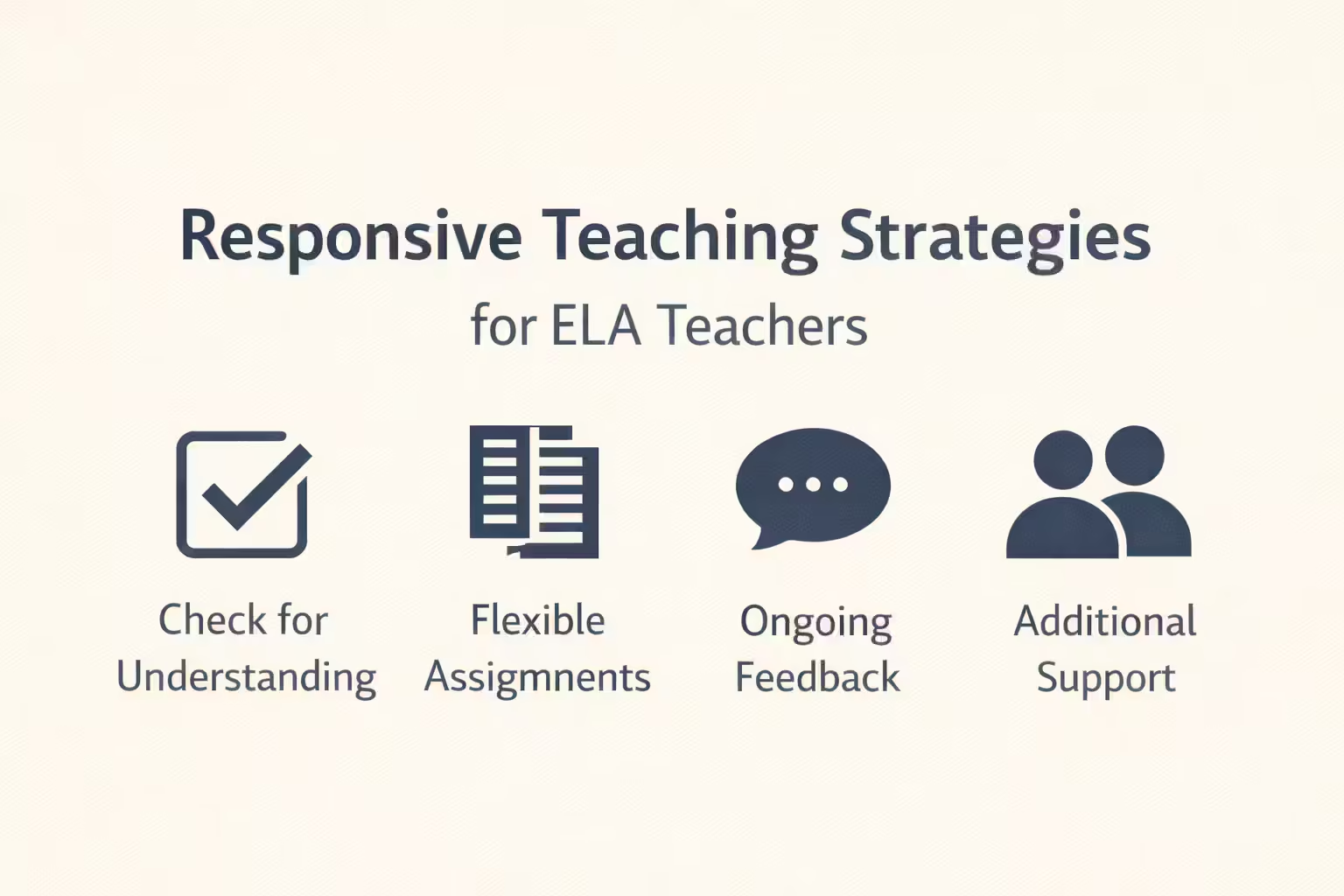
Key elements of responsive teaching include:
- Ongoing assessment during lessons, not just at the end
- Flexible grouping based on current needs
- Multiple ways to learn and demonstrate understanding
- Student choice and voice in learning activities
- Culturally responsive content that reflects students’ lives
Explore more English teaching topics here:
- Getting Your Online Teaching English Certificate
- Top 5 Innovative ELT Teaching Methods
- The Basics of English Teaching
- ESOL Jobs: Teaching English to Speakers of Other Languages
- Top Educational Tools for Teachers: A Complete Guide
Why Responsive Teaching Matters in ELA Classrooms
English Language Arts covers reading, writing, speaking, listening, and language skills. That’s a lot of ground to cover, and students develop these skills at different rates.
I once had a student named Maria who could write beautiful essays but froze when asked to read aloud. Meanwhile, her classmate James could discuss books passionately but struggled to organize his thoughts on paper. Traditional teaching methods that treat all students the same would fail both of them.
Responsive ELA teaching strategies help because they:
Increase student engagement. When lessons connect to students’ interests and abilities, they pay attention. Last semester, I let students choose between analyzing song lyrics, movie scripts, or traditional poems for a figurative language unit. Engagement went from about 60% to nearly 100%.
Build confidence. Students who struggle with English often feel defeated by generic lessons. Responsive teaching meets them where they are and shows clear progress, which builds confidence over time.
Improve learning outcomes. Research consistently shows that differentiated, responsive instruction leads to better test scores and deeper understanding. But more importantly, students actually retain what they learn.
Develop critical thinking. When you teach responsively, you ask students to reflect on their own learning. This metacognition—thinking about thinking—is crucial for developing independent learners.
Practical Responsive Strategies for Reading Instruction
Reading is the foundation of ELA, but students come to us reading at vastly different levels. Here are responsive strategies I use regularly:
Strategy 1: Tiered Text Sets
Instead of making everyone read the same book, I provide text sets on the same theme or topic at different reading levels. For example, when teaching about social justice, I might offer:
- A picture book for struggling readers
- A short story for grade-level readers
- A novel excerpt for advanced readers
- A podcast transcript for auditory learners
All students explore the same essential questions and participate in the same discussions, but they access the content in ways that work for them. The key is making sure all options are equally valued—never make students feel they’re getting the “easy” version.
Strategy 2: Flexible Reading Groups
Forget static ability groups that never change. I create flexible reading groups based on current needs, which shift every few weeks.
Sometimes I group by interest (students choose which book to read). Sometimes by skill (students working on the same reading strategy). Sometimes by choice (students pick their preferred discussion format).
In my classroom, I might have one group practicing inference skills with graphic novels while another analyzes character development in traditional literature. Next month, those groups will look completely different based on our new learning goals.
Strategy 3: Read-Aloud and Think-Aloud Modeling
Many students, especially English language learners, benefit enormously from hearing fluent reading and seeing how good readers think.
I regularly read texts aloud while modeling my thinking process: “Hmm, this character seems angry, but the author says she’s smiling. That’s confusing. Let me reread… Oh, it’s a sarcastic smile. The author is showing me she’s hiding her anger.”
This explicit modeling of comprehension strategies helps students understand what active reading actually looks like. It’s not magic—it’s a skill they can learn.
Responsive Strategies for Writing Instruction
Writing terrifies many students. Responsive teaching can make it less scary and more productive.
Strategy 4: Writing Conferences
Nothing replaces one-on-one or small-group conferences where you respond directly to student writing. I schedule 5-minute conferences with each student every two weeks.
During conferences, I don’t mark every error. Instead, I focus on one or two high-impact areas: “Your ideas are strong, but your readers might get confused by these run-on sentences. Let’s work on breaking them into clearer thoughts.”
This targeted feedback is far more effective than covering a paper in red ink, which just overwhelms students.
Strategy 5: Choice in Writing Topics and Formats
When possible, let students write about topics they care about in formats that interest them.
A persuasive writing unit doesn’t have to mean everyone writes a five-paragraph essay. Some students might write a speech, others a blog post, others a series of social media posts making an argument, and others a traditional essay. The learning objective (persuasive techniques) stays the same, but the format varies.
One of my most reluctant writers last year wrote an amazing persuasive piece about video game design—something he’d never have tackled if I’d assigned a generic topic.
Strategy 6: Scaffolded Writing Process
Break writing into manageable steps with different support levels at each stage.
For brainstorming, some students might use a graphic organizer, others might freewrite, and others might discuss ideas with a partner. For drafting, some students might dictate their ideas (using speech-to-text), while others write by hand or type. For revision, some might work with a peer partner while others consult a checklist independently.
The point is to provide multiple pathways through the writing process, not just one rigid sequence.
Responsive Strategies for Speaking and Listening
Speaking and listening skills are often overlooked in ELA, but they’re crucial for real-world communication. Responsive teaching strategies help build these skills without putting students on the spot before they’re ready.
Strategy 7: Structured Discussion Formats
Not all students feel comfortable jumping into open discussions. I use various formats to include everyone:
Think-Pair-Share: Students think individually, discuss with a partner, then share with the class. This gives processing time and a practice round.
Written Discussions: Students post written responses to discussion questions and reply to classmates. This works especially well for ESL learners who need extra processing time.
Small Group Discussions: Groups of 3-4 discuss while I rotate and listen. Less intimidating than whole-class sharing.
Fishbowl Discussions: Half the class discusses while the other half observes and takes notes, then they switch. Great for teaching active listening.
Strategy 8: Purposeful Partner and Group Work
I’m very intentional about how I pair students for speaking activities. Sometimes I pair students with similar skill levels so they can work at the same pace. Sometimes I pair stronger speakers with those building confidence, with clear roles for each person (summarizer, questioner, recorder, etc.).
The key is making sure every student has a genuine role and responsibility. No one should be able to just sit silently while others do the work.
Strategy 9: Low-Stakes Speaking Practice
Build speaking confidence through regular, low-pressure opportunities:
- Quick 30-second “share outs” about the reading
- Recording video responses at home (less pressure than live performance)
- Teaching a concept to a partner
- Presenting to a small group before the whole class
One of my shyest students built her confidence by first recording video responses, then sharing with one partner, then a small group, and finally the whole class. It took a full semester, but she got there because I didn’t force her to present to everyone on day one.
Responsive Strategies for Assessment
Assessment drives responsive teaching. You can’t adjust instruction if you don’t know what students understand.
Strategy 10: Formative Assessment Throughout Lessons
I constantly check understanding during lessons using quick, informal assessments:
- Exit tickets: Quick questions students answer before leaving (on paper or digitally)
- Thumbs up/down: Fast comprehension checks during instruction
- Quick writes: 2-minute responses to a question
- Turn and talk: Listen in as students discuss with partners
- Digital polls: Real-time checks using classroom technology
These quick checks tell me if I need to reteach, move forward, or adjust my approach.
Strategy 11: Multiple Ways to Demonstrate Learning
End-of-unit assessments don’t have to be traditional tests. I offer choice menus where students can demonstrate learning through:
- Essays or research papers
- Presentations or speeches
- Creative projects with written reflections
- Multimedia creations (videos, podcasts, digital stories)
- Debates or Socratic seminars
All options address the same learning standards but allow students to show what they know in ways that work for them.
Implementing Responsive ELA Teaching Strategies: Where to Start
If this all feels overwhelming, start small. You don’t need to transform everything overnight.
Begin with one strategy. Pick one approach from this article that resonates with you and try it consistently for a month. Once it becomes routine, add another.
I started with exit tickets. Just that one change—checking understanding at the end of each lesson—transformed my teaching because I finally knew what was working and what wasn’t.
Know your students. Responsive teaching requires knowing your students as individuals. Learn their interests, strengths, challenges, and goals. This happens through conversation, interest inventories, and observation.
Reflect and adjust. At the end of each week, ask yourself: What worked? What didn’t? What will I change next week? Teaching responsively means being a responsive learner yourself.
Be patient with yourself and your students. Responsive teaching is harder than following a script. There will be lessons that flop. That’s okay. Learn from them and try again.
Collaborate with colleagues. Share strategies, resources, and challenges with other teachers. Some of my best ideas come from conversations with fellow educators who are also trying to teach more responsively.
Common Challenges and Solutions
Challenge: “I don’t have time to create different materials for every student.”
You don’t need completely different materials—you need flexible materials. A single text can be accessed through reading independently, partner reading, listening to an audio version, or reading with teacher support. Same content, different access points.
Challenge: “My curriculum is too rigid for responsive teaching.”
You might have less flexibility than ideal, but you almost always have some. Even within a required curriculum, you can vary groupings, offer some choice in assignments, and adjust pacing based on student needs.
Challenge: “How do I manage a classroom where everyone is doing something different?”
Start with two or three options, not twenty. Clear routines and expectations are essential. Students need to know where to find materials, what to do when they finish, and how to get help without interrupting you.
Conclusion: Making Responsive ELA Teaching Strategies Work for You
Responsive ELA teaching strategies aren’t about more work—they’re about smarter work. When you teach responsively, you spend less time re-teaching concepts students didn’t understand the first time and more time helping students actually grow.
The heart of responsive teaching is simple: pay attention to your students, adjust based on what you notice, and remember that good teaching isn’t about delivering perfect lessons—it’s about helping real students with real needs make real progress.
Start small, be patient with yourself, and celebrate the small victories. That struggling reader who finally gets excited about a book? That quiet student who starts participating in discussions? That’s responsive teaching in action.
Your students don’t need you to be perfect. They need you to be present, flexible, and committed to their growth. That’s what responsive ELA teaching strategies make possible.
Remember, progress takes time. Some changes will feel awkward at first. Some strategies will work brilliantly with one class and fall flat with another. That’s normal. Keep observing, keep adjusting, and keep putting students at the center of your teaching decisions.
The most powerful responsive teaching strategy isn’t in this article—it’s your willingness to keep learning and growing alongside your students. That’s what makes great teachers great.
📚 Continue Learning English
Choose your next lesson and keep improving your English skills with our free English learning resources.