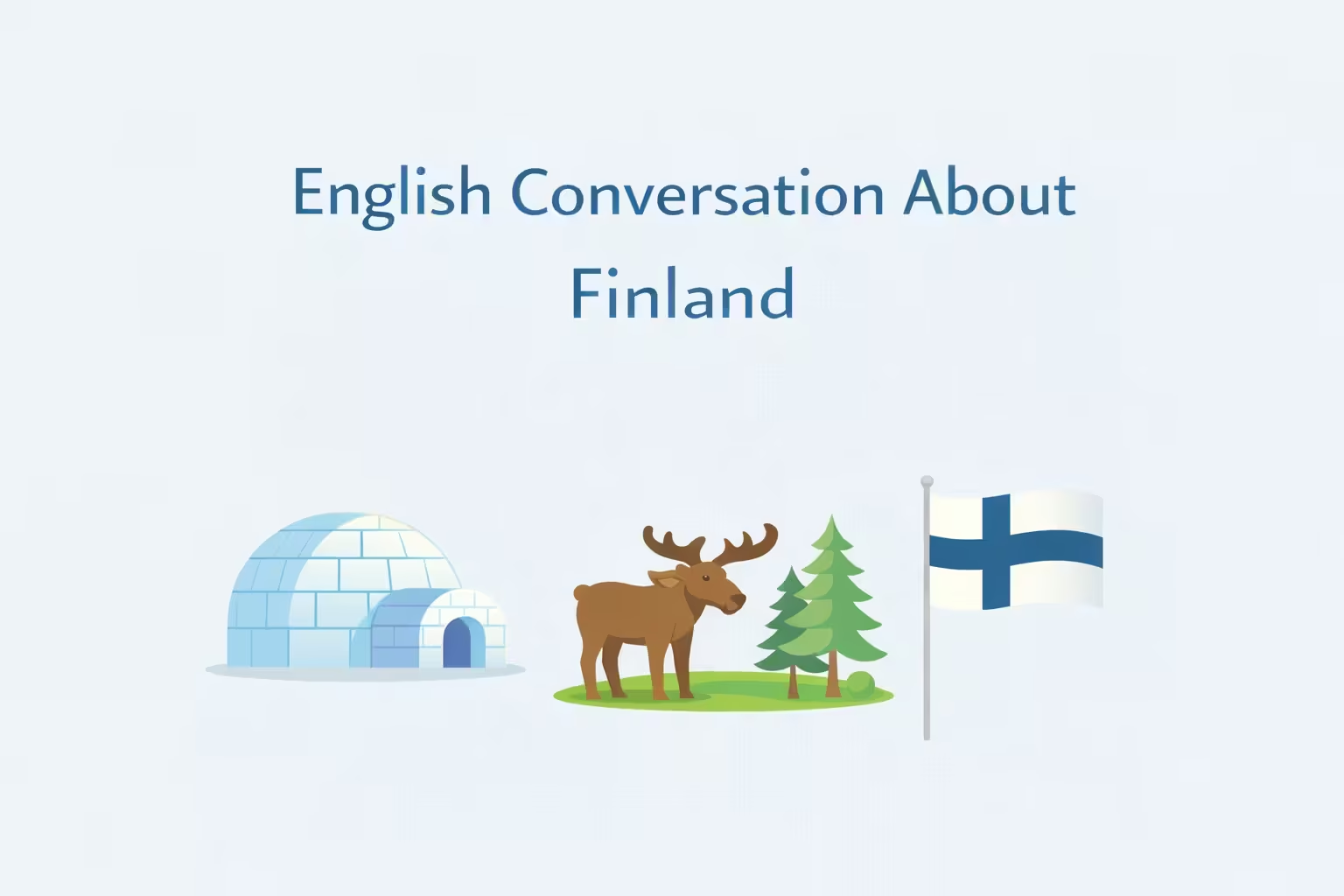
If you enjoy learning English through real-life conversations, this blog post is perfect for you. In this engaging and natural dialogue, two people discuss their experiences and curiosity about Finland—a country known for its happiness, beautiful nature, and unique lifestyle.
This conversation takes you through interesting topics such as Finnish culture, education system, weather, food, and travel experiences. It also highlights real opinions, questions, and storytelling, making it ideal for improving your speaking and listening skills.
By reading this conversation, you will not only learn useful vocabulary and expressions but also understand how native speakers discuss travel, culture, and personal experiences in everyday English.
English Conversation About Finland | Learn Speaking Through Real Dialogue
Alex: Hey Taylor, you’ve been staring at that map on your phone for the last ten minutes. What’s got you so obsessed with Finland all of a sudden?
Taylor: Guilty as charged. I was scrolling through travel reels last night and somehow ended up in a rabbit hole about Finland. It keeps coming up as the happiest country on Earth, like, year after year. I mean, how does a place with six months of darkness pull that off? I need the full story from someone who actually went there last summer. Spill.
Alex: Okay, fair. I spent three weeks there in July—Helsinki, then a train up to Lapland. First thing I’ll say is yes, the happiness thing is real, but it’s not some magical fairy dust. It’s baked into the system. Universal healthcare, free university education even for foreigners in some cases, and this cultural thing they call “sisu.” It’s like grit mixed with quiet determination. They don’t complain about the cold; they just build better saunas.
Taylor: Sisu. I’ve heard the word but never got the vibe. Is it like the Finnish version of “stiff upper lip”?
Alex: Close, but warmer. It’s the idea that you keep going even when it sucks, and you do it without making a big deal. I saw it everywhere. Guy at the train station in Rovaniemi dropped his coffee, smiled, cleaned it up in thirty seconds, and kept walking like nothing happened. No drama. Meanwhile I’m over here internally screaming about the 4 a.m. sunlight that never sets in summer. Speaking of which, the midnight sun is wild. You’re having dinner at 11 p.m. and the sky is still bright blue. I had to buy blackout curtains just to sleep.
Taylor: That sounds both amazing and completely disorienting. Did you actually adjust, or were you a zombie the whole time?
Alex: First three days I was a zombie, yeah. Then I embraced it. We rented bikes in Helsinki and rode around the islands at 2 a.m. under this soft golden light that never quite turns to night. The city feels alive 24/7 in summer. People are picnicking, swimming in the sea, playing volleyball. Helsinki is surprisingly green for a capital—half the place is parks or forest. You can kayak right from the market square.
Taylor: Okay, sell me on Helsinki first, because I’m probably starting there if I ever go. What’s the food like? I keep hearing about weird berries and reindeer.
Alex: Reindeer is actually delicious—tastes like lean venison with a slight gamey edge. They serve it as sausages, stew, or smoked. But the star for me was the seafood. Fresh Baltic herring, smoked salmon that melts, and these tiny wild blueberries and lingonberries everywhere. There’s a place in Helsinki called Story that does a tasting menu where every course is foraged from Finnish forests. Cloudberries are insane; they’re like golden raspberries that taste like caramel and sunshine had a baby. And of course, everything pairs with rye bread that’s so dense it could be a weapon.
Taylor: I’m already hungry. What about the famous Finnish silence? Is it awkward or actually peaceful?
Alex: Both, depending on your mood. Finns are not big on small talk. You sit on a bus next to someone for an hour and they might nod once. At first I thought they were rude, but then I realized it’s respect. They give you space to just exist. I took a ferry to Suomenlinna sea fortress and spent the whole afternoon reading on a rock without anyone bothering me. No one trying to chat me up or sell me something. It was glorious. But when they do talk—especially after a sauna—they open up like crazy. Alcohol helps, but mostly it’s the sauna culture that melts the ice.
Taylor: Sauna. Everyone says it’s basically their national religion. How hot are we talking?
Alex: The traditional ones hit 90–100 Celsius easy. You sit there naked—yes, naked, no swimsuits in proper Finnish saunas—sweating it out, then you run and jump into a lake or the sea. Repeat. I did one on a private island near Turku where the host threw vodka on the stones for löyly—the steam. Felt like my soul left my body and came back happier. They have saunas everywhere: office buildings, airports, even some public buses. There’s a floating sauna in Helsinki harbor. You book it, cruise around, and sweat while watching the sunset.
Taylor: I’m sold. But what about winter? Everyone posts those northern lights photos, but I bet the reality is brutal.
Alex: Winter is no joke. I went back for a long weekend in February just to see the dark side. Temperatures hit minus 25 Celsius in Lapland. The sun barely rises—maybe four hours of twilight. But that’s when the magic happens. We stayed in a glass igloo near Rovaniemi and woke up to the aurora borealis dancing right above the bed. Green, purple, pink ribbons swirling for hours. No filters needed. During the day you snowshoe through silent pine forests where the only sound is your own breathing and the crunch of snow. Reindeer wander right up to you. And ice fishing—sitting on a frozen lake drilling a hole, waiting for Arctic char. It’s meditative as hell.
Taylor: Sounds romantic until you think about the cold biting your face off. Did you get the whole Santa Claus village thing? Is it cheesy or actually worth it?
Alex: It’s both, and I loved it. Santa Claus Village is right on the Arctic Circle line. You cross the line, get a certificate, meet the real Santa—he’s a Finnish guy with the beard and everything—and send postcards that get stamped from the Arctic. Kids go nuts, but adults do too. There’s a husky sled ride through the forest at night, and the reindeer are so tame they’ll eat moss from your hand. The whole place is lit up with thousands of lights, and they serve glögi—hot spiced wine—that warms you from the inside. Cheesy? Yes. But in the best way. It’s like the North Pole decided to become a theme park run by introverts.
Taylor: Okay, shifting gears—what about the people themselves? Are Finns as reserved as the stereotypes say, or did you make any friends?
Alex: Reserved at first, absolutely. But once you show genuine interest, they warm up fast. I joined a language exchange in Helsinki and met this woman named Aino who became my unofficial guide. She taught me how to pronounce “sauna” correctly—sow-na, not saw-na—and took me to a heavy metal karaoke night. Finns love their metal scene. Lordi won Eurovision back in the day, and there’s this underground vibe where everyone from accountants to professors headbangs to bands with names like Nightwish. We sang “I Will Follow You Into the Dark” in Finnish. Terrible pronunciation, great night.
Taylor: That’s hilarious. What about the language? I looked it up—totally unrelated to anything else in Europe, right?
Alex: Yep, Uralic family, like Hungarian and Estonian but even more different. No articles, no future tense, and words that can be a mile long. “Kävely” means walking, “kävelyllä” means on a walk. I tried ordering coffee and accidentally said something that sounded like “I would like to marry the espresso.” The barista just smiled politely and handed me my latte. English is everywhere though, especially among younger people, so you’re fine as a tourist. But learning a few words goes a long way. “Kiitos” for thank you, “hei hei” for bye-bye. They light up when you try.
Taylor: Noted. Education system next—because I keep reading Finland has the best schools with no homework and kids starting at seven. Is that actually true or travel blog hype?
Alex: Not hype. I visited a primary school in Espoo as part of a tour. Kids start formal schooling at seven, yes. No standardized tests until they’re teens. Teachers are super respected—master’s degree required, and they get paid like professionals. The focus is play, equality, and trust. One classroom had a “quiet corner” with beanbags and books instead of desks in rows. No homework until middle school. Yet they top PISA rankings every time. The secret? Smaller classes, trust in teachers, and the belief that childhood should be childhood. They also feed kids free hot lunches every day—healthy, balanced, no stigma. My guide said the system was rebuilt after World War II with the idea that every kid deserves the same shot regardless of background.
Taylor: That’s inspiring. Makes me jealous of Finnish kids. What about equality in general? I read they’re top in gender equality, LGBTQ rights, everything.
Alex: Spot on. Finland was the first European country to give women full voting rights in 1906. Today, half the parliament is women. Same-sex marriage has been legal since 2017, and society is pretty chill about it. Trans rights are progressive too. And the income gap is tiny. You don’t see flashy wealth displays because the culture values modesty. The richest guy in the country drives a normal Volvo and lives in a regular house. Taxes are high, but people see the return—free education, healthcare, parental leave that’s like nine months shared between parents. It’s not utopia; they have their issues with mental health and alcohol in winter, but the safety net is real.
Taylor: Safety net sounds nice. Cost of living though? I bet it’s expensive.
Alex: It is, but not insanely so compared to London or New York. A good meal out is €25–40 per person. Hotels in Helsinki run €120–200 a night for nice places. Trains are cheap and punctual—high-speed to Turku in under two hours for €30. Domestic flights to Lapland are reasonable if you book ahead. Groceries are normal, alcohol is taxed heavily though, which explains why people buy duty-free on the ferries to Estonia. Overall, you get what you pay for. Clean air, safe streets, public transport that actually works.
Taylor: I’m mentally packing my bags. Any downsides? There has to be something that sucks.
Alex: Honest truth? The winters can mess with your head if you’re not prepared. Seasonal affective disorder is real, and the darkness is profound. Some people get really quiet and isolated. The language barrier can feel lonely if you stay long-term. And nature is everywhere, but so are mosquitoes in summer—huge swarms in the forests. Also, Finnish bureaucracy moves at glacial speed sometimes. But those are small prices. The biggest “downside” is probably that once you visit, you start comparing every other country unfavorably.
Taylor: Fair. History quick—how did this tiny country end up so independent and successful?
Alex: Wild story. Ruled by Sweden for centuries, then Russia for a hundred years until independence in 1917. They fought the Winter War against the Soviet Union in 1939—outnumbered like 10 to 1, but held them off with skis, molotov cocktails, and sheer sisu. Lost some land but kept their freedom. Then the Continuation War, then paid reparations and rebuilt. Turned into a modern tech powerhouse. Nokia started as a paper mill, became the mobile phone king, then pivoted when Apple came along. Linux was created by Linus Torvalds, who’s Finnish. Angry Birds? Finnish. Supercell games? Same. They export education know-how now too—teachers from around the world go there for training.
Taylor: That resilience is impressive. Okay, random question: Moomins. Are they as big a deal as people say?
Alex: Bigger. Moomins are these white hippo-like trolls from Tove Jansson’s books. Every kid grows up with them. There’s a Moomin museum in Tampere, a theme park in Naantali, and you’ll see Moomin everything—mugs, towels, even a Moomin café in Helsinki. Adults love them too because the stories are deep—about tolerance, nature, dealing with loneliness. Jansson was a lesbian in a time when that wasn’t easy, and her work is quietly progressive. I bought a little Moomin troll for my niece; she sleeps with it every night now.
Taylor: Cute. Last big topic—nature beyond the cities. How much of the country is actually wilderness?
Alex: About 75% forest, 10% water. 187,888 lakes officially. You can pick any direction and hit pristine nature in minutes. Everyman’s Right—jokamiehenoikeus—lets you camp, forage, swim almost anywhere as long as you’re respectful. I hiked in Nuuksio National Park near Helsinki and felt like I was in a fairy tale: mossy boulders, crystal lakes, zero crowds. Up north in Oulanka you’ve got canyons and waterfalls. Bear watching tours in eastern Finland—brown bears, not grizzlies. They’re shy but majestic. And the archipelago in the southwest has 40,000 islands. You can rent a cottage for a week and never see another soul.
Taylor: I want that week. So if I plan a two-week trip, what’s your perfect itinerary?
Alex: Fly into Helsinki. Three days there—sauna, islands, design district shopping. Train to Turku for old wooden architecture and more saunas. Then north to Tampere for lakes and Moomins. Fly to Rovaniemi for four days—Santa, huskies, aurora hunting. End with a slow ferry back from Stockholm if you want the scenic route, but that’s Swedish. Or just fly home from Helsinki after chilling in the Lakeland region. Rent a car for the middle part; roads are empty and beautiful. Total cost maybe €2,500–3,500 including everything if you’re smart.
Taylor: That’s doable. You’ve convinced me. I’m booking flights tonight.
Alex: Wait, seriously? Let me send you my Google Doc with all the links. And if you go in summer, pack bug spray. Winter, pack layers like your life depends on it. Oh, and try the licorice ice cream—it’s salty and weird and addictive.
Taylor: Licorice ice cream? You buried the lede! Okay, adding that to the list. Thanks, Alex. This conversation just turned my vague curiosity into an actual plan. Finland, here I come.
Alex: Anytime. You’re gonna love it. Just remember: when in doubt, find a sauna. Everything else sorts itself out after that.
Taylor: Noted. One last thing—do they really drink more coffee per capita than anyone else?
Alex: Absolutely. Third place globally. They even have “coffee breaks” built into the workday. I drank more coffee in two weeks than in two months at home. It’s strong, black, and endless. Pairs perfectly with a cinnamon bun the size of your face.
Taylor: I’m in. Talk soon—gotta go research those glass igloos now.
Useful Phrases and Expressions from This Lesson
🔹 Talking About Interest & Curiosity
- what’s got you so obsessed with…
- guilty as charged
- I ended up in a rabbit hole
- it keeps coming up
- I need the full story
🔹 Expressing Opinions
- I mean, how does…?
- that’s actually impressive
- I’m sold
- that sounds amazing
- fair point
- I’m mentally packing my bags
🔹 Agreeing & Responding
- okay, fair
- close, but…
- spot on
- absolutely
- noted
🔹 Asking Questions Naturally
- what makes it different?
- is it actually true?
- what about…?
- how does… work?
- any downsides?
🔹 Describing Experiences
- I spent three weeks there
- first thing I’ll say is…
- I saw it everywhere
- it felt like…
- I had to…
- we ended up…
🔹 Describing Places & Culture
- a place known for…
- a whole lifestyle
- baked into the system
- a cultural thing
- surprisingly green
- peaceful and quiet
🔹 Advanced & Natural Expressions
- go down a rabbit hole
- baked into the system
- a perfect mix of…
- open up like crazy
- melts the ice
- no joke
- not hype
- you get what you pay for
- mess with your head
- small price to pay
- break the internet
🔹 Casual Conversation Fillers
- haha
- I mean…
- yeah
- okay
- wait, seriously?
- one last thing…
🔹 Giving Advice
- pack bug spray
- pack layers
- book in advance
- try…
- don’t forget to…
🔹 Learning & Fluency Boost
- express your thoughts clearly
- improve your fluency
- build confidence
- speak comfortably
- practice regularly
Conclusion: Conversation About Finland
This conversation about Finland shows how English can be used naturally to share ideas, experiences, and opinions. Through this engaging dialogue, we explored Finland’s culture, lifestyle, education system, and beautiful nature in a simple and interesting way.
By reading and practicing such conversations, you can improve your fluency, build confidence, and learn how to express your thoughts clearly in English. Try to notice how questions are asked, how answers are given, and how the conversation flows smoothly.
Keep practicing with similar real-life topics, and soon you will be able to speak English comfortably in everyday situations.
FAQs: Learn English Through Conversation – Finland
What is the purpose of this English conversation lesson about Finland?
This lesson helps learners improve their speaking and listening skills through a natural, real-life dialogue. It focuses on everyday English, cultural understanding, and practical expressions.
Why is Finland considered one of the happiest countries in the world?
Finland consistently ranks high due to:
- Strong social support systems
- Free education and healthcare
- High trust in society
- Balanced lifestyle
Happiness is part of the system, not just individual feelings.
What is “sisu” in Finnish culture?
“Sisu” is a unique Finnish concept that means:
- Inner strength
- Determination
- Resilience during difficult situations
It reflects how people stay calm and strong even in tough conditions.
What makes Finland’s education system special?
Finland’s education system is known for:
- No early pressure on children
- Less homework
- Highly trained teachers
- Focus on equality and creativity
Children start school later and still perform very well globally.
How is the weather in Finland?
Finland has extreme weather:
- Summers: Long days with midnight sun
- Winters: Very cold with limited daylight
Despite this, people adapt and enjoy seasonal activities.
What is unique about Finnish sauna culture?
Sauna is an important part of Finnish life:
- Temperatures can reach 90–100°C
- People relax, socialize, and de-stress
- It is considered essential for well-being
Saunas are found in homes, offices, and even public places.
What kind of food is popular in Finland?
Finnish food includes:
- Fresh seafood like salmon and herring
- Reindeer dishes
- Wild berries like blueberries and cloudberries
- Rye bread
The food is simple, fresh, and natural.
Are Finnish people friendly?
Finnish people may seem reserved at first, but they are:
- Polite and respectful
- Honest and direct
- Warm once you get to know them
They value personal space and meaningful conversations.
Is English widely spoken in Finland?
Yes, most Finnish people speak English fluently, especially younger generations. This makes it easy for tourists and learners to communicate.
What makes Finland’s nature special?
Finland is rich in natural beauty:
- About 75% forests
- Thousands of lakes
- Clean and peaceful environment
People enjoy outdoor activities like hiking, cycling, and camping.
What is “Everyman’s Right” in Finland?
This law allows people to:
- Walk freely in nature
- Camp in open areas
- Pick berries and mushrooms
It promotes freedom and respect for nature.
What are some challenges of living in Finland?
Some challenges include:
- Extremely cold winters
- Limited sunlight in winter
- Language difficulty for long-term stay
However, strong social support helps people manage these challenges.
How does this lesson improve English speaking skills?
This lesson helps learners:
- Understand real conversation flow
- Learn natural expressions
- Practice asking and answering questions
- Build confidence in speaking
It makes learning interactive and practical.
What level of learners is this lesson suitable for?
This lesson is best for:
- Beginner to intermediate learners
The language is simple, clear, and easy to follow.
How can students practice using this conversation?
Students can:
- Read the dialogue aloud
- Practice with a partner
- Repeat useful phrases
- Focus on pronunciation and fluency
Regular practice will improve speaking skills faster.
Explore interesting topics here:
- How to Teach Theme and Main Idea with Examples and Activities
- Master Subject Object, Possessive Pronouns and Adjectives (With Examples)
- How to Build an ESL Class Curriculum: Step-by-Step Guide for Teachers
- English Conversation: A Day in Sweden (Simple Speaking Practice)
Want to learn more? Find similar posts with English Conversation Practice.
📚 Continue Learning English
Choose your next lesson and keep improving your English skills with our free English learning resources.