Learning English becomes easier when you practice with real-life topics. One of the best ways to improve your speaking skills is through conversations that are interesting and meaningful.
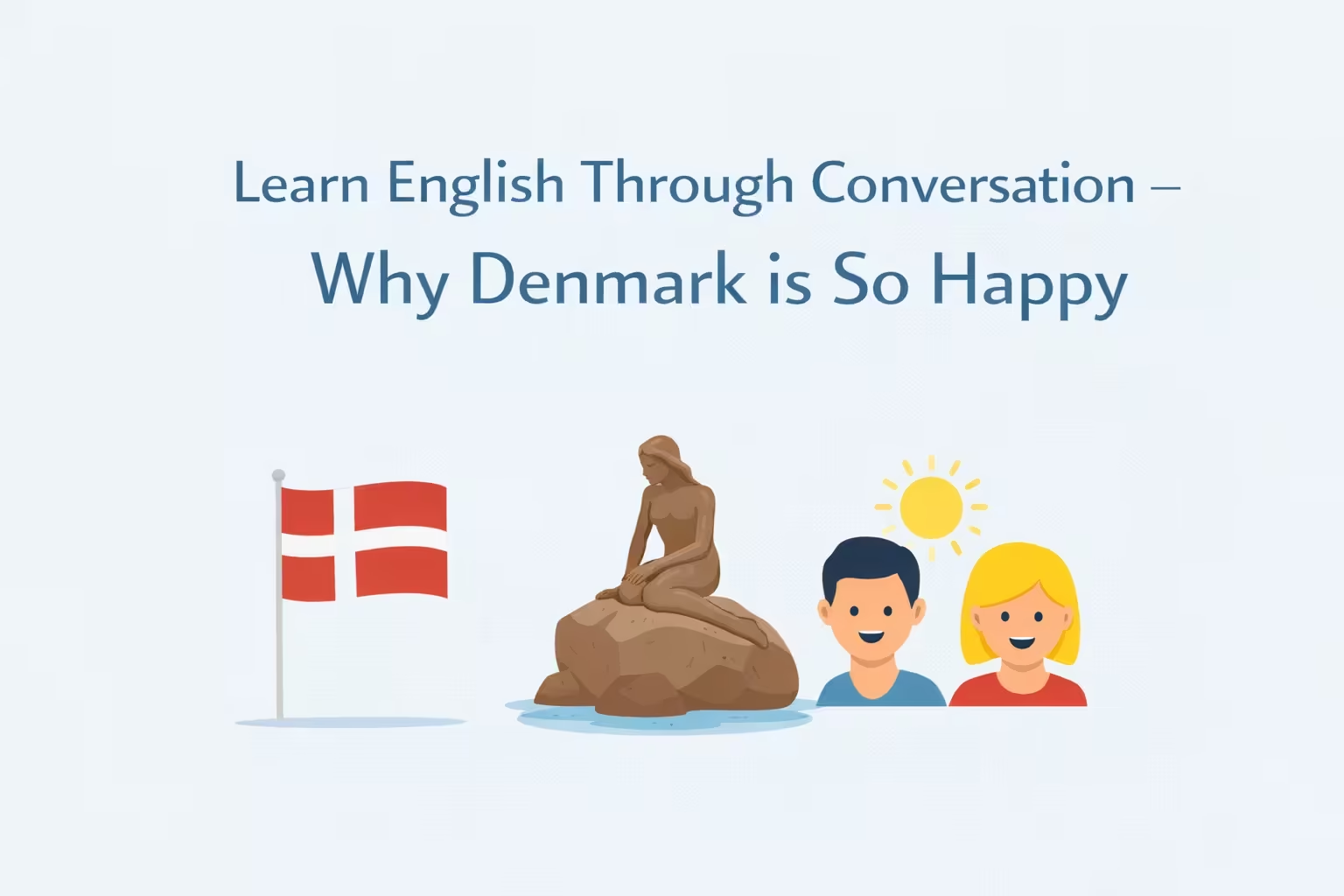
In this lesson, we will learn English through a simple conversation about why Denmark is considered one of the happiest countries in the world.
Denmark is famous for its high quality of life, strong social system, and peaceful lifestyle. People there enjoy a good work-life balance, trust each other, and focus on simple joys in life.
By talking about such topics, you not only improve your English but also learn about different cultures and lifestyles.
This English conversation is designed for beginners and intermediate learners. It uses easy vocabulary, clear sentences, and natural expressions that you can use in your daily life.
As you read and practice, try to repeat the sentences and understand how the conversation flows.
Let’s begin this interesting journey of learning English while exploring the happiness of Denmark.
Learn English Through Conversation – Why Denmark is So Happy
Emma: Hey Jack, I was scrolling through some news the other day and saw yet another article calling Denmark the happiest country in the world. Or at least one of the happiest—top three again in the latest World Happiness Report. Have you ever wondered why? I mean, it’s not like they’re all walking around with massive smiles 24/7 or living in some tropical paradise. It’s cold half the year!
Jack: Oh yeah, I saw that too. Finland’s number one this year, Iceland second, Denmark third in the 2026 report, right? But Denmark’s been in the top spots forever—never dropped below fourth in the whole history of the rankings. It got me curious. Is it the free stuff? The bikes? That weird word “hygge” everyone keeps throwing around? Tell me what you know. You’ve actually been there, haven’t you?
Emma: I spent a year in Copenhagen after university, so yeah, I got to live it. It’s not one single thing—it’s a whole system that just works. The World Happiness Report breaks happiness down into six main factors: GDP per capita, social support, healthy life expectancy, freedom to make life choices, generosity, and low corruption. Denmark crushes it on almost all of them. But the real magic is how they tie together.
First off, the welfare state. It’s insane. Free healthcare, free university education—including grants for living expenses while you study—subsidized childcare, generous unemployment benefits for up to two years while you job hunt, and pensions for the elderly. Even home care if you need it when you’re old. Danes pay some of the highest taxes in the world—up to half their income, plus 25% VAT and crazy car taxes—but they don’t complain. Why? Because they see the return every single day. No one worries about going bankrupt from a hospital bill or skipping university because of debt. It’s like the government says, “We’ve got your back,” and everyone believes it.
Jack: That sounds expensive. How do they afford it without going broke as a country?
Emma: High taxes, yeah, but also a super productive economy and low unemployment. Plus, that strong sense of “we’re all in this together.” The principle is “few have too much, and even fewer have too little.” Inequality is tiny compared to places like the US or UK. Social mobility is real—your kid’s future doesn’t depend on whether you were born rich. And because of that equality, there’s way less envy and stress. Studies show low inequality correlates directly with higher national happiness scores.
Jack: Okay, welfare checks out. But I’ve heard Danes are super trusting. Like, they leave babies sleeping outside in prams in winter?
Emma: Totally true! I saw it myself. Trust is huge. Danes trust each other, the government, the police, businesses—everything. Corruption is almost nonexistent; they rank near the top globally for that too. You can leave your bike unlocked sometimes, kids as young as eight or nine ride the metro alone, and strangers on the train will keep an eye on them. It’s not naivety—it’s earned. Low crime, honest officials, and that social safety net means people don’t have to scam or hoard. One professor I read about, Christian Bjørnskov, said Danes feel “empowered to change things in their lives.” They rarely get stuck in traps. You can switch careers without losing everything.
That trust spills into daily life. When I was there, my landlord just emailed me the keys to the apartment before I arrived. No background check drama. And in shops? No one hovering like you’re about to steal. It creates this calm baseline happiness. You don’t waste mental energy being suspicious.
Jack: Wow. Imagine that in a big city back home. People would freak out. So is that why they score high on social support? The report mentions that a lot—having someone to count on in tough times.
Emma: Exactly. About 95% of Danes say they have someone reliable to turn to—way above the OECD average. It’s not just family; it’s community. Parents organize playgroups where kids from different economic backgrounds visit each other’s homes. Public schools are the same for everyone—no private school elite bubble. That builds real social bonds early. Plus, the welfare system means when life hits hard—sick parent, job loss—you’re not alone. The state helps, but neighbors and friends step in too. It’s that “belief that everyone is working together for the common good,” as one Copenhagen journalist put it. Not flashy smiles, but quiet security.
Jack: Alright, I’m sold on the safety net and trust. But what about the culture side? Everyone talks about “hygge.” Is that just cozy blankets and candles, or is there more?
Emma: Hygge is the secret sauce! It’s this untranslatable Danish concept of coziness, but deeper—creating intimate, warm moments with people you care about. Or even alone. Think board games by candlelight in winter, hot chocolate, or just reading a book under a blanket. In summer, it’s picnics in the park or chilling at summer houses. Danes invented the word because they live through long, dark winters—they had to figure out how to enjoy the indoors. It’s not about luxury; it’s about presence. No phones, just good conversation and simple pleasures. I joined a hygge night with friends once—candles everywhere, homemade pastries, and we talked for hours. Zero pressure to “achieve” anything. That mindset lowers stress massively.
They pair it with friluftsliv—outdoor life. “There’s no bad weather, only bad clothes.” People cycle everywhere, swim in the harbor (Copenhagen cleaned up its old industrial waterway into swimmable spots), hike forests in rain, or sunbathe when it finally gets warm. Nature access is built in, and it boosts mental health.
Jack: Cycling everywhere? That ties into work-life balance, right? I heard they don’t grind like Americans.
Emma: Spot on. Standard workweek is 37 hours, and you get at least five weeks of paid vacation—often six. Plus generous parental leave. No hustle culture. When the workday ends, it ends. People actually use their free time for family, hobbies, sports like football or sailing, volunteering, or adult education classes. LEGO started there because of “learning through play”—they value creativity and fun even as adults. There’s this cultural emphasis on balance: work hard, but live well. One resident I met in Ribe said she walks the cobblestone streets every day feeling grateful. No envy, just contentment.
And singing! Danes love group singing—at parties, weddings, even random events. It reduces stress, builds community, and everyone participates equally. It’s like therapy baked into culture.
Jack: This all sounds almost too perfect. Any downsides? Like, is it boring? Or expensive to visit?
Emma: Not boring at all—vibrant cities, festivals, great design, food scene exploding. But yeah, it’s expensive for tourists because of taxes and wages. For residents, wages are high too, so it balances. The weather can be gray, and some say the “Janteloven” law of equality makes people avoid standing out too much. But overall, the pros dominate.
Compare it to other countries. In the US, high GDP but lower social support, more inequality, longer hours, medical bankruptcies. Happiness scores reflect that. Or think about places with high growth but corruption—trust evaporates. Denmark shows that after a certain income level, more money doesn’t buy happiness. It’s the intangibles: security, connections, freedom.
Jack: Freedom to make life choices—that’s another big report factor. How does Denmark nail that?
Emma: Because of the safety net! You can quit a job you hate, start a business, go back to school, or travel without fearing ruin. Unemployment pay gives breathing room. Education is free and high-quality, so skills aren’t locked behind money. Women have huge workforce participation thanks to childcare. Everyone feels they control their path. Professor Bjørnskov nailed it: society lets you choose the life you want without traps. That autonomy is huge for life satisfaction.
Jack: What about generosity? The report measures that too—helping strangers or donating.
Emma: Danes score high there because of the collective mindset. High taxes fund aid, but personally too—volunteering, community events. It’s normalized. Even small acts, like helping a neighbor, feel natural in a trusting society.
Jack: Okay, you’ve convinced me the system works. But can other countries copy it? Like, could India or the US adopt this?
Emma: Not one-to-one—culture and history matter. Denmark’s small, homogeneous, with strong institutions built over decades post-WWII. But lessons are universal: invest in equality, build trust through transparency, prioritize work-life balance, create safety nets that empower rather than trap. Even small changes—like better public schools, more vacation days, or community programs—boost happiness. Hygge and friluftsliv cost nothing but mindset shifts.
I remember one Danish friend saying, “We don’t chase happiness; we remove the obstacles to it.” Like, eliminate fear of poverty, isolation, or failure. That’s why their average life evaluation is like 7.5 out of 10—steady contentment, not wild highs and lows.
Jack: Steady sounds better than chasing peaks. Any personal story from your time there that sums it up?
Emma: Absolutely. One rainy Tuesday, I was stressed about a deadline. My Danish colleague just said, “Take the afternoon off, go for a swim in the harbor or hygge at home.” I did—biked there, swam (heated pools too!), then curled up with tea. Next day, I was refreshed. No guilt. Back home, I’d have powered through exhausted. That shift changed how I view success. Or watching parents push prams in snow while chatting calmly—kids safe, parents relaxed. Or the bike lanes packed at rush hour but no road rage. It’s peaceful prosperity.
Another time, at a summer house party: simple grilled sausages, beer, board games till midnight. Everyone equal—no one bragging about jobs or cars. Pure hygge. I felt more connected than at any fancy event elsewhere.
Jack: Man, I’m jealous. Makes me want to book a ticket. So bottom line—why Denmark specifically?
Emma: It’s the perfect storm: strong economy + ironclad welfare + deep trust + cultural tools like hygge and balance + equality that lets everyone thrive. The World Happiness Report proves it year after year. Denmark shows happiness isn’t luck or weather—it’s deliberate design. Government that serves people, society that cares, individuals who choose presence over pressure.
Even in 2026, with Finland edging it out slightly, Denmark’s never far behind. And honestly, many Danes say the ranking doesn’t matter; they just live it.
Jack: Fair point. You’ve sold me. Next coffee is on me—we’ll hygge Danish-style: candles, no phones, deep talk. Maybe plan a trip?
Emma: Deal! But bring warm clothes. And remember: it’s the little things—and the big safety net—that make life feel golden.
Jack: Golden without the gold rush. I like it.
Here’s a useful list of phrases and expressions.
General Reaction Phrases
- That’s really interesting!
- I didn’t know that before.
- That makes a lot of sense.
- I completely agree with that idea.
- That’s quite surprising.
- I never thought about it that way.
Expressing Opinions
- In my opinion, this is very important.
- I believe this is one of the main reasons.
- From my point of view, happiness depends on lifestyle.
- I think this system works very well.
- Personally, I find this idea inspiring.
Agreeing & Disagreeing
- I totally agree with you.
- That’s true to a great extent.
- I see your point, but I think differently.
- I’m not sure I completely agree.
- You may be right, but there are other factors too.
Comparing Countries
- Compared to my country, this is very different.
- In my country, things are not the same.
- Denmark seems more balanced than many countries.
- This system is better than what we usually see.
- There are both similarities and differences.
Talking About Happiness
- Happiness is not only about money.
- A good work-life balance is very important.
- Social support plays a big role in happiness.
- Trust in society makes people feel safe.
- Simple living can bring real happiness.
Giving Reasons
- One of the main reasons is…
- This is because…
- Another important factor is…
- That’s why people feel secure.
- This helps people live a stress-free life.
Adding Ideas
- In addition to that…
- Not only that, but also…
- Another point worth mentioning is…
- On top of that…
- Let me add something here…
Concluding Statements
- Overall, Denmark shows us a better way to live.
- To sum up, happiness comes from balance and security.
- In conclusion, small changes can make a big difference.
- This conversation teaches us an important lesson.
- We can learn a lot from this example.
Discussion Questions (Bonus for Engagement)
- Do you think money can buy happiness?
- What makes people happy in your country?
- Is work-life balance important for you?
- Do you trust people in your society? Why or why not?
- What can your country learn from Denmark?
FAQs: Learn English Through Conversation – Why Denmark is So Happy
What is the main goal of this English conversation lesson?
This lesson aims to improve English speaking skills through a real-life topic. It helps learners practice natural conversations while also learning about global cultures and lifestyles.
Why is Denmark considered one of the happiest countries in the world?
Denmark is known for its high quality of life, strong social support system, low corruption, and excellent work-life balance. These factors together create a stable and stress-free environment for people.
What are the key factors that contribute to happiness in Denmark?
The World Happiness Report highlights six main factors:
- Income (GDP per capita)
- Social support
- Life expectancy
- Freedom to make life choices
- Generosity
- Low corruption
Denmark performs well in almost all these areas.
How does the welfare system in Denmark support its citizens?
Denmark offers:
- Free healthcare
- Free education
- Unemployment benefits
- Pension support
- Subsidized childcare
This reduces financial stress and gives people a sense of security.
Why do Danish people trust each other so much?
Trust is high because:
- Corruption is very low
- Crime rates are low
- Government systems are transparent
This creates a safe and cooperative society.
What is “hygge” and why is it important?
“Hygge” is a Danish concept of coziness and comfort. It means enjoying simple moments like:
- Sitting with friends
- Lighting candles
- Relaxing at home
It helps reduce stress and improves emotional well-being.
What is “friluftsliv”?
“Friluftsliv” means living an outdoor life. It encourages people to:
- Spend time in nature
- Exercise regularly
- Enjoy fresh air
This improves both physical and mental health.
How does work-life balance affect happiness in Denmark?
People in Denmark:
- Work fewer hours
- Get long vacations
- Spend time with family and hobbies
This balance reduces stress and increases satisfaction in life.
How does equality impact happiness in Denmark?
Denmark has low income inequality. This means:
- Less competition and stress
- More fairness in opportunities
- Better social relationships
Equality creates a more peaceful society.
Can other countries learn from Denmark?
Yes, but not everything can be copied. However, countries can learn to:
- Improve social systems
- Build trust
- Focus on work-life balance
- Encourage community support
Small changes can improve overall happiness.
How does this lesson help English learners?
This lesson helps learners:
- Practice real conversations
- Learn useful vocabulary
- Understand sentence structure
- Improve fluency through repetition
It makes learning English more engaging and practical.
What level of learners is this lesson suitable for?
This lesson is suitable for:
- Beginners
- Intermediate learners
It uses simple vocabulary and clear sentence structures.
How should students practice this conversation?
Students should:
- Read aloud
- Repeat sentences
- Practice with a partner
- Focus on pronunciation and flow
This improves speaking confidence and accuracy.
Explore more conversations here:
- English Conversation at a Bus Stop (Daily Use Dialogue)
- English Conversation About K-Pop Culture | Learn English Speaking Practice
- English Conversation About Train Trips in Europe (Travel English Dialogue)
- English Dialogue: Talking About New Year’s Resolutions (Everyday English Dialogue Practice)
- English Dialogue: Ordering Takeout vs. Cooking at Home (Everyday English Dialogue Practice)
Want to learn more? Find more English conversations here on English Conversation Practice.