Introduction
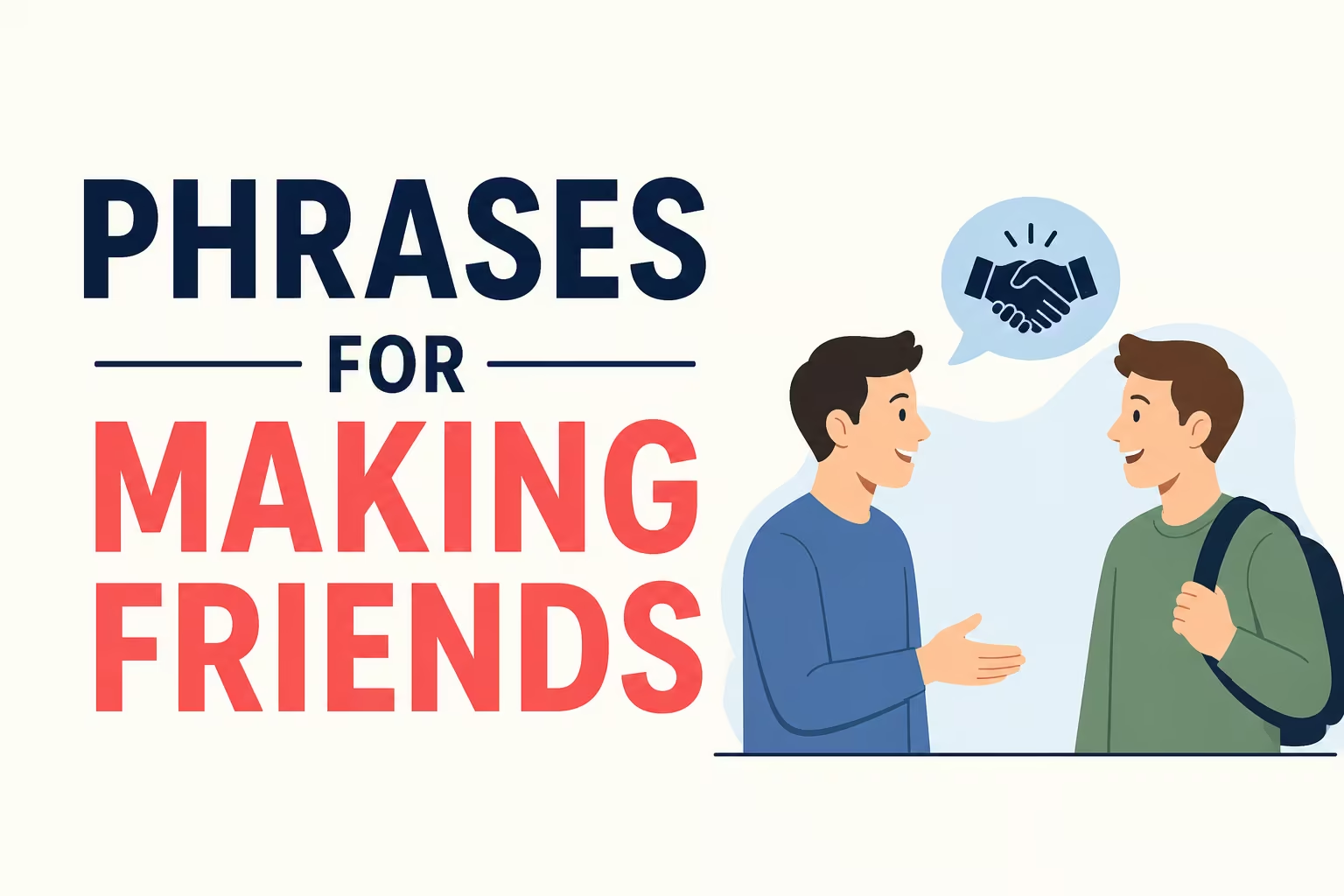
Making new friends is one of the best ways to improve your English and build meaningful relationships.
Table of Contents
ToggleWhether you’re at school, work, college, a social event, or traveling abroad, knowing the right English phrases can help you start conversations, connect with others, and make a great first impression.
In this guide, you’ll discover 250 English phrases for making friends that you can use in everyday situations.
These practical and natural expressions will help you introduce yourself, start conversations, ask questions, find common interests, make plans, and build lasting friendships.
Whether you’re a beginner or an advanced English learner, these phrases will help you speak with greater confidence and ease.
250 English Phrases for Making Friends
Starting a Conversation
- Hi!
- Hello!
- Good morning.
- Good afternoon.
- Good evening.
- How are you?
- How’s it going?
- What’s up?
- Nice to meet you.
- It’s great to meet you.
Introducing Yourself
- My name is…
- I’m…
- What should I call you?
- What’s your name?
- Where are you from?
- I’m from…
- I live in…
- What do you do?
- I’m a student.
- I work as…
Getting to Know Someone
- Tell me about yourself.
- What do you do for fun?
- What are your hobbies?
- What do you enjoy doing?
- What kind of music do you like?
- Do you like reading?
- What’s your favorite movie?
- What’s your favorite food?
- Have you been here before?
- How did you hear about this place?
Talking About Common Interests
- I love reading.
- I enjoy traveling.
- I like playing sports.
- I’m really into music.
- I enjoy cooking.
- I love watching movies.
- I like hiking.
- I’m interested in photography.
- I enjoy learning languages.
- We have a lot in common.
Showing Interest
- Really?
- That’s interesting.
- Tell me more.
- I’d love to hear more.
- That sounds exciting.
- Wow, that’s amazing!
- I didn’t know that.
- That’s good to know.
- How did that happen?
- What happened next?
Asking Follow-Up Questions
- Why do you like it?
- How long have you been doing that?
- When did you start?
- Where did you learn that?
- What’s it like?
- Can you recommend it?
- Have you always liked it?
- Would you do it again?
- What’s your favorite part?
- Do you do it often?
Talking About Yourself
- I really enjoy…
- I’m passionate about…
- I spend a lot of time…
- I recently started…
- I usually…
- In my free time…
- I love trying new things.
- I’m always looking for new experiences.
- I enjoy meeting new people.
- I like learning from others.
Finding Similarities
- Me too!
- So do I.
- I feel the same way.
- I couldn’t agree more.
- That’s exactly how I feel.
- We have similar interests.
- We think alike.
- That’s one of my favorites too.
- We have a lot in common.
- It’s nice to meet someone with similar interests.
Giving Compliments
- I like your style.
- That’s a great idea.
- You have a nice smile.
- You seem very friendly.
- You’re easy to talk to.
- That’s really impressive.
- You’re very kind.
- I like your positive attitude.
- You have a great sense of humor.
- It’s fun talking with you.
Being Polite
- Please.
- Thank you.
- You’re welcome.
- Excuse me.
- I’m sorry.
- No problem.
- Of course.
- My pleasure.
- Don’t worry.
- Thanks a lot.
Making Plans
- Would you like to grab a coffee?
- Let’s have lunch sometime.
- Are you free this weekend?
- Would you like to hang out?
- Let’s meet again soon.
- What are you doing tomorrow?
- Would you like to join us?
- Let’s go for a walk.
- We should catch up sometime.
- Let’s make plans.
Exchanging Contact Information
- Can I have your phone number?
- What’s your email address?
- Are you on Instagram?
- Can I add you on Facebook?
- Let’s stay in touch.
- Here’s my number.
- Feel free to message me.
- I’ll send you a text.
- Let’s connect online.
- Keep in touch.
Talking About School or Work
- Where do you work?
- What do you study?
- Do you enjoy your job?
- How long have you worked there?
- What’s your favorite part of your job?
- I’m studying English.
- I work from home.
- I enjoy what I do.
- I’m learning new skills.
- My work keeps me busy.
Talking About Family
- Do you have any brothers or sisters?
- Are you married?
- Do you have children?
- Tell me about your family.
- I have two brothers.
- I have one sister.
- My family is very close.
- I enjoy spending time with my family.
- We often travel together.
- Family is very important to me.
Talking About Daily Life
- What do you usually do after work?
- How do you spend your weekends?
- I like relaxing at home.
- I usually go to the gym.
- I enjoy cooking dinner.
- I like watching TV.
- I often read books.
- I love exploring new places.
- I spend time with friends.
- Every day is different.
Expressing Feelings
- I’m happy to be here.
- I’m excited.
- I’m a little nervous.
- I’m having a great time.
- I’m glad we met.
- It’s been a wonderful day.
- I really enjoyed talking with you.
- I’m looking forward to seeing you again.
- This has been fun.
- I’m enjoying our conversation.
Encouraging the Conversation
- What do you think?
- How about you?
- What’s your opinion?
- I’d love to know.
- Please tell me more.
- That’s a good question.
- I never thought about that.
- That’s an interesting perspective.
- Thanks for sharing.
- I appreciate your honesty.
Friendly Responses
- That’s awesome!
- Sounds great!
- Fantastic!
- That’s wonderful.
- Good for you!
- I’m happy for you.
- That’s exciting.
- You’re doing great.
- I hope everything goes well.
- Best of luck!
Building a Friendship
- It’s always nice talking to you.
- I enjoy spending time with you.
- You’re a great friend.
- Thanks for always being there.
- I appreciate your friendship.
- You can always count on me.
- Let me know if you need anything.
- I’m here for you.
- Thanks for your support.
- I’m lucky to know you.
Ending the Conversation
- It was nice meeting you.
- It was great talking with you.
- See you soon.
- Take care.
- Have a great day.
- Have a wonderful weekend.
- Goodbye!
- Talk to you later.
- Catch you later.
- See you next time.
Casual Everyday Expressions
- No way!
- You’re kidding!
- That’s cool.
- Awesome!
- Sounds good.
- Why not?
- I hope so.
- Let’s do it.
- Count me in.
- That’s a great plan.
Encouraging Friendship
- Let’s stay connected.
- We should meet again.
- I’d love to get to know you better.
- We should keep in touch.
- It’s easy to talk with you.
- I feel comfortable around you.
- I’m glad we met today.
- Let’s make more memories.
- I hope we become good friends.
- Looking forward to seeing you again.
Advanced Friendship Phrases
- You always make me laugh.
- I enjoy our conversations.
- We have so much to talk about.
- You have a great personality.
- I admire your confidence.
- Thanks for being such a good listener.
- You’re always so positive.
- I learn something new from you.
- I’m grateful for our friendship.
- I value our time together.
Natural Conversation Fillers
- By the way…
- Actually…
- To be honest…
- You know…
- Let me think.
- That’s a good point.
- I see what you mean.
- It depends.
- Let’s see.
- I guess so.
Warm Closing Expressions
- Have a safe trip home.
- Enjoy the rest of your day.
- It was lovely meeting you.
- Thanks for the great conversation.
- Let’s talk again soon.
- Have fun!
- Stay in touch.
- Wishing you all the best.
- See you around.
- I can’t wait to catch up again.
Conclusion
Learning these 250 English phrases for making friends will make it easier to connect with people and communicate naturally in English.
The more you practice these common expressions, the more confident you’ll become in starting conversations and building new relationships.
Practice a few phrases every day, use them whenever you meet new people, and don’t be afraid to start a conversation.
With regular practice, making friends in English will become more natural and enjoyable.
Bookmark this guide, share it with fellow English learners, and explore our other conversation and vocabulary resources to continue improving your English skills.
FAQs: 250 English Phrases for Making Friends
1. Why should I learn English phrases for making friends?
Learning these phrases helps you start conversations, build confidence, and develop meaningful friendships in English-speaking environments.
2. Who is this guide for?
This guide is perfect for beginners, intermediate learners, students, professionals, travelers, and anyone who wants to improve their spoken English.
3. Where can I use these English phrases?
You can use these phrases at school, college, work, social events, clubs, cafés, online communities, language exchange programs, and while traveling.
4. Are these phrases suitable for beginners?
Yes. All the phrases are simple, practical, and commonly used in everyday English conversations, making them ideal for learners of all levels.
5. What topics do these 250 phrases cover?
The phrases include:
- Greeting new people
- Introducing yourself
- Starting conversations
- Asking about hobbies and interests
- Finding common interests
- Giving compliments
- Inviting someone to hang out
- Exchanging contact information
- Keeping conversations going
- Staying in touch
6. Can these phrases help improve my spoken English?
Absolutely. Practicing these expressions regularly will improve your vocabulary, fluency, pronunciation, and confidence in real-life conversations.
7. Can I use these phrases while traveling abroad?
Yes. These phrases are useful for meeting locals, classmates, coworkers, neighbors, and fellow travelers in English-speaking countries.
8. How many phrases should I practice each day?
Learning and practicing 10–15 phrases a day is an effective way to improve your speaking skills and remember new expressions.
9. How can I practice these friendship phrases?
Read them aloud, practice with a friend or language partner, use them in role-plays, and try them in real conversations whenever possible.
10. Where can I find more English conversation resources?
You can explore our other articles on daily English phrases, small talk, introducing yourself, travel English, workplace English, vocabulary building, and English listening practice to continue improving your English.
Recommended posts:
- 250 English Phrases for Email Writing: Professional & Everyday Emails
- English Vocabulary for Watching TV and Movies (Essential Words and Phrases)
- English Vocabulary for Weather Disasters and Climate Change (Essential Words and Phrases)
- English Vocabulary for Household Chores and Cleaning (Words and Phrases Guide)
- 150+ Best Transition Words and Phrases for Writing