I will guide you through music vocabulary, from instruments to genres, using simple and clear language.
Music is everywhere in our lives. It plays at parties, in shops, during travel, and even when we study or relax. Music connects people across cultures and languages. But if you want to talk about music in English, you need to know the right words.
Why Learn Music Vocabulary?
Learning music vocabulary helps you:
-
Talk about your favorite songs and artists.
-
Describe different instruments and sounds.
-
Understand music genres like rock, jazz, or hip-hop.
-
Improve your conversations with friends, teachers, or classmates about music.
So let’s start exploring!
Musical Instruments Vocabulary
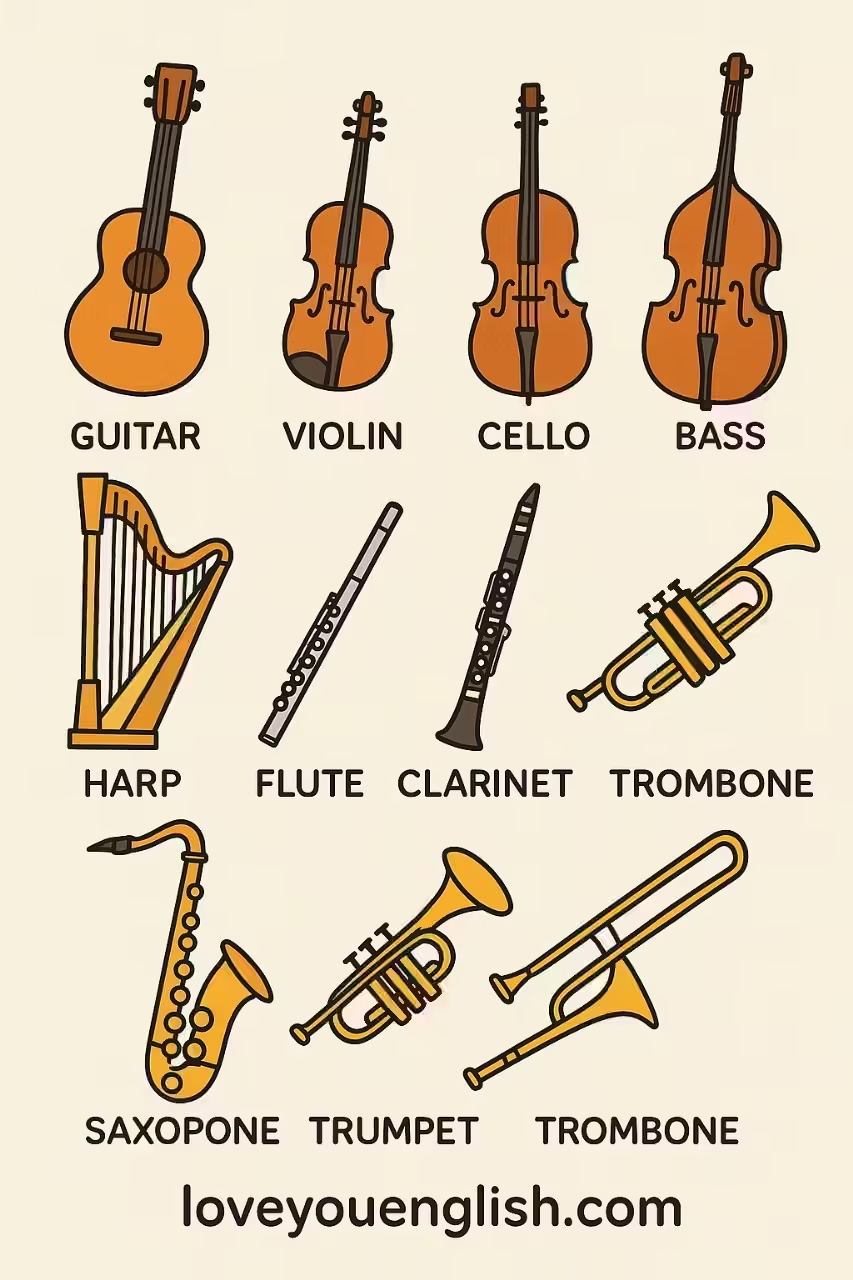
Musical instruments are the tools used to create music. They are usually divided into four main groups:
1. String Instruments
These instruments make sound when you pluck, strum, or bow their strings.
-
Guitar – A popular instrument with six strings, used in many styles.
-
Violin – A small string instrument played with a bow.
-
Cello – A larger string instrument with a deep sound.
-
Bass – A big guitar with a low sound, used in bands.
-
Harp – An instrument with many strings, often used in classical music.
2. Wind Instruments
These make sound when you blow air into them.
-
Flute – A long, thin instrument played by blowing across a hole.
-
Clarinet – A wooden instrument with a smooth sound.
-
Saxophone – Often used in jazz and blues.
-
Trumpet – A brass instrument with a loud, bright sound.
-
Trombone – A brass instrument with a slide to change notes.
3. Percussion Instruments
These are played by striking, shaking, or tapping.
-
Drums – A set of percussion instruments, common in bands.
-
Tambourine – A small frame with jingling metal pieces.
-
Cymbals – Large, round metal plates that crash together.
-
Xylophone – Wooden bars played with mallets.
-
Conga – Tall hand drums from Latin music.
4. Keyboard Instruments
These use keys to make sound.
-
Piano – A large instrument with black and white keys.
-
Organ – Often used in churches, with deep sounds.
-
Synthesizer – An electronic keyboard used in pop and dance music.
Common Music Words and Phrases
To talk about music, you also need to know some general words:
-
Lyrics – The words of a song.
-
Melody – The main tune of a song.
-
Beat – The rhythm or pulse of the music.
-
Tempo – The speed of the music (fast or slow).
-
Harmony – Different notes played or sung together.
-
Chorus – The part of the song that repeats.
-
Verse – The part of the song that changes each time.
-
Solo – When one musician plays or sings alone.
-
Band – A group of musicians playing together.
-
Orchestra – A large group of musicians, usually playing classical music.
Music Genres Vocabulary
A genre is a style or type of music. Knowing genres helps you describe what kind of music you like.
1. Pop
-
Short for “popular” music.
-
Easy to listen to, catchy, and often about love or life.
-
Example artists: Taylor Swift, Ed Sheeran.
2. Rock
-
Uses electric guitars, drums, and strong beats.
-
Can be loud and powerful.
-
Example bands: The Beatles, Queen.
3. Jazz
-
Started in the USA.
-
Known for saxophones, trumpets, and improvisation (making up music while playing).
-
Example artists: Louis Armstrong, Miles Davis.
4. Classical
-
Traditional music played by orchestras.
-
Written by famous composers like Mozart, Beethoven, Bach.
-
Usually calm, elegant, or dramatic.
5. Hip-Hop / Rap
-
Strong beats with spoken or chanted words (rap).
-
Originated in African American culture.
-
Example artists: Eminem, Tupac, Jay-Z.
6. Country
-
American music with guitars, fiddles, and stories about life.
-
Example artists: Johnny Cash, Dolly Parton.
7. Blues
-
Emotional music with guitars and harmonicas.
-
Often about love, sadness, or hope.
-
Example artists: B.B. King, Muddy Waters.
8. Reggae
-
Originated in Jamaica.
-
Relaxed rhythm and strong beat.
-
Famous artist: Bob Marley.
9. Electronic / EDM
-
Music made with computers and synthesizers.
-
Popular in clubs and festivals.
-
Example DJs: David Guetta, Calvin Harris.
10. Folk
-
Traditional music from different cultures.
-
Often uses acoustic instruments like guitars, flutes, and violins.
Talking About Music in Conversations
Here are some simple phrases you can use:
-
Asking about music
-
What kind of music do you like?
-
Who is your favorite singer or band?
-
Do you play any instruments?
-
-
Giving your opinion
-
I like pop music because it is fun and easy to sing.
-
I enjoy classical music because it is relaxing.
-
I don’t really listen to heavy metal.
-
-
Describing a song
-
This song has a fast beat.
-
The lyrics are very meaningful.
-
The guitar solo is amazing.
-
Vocabulary for Music Performances
When people perform music, we also use special words:
-
Concert – A live music show.
-
Gig – A small live performance.
-
Festival – A big event with many musicians.
-
Tour – When an artist travels to perform in different places.
-
Stage – The place where musicians perform.
-
Audience – The people watching the performance.
-
Encore – An extra song played at the end of a concert.
Music in Daily Life
Music is part of our everyday life. Here are ways to talk about it:
-
Background music – Music playing softly while you do other things.
-
Playlist – A list of songs you like.
-
Soundtrack – The music of a movie or TV show.
-
Earphones / Headphones – What you use to listen privately.
-
Karaoke – Singing along with recorded music, usually at parties.
Tips to Learn Music Vocabulary
-
Listen to songs in English – Pay attention to the lyrics.
-
Watch music videos – Notice the instruments and performance.
-
Make a music journal – Write down new words you learn from songs.
-
Talk with friends – Share your favorite artists and genres in English.
-
Play an instrument – It helps you understand music terms better.
Conclusion
Music is more than just sound – it is a universal language. By learning music vocabulary, you can talk about instruments, describe genres, share your favorite songs, and enjoy music with people from all over the world. Whether you love pop, jazz, rock, or classical, having the right words will make your conversations richer and more fun.
So, next time you listen to a song, try to use some of these words. Music will not just be something you hear – it will be something you can talk about, too!
You may also like these English learning articles:
- Garden and Farming Vocabulary in English
- MBA English: Business School Vocabulary and Essays
- Master Vocabulary: English Words Borrowed from Mythology
- Fitness and Gym Vocabulary in English with Meanings