Business English

📘 Business English – Learn Professional Communication for Workplace Success

Business English is essential for clear and effective communication in professional environments. If you want to succeed in your career, communicate confidently at work, and interact with global teams, learning Business English is important.

In this section, you can learn Business English in a simple, clear, and practical way. Each lesson is designed step by step so that students, job seekers, and working professionals can understand and use professional English easily in real-life situations.

Business English is not just about formal language. It is about communicating clearly, professionally, and confidently in the workplace.

What You Will Learn in Business English

This category covers a wide range of important workplace communication skills, including:

  • Business email writing
  • Professional speaking and communication
  • English for meetings and discussions
  • Presentation skills in English
  • Workplace conversations and office vocabulary
  • Job interview questions and answers
  • Formal vs informal English
  • Telephone and online communication
  • Negotiation and client communication
  • Business writing and reports

Each topic is explained with clear and practical examples so you can apply what you learn in real work situations.

Why Learning Business English Is Important

Strong Business English skills help you:

  • Communicate clearly in the workplace
  • Write professional emails and messages
  • Participate confidently in meetings
  • Perform better in job interviews
  • Build strong professional relationships
  • Work effectively with international teams

When you improve your Business English, you increase your confidence and career opportunities.

Learn Business English for Real-Life Use

At Love You English, Business English lessons focus on practical communication. Instead of only learning theory, you learn how to use English in:

  • Office conversations
  • Emails and professional writing
  • Meetings and presentations
  • Job interviews
  • Client communication
  • Remote work and online meetings

This approach helps you use English naturally and effectively in your professional life.

Business English for All Levels

Whether you are:

  • A student preparing for a career
  • A job seeker getting ready for interviews
  • A working professional improving communication
  • A freelancer working with global clients
  • An English learner aiming for career growth

You will find structured Business English lessons that match your needs.

All lessons are written in simple English so that you can understand easily and apply them confidently.

Improve Your Professional English Step by Step

Learning Business English is not about memorizing difficult words. It is about understanding how to communicate clearly and professionally in different situations.

With regular practice, you can:

  • Speak confidently in professional settings
  • Write clear and effective emails
  • Improve workplace communication skills
  • Build strong business vocabulary
  • Grow your career opportunities

Start exploring the Business English lessons below and improve your professional communication step by step.

Master Business English, and open the door to better career opportunities.

Explore More

For more English learning resources, visit
Love You English.

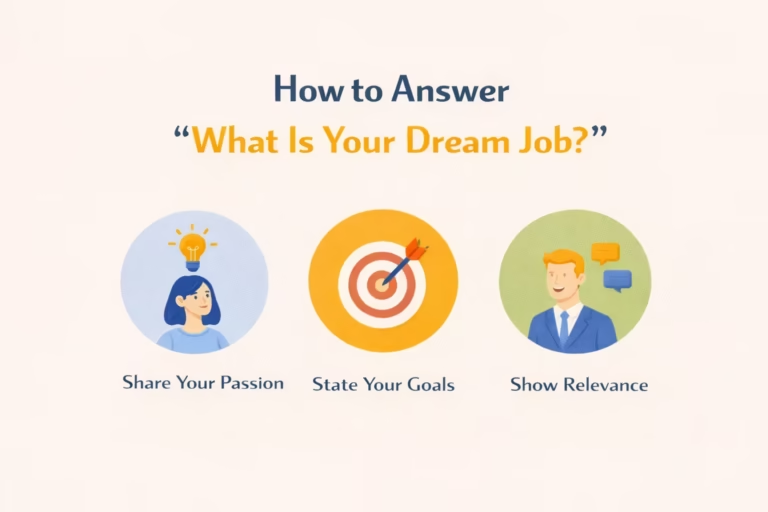
  • How to Answer “What Is Your Dream Job?” – A Comprehensive Guide

    I’ve been teaching English communication skills for years, and one question makes even confident speakers suddenly freeze: “What is your dream job?” Whether you’re sitting in a job interview, chatting at a networking event, or answering a common conversation question in English class, this seemingly simple question can feel surprisingly difficult to answer well. Here’s why students and professionals struggle with this question: They worry their answer sounds unrealistic or silly They’re not sure how honest to be They don’t know how much detail to share They freeze when trying to translate their thoughts into clear English The good news? With the right approach and some practice, you can answer this question confidently and naturally. In this guide, I’ll share practical strategies I’ve taught in…
  • 8 Tips for Professional Email Etiquette in the Workplace

    We’ve all been there—you hit “send” on an email and immediately regret it. Maybe you forgot to attach a file, used the wrong tone, or accidentally replied to everyone instead of just one person. In today’s workplace, email is one of the most important communication tools we use every day. Yet many professionals, especially those new to the workforce or working in English as a second language, struggle with email etiquette. Poor email habits can create misunderstandings, damage professional relationships, and even affect your career growth. The good news? Professional email writing is a skill you can learn and improve with practice. Whether you’re a teacher communicating with parents, a trainer coordinating with colleagues, or anyone working in a professional environment, mastering email etiquette will…

  • 610 Strengths Examples for Resume & Reviews

    Finding the right words to describe your strengths can feel overwhelming. Whether you’re writing a resume, preparing for a job interview, or completing a performance evaluation, knowing how to express what you do well matters. After 12 years helping students and professionals communicate their abilities clearly, I’ve noticed the same challenge again and again: people struggle to identify and articulate their strengths. They know they’re good at certain things, but putting those qualities into words feels difficult. This guide provides 610 strengths examples organized by category, along with practical advice on choosing and presenting your strengths effectively. You’ll learn which strengths work best for different situations, how to avoid common mistakes, and how to make your strengths stand out on resumes and in evaluations. Why…

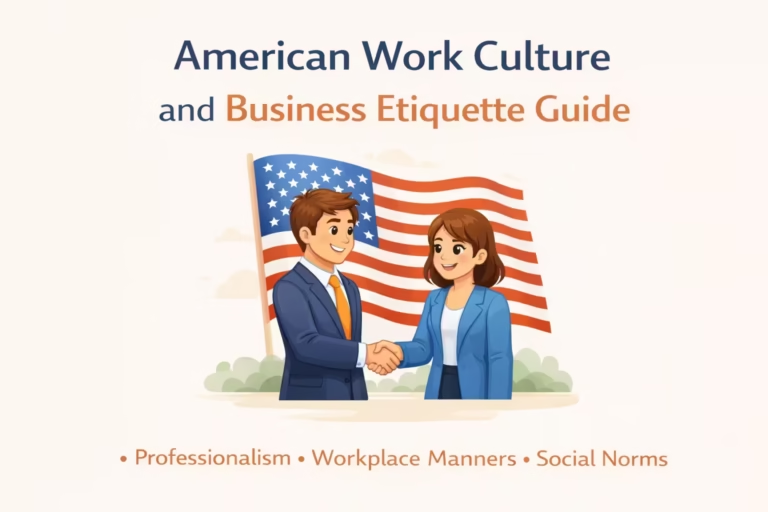
  • American Work Culture and Business Etiquette Guide

    Starting a job in America can feel overwhelming, especially if you come from a different cultural background. You might wonder: Is it okay to call my boss by their first name? Should I send emails after work hours? How casual is too casual? Understanding American work culture isn’t just about following rules—it’s about building relationships, communicating effectively, and feeling confident in your professional environment. Whether you’re a new employee, an international professional, or someone helping others prepare for American workplaces, this guide will walk you through the essential aspects of American business etiquette. The good news? American work culture values directness, friendliness, and respect for time. Once you understand these core principles, navigating your workplace becomes much easier. Understanding American Work Culture Values Individualism and…

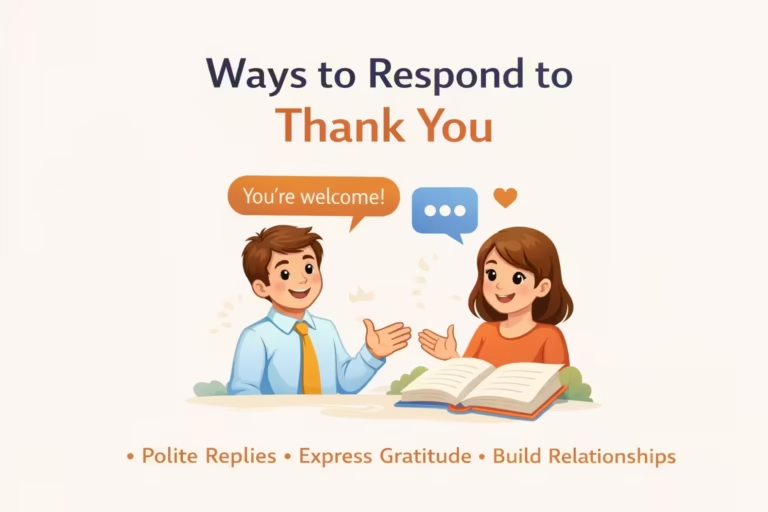
  • 500 Ways to Respond to Thank You (With Examples)

    Have you ever been thanked by someone, and suddenly your mind goes blank? You stand there, unsure whether to say “you’re welcome,” “no problem,” or something else entirely. You’re not alone. Knowing how to respond to “thank you” properly is a skill many people struggle with, yet it’s essential for good communication in English. As an English teacher with years of classroom experience, I’ve watched countless students freeze when someone thanks them. They know they should respond, but they’re uncertain which words to choose. This uncertainty affects their confidence and makes simple conversations feel complicated. This guide gives you 500 practical ways to respond to “thank you” for every situation you’ll encounter. Whether you’re responding to your boss, a friend, a stranger, or a customer,…

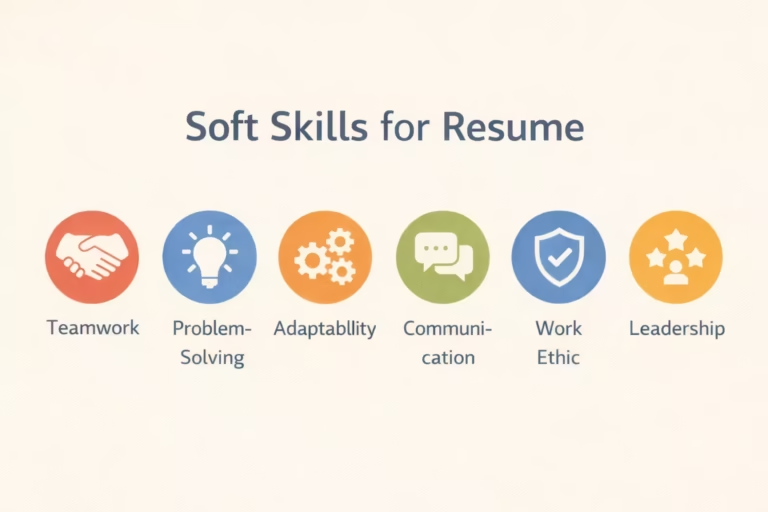
  • 500 Soft Skills for Resume (Complete List + Examples & Tips)

    Finding the right soft skills to put on your resume can feel overwhelming. After years of helping students and job seekers improve their career documents, I’ve seen one pattern repeatedly: people struggle to identify and describe their soft skills effectively. Here, I provide 500 soft-skill examples you can use on your resume, organized by category with clear explanations. Whether you’re a student writing your first resume, an ESL learner navigating the job market, or a professional updating your CV, you’ll find practical examples that showcase your abilities to potential employers. What Are Soft Skills? Soft skills are personal qualities that help you work well with others and succeed in your job. Unlike hard skills (like coding or accounting), soft skills focus on how you communicate,…

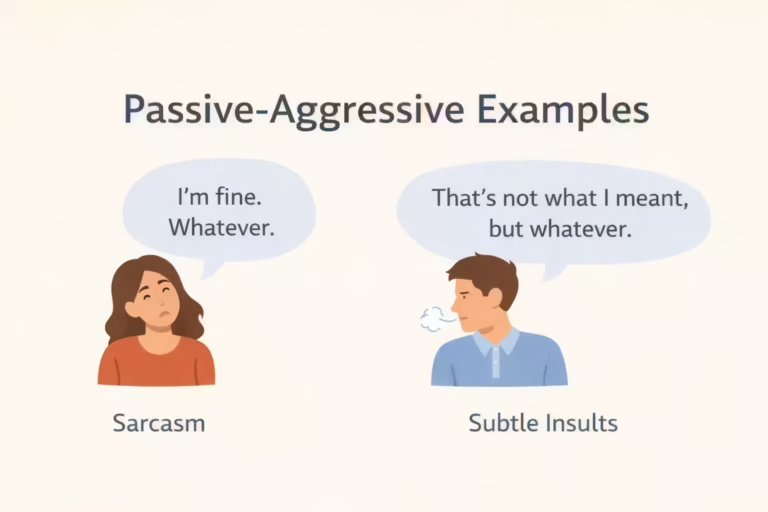
  • Passive-Aggressive Examples (With Explanations)

    Passive-aggressive communication is everywhere—in emails, text messages, workplace conversations, and even family chats. As an English teacher with over a decade of experience teaching communication skills, I’ve seen how confusing this speech pattern can be for students, especially ESL learners who struggle to decode the hidden meanings behind seemingly polite words. In my classroom, students often bring me real-life examples: “My boss wrote ‘per my last email’—why does everyone say that sounds rude?” or “My roommate keeps saying ‘it’s fine’ but seems angry. What does that mean?” Understanding passive-aggressive language is essential for effective communication, whether you’re writing professional emails, navigating social situations, or simply trying to express yourself clearly. This comprehensive guide provides 500 passive-aggressive examples organized by category, complete with explanations to help…

  • How to Write Speaker Notes for Presentations

    Have you ever watched someone give a presentation and wondered how they remembered everything they wanted to say? The secret is often hidden in their speaker notes. Whether you’re a student preparing for a class presentation, a teacher creating lesson materials, or a professional getting ready for your first business meeting, knowing how to write speaker notes can transform your speaking experience from nerve-wracking to confident. In my ten years of teaching public speaking and presentation skills, I’ve seen countless students struggle with presentations—not because they didn’t know their topic, but because they didn’t know how to prepare effective speaker notes. The good news? Writing speaker notes is a skill anyone can learn, and I’m here to show you exactly how to do it. What…

  • 300 Problem Statement Examples with a Complete Writing Guide

    As an English teacher who has spent over a decade helping students write clear, effective problem statements, I’ve seen thousands of confused faces staring at blank pages. Whether you’re: A student writing your first research paper A professional drafting a business proposal A teacher guiding others Or someone preparing a funding request Crafting a strong problem statement can feel overwhelming. Many people know something is wrong—but they struggle to explain exactly what is wrong. Today, I’m sharing 300 problem statement examples across 20 real-life categories — from education and business to healthcare, environment, family, and technology. But this is more than just a list. I’ll also explain: What makes a problem statement strong Why problem statements matter in real life The simple structure you can…

  • How to Use Best Regards in Emails (+60 Examples)

    After teaching business English to over 500 students across 12 countries, I’ve noticed something interesting: many learners struggle more with email closings than with the actual message. Last month, one of my students sent a job application ending with “Cheers!” to a Fortune 500 company. We had a long conversation after that. The truth is, choosing the right email sign-off matters more than most people think. Your closing line creates a lasting impression and sets the tone for future communication. Whether you’re emailing a potential employer, writing to your professor, or corresponding with clients, the phrase you use to end your message can strengthen or weaken your relationship. In this comprehensive guide, I’ll share 60 best regards examples organized by situation, plus practical advice on…