Career Skills

📘 Career Skills – Build Job-Ready Skills for Career Success

Career skills are essential for achieving success in today’s competitive world. Whether you are a student, a job seeker, or a working professional, developing the right career skills can help you grow, communicate effectively, and achieve your professional goals.

If you want to succeed in your career, perform well in interviews, and build confidence in the workplace, learning career skills for students and professionals is very important.

In this section, you can learn career skills in a simple, clear, and practical way. Each lesson is designed step by step so that learners can understand and apply these skills easily in real-life situations.

Career skills are not just about getting a job. They are about building confidence, improving communication, and developing the abilities needed to succeed in your professional life.

🔹 What You Will Learn in Career Skills

This category covers a wide range of important career and professional skills, including:

Job interview skills and common interview questions
Resume and CV writing tips
Communication skills for the workplace
Soft skills such as teamwork, leadership, and time management
Professional behavior and workplace etiquette
Confidence building and personality development
Career planning and goal setting
Problem-solving and decision-making skills
First job tips and workplace success strategies
Study abroad and career guidance

Each topic is explained with simple language and practical examples so that you can use these skills in real-life situations.

🔹 Why Learning Career Skills Is Important

Strong career skills help you:

Get better job opportunities
Perform confidently in job interviews
Communicate effectively at work
Build strong professional relationships
Improve your confidence and personality
Adapt to different workplace environments
Grow and succeed in your career

When you improve your career skills and communication skills, you become more prepared for real-world challenges and opportunities.

🔹 Learn Career Skills for Real-Life Success

At Love You English, career skills lessons focus on practical learning. Instead of only theory, you learn how to apply these skills in real-life situations such as:

Job interviews
Workplace communication
Professional interactions
Career planning
Daily work situations

This practical approach helps you develop skills that are useful and effective in your career.

🔹 Career Skills for All Learners

Whether you are:

A student preparing for your future career
A job seeker looking for opportunities
A fresher starting your first job
A working professional improving skills
An English learner aiming for career growth

You will find structured and easy-to-follow lessons that match your needs.

All lessons are written in simple English so that you can understand easily and apply them with confidence.

🔹 Improve Your Career Step by Step

Learning career skills is not about memorizing information. It is about understanding how to think, communicate, and act professionally in different situations.

With regular practice, you can:

Speak confidently in professional situations
Perform better in interviews
Improve communication and soft skills
Build a strong professional personality
Achieve your career goals

Start exploring the Career Skills lessons below and improve your professional abilities step by step.

🔹 Build Your Future with Strong Career Skills

Developing the right career skills can open the door to new opportunities and long-term success. With the right guidance and consistent practice, you can build confidence, improve communication, and grow in your career.

Start learning today and take the first step toward a successful future.

Explore More

English Grammar
English Vocabulary
English Conversation Practice
English Teaching

For more English learning resources, visit
Love You English.

  • 250 Short Bio Examples (+ Free Templates)

    Writing a short bio can feel surprisingly difficult. Whether you’re creating a profile for work, updating your social media, or introducing yourself on a website, finding the right words to describe yourself in just a few sentences is a real challenge. I’ve helped hundreds of students and professionals write their bios over the years, and I’ve learned that most people struggle with the same thing: how to sound professional without being boring, and how to be interesting without seeming boastful. In this guide, I’ll share 250 real examples of short bios across different situations, plus simple templates you can customize for your own use. These examples come from my experience working with teachers, business professionals, students, and creative people who all needed to introduce themselves…
  • How to Answer “What Is Your Dream Job?” – A Comprehensive Guide

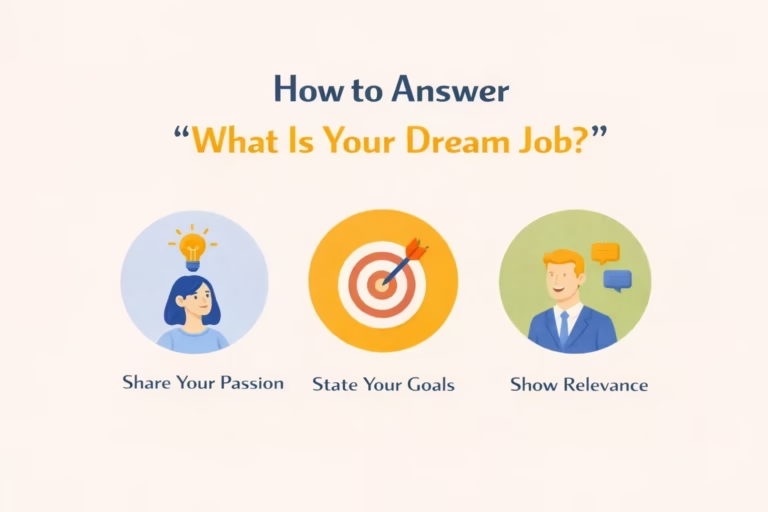
    I’ve been teaching English communication skills for years, and one question makes even confident speakers suddenly freeze: “What is your dream job?” Whether you’re sitting in a job interview, chatting at a networking event, or answering a common conversation question in English class, this seemingly simple question can feel surprisingly difficult to answer well. Here’s why students and professionals struggle with this question: They worry their answer sounds unrealistic or silly They’re not sure how honest to be They don’t know how much detail to share They freeze when trying to translate their thoughts into clear English The good news? With the right approach and some practice, you can answer this question confidently and naturally. In this guide, I’ll share practical strategies I’ve taught in…

  • 8 Tips for Professional Email Etiquette in the Workplace

    We’ve all been there—you hit “send” on an email and immediately regret it. Maybe you forgot to attach a file, used the wrong tone, or accidentally replied to everyone instead of just one person. In today’s workplace, email is one of the most important communication tools we use every day. Yet many professionals, especially those new to the workforce or working in English as a second language, struggle with email etiquette. Poor email habits can create misunderstandings, damage professional relationships, and even affect your career growth. The good news? Professional email writing is a skill you can learn and improve with practice. Whether you’re a teacher communicating with parents, a trainer coordinating with colleagues, or anyone working in a professional environment, mastering email etiquette will…

  • 610 Strengths Examples for Resume & Reviews

    Finding the right words to describe your strengths can feel overwhelming. Whether you’re writing a resume, preparing for a job interview, or completing a performance evaluation, knowing how to express what you do well matters. After 12 years helping students and professionals communicate their abilities clearly, I’ve noticed the same challenge again and again: people struggle to identify and articulate their strengths. They know they’re good at certain things, but putting those qualities into words feels difficult. This guide provides 610 strengths examples organized by category, along with practical advice on choosing and presenting your strengths effectively. You’ll learn which strengths work best for different situations, how to avoid common mistakes, and how to make your strengths stand out on resumes and in evaluations. Why…

  • 500 Ways to Respond to Thank You (With Examples)

    Have you ever been thanked by someone, and suddenly your mind goes blank? You stand there, unsure whether to say “you’re welcome,” “no problem,” or something else entirely. You’re not alone. Knowing how to respond to “thank you” properly is a skill many people struggle with, yet it’s essential for good communication in English. As an English teacher with years of classroom experience, I’ve watched countless students freeze when someone thanks them. They know they should respond, but they’re uncertain which words to choose. This uncertainty affects their confidence and makes simple conversations feel complicated. This guide gives you 500 practical ways to respond to “thank you” for every situation you’ll encounter. Whether you’re responding to your boss, a friend, a stranger, or a customer,…

  • 10 Strategies to Help Students Get Started on Their Work

    Getting started is often the hardest part of any task. As an English teacher who has worked with hundreds of students in both classroom and online settings, I’ve seen this struggle countless times. Students sit with blank pages, unopened books, or unstarted assignments, feeling overwhelmed and unsure where to begin. The good news? Learning how to help students get started on their work is a skill that anyone can develop with the right strategies. Whether you’re a teacher looking for ways to motivate your class, a parent supporting a struggling learner, or a student trying to overcome procrastination, these ten practical strategies will make starting work easier and less stressful. I’ve used these methods with English learners, exam preparation students, and even adult job seekers—and…

  • 500 Soft Skills for Resume (Complete List + Examples & Tips)

    Finding the right soft skills to put on your resume can feel overwhelming. After years of helping students and job seekers improve their career documents, I’ve seen one pattern repeatedly: people struggle to identify and describe their soft skills effectively. Here, I provide 500 soft-skill examples you can use on your resume, organized by category with clear explanations. Whether you’re a student writing your first resume, an ESL learner navigating the job market, or a professional updating your CV, you’ll find practical examples that showcase your abilities to potential employers. What Are Soft Skills? Soft skills are personal qualities that help you work well with others and succeed in your job. Unlike hard skills (like coding or accounting), soft skills focus on how you communicate,…

  • 10 Job Search Resources For Recent Graduate Should Know About

    Landing your first job after college can feel overwhelming. You’ve spent years studying, and now you’re facing a completely different challenge: finding work in a competitive market. The good news? You don’t have to do it alone. There are dozens of job search resources designed specifically to help fresh graduates like you find opportunities, build connections, and start your career with confidence. I’m going to introduce ten essential resources that can transform your job search from confusing and frustrating into organized and productive. Whether you’re looking for your first entry-level position, trying to understand what employers want, or simply need help writing a resume, these tools will give you a real advantage. Understanding What You’re Looking For: Entry-Level Jobs Explained Before diving into resources, let’s…

  • 10 Behavioral Interview Questions (With Sample Answers)

    Landing your first job after college can feel overwhelming. You’ve polished your resume, applied to dozens of positions, and finally—you get the interview call. But then comes a new challenge: behavioral interview questions. If you’ve never heard this term before, don’t worry. You’re not alone. Many fresh graduates walk into their first interviews unprepared for questions that start with phrases like “Tell me about a time when…” or “Describe a situation where…” These behavioral questions are different from typical interview questions. Instead of asking what you would do in a hypothetical situation, they ask what you actually did in real situations from your past. Employers use these questions because past behavior is one of the best predictors of future performance. The good news? With the…

  • Interview Strategies for Recent Graduates | Top 10 Tips

    Landing your first job after college can feel overwhelming. You’ve spent years studying, preparing, and dreaming about your career. Now you’re facing interviews with experienced hiring managers, competing against other qualified candidates, and trying to prove yourself without much professional experience to show. Here’s the good news: companies are actively hiring recent graduates. They value fresh perspectives, up-to-date knowledge, and enthusiasm. The challenge isn’t that opportunities don’t exist—it’s that you need the right strategies to stand out during the interview process. This guide shares ten practical interview strategies that will help you feel more confident, prepared, and professional. These aren’t magic tricks or shortcuts. They’re honest, proven approaches that hiring managers actually respond to when evaluating candidates for entry-level positions. Why Interview Skills Matter More…