English Reading & Writing Skills

✍️ English Reading & Writing Skills – Improve Your Communication Step by Step

English reading and writing skills are essential for academic success, professional growth, and confident communication. If you want to understand texts clearly and write well-structured sentences, this section will guide you step by step.

In this category, you can improve your English reading skills, develop clear writing techniques, and learn how to express ideas effectively in simple and correct English.

Improve Your English Reading Skills

Reading regularly helps you:

  • Build English vocabulary
  • Understand grammar naturally
  • Improve sentence structure
  • Develop comprehension skills
  • Think in English more easily

Here you will find reading passages, comprehension practice, and structured lessons designed for beginners and intermediate learners.

Each lesson focuses on helping you understand meaning, context, and correct usage.

Develop Strong English Writing Skills

Good writing is not about using difficult words. It is about clarity, structure, and correct grammar.

In this section, you will learn:

  • How to write clear and simple sentences
  • Paragraph writing techniques
  • Essay writing guidance
  • Formal and informal writing styles
  • Letter and email writing
  • Structured composition practice

These lessons help you improve your English writing skills for school, college, workplace communication, and exams.

Reading and Writing for Real-Life Use

This category focuses on practical application. You will learn how to use reading and writing skills in:

  • Academic assignments
  • Professional emails
  • Reports and presentations
  • Exams and competitive tests
  • Everyday written communication

By practicing regularly, you can improve both written English and overall communication ability.

Suitable for All Levels

Whether you are:

  • A beginner learning basic sentence formation
  • A student preparing for exams
  • A job seeker improving professional writing
  • A working professional writing emails
  • An English teacher looking for structured material

You will find clear and practical lessons that match your needs.

All topics are explained in simple English so learners can practice independently and build confidence.

Build Confidence Through Practice

Improving English reading and writing skills takes regular practice. With structured lessons, clear examples, and practical exercises, you can develop strong communication skills step by step.

Start exploring the lessons below and strengthen your reading and writing abilities today.

Clear reading leads to better understanding.

Strong writing leads to confident expression.

For more English learning resources, visit
Love You English.

  • ·

    How to Answer “What Is Your Dream Job?” – A Comprehensive Guide

    I’ve been teaching English communication skills for years, and one question makes even confident speakers suddenly freeze: “What is your dream job?” Whether you’re sitting in a job interview, chatting at a networking event, or answering a common conversation question in English class, this seemingly simple question can feel surprisingly difficult to answer well. Here’s why students and professionals struggle with this question: They worry their answer sounds unrealistic or silly They’re not sure how honest to be They don’t know how much detail to share They freeze when trying to translate their thoughts into clear English The good news? With the right approach and some practice, you can answer this question confidently and naturally. In this guide, I’ll share practical strategies I’ve taught in…
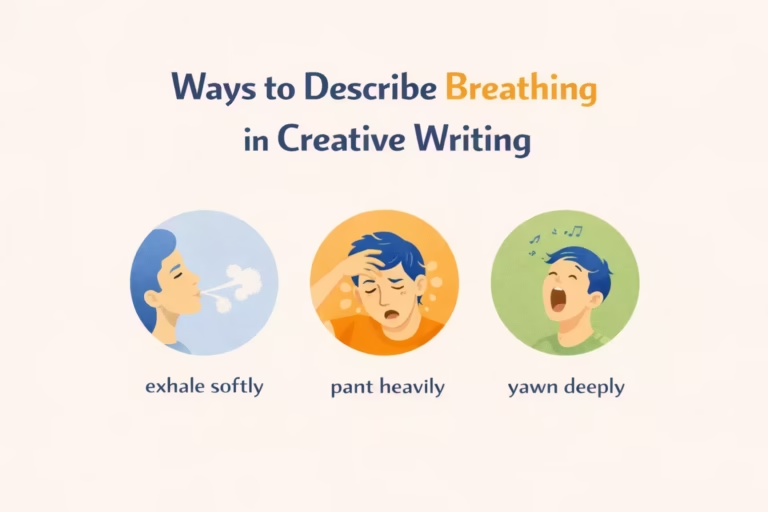
  • 40 Ways to Describe Breathing in Creative Writing

    Have you ever struggled to describe a character gasping for air, sighing in relief, or breathing heavily after a chase? You’re not alone. Many writers find it challenging to capture something as simple yet essential as breathing on the page. As an English writing instructor, I’ve spent years helping students bring their stories to life through vivid descriptions. One of the most common challenges I see in student manuscripts is flat, repetitive breathing descriptions. They write “he breathed heavily” or “she took a deep breath” over and over, missing opportunities to show emotion, build tension, and create atmosphere. Learning how to describe breathing in writing transforms your storytelling. Breathing reveals character emotions, creates mood, and pulls readers deeper into scenes. This guide provides 40 practical…

  • 8 Tips for Professional Email Etiquette in the Workplace

    We’ve all been there—you hit “send” on an email and immediately regret it. Maybe you forgot to attach a file, used the wrong tone, or accidentally replied to everyone instead of just one person. In today’s workplace, email is one of the most important communication tools we use every day. Yet many professionals, especially those new to the workforce or working in English as a second language, struggle with email etiquette. Poor email habits can create misunderstandings, damage professional relationships, and even affect your career growth. The good news? Professional email writing is a skill you can learn and improve with practice. Whether you’re a teacher communicating with parents, a trainer coordinating with colleagues, or anyone working in a professional environment, mastering email etiquette will…

  • ·

    610 Strengths Examples for Resume & Reviews

    Finding the right words to describe your strengths can feel overwhelming. Whether you’re writing a resume, preparing for a job interview, or completing a performance evaluation, knowing how to express what you do well matters. After 12 years helping students and professionals communicate their abilities clearly, I’ve noticed the same challenge again and again: people struggle to identify and articulate their strengths. They know they’re good at certain things, but putting those qualities into words feels difficult. This guide provides 610 strengths examples organized by category, along with practical advice on choosing and presenting your strengths effectively. You’ll learn which strengths work best for different situations, how to avoid common mistakes, and how to make your strengths stand out on resumes and in evaluations. Why…

  • How to Describe Bruises in Writing (With Examples)

    Have you ever struggled to describe a bruise in your story, medical report, or creative writing assignment? You’re not alone. After teaching English writing for over twelve years, I’ve noticed students often repeat the same basic words: “blue,” “purple,” or “painful.” While these words aren’t wrong, they don’t create vivid pictures in readers’ minds. Learning how to describe bruises in writing effectively helps you create more realistic characters, write better medical documentation, craft compelling fiction, and improve your overall descriptive writing skills. Whether you’re a student working on a creative writing piece, an ESL learner building vocabulary, or a professional documenting injuries, this guide will teach you practical techniques with clear examples you can use immediately. Why Accurate Bruise Description Matters in Writing In my…

  • Limerick Examples: 410 Funny & Creative Poems

    As an English teacher with over a decade of classroom experience, I’ve watched countless students light up when they discover limericks. These playful five-line poems are magical teaching tools—they make grammar fun, boost creativity, and help learners remember vocabulary through rhythm and rhyme. Whether you’re a parent looking for educational activities, a teacher planning lessons, or simply someone who loves wordplay, limericks offer something special for everyone. In this comprehensive guide, I’ll share 410 limerick examples organized by age group and theme, plus practical tips I’ve used successfully in both offline and online classes. You’ll discover how these short poems can transform language learning from a chore into pure joy. What Is a Limerick? (Simple Explanation) A limerick is a short, funny poem with exactly…

  • Positive Feedback Examples: 400 Inspiring Ideas

    Giving positive feedback is one of the most powerful tools in teaching, parenting, and personal development. When done well, it builds confidence, motivates learners, and creates a supportive environment where people feel safe to try, fail, and grow. But here’s the challenge many teachers and parents face: we know we should give positive feedback, but we often struggle to find the right words. We end up repeating “Good job!” or “Well done!” until these phrases lose their meaning. As an experienced English teacher, I’ve learned that specific, meaningful feedback makes all the difference. Generic praise feels empty. Specific recognition feels genuine and encouraging. This guide provides 400 positive feedback examples across different situations. Whether you’re a new teacher, an ESL trainer, a parent supporting your…

  • How to Make an Inference in 6 Easy Steps

    By an experienced English teacher and spoken English trainer with 10+ years of classroom experience You Already Know How to Make an Inference — You Just Don’t Know It Yet Here’s something that happens in my classroom almost every week. A student walks in, looks at me holding a stack of papers, and whispers to their friend, “I think we have a quiz today.” Nobody told them. It wasn’t written on the board. But they figured it out from the clues in front of them. That’s an inference. Learning how to make an inference is one of the most useful thinking skills you will ever develop. It helps you understand what you read, what you hear, and what happens around you — even when not…

  • ·

    American Work Culture and Business Etiquette Guide

    Starting a job in America can feel overwhelming, especially if you come from a different cultural background. You might wonder: Is it okay to call my boss by their first name? Should I send emails after work hours? How casual is too casual? Understanding American work culture isn’t just about following rules—it’s about building relationships, communicating effectively, and feeling confident in your professional environment. Whether you’re a new employee, an international professional, or someone helping others prepare for American workplaces, this guide will walk you through the essential aspects of American business etiquette. The good news? American work culture values directness, friendliness, and respect for time. Once you understand these core principles, navigating your workplace becomes much easier. Understanding American Work Culture Values Individualism and…

  • How to Answer “What Are Your Strengths?” Naturally in English

    “So, tell me about your strengths.” Five simple words that can make even confident speakers freeze up. I’ve watched countless students practice their English fluently in class, only to stumble when asked this common interview question. Why? Because talking about yourself in English—especially your good qualities—requires a special kind of confidence that goes beyond grammar rules. Whether you’re preparing for a job interview, a university admission, or simply want to introduce yourself professionally, knowing how to discuss your strengths clearly and naturally is essential. But here’s the challenge: you need to sound confident without bragging, be specific without rambling, and speak naturally without memorizing scripts. In my years of teaching spoken English, I’ve helped hundreds of learners transform from nervous, script-dependent speakers into confident communicators…