Speaking Practice

Spoken English Practice: Improve Speaking Skills and Speak English Confidently

Spoken English practice is essential for improving your speaking skills and becoming fluent in English. Whether you are a beginner or an intermediate learner, regular practice helps you speak clearly, confidently, and naturally.

In this category, you will find simple, practical, and effective spoken English lessons. These lessons are designed step by step so you can practice speaking, improve pronunciation, and communicate confidently in real-life situations.

Spoken English is not just about grammar. It is about using English naturally in conversations and expressing your ideas clearly.

What You Will Learn in Spoken English Practice

This section covers a wide range of speaking skills, including:

  • Daily speaking practice and exercises
  • Common English sentences for conversation
  • Pronunciation and fluency improvement
  • Speaking activities and practice topics
  • Real-life conversation practice
  • Confidence-building speaking techniques
  • English for daily life and workplace communication
  • Listening and speaking practice together

Each lesson includes practical examples and activities so you can practice speaking and improve your fluency step by step.

Why Spoken English Practice Is Important

Regular speaking practice helps you:

  • Speak English confidently and fluently
  • Improve pronunciation and clarity
  • Think in English while speaking
  • Respond quickly in conversations
  • Reduce hesitation and fear of speaking
  • Improve overall communication skills

The more you practice speaking, the more natural your English becomes.

Practice Spoken English for Real-Life Situations

At Love You English, we focus on practical communication. You will practice English in situations such as:

  • Daily conversations with friends and family
  • Introducing yourself and others
  • Asking and answering questions
  • Shopping, travel, and daily activities
  • Workplace and professional communication
  • Online meetings and real-life interactions

This practical approach helps you use English confidently in everyday life.

Spoken English Practice for All Levels

This category is useful for:

  • Beginners starting to speak English
  • Students improving communication skills
  • English learners building fluency
  • Professionals improving spoken English
  • Anyone who wants to speak English confidently

All lessons are written in simple English so that learners at all levels can understand easily and practice without difficulty.

Improve Your Speaking Skills Step by Step

Improving spoken English requires regular practice. By speaking daily, you can become more confident and fluent.

With consistent practice, you can:

  • Speak English confidently in any situation
  • Improve fluency and pronunciation
  • Understand conversations easily
  • Respond naturally and quickly
  • Build strong communication skills

Explore the lessons below and start practicing spoken English today. Take the first step toward speaking English fluently and confidently.

Practice daily, speak confidently, and improve your English step by step.


Frequently Asked Questions (FAQs)

What is spoken English practice?

Spoken English practice involves practicing speaking English regularly to improve fluency, pronunciation, and confidence.

Why is spoken English practice important?

It is important because it helps you speak fluently, improve communication skills, and build confidence.

How can I practice spoken English daily?

You can practice by speaking regularly, using daily sentences, practicing conversations, and speaking with others.

Can I improve spoken English without a partner?

Yes, you can practice alone by speaking aloud, recording yourself, and practicing daily exercises.

How long does it take to improve spoken English?

With daily practice, you can see improvement in a few weeks, but fluency takes consistent effort.

What are the best ways to improve speaking skills?

Regular practice, listening, speaking, and using English in real-life situations are the best ways to improve.

Is spoken English practice useful for beginners?

Yes, beginners can start with simple sentences and gradually improve speaking skills.

How can I speak English confidently?

You can build confidence by practicing daily, not fearing mistakes, and using simple and clear sentences.

Practice daily. Speak confidently. Communicate clearly.

For more English learning resources, visit
Love You English.

  • Active Voice Examples: 5,00 English Sentences + Guide

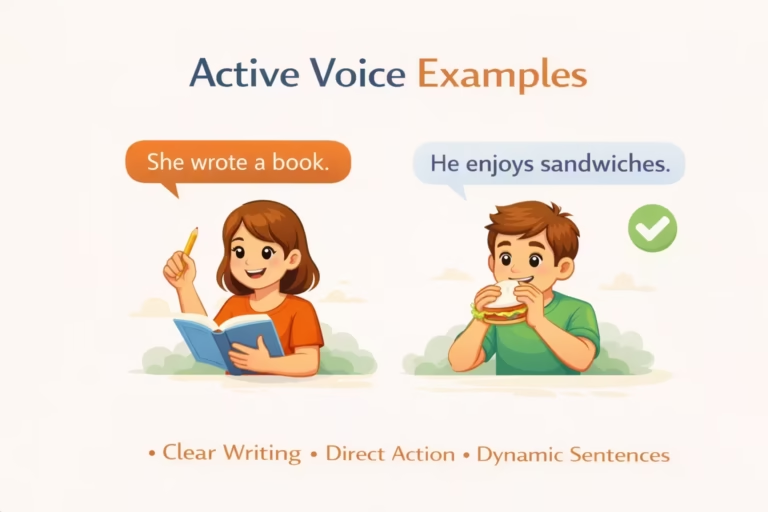
    Writing clearly matters. When your readers understand your message the first time, everyone wins. One of the simplest ways to improve your writing is to use the active voice instead of the passive voice. I’ve taught writing to students for over fifteen years. In every class, I see the same problem. New writers fill their work with passive sentences without realizing it. Their writing feels weak and confusing. When they switch to the active voice, their work transforms immediately. I will help you understand the active voice and use it confidently. You’ll learn what makes a sentence active, why it matters, and how to spot passive voice in your own writing. By the end, you’ll have the tools to write with more power and clarity….


  • How to Become a Better English Student – Study Tips

    Introduction: Are You Struggling to Improve Your English? If you want to become a better English student, you are not alone. Millions of people around the world are trying to improve their English every single day — in classrooms, at home, on their phones, and during their lunch breaks. But many of them hit a wall. They study hard, but their progress feels slow. They learn grammar rules but freeze when they try to speak. They understand written English but struggle to follow conversations. I’ve been teaching English for over 10 years — in physical classrooms, online platforms, and corporate training rooms. And in that time, I’ve seen the same patterns repeat. Some students improve quickly. Others stay stuck for months, even years. The difference…

  • ·

    How to Design Outdoor STEM Learning Activities

    When I first moved my science lesson outside, I expected chaos. Instead, I watched my third-graders spend forty minutes measuring shadows, completely absorbed. That day changed how I thought about teaching STEM (Science, Technology, Engineering, and Mathematics). Outdoor STEM learning transforms abstract concepts into hands-on experiences that elementary students can touch, measure, and explore. After ten years of teaching elementary students both in traditional classrooms and outdoor settings, I’ve learned that nature provides the perfect laboratory for young learners. Children naturally ask questions outdoors. They notice patterns. They want to understand why leaves change color or how ants build their homes. This curiosity makes outdoor STEM activities powerful teaching tools. This guide shares practical strategies for designing outdoor STEM learning experiences that work in real…

  • ·

    60 Best Sonnet Examples (With Explanation)

    As an English teacher with over a decade of experience helping students understand poetry, I’ve seen countless learners struggle with sonnets. They often ask me, “Why are these 14-line poems so important?” or “How can I actually understand what the poet is saying?” Through my years of teaching both offline and online classes, I’ve discovered that the best way to learn sonnets is through real examples with clear explanations. That’s exactly what this guide provides: 60 of the best sonnet examples from famous poets, organized by type, with simple explanations that anyone can understand. Whether you’re a student preparing for exams, an ESL learner exploring English literature, a teacher looking for classroom materials, or a parent helping your child with homework, this comprehensive collection will…

  • ·

    How Long Does It Take to Speak English Fluently? (Realistic Timeline)

    If you’re learning English, you’ve probably asked yourself this question many times: “How long will it take me to speak English fluently?” It’s one of the most common questions language learners ask, and the answer might surprise you. The truth is, there’s no single answer that works for everyone. Some people reach fluency in one year, while others need three, five, or even ten years. But don’t worry—understanding the factors that affect your learning speed can help you create a realistic plan and reach your goals faster. In this guide, we’ll explore what fluency really means, how long it typically takes, and what you can do to speed up your progress. This topic is part of our Spoken English for English learners. What Does “Fluent”…

  • ·

    8 Questions to Ask a Stranger | Easy Conversation Starters

    In this blog post, you will learn 8 easy questions to ask a stranger. These questions are safe, natural, and useful in real life. They work well in places like buses, trains, offices, parks, cafés, events, or online conversations. Talking to strangers can feel scary, especially if you are learning English. You may worry about what to say, how to start, or what if the other person is not interested. The good news is: you don’t need perfect English or clever jokes. You only need simple, polite, and friendly questions. This post is written especially for English learners. I will explain everything step by step, define important terms, and give practical tips for both beginners and advanced learners. What Is a Conversation Starter? A conversation…

  • ·

    How to Use the Shadowing Technique to Speak English Fluently

    Speaking English fluently is a dream for many learners, but finding the right practice method can be challenging. You may understand grammar and vocabulary, yet still struggle to speak confidently and naturally. This is where the Shadowing Technique can make a big difference. The shadowing technique is a powerful speaking practice method used by language learners around the world. It helps you improve pronunciation, listening skills, rhythm, and fluency at the same time. Instead of memorising rules, you learn English the natural way—by listening and speaking together. In this article, you will learn how to use the shadowing technique step by step, why it works so well, and how you can practise it daily to speak English more smoothly and confidently. Whether you are a…

  • ·

    Top 5 Ways to Advance Your English Skills in 2026

    English learning is changing fast, and in 2026, learners have more opportunities than ever to improve their skills. From smart technology to practical speaking methods, the way we learn English today is very different from the past. However, many learners still feel stuck—they understand English but struggle to speak fluently, write confidently, or think in English. To truly advance your English skills in 2026, you need smart strategies, not just hard work. Practising randomly or memorising rules is no longer enough. What you need are effective methods that focus on real-life communication, confidence, and consistency. In this article, you’ll discover the top 5 proven ways to advance your English skills in 2026. These tips are practical, easy to follow, and suitable for beginners, intermediate, and…

  • 150 English Sentences Related to Public Transport

    Public transport is a common topic in daily conversations, exams, and real-life situations. Whether you are talking about buses, trains, metros, taxis, or airports, you need the right English sentences to express yourself clearly. This blog post, “150 English Sentences Related to Public Transport,” is specially designed for English learners who want to improve their speaking, reading, and vocabulary skills. In this post, you will find easy and useful English sentences related to public transport that are commonly used in daily life. These sentences will help students, ESL learners, and competitive exam candidates speak English with more confidence. The sentences are simple, practical, and suitable for beginners to intermediate learners. Buying Tickets and Payments (1–25) Where’s the ticket office? What time’s the next bus to…

  • 200 English Sentences for Restaurants and Cafes for English Speaking

    Eating out at restaurants and cafes is a common part of daily life, especially while traveling or socializing. To communicate confidently in such situations, you need the right English sentences. This blog post, “200 English Sentences for Restaurants and Cafes,” is specially created for English learners who want to improve their speaking skills in real-life situations. In this post, you will learn easy and practical English sentences used while ordering food, talking to waiters, asking about the menu, paying the bill, and giving feedback. These sentences are perfect for beginners, ESL learners, and students who want to speak English fluently and naturally in restaurants and cafes. 200 English Sentences for Restaurants and Cafes for English Speaking 1. Greetings and Welcoming (20 sentences) Welcome to our…