Speaking English fluently is a dream for many learners, but finding the right practice method can be challenging.
You may understand grammar and vocabulary, yet still struggle to speak confidently and naturally. This is where the Shadowing Technique can make a big difference.
The shadowing technique is a powerful speaking practice method used by language learners around the world. It helps you improve pronunciation, listening skills, rhythm, and fluency at the same time.
Instead of memorising rules, you learn English the natural way—by listening and speaking together.
In this article, you will learn how to use the shadowing technique step by step, why it works so well, and how you can practise it daily to speak English more smoothly and confidently.
Whether you are a beginner or an advanced learner, this technique can help you sound more natural in English conversations.
What Is the Shadowing Technique?
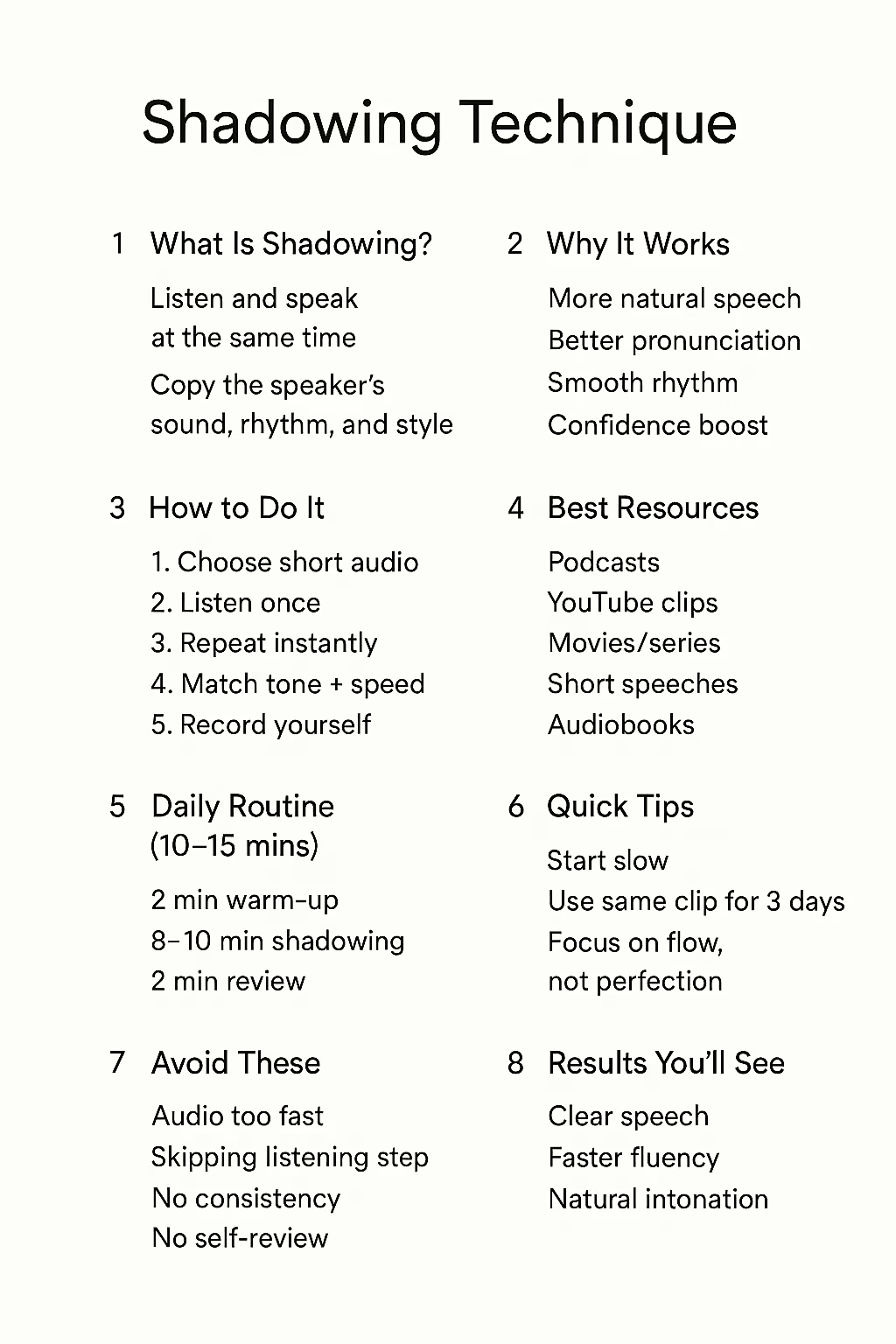
The shadowing technique is a language learning method where you listen to audio in English and repeat it immediately, almost at the same time.
You become the “shadow” of the speaker, copying their words, pronunciation, rhythm, and intonation as closely as possible.
Think of it like singing along to your favorite song. You hear the words and sing them almost simultaneously.
That’s exactly what shadowing feels like, except you’re doing it with everyday English conversations, podcasts, or videos instead of music.
Why Does Shadowing Work So Well?
I remember Maria, one of my intermediate students from Kerala. She could write beautiful English sentences and understood grammar perfectly, but when she spoke, she struggled with pronunciation and spoke very slowly.
After just three weeks of daily shadowing practice, her speaking transformed completely. Her confidence soared, and her English started to flow naturally.
Here’s why shadowing is so effective:
It trains your mouth muscles. Speaking a new language requires your mouth, tongue, and lips to move in new ways. Shadowing gives these muscles the workout they need.
It improves your pronunciation naturally. Instead of studying pronunciation rules in a textbook, you learn by imitating native speakers directly.
It helps you think in English. Because you’re repeating immediately, your brain doesn’t have time to translate from your native language. This builds the neural pathways for thinking directly in English.
It develops your listening skills simultaneously. To shadow effectively, you must listen carefully, which sharpens your ability to understand spoken English.
It teaches natural rhythm and intonation. English has a musical quality with stress patterns and melody. Shadowing helps you absorb these patterns unconsciously.
How to Practice Shadowing: A Step-by-Step Guide
Step 1: Choose the Right Material
This is crucial for your success. Pick audio or video content that matches your current level.
For beginners: Start with slow, clear speech. Children’s audiobooks, simple podcasts for learners, or basic English learning videos work perfectly. The content should be about 70-80% understandable to you.
For intermediate learners: Try TV show clips, TED Talks on familiar topics, or podcasts for native speakers on subjects you know well.
For advanced learners: Challenge yourself with news broadcasts, complex podcasts, audiobooks, or movie scenes with natural, fast-paced dialogue.
I always tell my students: don’t start with material that’s too difficult. One of my students, Ahmed, began shadowing with fast-paced American comedy shows. He felt frustrated and gave up quickly. When he switched to a cooking show about a topic he loved, he made incredible progress because he already understood the vocabulary.
Step 2: Listen First
Before you start shadowing, listen to your chosen material 2-3 times without repeating. This helps you:
- Understand the general meaning
- Notice pronunciation patterns
- Identify difficult words or phrases
- Get familiar with the speaker’s pace
Step 3: Start Shadowing
Now comes the practice itself. Play the audio and start speaking along with it, trying to match the speaker as closely as possible. Here’s how:
- Play the audio at normal speed (don’t slow it down initially)
- Start speaking 1-2 words behind the speaker (this is why it’s called “shadowing”)
- Copy everything: pronunciation, intonation, emotion, even their breathing pauses
- Don’t worry about perfection – just keep going even if you make mistakes
In my classes, I often practice shadowing as a group activity. I play a 30-second clip, and we all shadow together. Students feel less self-conscious this way, and the energy in the room is amazing. They laugh at mistakes, encourage each other, and by the third repetition, everyone sounds noticeably better.
Step 4: Record Yourself
This step makes many students uncomfortable, but it’s incredibly valuable. Record yourself shadowing and then compare it to the original audio. Listen for:
- Words you’re mispronouncing
- Places where your rhythm differs from the speaker
- Intonation patterns you’re missing
The first time I recorded myself speaking Spanish (I was learning it alongside my students), I was shocked by how different I sounded from native speakers. But this awareness helped me improve faster than anything else.
Step 5: Repeat and Review
Shadow the same material multiple times over several days. Repetition is key. Your goal isn’t to shadow something once perfectly, but to shadow it many times until it becomes automatic.
I recommend the “3-7-21” method:
- Shadow the same material 3 times in your first session
- Return to it after 7 days
- Practice it again after 21 days
This spaced repetition helps cement the patterns in your long-term memory.
Practical Tips for Success
Start small. Begin with just 30 seconds to one minute of material. As I learned from teaching young learners, short, focused practice is better than long, exhausting sessions.
Practice daily. Even 10-15 minutes every day is more effective than one long session per week. Consistency builds fluency.
Shadow with expression. Don’t just repeat words like a robot. Copy the speaker’s emotions, enthusiasm, or seriousness. This helps you sound more natural.
Use transcripts wisely. If available, use transcripts to check your understanding, but don’t read while shadowing. Your eyes should be free, not glued to text. After you shadow, you can check the transcript to see what you missed.
Don’t translate. If you don’t understand a word, guess from context or look it up later. During shadowing, just keep going.
Move your body. I encourage students to walk around while shadowing. Movement helps with memory and makes practice more enjoyable.
Common Mistakes to Avoid
In my teaching experience, I’ve seen students make these mistakes repeatedly:
Choosing material that’s too difficult. If you’re understanding less than 60% of the content, it’s too advanced. You’ll feel frustrated and won’t improve effectively.
Stopping every time they make a mistake. Shadowing should flow continuously. Mistakes are normal and expected.
Reading transcripts while shadowing. This defeats the purpose. You need to train your ears, not your eyes.
Shadowing without emotion. Speaking with flat intonation won’t help you sound natural. Mimic the speaker’s feelings and energy.
Giving up too soon. Shadowing feels awkward at first. Every single student I’ve taught feels clumsy initially. But after 7-10 practice sessions, something clicks, and it starts feeling natural.
Shadowing for Different Learning Styles
Visual learners: Watch videos with subtitles initially (in English, not your native language) to understand the content, then turn off subtitles for shadowing.
Auditory learners: You’ll love shadowing naturally. Focus on podcasts or audiobooks and shadow while walking or doing simple tasks.
Kinesthetic learners: Shadow while moving. Walk, gesture, or even act out what the speaker is saying. This physical engagement helps you learn faster.
Measuring Your Progress
After one month of regular shadowing practice, you should notice:
- Easier pronunciation of difficult sounds
- More natural rhythm when speaking
- Improved listening comprehension
- Greater confidence in conversations
- Reduced translation in your head
Sarah, an advanced student preparing for a job interview in English, used shadowing with business presentations for three weeks. She told me later that during her interview, English phrases came to her naturally without thinking. She got the job.
Final Thoughts
The shadowing technique isn’t magic, but it’s close. It works because it trains your brain and mouth to work together in English, just as they do in your native language. You’re not just learning vocabulary or grammar rules – you’re developing muscle memory for speaking.
Start today with just five minutes. Find a short video or audio clip you enjoy, listen to it a few times, and then shadow it. Do this daily, and in a few weeks, you’ll be amazed at how much more fluently and naturally you speak English.
Remember what I always tell my students: Fluency isn’t about being perfect. It’s about being comfortable expressing yourself. Shadowing gives you that comfort by making English feel familiar in your mouth and natural in your mind.
Now it’s your turn. What will you shadow first?
Frequently Asked Questions (FAQs)
1. What is the shadowing technique in English learning?
The shadowing technique is a language learning method where you listen to spoken English and repeat it almost immediately. You try to copy the speaker’s pronunciation, rhythm, stress, and intonation as closely as possible.
2. How does the shadowing technique improve English fluency?
Shadowing improves fluency by training your brain to process and produce English simultaneously. Regular practice helps you speak more naturally, reduce hesitation, and develop smoother speech patterns.
3. Is the shadowing technique suitable for beginners?
Yes. Beginners can start with simple and slow English audio, such as children’s stories, beginner podcasts, or English learning videos. The key is choosing material that matches your level.
4. How long should I practice shadowing each day?
Even 10–15 minutes of daily shadowing practice can lead to noticeable improvement. Consistency is more important than long study sessions.
5. What are the benefits of shadowing in English?
Benefits include:
- Better pronunciation
- Improved listening skills
- Increased speaking fluency
- More natural intonation
- Greater confidence in conversations
- Faster thinking in English
6. What type of audio should I use for shadowing practice?
You can use:
- Podcasts
- Audiobooks
- YouTube videos
- TED Talks
- TV shows
- News broadcasts
Choose content that is interesting and appropriate for your English level.
7. Should I use subtitles while shadowing?
You can use English subtitles initially to understand the content. However, for effective shadowing practice, try to rely mainly on listening rather than reading.
8. Can shadowing improve pronunciation?
Yes. Shadowing is one of the most effective techniques for improving pronunciation because you imitate native speakers directly and learn correct sounds, stress patterns, and intonation naturally.
9. What is the difference between shadowing and repeating?
In repeating exercises, you listen first and then repeat after the speaker finishes. In shadowing, you speak almost at the same time as the speaker, following closely behind their voice.
10. How can I measure my progress with shadowing?
You can:
- Record yourself regularly
- Compare your pronunciation with native speakers
- Track speaking confidence
- Notice improvements in listening comprehension
- Monitor how easily you speak without translating
11. Is it necessary to understand every word before shadowing?
No. It is helpful to understand the general meaning, but you do not need to know every word. The goal is to train your listening and speaking skills simultaneously.
12. What are common mistakes learners make when using the shadowing technique?
Common mistakes include:
- Choosing material that is too difficult
- Stopping after every mistake
- Reading instead of listening
- Practicing inconsistently
- Focusing only on words and ignoring intonation
13. Can shadowing help me think in English?
Yes. Since shadowing requires immediate repetition, your brain has less time to translate from your native language. This helps develop the habit of thinking directly in English.
14. Is shadowing useful for IELTS, TOEFL, and spoken English exams?
Absolutely. Shadowing improves pronunciation, fluency, listening comprehension, and speaking confidence, all of which are important for English proficiency exams and interviews.
15. How long does it take to see results from shadowing?
Many learners notice improvements in pronunciation and listening within a few weeks of regular practice. Significant fluency gains often appear after one to three months of consistent daily practice.
16. What is the best way to start shadowing today?
Choose a short audio clip (30–60 seconds), listen to it a few times, then repeat along with the speaker. Practice the same clip several times and continue daily for the best results.
You may also like these English learning articles:
📚 Continue Learning English
Choose your next lesson and keep improving your English skills with our free English learning resources.