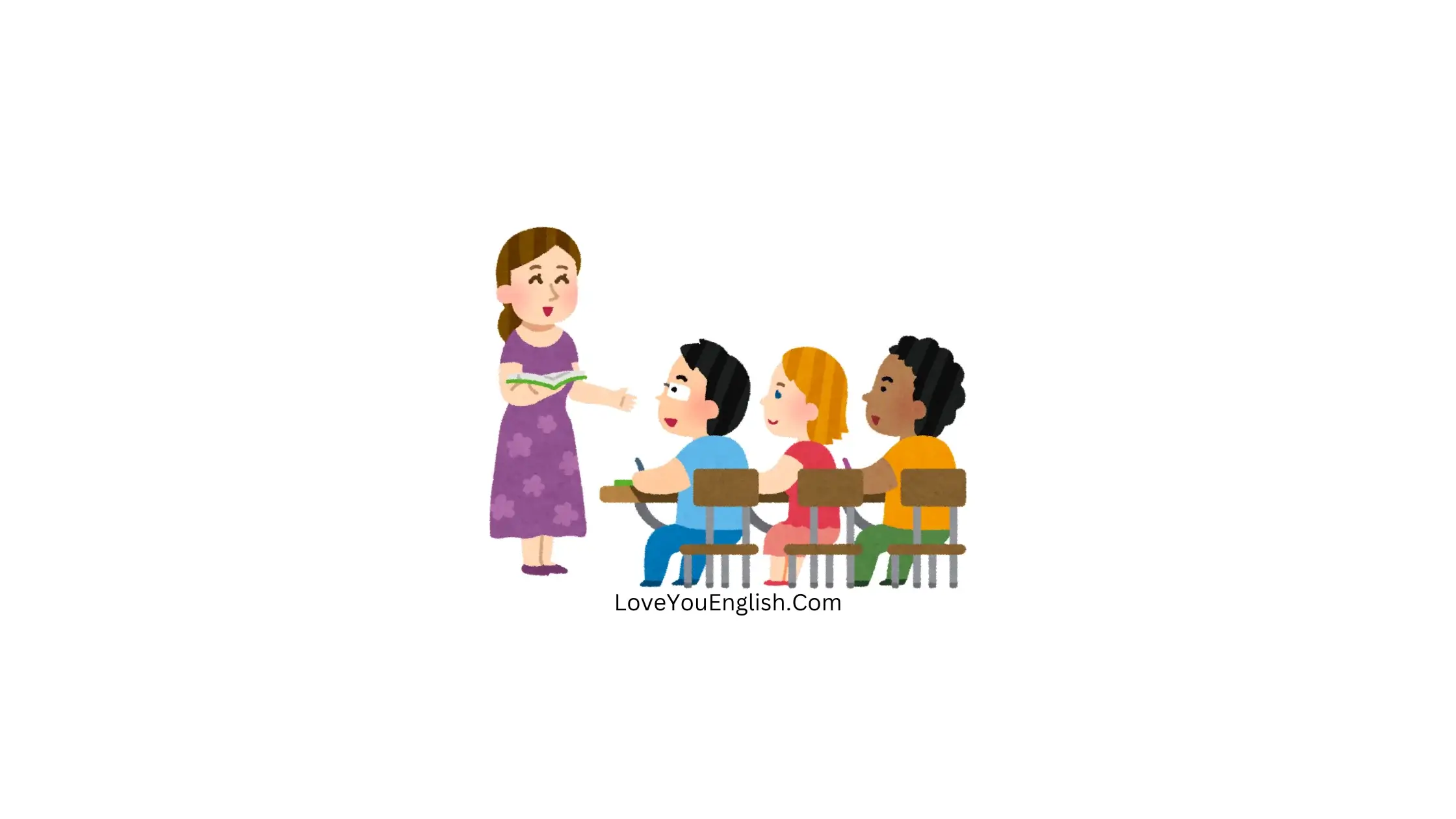
Teaching is a core topic in English, especially for students, teachers, trainers, and English learners.
Whether you are talking about school life, online classes, education systems, or professional training, knowing teaching-related vocabulary helps you communicate clearly and confidently.
In this lesson, you’ll learn useful English words related to teaching and education. These words are commonly used in classrooms, exams, interviews, lesson plans, academic writing, and everyday conversations.
They will help you talk about teachers, students, learning methods, and classroom activities in a natural way.
This topic will help you:
-
Describe teaching and learning processes
-
Talk about schools, classes, and education
-
Improve spoken and written English
-
Build confidence for IELTS, ESL, and competitive exams
-
Sound more professional and fluent when discussing education
Whether you’re an English teacher, a student, or a lifelong learner, this vocabulary will strengthen your English and make your communication clearer and more effective
1. Teacher
Meaning: A person who teaches students in a school, college, or any other institution.
Example: The teacher explained the math problem clearly.
2. Student
Meaning: A person who is learning something in a school, college, or any other place.
Example: The students listened carefully to the lesson.
3. Classroom
Meaning: A room where students and teachers meet for lessons.
Example: The classroom was decorated with colorful charts.
4. Lesson
Meaning: A period of time in which a teacher teaches a particular subject.
Example: Today’s lesson is about the solar system.
5. Homework
Meaning: Work that a teacher gives to students to do at home.
Example: The teacher asked us to complete our homework by Monday.
6. Exam
Meaning: A test to check how much students have learned.
Example: The students were nervous before their final exam.
7. Grade
Meaning: A score or mark given for a student’s work.
Example: Sarah got a high grade in English.
8. Subject
Meaning: A particular area of study, like math, science, or history.
Example: My favorite subject is English.
9. Curriculum
Meaning: The subjects and topics that are taught in a school.
Example: The curriculum includes both science and arts subjects.
10. Syllabus
Meaning: A plan showing what will be taught in a course.
Example: The teacher handed out the syllabus on the first day of class.
11. Chalkboard (or Blackboard)
Meaning: A board where teachers write with chalk.
Example: The teacher wrote the new vocabulary words on the chalkboard.
12. Whiteboard
Meaning: A smooth board where teachers write with markers.
Example: The whiteboard was full of math equations.
13. Marker
Meaning: A pen used to write on a whiteboard.
Example: The teacher used a red marker to underline the important points.
14. Notebook
Meaning: A book used by students to write notes.
Example: I wrote all the key points from the lesson in my notebook.
15. Textbook
Meaning: A book containing information about a subject, used by students.
Example: The teacher asked us to read chapter 3 in the textbook.
16. Class Schedule
Meaning: A plan that shows the time and subjects for each class.
Example: Our class schedule shows that we have science after lunch.
17. Attendance
Meaning: The act of being present in class.
Example: The teacher takes attendance at the beginning of each class.
18. Quiz
Meaning: A short test to check students’ knowledge.
Example: We had a quiz on vocabulary today.
19. Assignment
Meaning: A task or project given by the teacher for students to complete.
Example: Our assignment is to write an essay about pollution.
20. Teacher’s Desk
Meaning: A desk used by the teacher in the classroom.
Example: The teacher’s desk was neatly organized.
21. School Principal
Meaning: The head of a school.
Example: The principal visited our class to check the students’ progress.
22. School Uniform
Meaning: Clothes that students are required to wear in school.
Example: All the students wore their school uniforms neatly.
23. Recess
Meaning: A short break during the school day.
Example: The students played outside during recess.
24. Library
Meaning: A place in school where students can read and borrow books.
Example: The library has many books on history and science.
25. Educational Tools
Meaning: Materials or devices used to help teach and learn. Examples: flashcards, videos, or apps.
Example: The teacher used educational tools like videos to explain the topic.
26. Lesson Plan
Meaning: A teacher’s plan for what will be taught in a lesson.
Example: The teacher prepared a detailed lesson plan for the week.
27. Lecture
Meaning: A talk or speech given by the teacher to explain something.
Example: The professor’s lecture on world history was very interesting.
28. Class Participation
Meaning: Taking part in activities or discussions during the class.
Example: The teacher encouraged class participation by asking questions.
29. School Trip
Meaning: A trip organized by the school for educational purposes.
Example: We went on a school trip to the museum.
30. Parent-Teacher Meeting
Meaning: A meeting where teachers discuss students’ progress with their parents.
Example: My parents attended the parent-teacher meeting yesterday.
31. Group Activity
Meaning: A task done by students working together in groups.
Example: The group activity helped us learn teamwork.
32. Discipline
Meaning: Following rules and behaving well in class.
Example: The teacher praised the students for their discipline.
33. Grading System
Meaning: A system used to evaluate and grade students’ work.
Example: Our school uses a letter grading system (A, B, C, etc.).
34. Virtual Learning
Meaning: Learning done online, often from home.
Example: Many schools started virtual learning during the pandemic.
35. Classroom Rules
Meaning: Guidelines students must follow in the classroom.
Example: One of the classroom rules is to raise your hand before speaking.
36. Educational Games
Meaning: Games designed to make learning fun.
Example: The teacher used educational games to teach new vocabulary.
37. Extra-Curricular Activities
Meaning: Activities outside the regular subjects, like sports or music.
Example: I joined the drama club as an extra-curricular activity.
38. School Assembly
Meaning: A gathering of all students and teachers for announcements or programs.
Example: The school assembly starts at 8:30 every morning.
39. Class Monitor
Meaning: A student chosen to help the teacher in the classroom.
Example: The class monitor collected the homework from everyone.
40. Role-Play
Meaning: Acting out roles to practice skills or learn something new.
Example: We did a role-play in class to practice English conversations.
41. Classroom Management
Meaning: The way a teacher organizes and controls the classroom.
Example: Good classroom management keeps students focused and disciplined.
42. Interactive Learning
Meaning: A learning method where students actively participate.
Example: The interactive learning activities made the class enjoyable.
43. Peer Learning
Meaning: Learning from classmates or friends.
Example: Peer learning helped me understand the math problems better.
44. Quiz Competition
Meaning: A contest where students answer questions to win.
Example: Our team won first place in the quiz competition.
45. Educational App
Meaning: A mobile app designed for learning.
Example: I use an educational app to practice English grammar.
Conclusion
Teaching is not just about sharing knowledge; it’s about inspiring and guiding students to grow.
Knowing these common words related to teaching can help you communicate better in an educational environment.
Whether you are a teacher, a student, or simply someone who loves learning, this vocabulary will make understanding and discussing teaching much easier.
Let me know in the comments which words you found most useful or if you want more posts like this!
FAQs About Teaching and Education Vocabulary
1. Why is teaching vocabulary important for English learners?
Teaching vocabulary helps learners discuss education, schools, classrooms, learning methods, and academic topics more confidently and accurately.
2. What is teaching vocabulary?
Teaching vocabulary includes words and phrases related to teachers, students, classrooms, lessons, exams, learning activities, and educational systems.
3. What is the difference between a teacher and a student?
A teacher is a person who teaches and guides learners, while a student is a person who studies and learns.
4. What is a classroom?
A classroom is a room where teachers and students meet for lessons and educational activities.
5. What is a lesson plan?
A lesson plan is a teacher’s outline that explains what will be taught and how the lesson will be conducted.
6. What is the difference between a syllabus and a curriculum?
A syllabus outlines the topics covered in a specific course, while a curriculum refers to the overall educational program offered by a school or institution.
7. What is homework?
Homework is work assigned by a teacher that students complete outside the classroom, usually at home.
8. What is an assignment?
An assignment is a task, project, or piece of work that students must complete and submit.
9. What is the difference between a quiz and an exam?
A quiz is usually a short test that covers a small amount of material, while an exam is more comprehensive and often covers an entire subject or course.
10. What is attendance?
Attendance refers to being present in class, school, or any educational activity.
11. What is classroom management?
Classroom management is the process of organizing, controlling, and maintaining a productive learning environment.
12. What is class participation?
Class participation means actively taking part in discussions, activities, and lessons during class.
13. What is peer learning?
Peer learning is a learning method where students learn from and help each other.
14. What is interactive learning?
Interactive learning involves active student participation through discussions, activities, games, and technology.
15. What is virtual learning?
Virtual learning is education that takes place online through digital platforms and virtual classrooms.
16. What are educational tools?
Educational tools are resources used to support teaching and learning, such as flashcards, videos, apps, worksheets, and presentations.
17. What is a textbook?
A textbook is a book specifically designed to provide information and instruction about a particular subject.
18. What is a notebook?
A notebook is used by students to write notes, assignments, and important information during lessons.
19. What is a school principal?
A school principal is the head administrator responsible for managing and overseeing a school.
20. What is a class monitor?
A class monitor is a student selected to assist the teacher with classroom tasks and responsibilities.
21. What are extra-curricular activities?
Extra-curricular activities are activities outside regular academic subjects, such as sports, music, drama, and clubs.
22. What is a school assembly?
A school assembly is a gathering of students and teachers for announcements, celebrations, or special programs.
23. What is a parent-teacher meeting?
A parent-teacher meeting is a discussion between parents and teachers about a student’s academic progress and behavior.
24. What is a school trip?
A school trip is an educational outing organized by a school to help students learn outside the classroom.
25. What is discipline in education?
Discipline refers to following rules, behaving responsibly, and maintaining order in the classroom.
26. What is a grading system?
A grading system is a method used to evaluate student performance through marks, grades, or scores.
27. What is a lecture?
A lecture is a formal talk or presentation given by a teacher or professor to explain a topic.
28. What is group activity?
A group activity is a learning task completed by students working together as a team.
29. What is role-play in education?
Role-play is an activity where students act out situations or characters to practice skills and improve learning.
30. What is an educational app?
An educational app is a mobile or computer application designed to support learning and skill development.
31. Why is vocabulary related to teaching useful for IELTS?
Education is a common IELTS Speaking and Writing topic. Knowing teaching vocabulary helps candidates express ideas more clearly and achieve higher scores.
32. What are common classroom items in English?
Common classroom items include:
- Whiteboard
- Marker
- Notebook
- Textbook
- Desk
- Chair
- Chalkboard
33. What is the purpose of a class schedule?
A class schedule shows the subjects, lessons, and timings students follow during the school day.
34. What is recess?
Recess is a short break during the school day when students can relax, play, or socialize.
35. What is the difference between teaching and learning?
Teaching is the process of giving knowledge or instruction, while learning is the process of acquiring knowledge or skills.
36. How can I improve my education-related English vocabulary?
You can improve by:
- Reading educational articles
- Watching teaching videos
- Using vocabulary flashcards
- Practicing conversations about school and learning
- Writing sentences using new words
37. What is active learning?
Active learning is a teaching method where students participate directly through discussions, problem-solving, and activities.
38. What is collaborative learning?
Collaborative learning occurs when students work together to achieve learning goals and solve problems.
39. Why is classroom participation important?
Classroom participation improves understanding, communication skills, confidence, and student engagement.
40. Can teaching vocabulary help in job interviews?
Yes. Teaching and education vocabulary is useful for teacher interviews, academic positions, training roles, and professional communication.
41. What is the role of a teacher?
A teacher guides students, explains concepts, assesses progress, motivates learners, and creates a positive learning environment.
42. What is the role of a student?
A student actively participates in learning, completes assignments, attends classes, and develops knowledge and skills.
43. What is educational technology?
Educational technology includes digital tools such as online platforms, educational apps, interactive whiteboards, and virtual learning systems.
44. Why is teaching vocabulary important for ESL teachers?
It helps ESL teachers explain lessons effectively, manage classrooms, create activities, and communicate professionally with students and parents.
45. How can I use teaching vocabulary in everyday English?
You can use it when discussing school experiences, online courses, learning goals, teaching methods, exams, training programs, and educational achievements.
You may also like these English learning articles:
- Phrasal Verbs vs. Idiomatic Expressions: What’s the Difference?
- Present Perfect vs Past Simple: Key Differences with Examples
- Emphatic Do: What It Is and How to Use It in English Sentences
- Shall vs Will: What’s the Difference and When to Use Each
- Basic English Curriculum for Teaching ESL: A Complete Guide for Teachers and Learners
📚 Continue Learning English
Choose your next lesson and keep improving your English skills with our free English learning resources.