Year: 2026

  • Independent Reading Activities for Middle School ELA

    As a middle school English teacher for over a decade, I’ve watched countless students transform from reluctant readers into book lovers. The secret? Making independent reading activities for middle school ELA engaging, choice-driven, and meaningful. When students read independently with purpose, they build vocabulary, improve comprehension, and develop critical thinking skills that last a lifetime. In this guide, I’ll share proven independent reading strategies that work in real classrooms—both online and offline. These aren’t complicated lesson plans requiring hours of prep. They’re practical, student-centered activities that middle school English Language Arts teachers can implement tomorrow. Why Independent Reading Matters in Middle School ELA Middle school is a critical time for reading development. Students transition from “learning to read” to “reading to learn.” Unfortunately, this is…
  • Limerick Examples: 410 Funny & Creative Poems

    As an English teacher with over a decade of classroom experience, I’ve watched countless students light up when they discover limericks. These playful five-line poems are magical teaching tools—they make grammar fun, boost creativity, and help learners remember vocabulary through rhythm and rhyme. Whether you’re a parent looking for educational activities, a teacher planning lessons, or simply someone who loves wordplay, limericks offer something special for everyone. In this comprehensive guide, I’ll share 410 limerick examples organized by age group and theme, plus practical tips I’ve used successfully in both offline and online classes. You’ll discover how these short poems can transform language learning from a chore into pure joy. What Is a Limerick? (Simple Explanation) A limerick is a short, funny poem with exactly…

  • Active Voice Examples: 5,00 English Sentences + Guide

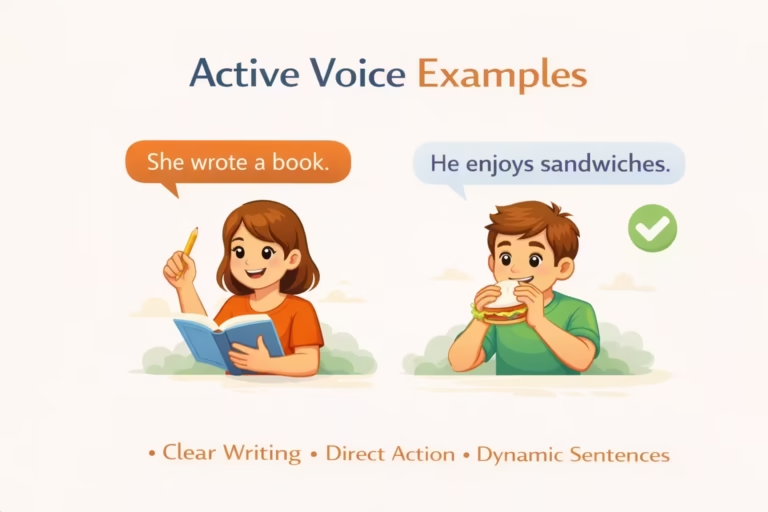
    Writing clearly matters. When your readers understand your message the first time, everyone wins. One of the simplest ways to improve your writing is to use the active voice instead of the passive voice. I’ve taught writing to students for over fifteen years. In every class, I see the same problem. New writers fill their work with passive sentences without realizing it. Their writing feels weak and confusing. When they switch to the active voice, their work transforms immediately. I will help you understand the active voice and use it confidently. You’ll learn what makes a sentence active, why it matters, and how to spot passive voice in your own writing. By the end, you’ll have the tools to write with more power and clarity….

  • Positive Feedback Examples: 400 Inspiring Ideas

    Giving positive feedback is one of the most powerful tools in teaching, parenting, and personal development. When done well, it builds confidence, motivates learners, and creates a supportive environment where people feel safe to try, fail, and grow. But here’s the challenge many teachers and parents face: we know we should give positive feedback, but we often struggle to find the right words. We end up repeating “Good job!” or “Well done!” until these phrases lose their meaning. As an experienced English teacher, I’ve learned that specific, meaningful feedback makes all the difference. Generic praise feels empty. Specific recognition feels genuine and encouraging. This guide provides 400 positive feedback examples across different situations. Whether you’re a new teacher, an ESL trainer, a parent supporting your…

  • How to Make an Inference in 6 Easy Steps

    By an experienced English teacher and spoken English trainer with 10+ years of classroom experience You Already Know How to Make an Inference — You Just Don’t Know It Yet Here’s something that happens in my classroom almost every week. A student walks in, looks at me holding a stack of papers, and whispers to their friend, “I think we have a quiz today.” Nobody told them. It wasn’t written on the board. But they figured it out from the clues in front of them. That’s an inference. Learning how to make an inference is one of the most useful thinking skills you will ever develop. It helps you understand what you read, what you hear, and what happens around you — even when not…

  • How to Become a Better English Student – Study Tips

    Introduction: Are You Struggling to Improve Your English? If you want to become a better English student, you are not alone. Millions of people around the world are trying to improve their English every single day — in classrooms, at home, on their phones, and during their lunch breaks. But many of them hit a wall. They study hard, but their progress feels slow. They learn grammar rules but freeze when they try to speak. They understand written English but struggle to follow conversations. I’ve been teaching English for over 10 years — in physical classrooms, online platforms, and corporate training rooms. And in that time, I’ve seen the same patterns repeat. Some students improve quickly. Others stay stuck for months, even years. The difference…

  • American Work Culture and Business Etiquette Guide

    Starting a job in America can feel overwhelming, especially if you come from a different cultural background. You might wonder: Is it okay to call my boss by their first name? Should I send emails after work hours? How casual is too casual? Understanding American work culture isn’t just about following rules—it’s about building relationships, communicating effectively, and feeling confident in your professional environment. Whether you’re a new employee, an international professional, or someone helping others prepare for American workplaces, this guide will walk you through the essential aspects of American business etiquette. The good news? American work culture values directness, friendliness, and respect for time. Once you understand these core principles, navigating your workplace becomes much easier. Understanding American Work Culture Values Individualism and…

  • How to Answer “What Are Your Strengths?” Naturally in English

    “So, tell me about your strengths.” Five simple words that can make even confident speakers freeze up. I’ve watched countless students practice their English fluently in class, only to stumble when asked this common interview question. Why? Because talking about yourself in English—especially your good qualities—requires a special kind of confidence that goes beyond grammar rules. Whether you’re preparing for a job interview, a university admission, or simply want to introduce yourself professionally, knowing how to discuss your strengths clearly and naturally is essential. But here’s the challenge: you need to sound confident without bragging, be specific without rambling, and speak naturally without memorizing scripts. In my years of teaching spoken English, I’ve helped hundreds of learners transform from nervous, script-dependent speakers into confident communicators…

  • ·

    How to Help Your Children with Their Tutoring Lessons

    As a teacher who has worked with hundreds of students in both classroom and online settings, I can tell you one simple truth: children learn best when their parents are involved. But here’s the challenge—many parents want to help their children with their tutoring lessons but don’t know where to start. You don’t need to be an expert in every subject. You don’t need a teaching degree. What you need is the right approach, some patience, and a willingness to support your child’s learning journey. In this guide, I’ll share practical strategies I’ve used successfully with parents over my years of teaching. These methods work whether your child is learning English, math, science, or any other subject through tutoring sessions. Understanding Your Role in Your…

  • ·

    How to Design Outdoor STEM Learning Activities

    When I first moved my science lesson outside, I expected chaos. Instead, I watched my third-graders spend forty minutes measuring shadows, completely absorbed. That day changed how I thought about teaching STEM (Science, Technology, Engineering, and Mathematics). Outdoor STEM learning transforms abstract concepts into hands-on experiences that elementary students can touch, measure, and explore. After ten years of teaching elementary students both in traditional classrooms and outdoor settings, I’ve learned that nature provides the perfect laboratory for young learners. Children naturally ask questions outdoors. They notice patterns. They want to understand why leaves change color or how ants build their homes. This curiosity makes outdoor STEM activities powerful teaching tools. This guide shares practical strategies for designing outdoor STEM learning experiences that work in real…