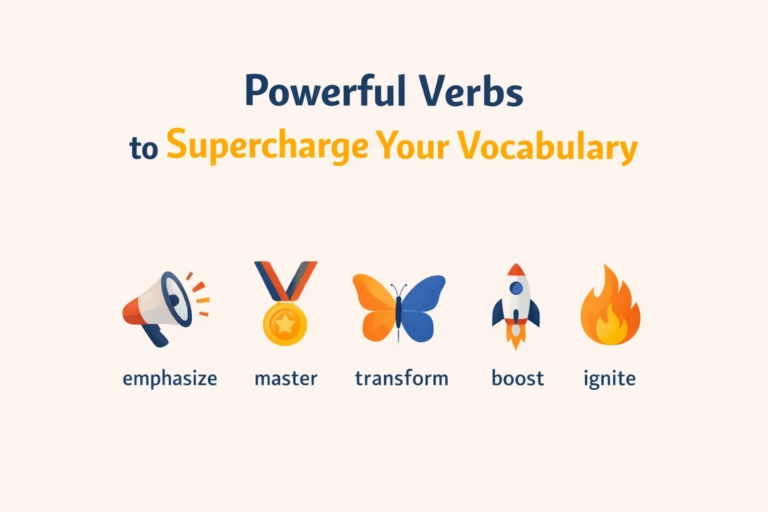
Public speaking and presentations are important skills in academic, professional, and business settings. Whether you are giving a classroom presentation, leading a meeting, or speaking at a conference, using the right vocabulary helps you sound clear, confident, and professional.
Many English learners feel nervous while presenting, not only because of stage fear but also because they are unsure about what phrases to use.
Expressions like “Let me begin by…,” “I would like to highlight…,” “According to the data…,” and “To conclude…” make your presentation more structured and polished. Strong presentation vocabulary helps you organize ideas, transition smoothly between points, and respond confidently to questions.
In this comprehensive guide, you will learn essential vocabulary and phrases for public speaking and presentations.
You will discover useful expressions for starting a presentation, explaining key points, showing data, handling questions, and ending effectively.
By mastering this vocabulary, you will improve your speaking skills and deliver impactful presentations with greater confidence and clarity.
Why Vocabulary Matters in Public Speaking
Vocabulary is the foundation of communication. When you speak in front of an audience, your choice of words can make a big difference in how your message is received. A strong vocabulary helps you:
- Clarity: The right words make your message easier to understand. Simple, precise words help your audience follow your ideas without confusion.
- Confidence: Having a rich vocabulary allows you to express yourself more confidently. You won’t struggle to find the right words when you’re speaking.
- Persuasion: Effective vocabulary can help you persuade your audience. Whether you’re trying to motivate, inform, or convince, the right words can make your message more powerful.
- Engagement: Words that are vivid and descriptive can capture your audience’s attention and keep them interested throughout your presentation.
Building a Strong Vocabulary for Presentations
To master vocabulary for public speaking, it’s important to build a wide range of words that suit different situations. Here are some key areas to focus on:
1. Transition Words and Phrases
Transition words help you move from one idea to the next smoothly. They create a natural flow in your speech, making it easier for the audience to follow your points.
Some examples include:
- Firstly, secondly, lastly: Useful for organizing your ideas in a clear order.
- Moreover, furthermore: Helps you add more information to support your point.
- In addition, also: Good for adding details or new ideas.
- However, on the other hand: Useful for presenting contrasting ideas.
- For example, for instance: Helps you provide concrete examples.
- In conclusion, to sum up: Signals the end of your presentation.
Using these phrases effectively will help you structure your presentation and guide your audience through your points.
2. Powerful Action Verbs
Action verbs make your speech more dynamic and engaging. Instead of using weak verbs like “do” or “make,” try incorporating stronger action verbs that convey more meaning.
Examples:
- Instead of saying “I did research,” say “I conducted research.”
- Instead of “I made a decision,” say “I chose” or “I determined.”
- Instead of “This is a good solution,” say “This is an effective solution.”
- Instead of “I will talk about this issue,” say “I will address this issue.”
Stronger action verbs help you sound more confident and decisive, which is important when you’re trying to persuade or motivate your audience.
3. Descriptive Adjectives
Adjectives add depth to your speech by helping you describe things in a more interesting way. Using descriptive adjectives can make your presentation more vivid and memorable.
Examples:
- Innovative instead of “new”
- Challenging instead of “difficult”
- Comprehensive instead of “complete”
- Dynamic instead of “active”
- Powerful instead of “strong”
Descriptive adjectives help you paint a clearer picture in your audience’s mind, making your presentation more engaging.
4. Inclusive Language
In public speaking, it’s important to use language that includes everyone in your audience. Avoid using language that may alienate or exclude people. Instead, use inclusive language that makes everyone feel connected to your message.
Examples:
- Use “we” instead of “I” or “you” to create a sense of unity.
- Use “everyone” instead of “some people.”
- Use “they” instead of referring to specific groups or genders.
Using inclusive language helps you connect with your audience and make them feel involved in your message.
5. Emotional Appeal Vocabulary
When you want to inspire, motivate, or connect with your audience on a deeper level, emotional appeal vocabulary can help. Words that evoke emotions can make your speech more impactful and memorable.
Examples:
- Empowering, inspiring, motivating, uplifting: These words are used to stir positive emotions.
- Heartbreaking, devastating, tragic, disturbing: These words can help express sorrow or sadness.
- Exciting, thrilling, exhilarating: Words that create a sense of anticipation or energy.
By using emotional appeal vocabulary, you can connect with your audience on a personal level and make your message resonate with them.
6. Rhetorical Questions
Rhetorical questions are questions that you ask without expecting an answer. They are often used to engage the audience, make them think, or emphasize a point. This technique can help make your presentation more interactive and thought-provoking.
Examples:
- “What if we could change the world with just one idea?”
- “How many of you have ever faced a challenge like this?”
- “Isn’t it time we take action?”
Rhetorical questions make your audience pause and think about your message, helping them connect with your ideas more deeply.
Tips for Expanding Your Vocabulary for Public Speaking
Now that we’ve covered some key areas of vocabulary for public speaking, here are some practical tips for expanding your vocabulary and using it effectively in your presentations:
1. Read Widely and Regularly
Reading a variety of materials – such as books, articles, blogs, and speeches – will expose you to new words and phrases. Pay attention to how different writers and speakers use language to make their points effectively. The more you read, the more you’ll learn about different ways to express ideas and emotions.
2. Use a Thesaurus
A thesaurus is a useful tool for finding synonyms (words with similar meanings). It can help you avoid repetition and expand your vocabulary. However, make sure to use synonyms carefully. While they may have similar meanings, they may have different connotations or be more appropriate in different contexts.
For example, “happy” and “joyful” are synonyms, but “joyful” might sound more formal or passionate. Be mindful of the tone and context when choosing synonyms.
3. Practice Using New Words
Once you learn new words, practice using them in your speaking and writing. The more you use new vocabulary, the more natural it will become. Try to incorporate new words into your everyday conversations and presentations. You can also practice with a language partner or record yourself speaking to get more comfortable with new vocabulary.
4. Learn Words Related to Your Topic
When preparing for a presentation, focus on learning words that are specific to your topic. Having specialized vocabulary related to your subject matter will make you sound more knowledgeable and credible. For instance, if you’re presenting on technology, learn the terms related to innovation, artificial intelligence, and digital transformation.
5. Use Mnemonics
Mnemonic devices are memory aids that can help you remember new words. For example, you can create associations or stories around new vocabulary to make them easier to recall. The more associations you create, the easier it will be to remember and use the words during your presentations.
Final Thoughts
Mastering vocabulary for public speaking and presentations can transform the way you communicate. When you use appropriate and powerful words, you speak with more confidence, clarity, and professionalism.
Regular practice with presentation-related vocabulary helps reduce hesitation, improve fluency, and keep your audience interested.
Whether you are a student, teacher, trainer, or working professional, investing time in building this vocabulary will make your presentations more effective, memorable, and successful. Keep practising, keep speaking, and let your words create impact.
FAQs About Vocabulary for Public Speaking and Presentations
What is presentation vocabulary?
Presentation vocabulary refers to the words and phrases commonly used during speeches, presentations, seminars, and public speaking events. These expressions help speakers introduce topics, explain ideas, present data, transition between points, and conclude effectively.
Why is vocabulary important in public speaking?
Vocabulary is important because it helps speakers communicate clearly, confidently, and professionally. The right words make presentations easier to understand, more persuasive, and more engaging for the audience.
How can I improve my vocabulary for presentations?
You can improve your presentation vocabulary by reading books, articles, and speeches, learning common presentation phrases, practising public speaking regularly, and using new words in conversations and presentations.
What are some useful phrases to start a presentation?
Common presentation opening phrases include:
- “Good morning everyone.”
- “Thank you for being here today.”
- “Let me begin by introducing the topic.”
- “Today, I would like to talk about…”
- “The purpose of this presentation is…”
What words can I use to transition between presentation points?
Useful transition words and phrases include:
- Firstly
- Secondly
- Next
- Furthermore
- In addition
- Moreover
- However
- On the other hand
- For example
- As a result
These expressions help create a smooth flow between ideas.
How can I sound more confident during a presentation?
To sound more confident, prepare thoroughly, practise regularly, maintain eye contact, speak clearly, and use strong action verbs and professional presentation vocabulary. Familiarity with your vocabulary reduces hesitation and nervousness.
What are powerful action verbs for presentations?
Some effective action verbs include:
- Analyze
- Demonstrate
- Explain
- Illustrate
- Highlight
- Address
- Evaluate
- Recommend
- Present
- Discuss
These verbs make your speech more dynamic and professional.
What is inclusive language in public speaking?
Inclusive language is communication that respects and includes all audience members. Using words such as “we,” “our,” and “everyone” helps create a sense of connection and engagement.
How do I end a presentation effectively?
You can end a presentation with phrases such as:
- “To conclude…”
- “In summary…”
- “Thank you for your attention.”
- “I appreciate your time today.”
- “I would be happy to answer any questions.”
A strong conclusion reinforces your key message and leaves a positive impression.
What are the benefits of learning public speaking vocabulary?
Learning public speaking vocabulary can help you:
- Speak more fluently
- Organize ideas clearly
- Improve audience engagement
- Increase confidence
- Deliver professional presentations
- Communicate more effectively in academic and workplace settings
Strong vocabulary is an essential skill for successful public speaking and presentations.
You may also like these English learning articles:
- Top 10 Collocations in English
- 100+ English Collocations to Sound More Fluent
- Everyday English Expressions for Daily Use
- Luxury Hotel English: Premium Hospitality Vocabulary
- Vocabulary for Expressing Politeness and Courtesy
📚 Continue Learning English
Choose your next lesson and keep improving your English skills with our free English learning resources.