
Have you ever wondered why native English speakers instantly recognize when something sounds “off” in a sentence, even when the grammar is technically correct?
The secret lies in collocations—the natural partnerships between words that make English flow smoothly and sound authentic.
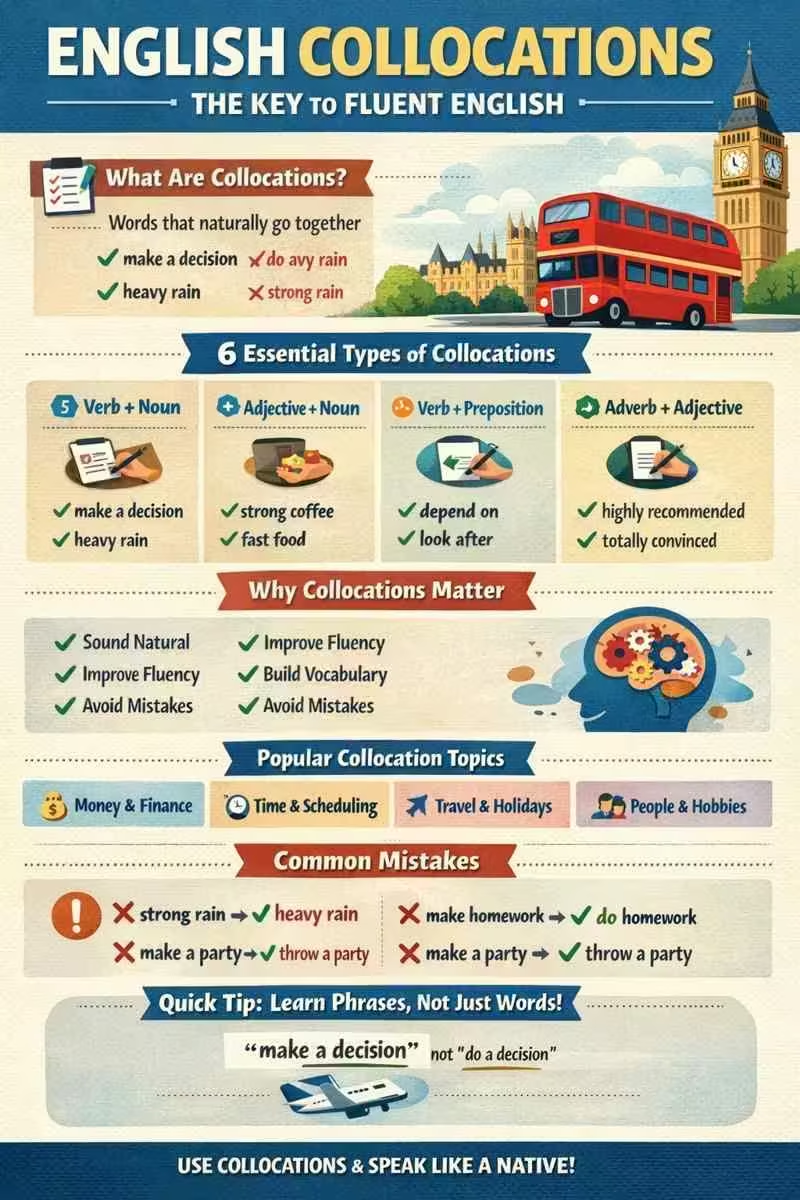
When you say “make a decision” instead of “do a decision,” or “heavy rain” rather than “strong rain,” you’re using collocations correctly.
These word combinations are the building blocks of natural English, and mastering them is your key to sounding fluent and confident.
This comprehensive guide will transform your understanding of English collocations, covering a wide range of topics, including Money & Finance Collocations, Time Expressions in English, Travel & Holiday Collocations, Describing People Naturally, and Daily Life & Hobbies Collocations.
By the end, you’ll have the tools and knowledge to use collocations naturally in any situation.
This topic is part of our English Collocations for English learners.
Chapter 1: Understanding English Collocations
What Are Collocations Exactly?
English collocations are words that naturally pair together in predictable combinations. Think of them as linguistic partnerships that have developed over time through common usage. These combinations sound “right” to native speakers and feel natural when spoken or written.
Unlike grammar rules, collocations aren’t based on logical patterns—they’re established through tradition and common usage. This is why direct translation from other languages often fails to produce natural-sounding English.
The Six Essential Types of Collocations
Understanding these collocation patterns will help you recognize and use them more effectively:
1. Verb + Noun Collocations
- make a decision (not “do a decision”)
- take a shower (not “make a shower”)
- do homework (not “make homework”)
- give advice (not “make advice”)
2. Adjective + Noun Collocations
- heavy rain (not “strong rain”)
- strong coffee (not “powerful coffee”)
- fast food (not “quick food”)
- bright idea (not “shining idea”)
3. Verb + Preposition Collocations
- depend on something
- rely on someone
- look after children
- care for elderly
4. Adverb + Adjective Collocations
- completely exhausted
- highly recommended
- absolutely essential
- totally convinced
5. Noun + Noun Collocations
- traffic jam
- computer software
- kitchen table
- birthday party
6. Verb + Adverb Collocations
- work hard
- sleep soundly
- speak fluently
- listen carefully
Why Collocations Are Crucial for English Fluency
Mastering collocations offers several significant advantages:
- Natural Communication: Your speech and writing will sound more authentic and less translated
- Improved Comprehension: Understanding collocations helps you better grasp native speaker conversations
- Enhanced Vocabulary: Learning words in natural combinations makes them more memorable
- Professional Credibility: Correct collocation usage demonstrates advanced English proficiency
- Cultural Integration: Collocations often carry cultural nuances that enhance your understanding of English-speaking societies
Chapter 2: Money & Finance Collocations
Financial conversations are unavoidable in daily life, making money-related collocations essential for practical communication. Understanding Collocations with “Spend” and “Save” for Talking About Money is particularly crucial for managing everyday financial discussions.
Core Money Collocations
Spending Money:
- spend money wisely/foolishly
- spend a fortune on something
- spend within your means
- spend like there’s no tomorrow
Saving and Investing:
- save money for a rainy day
- save up for something special
- put money aside
- invest money in stocks/property
- build up savings
Earning and Making Money:
- earn a living
- make money hand over fist
- bring home the bacon
- earn good money
- make ends meet
Managing Finances:
- balance the books
- keep track of expenses
- stick to a budget
- cut costs dramatically
- reduce spending significantly
Practical Examples in Context
“After losing his job, John had to learn how to make ends meet on unemployment benefits. He decided to cut costs dramatically by cooking at home instead of eating out, and started to put money aside whenever possible. His goal is to save up for a small emergency fund while he searches for new employment.”
Advanced Money Collocations for Business:
- raise capital for expansion
- generate revenue streams
- maximize profit margins
- minimize financial risks
- diversify investment portfolios
Chapter 3: Time Expressions in English – Organizing Your Schedule
Time-related collocations are fundamental for scheduling, planning, and discussing daily activities.
Mastering Collocations for Talking About Time and Dates will help you communicate more effectively about schedules, deadlines, and temporal relationships.
Essential Time Collocations
Using Time Effectively:
- spend time productively
- make time for family
- save time by planning ahead
- waste time on trivial matters
- kill time while waiting
Scheduling and Planning:
- set a date for the meeting
- fix a time that works
- schedule an appointment
- book a time slot
- reserve time for relaxation
Time-Related Expressions:
- run out of time
- be pressed for time
- have time on your hands
- take your time with decisions
- make up for lost time
Contextual Usage Examples
“Sarah always makes time for her morning workout, even when she’s pressed for time. She believes that spending time productively in the gym helps her save time later by keeping her energy levels high throughout the day. On weekends, when she has time on her hands, she likes to take her time reading novels.”
Professional Time Collocations:
- meet tight deadlines
- extend the deadline
- work against the clock
- manage time efficiently
- allocate time resources
Chapter 4: Travel & Holiday Collocations – Your Gateway to Adventure
Travel collocations are essential for anyone planning trips, discussing vacations, or working in tourism-related fields. These Travel Collocations: Essential Phrases for Vacation Planning will help you navigate every aspect of your journey confidently.
Pre-Travel Planning Collocations
Booking and Reservations:
- book a flight/hotel/rental car
- make a reservation
- reserve a table at a restaurant
- confirm your booking
- cancel a reservation
Preparation Collocations:
- pack your bags/suitcase
- plan an itinerary
- research destinations
- check travel requirements
- book accommodation
During Travel Collocations
Transportation:
- catch a flight/train/bus
- miss your connection
- board the plane
- check in for your flight
- collect your luggage
Activities and Experiences:
- go sightseeing
- take a guided tour
- explore local culture
- visit tourist attractions
- try local cuisine
Extended Travel Vocabulary
Accommodation Collocations:
- check into a hotel
- check out of your room
- request a room upgrade
- book a suite
- stay at a bed and breakfast
Travel Problems:
- experience flight delays
- lose your luggage
- miss your flight
- deal with jet lag
- encounter travel disruptions
A Travel Scenario
“Before our European vacation, we researched destinations thoroughly and planned our itinerary carefully. We booked our flights six months in advance to get better prices and reserved accommodation in city centers. During the trip, we went sightseeing every morning and tried local cuisine at recommended restaurants. Unfortunately, we experienced flight delays on our return journey, but overall, we had an amazing time exploring local culture.”
Chapter 5: Describing People Naturally
Whether you’re writing a character description, giving feedback, or simply chatting about friends, these Common Collocations with Adjectives for Describing People will help you express yourself naturally and create vivid, accurate portrayals.
Physical Appearance Collocations
General Appearance:
- striking appearance
- neat and tidy
- well-dressed individual
- casual attire
- professional look
Specific Features:
- piercing blue eyes
- warm smile
- strong jawline
- curly hair
- athletic build
Personality and Character Collocations
Positive Traits:
- kind-hearted person
- strong personality
- gentle nature
- quick wit
- positive attitude
Professional Qualities:
- natural leader
- team player
- creative thinker
- hard worker
- reliable colleague
- outgoing personality
- reserved nature
- confident demeanor
- humble attitude
- ambitious spirit
Advanced Personality Collocations
Emotional Intelligence:
- emotionally mature
- socially aware
- naturally empathetic
- excellent communicator
- culturally sensitive
- inspiring leader
- visionary thinker
- decisive manager
- motivational speaker
- strategic planner
Character Description Example
“Maria is a kind-hearted person with a warm smile and piercing green eyes. Her outgoing personality makes her a natural leader in group settings, while her gentle nature helps her connect with people from all backgrounds. As a reliable colleague and creative thinker, she brings both positive attitude and strategic planning to every project she undertakes.”
Chapter 6: Daily Life & Hobbies Collocations
Discussing hobbies and free-time activities is a common conversation topic that requires specific collocations to sound natural. These Collocations for Discussing Hobbies and Free-Time Activities will help you share your interests and connect with others through common recreational topics.
Sports and Physical Activities
Common Sports Collocations:
- play tennis/football/basketball
- go swimming/running/cycling
- take up a new sport
- join a sports team
- practice regularly
Exercise and Fitness:
- work out at the gym
- stay in shape
- build muscle mass
- improve cardiovascular health
- maintain physical fitness
Creative and Intellectual Hobbies
Arts and Crafts:
- take up painting
- learn to play an instrument
- develop artistic skills
- create original artwork
- express creativity
Reading and Learning:
- read extensively
- broaden your knowledge
- pursue lifelong learning
- develop new skills
- expand your horizons
Entertainment and Social Activities
Media Consumption:
- watch movies/TV shows
- listen to music
- stream content online
- binge-watch series
- discover new genres
Social Hobbies:
- meet new people
- join social clubs
- attend community events
- volunteer for causes
- participate in group activities
Hobby Development Over Time
“When I first took up photography, I could barely operate my camera. However, by practicing regularly and attending workshops, I gradually developed artistic skills. Now I pursue this passion seriously, often participating in group exhibitions and meeting other photographers who share similar interests. This hobby has helped me broaden my perspective and express my creativity in ways I never imagined.”
Chapter 7: Advanced Collocation Patterns and Usage
Business and Professional Collocations
Meeting and Communication:
- call a meeting
- attend a conference
- deliver a presentation
- reach an agreement
- negotiate terms
Project Management:
- set objectives
- meet targets
- exceed expectations
- handle responsibilities
- delegate tasks
Academic and Educational Collocations
Learning Process:
- acquire knowledge
- develop understanding
- grasp concepts
- master subjects
- gain expertise
Academic Achievement:
- achieve high grades
- excel in studies
- demonstrate proficiency
- show improvement
- reach potential
Technology and Digital Life Collocations
- send emails
- post updates
- share content
- stream videos
- download files
Online Activities:
- browse websites
- search for information
- create accounts
- manage passwords
- protect privacy
Chapter 8: Mastering Collocations
Effective Learning Techniques
1. Contextual Learning
Instead of memorizing isolated collocations, learn them within meaningful contexts. Read articles, watch movies, and listen to podcasts while paying attention to natural word combinations.
2. Pattern Recognition
Start recognizing patterns in collocations. For example, many emotions pair with specific prepositions: “angry with/about,” “excited about,” “worried about.”
3. Active Usage
Incorporate new collocations into your daily conversations and writing. The more you use them, the more natural they become.
4. Collocation Journals
Keep a dedicated notebook for interesting collocations you encounter. Organize them by theme or situation for easy reference.
Common Collocation Mistakes to Avoid
Literal Translation Errors:
- Incorrect: “make sport” (German influence)
- Correct: “play sports”
Logic-Based Assumptions:
- Incorrect: “strong rain”
- Correct: “heavy rain”
Overuse of Common Verbs:
- Weak: “make a party”
- Strong: “throw a party”
Chapter 9: Collocation Resources and Tools
Essential Reference Materials
Dictionaries and Databases:
- Oxford Collocations Dictionary
- Cambridge Advanced Learner’s Dictionary
- Online collocation databases
- Academic writing resources
- Professional communication guides
Digital Learning Tools:
- Collocation apps for smartphones
- Online exercise platforms
- Interactive learning websites
- YouTube educational channels
- Podcast resources for language learners
Conclusion
Mastering English collocations is not just about memorizing word pairs—it’s about developing an intuitive sense of how English naturally flows.
The collocations covered in this guide represent the foundation of natural English communication, from everyday conversations about money and time to specialized discussions about travel, personal characteristics, and hobbies.
Remember that collocation mastery is a gradual process. Start with the most common combinations relevant to your daily life and gradually expand your repertoire.
Pay attention to collocations in authentic English materials, practice them regularly in your own communication, and don’t be afraid to make mistakes—they’re an essential part of the learning process.
As you continue developing your collocation skills, you’ll notice your English becoming more natural, confident, and fluent.
Native speakers will find your communication more engaging and authentic, and you’ll feel more comfortable expressing complex ideas and emotions in English.
The journey to collocation mastery is ongoing, but with consistent practice and attention to natural word combinations, you’ll soon find yourself using English collocations instinctively and effectively in any situation.
Quick Reference: Most Essential Collocations for Daily Use
Money: spend wisely, save money, make ends meet, waste money
Time: spend time, save time, make time, run out of time
Travel: book tickets, pack bags, go sightseeing, miss flights
People: kind-hearted, strong personality, warm smile, quick wit
Hobbies: take up, play sports, watch movies, listen to music
Start with these essentials and gradually build your collocation vocabulary for more sophisticated and natural English communication.
FAQs: English Collocations
1. What are collocations in English?
Collocations are natural combinations of words that are commonly used together by native English speakers. For example, we say make a decision and heavy rain because these combinations sound correct and natural. Collocations are not based on strict grammar rules but on usage and habit, which is why they must be learned through exposure and practice.
2. Why are collocations important for English learners?
Collocations are important because they help learners sound more natural and fluent. When you use correct word combinations, your English becomes easier to understand and more professional. They also improve listening skills because native speakers use collocations frequently in daily conversations, movies, and business communication.
3. What are some common examples of English collocations?
Some common collocations include:
- make a decision
- take a break
- strong coffee
- heavy rain
- run out of time
- save money
These are widely used in everyday English and help learners communicate more naturally.
4. What are the main types of collocations in English?
There are six main types of collocations:
- Verb + Noun (e.g., make a mistake)
- Adjective + Noun (e.g., fast food)
- Verb + Preposition (e.g., depend on)
- Adverb + Adjective (e.g., highly effective)
- Noun + Noun (e.g., traffic jam)
- Verb + Adverb (e.g., work hard)
Understanding these patterns makes learning easier and more structured.
5. How can I learn English collocations easily?
You can learn collocations effectively by:
- Reading books, blogs, and articles regularly
- Listening to podcasts and watching English videos
- Keeping a collocation notebook
- Practicing with sentences in daily conversation
- Using collocation dictionaries and apps
Learning in context is the most effective method.
6. What is the difference between collocations and idioms?
Collocations are natural word combinations like make money or take a shower. Idioms, on the other hand, have meanings that are not literal, such as break the ice (start a conversation). Collocations are easier to understand because their meanings are usually clear.
7. Can I translate collocations from my native language?
No, direct translation often leads to incorrect phrases. For example, saying strong rain instead of heavy rain is a common mistake. It is better to learn collocations as fixed combinations rather than translating word by word.
8. How do collocations improve speaking skills?
Collocations improve speaking by making your sentences sound smooth and natural. Instead of thinking about each word, you can use ready-made combinations, which increases fluency and confidence during conversations.
9. What are common mistakes learners make with collocations?
Common mistakes include:
- Using the wrong verb (e.g., do a decision ❌ instead of make a decision ✔️)
- Translating from the native language
- Overusing simple verbs like make, do, and have
- Guessing combinations based on logic
Avoiding these mistakes requires practice and exposure.
10. How can I practice collocations daily?
You can practice daily by:
- Writing short sentences using new collocations
- Speaking with a partner or recording yourself
- Doing online exercises
- Reviewing 5–10 collocations every day
- Using them in real-life situations
Consistency is the key to mastering collocations.
11. Are collocations useful for exams like IELTS?
Yes, collocations are extremely important for exams like IELTS. Using correct collocations can improve your speaking and writing scores, especially in the areas of vocabulary and fluency. Examiners look for natural language use, and collocations play a major role in that.
12. What are some collocations related to money and finance?
Examples include:
- save money
- spend wisely
- make ends meet
- earn a living
- invest money
- cut costs
These are useful in daily conversations and professional contexts.
13. What are common time-related collocations?
Some useful time collocations are:
- make time
- spend time
- run out of time
- save time
- waste time
They are essential for talking about schedules and daily routines.
14. How long does it take to learn collocations?
Learning collocations is a gradual process. You can start using basic collocations within a few weeks, but mastering them fully may take several months of regular practice. The more you read, listen, and speak, the faster you improve.
15. What is the best way to remember collocations?
The best way is to learn them in context rather than memorizing lists. Use real sentences, repeat them often, and try to use them in your own speaking and writing. Grouping collocations by topic (like travel, money, or hobbies) also helps memory.
16. Are collocations used in professional English?
Yes, collocations are widely used in business and professional communication. Examples include:
- meet deadlines
- achieve goals
- generate revenue
- deliver results
Using them correctly makes your English sound more professional and polished.
17. What are travel-related collocations?
Common travel collocations include:
- book a flight
- pack your bags
- go sightseeing
- check in at a hotel
- miss a flight
These are useful when discussing trips and vacations.
18. Do native speakers think about collocations?
No, native speakers use collocations naturally without thinking. They learn them through exposure from childhood. English learners can develop this skill through regular practice and listening.
19. What are collocation dictionaries?
Collocation dictionaries show which words commonly go together. Popular ones include the Oxford Collocations Dictionary and Cambridge Dictionary. They are useful tools for improving writing and speaking.
20. How many collocations should I learn daily?
A good goal is to learn 5–10 collocations per day. Focus on quality over quantity and make sure you understand and use each one in context.
You may also like these English learning articles:
- Collocations Expressing Feelings and Emotions
- Best English Conversation Topics for Daily Use: Common Dialogues and Useful Phrases
- 100+ English Collocations to Sound More Fluent
- Common English Collocations with Meanings
- 1000+ Common English Collocations (With Meanings): The Ultimate Guide for Fluent English Speaking
Want to learn more? Visit our English Collocations | Sound Fluent and Natural in English for similar topics.
