Travel planning becomes much easier when you know the right word combinations used by native speakers.
Table of Contents
ToggleCollocations with travel help learners speak and write more naturally while discussing trips, holidays, and vacations.
From booking flights to exploring new destinations, these essential travel collocations are commonly used in everyday English.
In this post, you will learn practical travel collocations that are perfect for vacation planning, making your English sound fluent, confident, and professional.
This guide is especially helpful for English learners, IELTS aspirants, and anyone who wants to communicate clearly while traveling.
What are Collocations?
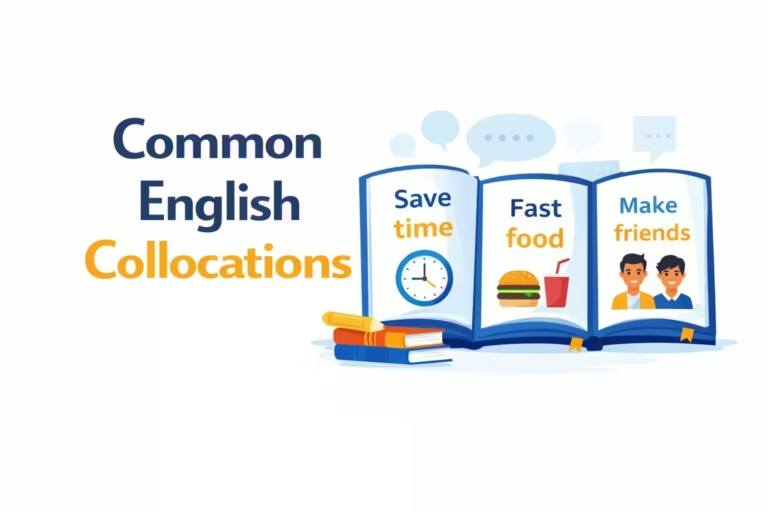
Collocations are pairs or groups of words that are often used together in a language.
These combinations sound natural to native speakers, but might not always make sense if translated directly.
For example, in English, we say “take a trip,” not “make a trip.” Understanding and using collocations can help you speak and write more fluently.
Common Travel Collocations
Let’s start by looking at some essential collocations for vacation planning. These collocations are divided into different categories, such as booking travel, preparing for the trip, and planning activities.
1. Booking Travel
When you are booking your travel, whether it’s a flight, train ticket, or a bus, there are specific phrases that are commonly used.
Book a flight – To arrange or reserve a flight.
Example: “I need to book a flight to Paris for next month.”
Reserve a seat – To hold a place for yourself on a flight or train.
Example: “I’d like to reserve a seat near the window.”
Make a reservation – To book a place to stay at a hotel or restaurant.
Example: “Can you make a reservation for two at the restaurant?”
Catch a flight – To get on a flight at the airport.
Example: “We need to leave early to catch our flight.”
Book tickets – To arrange tickets for a flight, train, or event.
Example: “I have already booked the tickets for the concert.”
2. Accommodation (Where to Stay)
Finding a place to stay is one of the most important parts of planning your vacation.
Here are some common collocations to help you book and talk about accommodation.
Check-in at the hotel – To register at the hotel when you arrive.
Example: “We will check-in at 3 p.m. tomorrow.”
Check out of the hotel – To leave the hotel after your stay.
Example: “We need to check out by noon.”
Stay at a hotel – To live temporarily in a hotel during your trip.
Example: “We’re staying at a five-star hotel for the weekend.”
Book a room – To reserve a room in a hotel.
Example: “I want to book a room with a sea view.”
Have a booking – To have made a reservation for accommodation.
Example: “I have a booking at the Hilton for tonight.”
Pay for accommodation – To settle the cost of where you’re staying.
-
- Example: “We need to pay for accommodation in advance.”
3. Travel Arrangements
Once you have your tickets and accommodation booked, there are some important phrases to use when you talk about travel arrangements.
Arrange transportation – To organize how you’ll travel to your destination.
Example: “I need to arrange transportation from the airport to the hotel.”
Go on a guided tour – To participate in a tour led by an expert guide.
Example: “We’re going on a guided tour of the museum tomorrow.”
Get travel insurance – To purchase insurance to cover unexpected events during your trip.
Example: “I always get travel insurance in case of emergencies.”
Pick someone up – To go to a location and collect someone (usually at the airport or station).
Example: “I will pick you up at the airport when your flight arrives.”
Rent a car – To hire a car for temporary use.
Example: “We need to rent a car to explore the city.”
Travel by train/plane/bus – To use a particular mode of transportation.
Example: “We’re traveling by train to the countryside.”
4. Packing for a Trip
Packing for your trip can be a stressful part of the planning process.
Here are some common travel-related collocations to help with your packing.
Pack a suitcase – To put clothes and items in a suitcase for your trip.
Example: “Don’t forget to pack a suitcase with your clothes.”
Pack light – To bring only a small amount of clothing and items.
Example: “I always try to pack light so I don’t have to carry too much.”
Carry-on luggage – Small bags that you can bring with you onto the plane.
Example: “I only have a small carry-on luggage for this trip.”
Take a backpack – To bring a backpack with you while traveling.
Example: “I’ll take a backpack for short trips and hikes.”
Wear comfortable shoes – To wear shoes that are easy to walk in, especially for sightseeing.
Example: “Make sure to wear comfortable shoes when we go sightseeing.”
Bring travel essentials – To carry important items, such as a passport, tickets, and money.
Example: “Don’t forget to bring your travel essentials like your passport.”
5. Travel Activities
Now, let’s look at some common phrases used when talking about activities during your vacation.
Go sightseeing – To visit famous places and tourist attractions.
Example: “We plan to go sightseeing around the city.”
Relax on the beach – To spend time resting on the beach.
Example: “We’ll relax on the beach all afternoon.”
Try local food – To eat the food that is typical in the place you’re visiting.
Example: “I’m excited to try the local food in Thailand.”
Take a walk – To walk around a particular area.
Example: “Let’s take a walk in the park after lunch.”
Explore the city – To travel around and discover different parts of the city.
Example: “We’ll have the whole day to explore the city.”
Go hiking – To walk on trails in the mountains or countryside.
Example: “We want to go hiking in the national park.”
Visit a museum – To go to a museum to look at the exhibits.
Example: “We’ll visit a museum to learn about the history of the place.”
6. Dealing with Problems
Sometimes, things don’t go as planned while traveling.
Here are some useful collocations for dealing with problems during your vacation.
Miss a flight – To be late for your flight and not catch it.
Example: “We missed our flight because of the traffic.”
Cancel a reservation – To call off or change a previously made reservation.
Example: “I need to cancel my reservation at the hotel.”
Get lost – To not know where you are and lose your way.
Example: “We got lost in the city center and had to ask for directions.”
Lose luggage – To have your bags go missing during your flight.
Example: “The airline lost our luggage, and we had to wait for it.”
Face delays – To experience a hold-up in your travel plans, like flight or train delays.
Example: “Our flight was delayed due to bad weather.”
7. At the Airport
The airport is an important part of any trip.
Here are some phrases that can be helpful when you are at the airport.
Go through security – To pass through the security checks before your flight.
Example: “We need to go through security before heading to the gate.”
Board the plane – To get on the plane before it takes off.
Example: “The announcement said we can board the plane now.”
Pick up baggage – To collect your luggage after your flight.
Example: “Let’s pick up our baggage from the baggage claim area.”
Go to the departure gate – To go to the gate where your flight will depart.
Example: “Our flight departs from gate 12, so let’s head there.”
Conclusion
Mastering travel collocations is a smart way to improve your English for real-life situations.
These commonly used travel phrases will help you plan vacations, talk about trips, and communicate comfortably during your journey.
By learning and using these collocations regularly, you can boost your vocabulary, improve fluency, and sound more like a native speaker.
Keep practicing these travel collocations, and your vacation planning conversations in English will become smoother and more natural.
FAQs – Travel Collocations for Vacation Planning
1. What are travel collocations in English?
Travel collocations are common word combinations like “book a flight,” “make a reservation,” and “go sightseeing” that are used naturally when talking about travel and vacations.
2. Why are travel collocations important?
They are important because they:
- Help you speak naturally while traveling
- Improve communication in real-life situations
- Make your English sound fluent and professional
- Reduce common mistakes
3. Who should learn travel collocations?
These collocations are useful for:
- ESL learners
- Travelers and tourists
- IELTS and speaking exam candidates
- Professionals communicating internationally
4. What are common collocations for booking travel?
Examples include:
- Book a flight
- Reserve a seat
- Make a reservation
- Catch a flight
- Book tickets
5. What are collocations for accommodation?
Examples include:
- Check-in at the hotel
- Check out of the hotel
- Stay at a hotel
- Book a room
- Pay for accommodation
6. What are collocations for travel arrangements?
Examples include:
- Arrange transportation
- Rent a car
- Get travel insurance
- Go on a guided tour
- Travel by train/plane/bus
7. What are collocations for packing?
Examples include:
- Pack a suitcase
- Pack light
- Carry-on luggage
- Take a backpack
- Bring travel essentials
8. What are collocations for travel activities?
Examples include:
- Go sightseeing
- Relax on the beach
- Explore the city
- Try local food
- Visit a museum
9. What are collocations for problems during travel?
Examples include:
- Miss a flight
- Cancel a reservation
- Get lost
- Lose luggage
- Face delays
10. What are collocations used at the airport?
Examples include:
- Go through security
- Board the plane
- Pick up baggage
- Go to the departure gate
11. What does “go sightseeing” mean?
It means visiting famous places and tourist attractions.
12. What does “pack light” mean?
It means to carry fewer items or minimal luggage while traveling.
13. How can I learn travel collocations easily?
You can:
- Practice daily
- Use them in real conversations
- Watch travel videos
- Read travel blogs
- Revise regularly
14. What mistakes should I avoid?
Avoid:
- Using incorrect word combinations
- Translating directly from your language
- Using basic vocabulary repeatedly
15. Can travel collocations help in speaking exams?
Yes, they:
- Improve fluency
- Make answers sound natural
- Increase vocabulary range
- Boost confidence
16. What is the overall benefit of learning travel collocations?
The overall benefit is:
You can communicate clearly, confidently, and naturally while planning and talking about travel.
You may like more collocations:
📚 Continue Learning English
Choose your next lesson and keep improving your English skills with our free English learning resources.