Introduction
Do you want to speak Business English fluently but don’t know where to start? You are not alone. Millions of people around the world want to improve their English speaking skills — especially for work, interviews, and professional meetings.
The good news? Learning how to speak Business English fluently in 30 days is absolutely possible. You don’t need to be perfect. You just need the right plan, daily practice, and the right strategies.
In this guide, you will learn everything — from basic vocabulary to real-life conversation tips. Whether you’re a student, a job seeker, or a working professional, this article is your complete roadmap to speaking English with confidence in just 30 days.
Let’s get started.
Visit our Business English category for more detailed guides and tips.
What Is “How to Speak Business English Fluently in 30 Days”?
Simply put, speaking Business English fluently means using the English language clearly and confidently in professional situations.
Business English is a specific style of English. It is used in offices, meetings, emails, presentations, and job interviews. It is more formal than everyday English. But it is also clear, polite, and structured.
When we talk about speaking Business English fluently in 30 days, we mean:
- Using the right words in professional settings
- Speaking clearly without long pauses or confusion
- Understanding what others say in meetings or calls
- Expressing your ideas, opinions, and requests professionally
It is not about having a perfect accent. It is not about memorizing hundreds of words in one day. It is about building a daily habit and improving step by step.
Think of it like going to the gym. You don’t get fit in one day. But if you work out every day for 30 days, you will see a real difference.
Why Is It Important to Speak Business English Fluently?
Learning to speak Business English fluently can change your life. Here is why:
1. Better Career Opportunities
Most global companies use English as their working language. If you can speak English well, you open doors to better jobs, higher salaries, and international opportunities.
According to many HR professionals, candidates who speak Business English confidently are more likely to be hired and promoted.
2. More Confidence at Work
When you know how to express yourself clearly in English, you feel more confident. You participate in meetings. You ask questions. You share your ideas without fear.
Confidence in communication makes you look more professional and capable.
3. Stronger Professional Relationships
Language builds connections. When you speak Business English fluently, you can build better relationships with colleagues, clients, and managers — even from different countries.
Good communication leads to trust. Trust leads to teamwork. Teamwork leads to success.
4. Improved Listening and Understanding
When you practice spoken English regularly, you also improve your listening skills. You understand instructions better, avoid misunderstandings, and respond more effectively.
5. Global Recognition
In today’s world, Business English is the universal language of commerce. Whether you’re in Delhi, Dubai, or Dallas — speaking fluent Business English makes you understood everywhere.
Types and Categories of English Speaking Skills
To speak Business English fluently in 30 days, you need to develop several key skills. Let’s break them down:
1. Fluency
Fluency means speaking smoothly and naturally — without stopping too often or getting confused.
Fluent speakers don’t always use perfect grammar. But they communicate ideas clearly and keep the conversation flowing.
Example: Instead of saying “I… um… want to… discuss the… um… project,” a fluent speaker says, “I’d like to discuss the project progress today.”
2. Pronunciation
Pronunciation means saying words clearly so others can understand you. You don’t need a British or American accent. You just need to be clear.
Poor pronunciation can cause misunderstandings in meetings or phone calls.
Tip: Practice with audio tools, YouTube videos, or pronunciation apps like ELSA Speak.
3. Vocabulary
Vocabulary means the words you know and use. Business English has its own vocabulary.
Common Business English words and phrases:
- “Could you please send me the report?”
- “Let’s touch base tomorrow.”
- “I’ll follow up with you by end of day.”
- “We need to move forward on this.”
- “Please find the attached document.”
The more business vocabulary you learn, the more confident and professional you sound.
4. Grammar
You don’t need perfect grammar to speak Business English. But basic grammar mistakes can make you look unprofessional.
Focus on:
- Correct tenses (past, present, future)
- Polite requests (“Could you…” instead of “You must…”)
- Question formation (“Can I ask you something?” not “I can ask something?”)
5. Confidence
Confidence is not a language skill. But it is one of the most important parts of speaking well.
Many people know English but are afraid to speak. They fear making mistakes. This fear stops them from improving.
Remember: Every mistake is a lesson. The more you speak, the more confident you become.
6. Listening Skills
Good communication is not just about speaking. It is also about listening.
In a business environment, you need to:
- Understand accents from different countries
- Follow fast-paced conversations
- Pick up on key words and instructions
Practice listening every day — through podcasts, videos, and real conversations.
Detailed Explanation with Real-Life Examples
Let’s look at how these skills work in real business situations.
Scenario 1: Job Interview
You are applying for a marketing role. The interviewer asks:
Interviewer: “Tell me about yourself.”
Weak Answer: “I am… I work in marketing… I like this job.”
Strong Business English Answer: “I have three years of experience in digital marketing. I’ve managed social media campaigns and helped increase website traffic by 40%. I’m excited about this opportunity because I believe my skills match your company’s goals perfectly.”
See the difference? The second answer uses clear structure, confident vocabulary, and professional phrases.
Scenario 2: Business Meeting
Your manager asks for a project update.
Weak Answer: “The project is… we are doing it… almost done.”
Strong Business English Answer: “The project is currently in its final phase. We expect to complete it by Friday. I’ll send you a full update report by end of day today.”
This answer is clear, structured, and professional. It shows fluency and confidence.
Scenario 3: Email Follow-Up Call
Your colleague asks, “Did you send that email?”
Strong reply: “Yes, I sent it this morning. I’ve also CC’d the manager as requested. Let me know if you need anything else.”
Short. Clear. Professional. That’s Business English in action.
Scenario 4: Handling Disagreement Politely
In meetings, you may sometimes disagree with a colleague.
Instead of saying: “No, that’s wrong.”
Say: “I see your point, but I’d like to suggest a different approach. Could we consider…?”
This is polite, professional, and effective.
Common Mistakes to Avoid When Learning Business English
Many learners make the same mistakes. Here are the most common ones — and why you should avoid them:
Mistake 1: Translating Directly from Your Native Language
Many ESL learners think in their native language and then translate into English. This leads to awkward sentences.
Why it’s a problem: English sentence structure is different from many other languages.
Solution: Practice thinking in English. Start with simple sentences, then build up.
Mistake 2: Memorizing Too Many Words at Once
Some learners try to memorize 50 new words every day. This rarely works.
Why it’s a problem: You forget them quickly and can’t use them naturally.
Solution: Learn 5–10 new business words per day. Use them in sentences. Review them the next day.
Mistake 3: Avoiding Speaking Practice
Many learners focus only on reading and writing. They avoid speaking because they fear mistakes.
Why it’s a problem: Speaking is a skill. You only improve by doing it.
Solution: Speak English every day — even if it’s just talking to yourself or recording voice notes.
Mistake 4: Using Informal Language in Professional Settings
Saying “Hey, what’s up?” to your manager is not Business English.
Why it’s a problem: It sounds unprofessional and disrespectful in formal environments.
Solution: Learn the difference between informal and formal English. Use formal phrases in professional situations.
Mistake 5: Ignoring Listening Practice
Some learners focus only on speaking and forget to work on listening.
Why it’s a problem: If you can’t understand others, communication breaks down.
Solution: Listen to English podcasts, TED Talks, and business videos daily.
Mistake 6: Being Afraid of Silence or Pauses
Many learners panic when they can’t think of a word immediately. They fill the gap with “um, um, um.”
Solution: Use filler phrases like:
- “That’s a great question. Let me think for a moment.”
- “Could you give me a second to gather my thoughts?”
These are completely natural and professional.
Tips, Strategies, and Best Practices for Speaking Business English Fluently in 30 Days
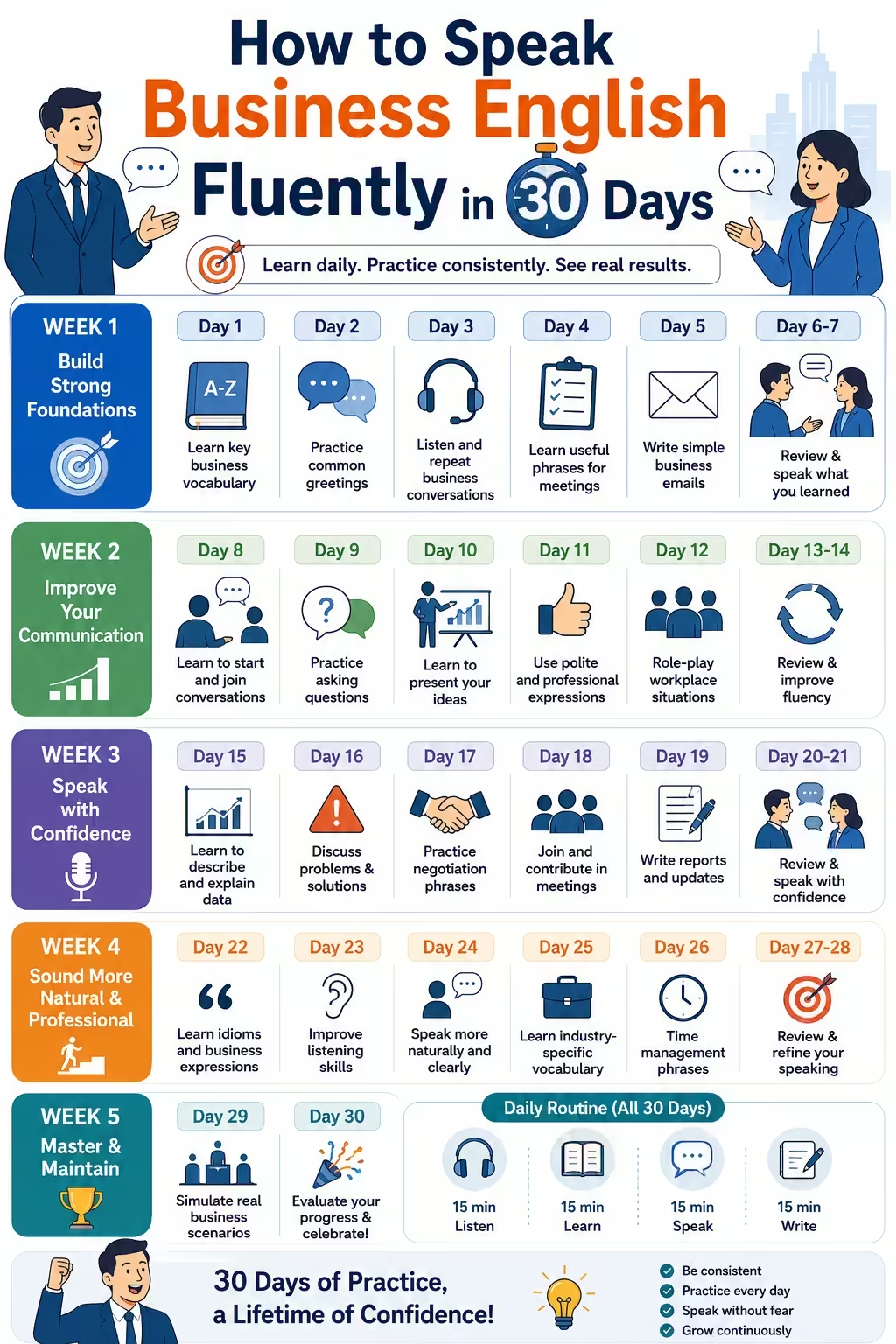
Here is your practical 30-day action plan. Follow these strategies every day:
Week 1: Build Your Foundation (Days 1–7)
Day 1–2: Set a Clear Goal
Write down why you want to learn Business English. Is it for a job interview? A promotion? More confidence? A clear goal keeps you motivated.
Day 3–4: Learn Core Business Vocabulary
Start with the most common Business English phrases:
- Greetings: “Good morning, how are you today?”
- Requests: “Could you please help me with this?”
- Apologies: “I apologize for the delay.”
- Agreements: “That sounds like a great plan.”
Day 5–7: Practice Basic Sentences
Use these vocabulary words in complete sentences. Write 5–10 sentences each day. Read them aloud.
Week 2: Improve Fluency and Pronunciation (Days 8–14)
Daily Habit: Speak for 10 Minutes
Choose a topic — your job, your weekend, a news story — and speak about it for 10 minutes. Record yourself. Listen back.
Shadow Native Speakers
Shadowing is one of the best spoken English techniques. Here’s how:
- Choose a short video or podcast in Business English
- Listen carefully
- Pause and repeat exactly what the speaker said
- Copy their tone, speed, and pronunciation
Read Aloud Every Day
Pick a business article, email, or news headline. Read it aloud clearly. This improves both pronunciation and fluency.
Week 3: Practice Real Conversations (Days 15–21)
Join an English Speaking Group
Find online communities where you can practice Business English with others. Platforms like italki, Preply, or even LinkedIn groups are great options.
Role-Play Business Scenarios
Practice common situations with a friend or partner:
- Job interview questions and answers
- Explaining a project to your manager
- Handling a client complaint politely
Learn from Business English Podcasts
Some excellent podcasts for Business English include:
- “Business English Pod”
- “The English We Speak” by BBC
- “All Ears English”
Listen for 15–20 minutes daily. Take notes on new phrases.
Week 4: Master Professional Communication (Days 22–30)
Write and Speak Business Emails
Practice writing business emails. Then read them aloud. This connects writing and speaking skills.
Watch Business English Videos
YouTube channels like English with Lucy, Oxford Online English, and Business English with Christina offer free, excellent lessons.
Attend a Mock Interview or Presentation
Ask a friend to conduct a mock job interview or presentation. Record it. Review your language, tone, and confidence.
Review and Reflect
At the end of 30 days, compare your first recordings to your latest ones. You will be amazed at how much you have improved.
Daily Habits That Accelerate Your Progress
Small habits done daily make a huge difference. Here are the most effective:
- Morning: Read one business article or email in English (10 minutes)
- Afternoon: Learn 5 new business phrases and use them in sentences (10 minutes)
- Evening: Watch a Business English video or listen to a podcast (15–20 minutes)
- Before bed: Speak about your day in English — out loud or in a voice recording (5 minutes)
Total daily effort: Less than 45 minutes a day. That’s all it takes.
Real-Life Applications of Business English
Here’s where Business English fluency truly makes a difference:
Job Interviews
Fluent Business English helps you:
- Introduce yourself confidently
- Answer questions clearly and professionally
- Ask smart, relevant questions
- Leave a lasting positive impression
Workplace Communication
At the office, you use Business English to:
- Participate in team meetings
- Give and receive feedback
- Write professional emails
- Deliver presentations
Client and Customer Interaction
When dealing with clients, Business English helps you:
- Explain services and solutions clearly
- Handle complaints professionally
- Build trust and long-term relationships
Networking Events
At conferences, seminars, or business events, fluent English helps you:
- Introduce yourself to new people
- Exchange ideas and opinions
- Build your professional network
International Business Travel
If you travel for work, Business English is essential for:
- Navigating airports and hotels
- Attending global conferences
- Communicating with international colleagues
Online Communication
Today, much of business happens online — Zoom calls, Slack messages, LinkedIn. Business English fluency helps you communicate professionally in all digital spaces.
FAQs: How to Speak Business English Fluently in 30 Days
Q1: Can I really learn to speak Business English fluently in 30 days?
Yes, you can make significant progress in 30 days — if you practice daily and follow a structured plan. You may not become 100% perfect, but you will speak with much more confidence, clarity, and professional vocabulary than when you started.
Q2: What is the difference between regular English and Business English?
Regular English is used in everyday conversations — with friends and family. Business English is more formal. It uses specific vocabulary, polite structures, and professional phrases. For example, in everyday English you might say “Can you help me?” In Business English, you say “Could you please assist me with this?”
Q3: How many hours per day should I practice Business English?
You don’t need hours. Just 30–45 minutes of focused, daily practice is enough. Consistency is more important than quantity. Practicing 30 minutes every day is far more effective than 4 hours once a week.
Q4: What are the best resources to improve my English speaking skills?
Some top resources include:
- YouTube channels: English with Lucy, Oxford Online English, Business English with Christina
- Podcasts: Business English Pod, BBC Learning English
- Apps: ELSA Speak (pronunciation), Duolingo (vocabulary), italki (live practice with tutors)
Q5: I feel shy when speaking English. How can I overcome this?
Fear and shyness are very common. Here’s how to overcome them:
- Start by speaking alone — to yourself or in recordings
- Practice with a trusted friend or language partner
- Remember: everyone makes mistakes when learning a language
- Focus on communication, not perfection
- Celebrate small wins every day
The more you speak, the less afraid you will feel.
Q6: Do I need a perfect accent to speak Business English fluently?
No. You do not need a British or American accent. Clarity is more important than accent. People from all over the world speak Business English every day — with their own accents. What matters is that others can understand you clearly.
Q7: What are the most important Business English phrases to learn first?
Start with these essential categories:
- Greetings: “Good morning, it’s a pleasure to meet you.”
- Requests: “Could you please send me the report by Friday?”
- Agreements: “That sounds like an excellent plan.”
- Apologies: “I sincerely apologize for the inconvenience.”
- Closings: “Thank you for your time. I look forward to hearing from you.”
Conclusion
Learning how to speak Business English fluently in 30 days is not a dream — it is a plan. A plan you can start today.
Let’s quickly recap what you’ve learned:
- Business English is the professional language of the global workplace
- The key skills are fluency, vocabulary, pronunciation, grammar, confidence, and listening
- You must avoid common mistakes like translation thinking, avoiding speaking, and using informal language
- A simple daily routine of 30–45 minutes can transform your speaking skills in one month
- Real-life practice — through role-plays, podcasts, videos, and conversations — is the fastest path to fluency
Remember: You don’t need to be perfect. You just need to be consistent. Every conversation is practice. Every mistake is progress. Every day is an opportunity to get better.
Start today. Speak one sentence in Business English right now. Then speak another tomorrow. After 30 days, look back and see how far you have come.
If this guide helped you, share it with a friend who also wants to improve their English speaking skills. And if you want more practical tips on spoken English, language learning, and professional communication — keep reading, keep practicing, and keep growing.
Your journey to fluent Business English starts now. Go speak.
Explore more topics here:
📚 Continue Learning English
Choose your next lesson and keep improving your English skills with our free English learning resources.