Introduction
Starting your first job is one of the most exciting moments in life. But it can also feel scary and confusing.
You may wonder: Am I ready? What should I say? How should I act?
If you are asking these questions, you are not alone. Millions of young people face the same challenges every year.
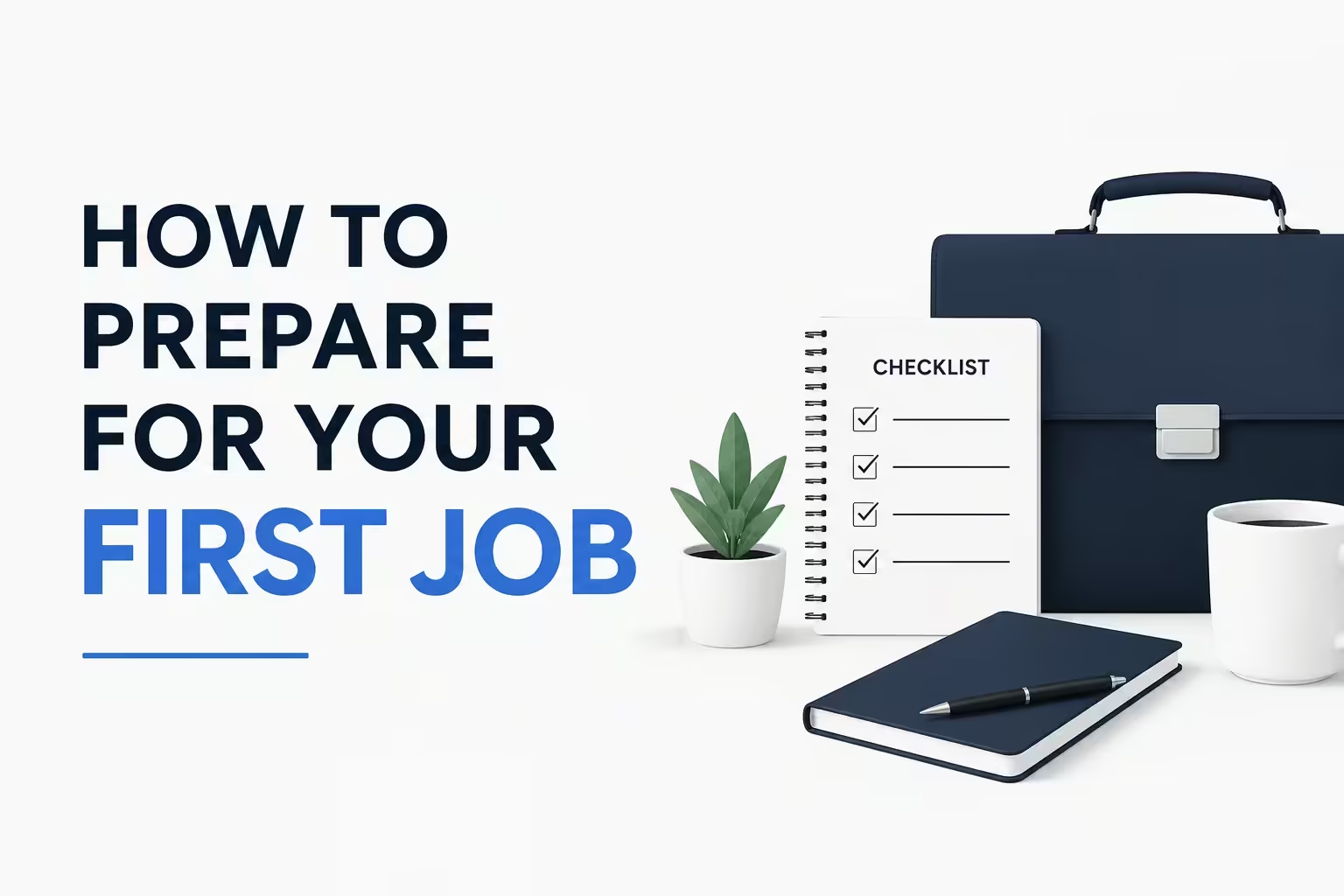
This complete guide on how to prepare for your first job will walk you through everything you need to know — from improving your English communication skills to dressing professionally, handling interviews, and building good workplace habits.
Whether you are a fresh graduate, a school leaver, or someone starting a new career path, this guide is made for you. Let’s get started.
What Does “Preparing for Your First Job” Really Mean?
Preparing for your first job means getting yourself ready — mentally, physically, and professionally — to enter the working world.
It is not just about writing a good resume. It includes:
- Learning how to communicate clearly in English
- Understanding workplace rules and culture
- Building confidence in speaking and listening
- Developing professional habits and attitudes
- Knowing how to handle interviews and colleagues
Think of it like preparing for a sports match. You do not just show up. You practice, plan, and get your mind and body ready.
For many job seekers — especially ESL (English as a Second Language) learners — one of the biggest challenges is English communication. This guide gives special attention to spoken English tips so you can speak with confidence at work.
Why Is Preparing for Your First Job So Important?
Many people skip preparation and hope for the best. That rarely works. Here is why preparation matters so much:
1. It Builds Confidence
When you are prepared, you feel less nervous. You know what to say, how to say it, and what to do. Confidence is one of the most important qualities employers look for.
2. It Helps You Make a Strong First Impression
In the workplace, first impressions are everything. How you speak, dress, and behave in the first few days can shape how people see you for months.
3. It Improves Your English Communication Skills
For ESL learners, preparation helps you practice important phrases, improve your pronunciation, and build your vocabulary before you actually need to use them at work.
4. It Increases Your Chances of Getting Hired
Candidates who prepare for interviews, research the company, and practice answers are far more likely to get the job.
5. It Reduces Stress
Preparation removes the fear of the unknown. When you know what to expect, work feels much less overwhelming.
Types of Skills You Need for Your First Job
Let us break down the key skill areas you need to develop before your first job.
1. English Fluency
Fluency means speaking English smoothly without long pauses or confusion. You do not need to speak perfectly. You need to speak clearly and confidently.
How to improve:
- Talk to yourself in English daily
- Describe what you are doing out loud (“Now I am making tea.”)
- Listen to English podcasts or YouTube videos
2. Pronunciation
Pronunciation means saying words correctly so others can understand you. Poor pronunciation can lead to misunderstandings at work.
How to improve:
- Use apps like Google Translate or Forvo to hear how words are spoken
- Record your voice and listen back
- Focus on common workplace words like schedule, colleague, presentation, deadline
3. Vocabulary
Vocabulary is the collection of words you know and use. At work, you need specific words related to your industry and general professional English.
Key professional vocabulary to learn:
- Meeting: agenda, minutes, postpone, follow up
- Email: attached, regarding, kindly, please find
- Daily work: deadline, priority, feedback, report, update
4. Grammar
You do not need perfect grammar, but you should know the basics. Poor grammar in emails or during presentations can look unprofessional.
Most important grammar points for work:
- Simple present tense (I work, she handles, we attend)
- Polite requests (Could you please…? Would you mind…?)
- Future plans (I will send the report. We are meeting tomorrow.)
5. Confidence in Speaking
Many people know English but are afraid to speak. This is one of the most common problems for first-time job seekers.
How to build speaking confidence:
- Practice with friends or family
- Join a speaking group or English club
- Remember: mistakes are normal and part of learning
6. Listening Skills
Listening is just as important as speaking. At work, you will need to follow instructions, attend meetings, and understand your colleagues clearly.
How to improve listening:
- Watch English movies or series with subtitles
- Listen actively — do not just hear words, try to understand the meaning
- Ask for clarification when you do not understand: “Could you please repeat that?”
Detailed Explanation with Real-Life Examples
Let us look at real workplace situations and how you can handle them.
Situation 1: Your First Day at Work
You walk into the office. Your manager introduces you to the team.
What should you say?
“Hi everyone, I’m [Your Name]. I’m very happy to join this team. I’m looking forward to working with all of you.”
Short. Simple. Professional. That is all you need.
Common mistake: Saying nothing or just smiling. Silence can seem rude or unfriendly.
Situation 2: Attending a Work Meeting
Your manager says, “Does anyone have any questions?”
You have a question but feel shy to ask.
What should you say?
“Yes, I have a quick question. Could you please explain the deadline for this project?”
Why this works: It is polite, clear, and shows you are engaged.
Tip: Always carry a small notebook to write down key points during meetings. This shows responsibility and helps your listening skills.
Situation 3: Sending a Professional Email
Your boss asks you to send a report update.
A simple professional email:
Subject: Report Update — [Project Name]
Dear [Manager’s Name],
Please find the updated report attached. I have completed sections 1 to 3. I will send the remaining sections by tomorrow evening.
Please let me know if you need any changes.
Best regards, [Your Name]
Key phrases to remember:
- Please find attached…
- I would like to inform you that…
- Kindly let me know if…
- Looking forward to your feedback.
Situation 4: Handling Criticism from Your Manager
Your manager says your work has some mistakes and needs improvement.
Wrong response: Getting defensive or staying silent.
Right response:
“Thank you for the feedback. I understand. I will make the corrections right away.”
Why this works: It shows maturity, a positive attitude, and willingness to learn — all qualities that employers love.
Common Mistakes to Avoid When Preparing for Your First Job
Avoid these common errors that many first-time job seekers make:
Mistake 1: Not Practicing English Before the Interview
Many candidates know English but never practice speaking it out loud before an interview. As a result, they freeze or lose words when it matters most.
Fix: Practice common interview questions out loud every day for at least one week before your interview.
Mistake 2: Using Informal Language at Work
Words like “gonna,” “wanna,” “yeah,” “nope” are fine with friends but not in a professional setting.
Fix: Use formal alternatives:
- Instead of “gonna” → say “going to”
- Instead of “yeah” → say “yes”
- Instead of “nope” → say “no, thank you”
Mistake 3: Not Researching the Company
Going into an interview without knowing anything about the company is a big mistake. Interviewers always ask, “What do you know about our company?”
Fix: Visit the company’s website. Learn about:
- What they do
- Their products or services
- Their mission and values
Mistake 4: Dressing Inappropriately
Wearing casual or messy clothes on your first day (or to an interview) creates a bad impression immediately.
Fix: When in doubt, dress formally. It is always better to be slightly overdressed than underdressed.
Mistake 5: Being Passive — Not Asking Questions
New employees sometimes sit quietly and wait for instructions. This can look like you are not interested or motivated.
Fix: Ask questions. Show curiosity. “Is there anything else I can help with?” or “Could you guide me on the next step?”
Mistake 6: Ignoring Time Management
Being late — even once — in your first week can damage your reputation badly.
Fix: Always arrive 10–15 minutes early. Set multiple alarms if needed.
Best Tips and Strategies to Prepare for Your First Job
Here are the most powerful, practical tips to help you succeed:
Tip 1: Practice Spoken English Every Day
The most effective way to improve English speaking skills is daily practice. Do not wait for the “perfect moment.” Start today.
Daily habits:
- Speak English for 15–30 minutes every morning
- Read English articles or news out loud
- Use a mirror to practice your facial expressions while speaking
Tip 2: Learn Common Workplace Phrases
Here are some essential phrases every first-time employee should know:
| Situation | Phrase to Use |
|---|---|
| Greeting colleagues | “Good morning! How are you?” |
| Asking for help | “Could you please help me with this?” |
| Confirming instructions | “Just to confirm, you need this by Friday, right?” |
| Apologizing | “I’m sorry for the delay. It won’t happen again.” |
| Giving an update | “I wanted to update you that the task is done.” |
Tip 3: Improve Your Listening Skills Actively
Watch one English video or podcast episode every day. Try to do this without subtitles at least once a week. This trains your ears for real-world conversations.
Recommended content:
- TED Talks (especially short ones — under 10 minutes)
- BBC Learning English
- English at Work podcasts
Tip 4: Prepare for Common Interview Questions
Practice answering these questions out loud:
- “Tell me about yourself.”
- “Why do you want this job?”
- “What are your strengths and weaknesses?”
- “Where do you see yourself in 5 years?”
- “Do you have any questions for us?”
Formula for answering clearly:
- Point: State your answer
- Reason: Give a reason
- Example: Add a real example
For example:
“I am a hard-working person. I always try to complete tasks before the deadline. For example, during my college project, I submitted my report three days early so we had time to review and improve it.”
Tip 5: Build Professional Habits Now
Do not wait until you start work to build good habits. Start today.
Good professional habits include:
- Waking up on time consistently
- Organising your tasks with a to-do list
- Responding to messages promptly
- Being honest when you make a mistake
- Keeping your workspace clean and organized
Tip 6: Work on Your Body Language
Communication is not just about words. Your body language speaks loudly too.
Professional body language tips:
- Make eye contact when speaking (but do not stare)
- Sit up straight in meetings
- Smile genuinely when greeting people
- Give a firm (not aggressive) handshake
- Avoid crossing your arms — it looks defensive
Tip 7: Create a Strong, Simple Resume
Your resume is your first introduction to an employer. Keep it clean and professional.
A good resume should include:
- Your name and contact details
- A short objective statement (2–3 sentences)
- Your education
- Any work experience (even part-time or volunteer work)
- Key skills
Tip: Use action words like managed, created, organised, achieved, completed, assisted.
Tip 8: Use Social Media Professionally
Many employers check LinkedIn and other social media profiles. Make sure yours looks professional.
Do:
- Create a LinkedIn profile with a professional photo
- Write a clear summary about your skills and goals
- Connect with industry professionals
Avoid:
- Negative or unprofessional posts
- Inappropriate photos
- Complaining about previous employers or schools
Real-Life Applications of These Skills
Here is how the skills and tips in this guide apply across different real-life situations:
In School or College
Even before you enter the workplace, you can practice. Group presentations, debates, and class discussions are perfect opportunities to improve spoken English and build confidence.
Action step: Volunteer to speak first in your next group project. It builds courage.
In Job Interviews
Everything you have learned here — pronunciation, vocabulary, confidence, body language — comes together in the interview room.
Key interview checklist:
- Research the company ✓
- Practice common questions ✓
- Dress professionally ✓
- Arrive early ✓
- Bring a copy of your resume ✓
- Smile and make eye contact ✓
While Travelling
If your job involves travel — domestic or international — strong English skills are essential. You will need to communicate with clients, book hotels, navigate airports, and make small talk.
Useful travel phrases:
- “Could you direct me to…?”
- “I have a reservation under the name…”
- “Could I have the bill, please?”
In Social and Professional Networking Events
Networking events are common in many careers. The ability to introduce yourself, make small talk, and exchange contact information in English is a valuable career skill.
Simple networking phrases:
- “Hi, I’m [Name]. I work in [field]. What about you?”
- “It’s great to meet you. I’ve heard a lot about your company.”
- “Could I have your business card? I’d love to stay in touch.”
Frequently Asked Questions (FAQs)
Q1: How can I improve my English speaking skills for my first job?
A: The best way to improve English speaking skills is daily practice. Speak English for at least 15–30 minutes every day. Practice common workplace phrases, listen to English podcasts, and record yourself to track your progress. Confidence comes from practice, not perfection.
Q2: What should I wear to my first job interview?
A: Always dress professionally. For most jobs, this means formal clothes — a clean shirt or blouse, trousers or a skirt, and neat shoes. Avoid casual clothes like jeans, t-shirts, or sports shoes unless the company has a very casual culture. When in doubt, be more formal.
Q3: What are the most important skills for a first-time employee?
A: The top skills employers look for in first-time employees are:
- Good communication (especially English speaking and listening)
- Punctuality and time management
- A positive attitude and willingness to learn
- Basic computer and writing skills
- The ability to work in a team
Q4: How do I answer “Tell me about yourself” in a job interview?
A: Use this simple formula:
- Your name and educational background
- One or two key strengths or skills
- Why you are interested in this role
Example: “My name is Priya. I recently completed my degree in Business Administration. I am organised, a quick learner, and I enjoy working with people. I am excited about this position because it matches my skills and career goals.”
Q5: How do I handle nervousness on my first day at work?
A: Nervousness is completely normal. Here is how to manage it:
- Prepare everything the night before (clothes, bag, documents)
- Arrive early so you are not rushing
- Take slow, deep breaths
- Remember: everyone has had a first day
- Focus on being helpful and friendly rather than being perfect
Q6: Can I get a good job without perfect English?
A: Yes, absolutely. You do not need perfect English — you need clear and effective English. Focus on being understood, being polite, and showing a willingness to improve. Many employers value attitude and effort over perfect grammar.
Q7: How long does it take to be job-ready?
A: It depends on where you are starting. With focused preparation — practising English daily, researching your industry, and building professional habits — most people feel significantly more job-ready within 4 to 8 weeks. Consistency is the key.
Conclusion
Getting your first job is a huge milestone. But success does not happen by accident. It comes from preparation, practice, and the right mindset.
In this complete guide on how to prepare for your first job, we have covered:
- Why preparation matters for your career and confidence
- The key English communication skills you need (fluency, pronunciation, vocabulary, grammar, listening)
- Real-life workplace situations and how to handle them
- Common mistakes to avoid
- Practical daily habits and strategies
- How these skills apply in interviews, travel, networking, and beyond
Remember: you do not have to be perfect. You just have to be prepared.
Every expert was once a beginner. Every confident professional once had a first nervous day. The difference between those who succeed and those who struggle is simple — preparation.
Start today. Practice your English. Research your industry. Update your resume. Prepare your interview answers. Build your confidence one step at a time.
If you found this guide helpful, share it with a friend who is also preparing for their first job. And if you want to keep improving your English and career skills, explore more guides on communication, workplace English, and professional development.
Your first job is just the beginning of a great career. Go get it!
Did this guide help you? Leave a comment below with your biggest challenge in preparing for your first job. We would love to help!
Explore more topics here:
- Improve Essay Writing: Should the Voting Age Be Lowered to 16?
- 200 Daily Office English Sentences to Speak Fluently
- 150 English Sentences to Build Confidence for Speaking English
- 105 Business Trip Vocabulary Words and Phrases in English
- Jobs in Germany for English Speakers: The Complete Beginner’s Guide (2026)
- English for Getting a Job: The Complete Guide for ESL Learners and Job Seekers
📚 Continue Learning English
Choose your next lesson and keep improving your English skills with our free English learning resources.