Podcasts have become one of the most popular ways to learn, relax, and stay informed. From comedy and storytelling to business and self-improvement, people around the world enjoy listening to podcasts every day.
For English learners, podcasts are also a great way to improve listening and speaking skills while learning natural conversations and modern vocabulary.
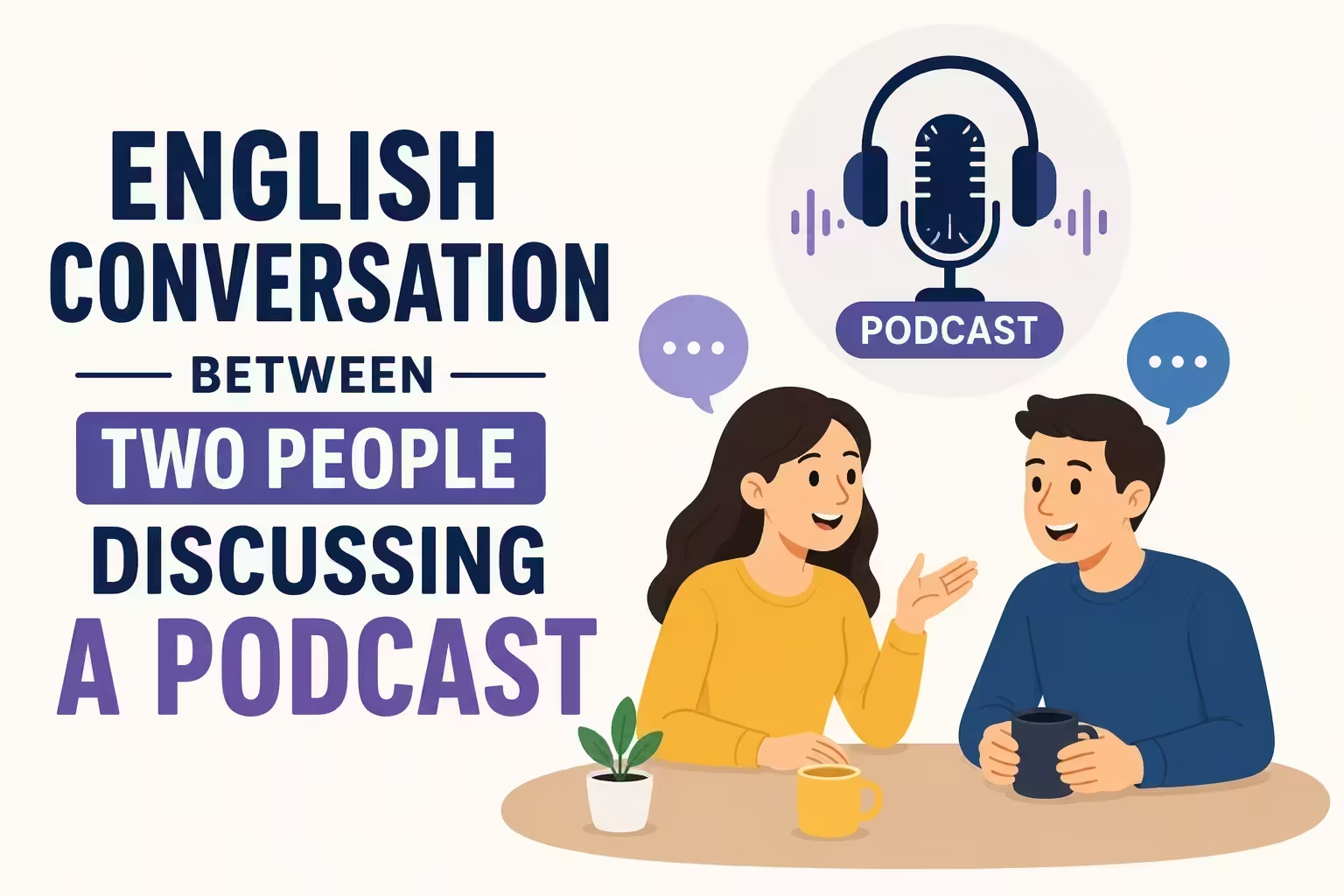
In this English conversation between two people discussing podcasts, you will read a realistic and engaging dialogue about favorite podcast shows, listening habits, and why podcasts are becoming so popular.
This conversation is written in simple and natural English, making it perfect for beginners, ESL students, and anyone who wants to improve spoken English through daily conversations.
Find more conversations in English Conversation Practice category.
English Conversation Between Two People Discussing a Podcast
Sarah: Hey Mike! It’s been forever since we caught up properly. How’ve you been? I’ve been meaning to text you about this new obsession of mine.
Mike: Sarah! I’m good, just buried in work as usual. What’s this obsession? Don’t tell me it’s another true-crime rabbit hole.
Sarah: Haha, close! Podcasts. I’ve gone full podcast addict. I listen while commuting, cooking, even folding laundry. It feels like having smart friends whispering in my ear all day. Have you been listening to any lately?
Mike: Actually, yeah. I started with “The Joe Rogan Experience” a couple years back, but now I’m more into shorter, focused ones. Podcasts have exploded, right? It’s like the new radio but way more personal. What got you hooked?
Sarah: It was during lockdown. I was tired of scrolling TikTok and wanted something with actual depth. I stumbled on “Stuff You Missed in History Class” and suddenly I’m learning about Victorian mourning rituals at 7 a.m. while making coffee. Now I’m obsessed with how intimate the format is. No fancy production, just voices and ideas. What about you? Still doing those long-form ones?
Mike: Totally. I love the long-form stuff because you really get to know the guest. Rogan interviews can go three hours and it never feels forced. But lately I’ve been loving “Hard Fork” by the New York Times. Those two hosts, Kevin and Casey, talk about tech in such a funny, accessible way. Last episode they broke down how AI is changing podcast production itself—voice cloning, auto-editing. It’s meta as hell.
Sarah: Oh my god, yes! I heard that one too. They were joking about AI hosts taking over. Imagine a podcast entirely generated by Grok or ChatGPT. Would it still feel human? That’s the big question for me. Podcasts succeeded because they feel like a conversation between friends. If it’s too polished or robotic, the magic dies.
Mike: Exactly. I think that’s why “Call Her Daddy” blew up. Alex Cooper just talks like she’s at a bar with you. No script, lots of swearing, real talk about sex and relationships. My sister got me into it and I was shocked how honest it is. But it’s also smart—there’s journalism mixed in. She interviews big names now. What’s your current rotation?
Sarah: Okay, top three right now: “The Daily” for news, because it’s 20-30 minutes and actually explains the headlines instead of yelling them. Then “SmartLess” with Jason Bateman, Sean Hayes, and Will Arnett—they’re so chaotic and funny. And “Heavyweight” by Jonathan Goldstein. That one is pure storytelling gold. He tracks down people from someone’s past to resolve old grudges or mysteries. The emotional payoff is insane. I cried in the car last week.
Mike: “Heavyweight” is elite. That episode where he helps a guy confront the bully who stole his bike in the 80s? Masterpiece. It’s like therapy radio. I’ve been recommending “This American Life” to everyone. Ira Glass has been doing it for decades and it still feels fresh. The way they structure stories—act one, act two, tiny details that make you feel like you’re there. Podcasts prove you don’t need video to create cinema in your head.
Sarah: One hundred percent. I remember listening to “Serial” back in 2014 and it changed everything. Adnan Syed, Hae Min Lee—that case is still unsolved and people are still obsessed. It basically invented the modern true-crime podcast boom. Now we have “Crime Junkie,” “Morbid,” “My Favorite Murder.” I binge them but sometimes I feel guilty. Is it weird to be entertained by real tragedy?
Mike: It’s a fair question. I think as long as it’s respectful and not exploitative, it’s okay. Podcasts let victims’ families have a voice too. “The Last Podcast on the Left” does a mix of comedy and horror—serial killers, cryptids, conspiracies. The hosts are idiots in the best way. They make dark topics bearable. Have you tried any science ones? I’m deep into “Science Vs” and “Radiolab.”
Sarah: “Radiolab” is my comfort listen. Jad and Robert (or now Latif) take these huge ideas—time, memory, color—and make them feel intimate. The sound design is next-level. One episode about how smell triggers memory had me pulling over because I got emotional thinking about my grandma’s perfume. That’s the power of audio. You’re alone with the story. No distractions.
Mike: Exactly. I commute by metro here in Delhi and podcasts turn that nightmare into my favorite part of the day. Noise-cancelling headphones, good story, boom. I’ve learned more about business from “How I Built This” than any MBA course. Guy Raz interviews founders like the woman who started Spanx or the guy behind Airbnb. Their failures are the best parts. It humanizes success.
Sarah: I love that one too! The episode with the founders of Allbirds—those wool sneakers—was hilarious. They kept saying “we had no idea what we were doing” but somehow built a billion-dollar brand. Podcasts democratize knowledge. Anyone with a mic and a story can reach millions. That’s why I’m thinking of starting one.
Mike: Wait, seriously? You should! What would it be about?
Sarah: Something niche. Maybe “Delhi Stories”—interviews with regular people about their wildest life moments. Cab drivers, aunties who run street food stalls, young entrepreneurs. Everyone has a podcast now, but the best ones are authentic. Look at “The Moth.” Real people telling real stories on stage, no notes. Pure vulnerability. Or “The Economist” podcasts for global affairs. I listened to their explainer on the India-Canada diplomatic row and felt so much more informed than reading tweets.
Mike: Starting one is harder than it looks. Equipment is cheap now—USB mic, free software like Audacity or GarageBand. But editing takes forever. Consistency is the killer. Most podcasts die after episode 10 because life gets busy. The ones that last treat it like a relationship with the audience. “The Tim Ferriss Show” has been going for years because he obsesses over every detail. He deconstructs world-class performers—athletes, chefs, writers. I stole so many productivity hacks from it.
Sarah: Tim Ferriss is a machine. But I also love the casual ones like “Office Ladies.” Jenna Fischer and Angela Kinsey from The Office just reminisce about episodes. It’s silly and comforting, like hanging out with old coworkers. During tough weeks I need that lightness. Podcasts balance me. Heavy news in the morning, comedy at night.
Mike: Same. I’ve cut my screen time by half since I started walking and listening. “Huberman Lab” is my health bible now. Andrew Huberman, the Stanford neuroscientist, explains sleep, dopamine, focus with actual science. I fixed my morning routine because of his episode on sunlight exposure. Twenty minutes outside changed my energy levels completely.
Sarah: Huberman is brilliant. He’s so good at translating complex biology without dumbing it down. I tried his protocol for focus—90-minute work blocks, deliberate cold exposure—and it actually works. Podcasts make experts accessible. You don’t need to read 400-page books anymore; you can absorb the highlights in an hour while cooking dal.
Mike: Speaking of food, have you heard “The Sporkful”? It’s a comedy podcast about eating. They do “the eat more better” segments and ridiculous debates like “is a hot dog a sandwich?” Pure joy. Or “Gastropod”—science of food. Why pineapple on pizza tastes good to some people genetically. Nerdy and delicious.
Sarah: I need to add that to my list. My queue is ridiculous—over 200 episodes saved. I use Overcast or Spotify and the “smart speed” feature to listen at 1.5x. Saves so much time. But sometimes I slow it down for the really emotional ones. “Dear Sugars” used to give advice letters. Cheryl Strayed and Steve Almond were like wise older siblings. When it ended I felt actual grief.
Mike: Podcast breakups are real! I still miss “Reply All.” That show about the internet was perfect until it wasn’t. The episode “The Case of the Missing Hit” is legendary investigative journalism disguised as fun. They spent months tracking one song from a 90s CD-ROM game. That’s the beauty—podcasts can be whatever you want. Comedy, journalism, education, therapy.
Sarah: Totally. And the community around them is wild. Reddit threads, Discord servers, live shows. I went to a “My Dad Wrote a Porno” live event last year and the theater was packed with people quoting lines. It felt like a secret club. Or “Conan O’Brien Needs a Friend”—he’s so self-deprecating and the guests open up because it’s not TV. No cameras, just mics and laughter.
Mike: Conan’s podcast is gold. He interviewed Barack Obama and they just chatted like normal dudes about basketball and books. No politics for the first 45 minutes. That never happens on TV. Podcasts let conversations breathe. No commercial breaks every eight minutes.
Sarah: Exactly. And monetization has changed everything. Ads at the beginning, mid-rolls, premium subscriptions on Patreon. Some creators make millions. Joe Rogan’s Spotify deal was huge. But it also created pressure to chase trends—every other podcast is true crime now. I worry about saturation. Will we hit “peak podcast”?
Mike: Maybe, but I don’t think so. The medium keeps evolving. Video podcasts on YouTube are blowing up—Rogan, Lex Fridman. People want to see faces sometimes. Then there’s spatial audio and Apple’s immersive stuff. Imagine a horror podcast that feels like it’s happening around you in 3D. Or AI-generated personalized episodes based on your interests. “Hey Grok, make me a 30-minute story about Delhi street food history with a twist ending.”
Sarah: That would be terrifyingly good. But I hope the human touch stays. The slight laugh when someone messes up a word, the awkward pause that feels real. That’s what makes it addictive. I’ve made actual friends through podcast recommendations. Like us right now!
Mike: True. Hey, we should start a joint one. “Two Friends Ramble About Everything.” Episode one: why podcasts are better than therapy sometimes.
Sarah: Deal. But only if we record it while eating momos. Listeners deserve authenticity.
Mike: Haha, perfect. I’m at about 45 minutes into my daily walk thanks to this chat. Podcasts really do extend your day in the best way. What’s next on your list?
Sarah: “The Ezra Klein Show.” He interviews thinkers about big ideas—democracy, AI ethics, climate. It’s dense but worth it. Then maybe a palate cleanser with “Dungeons and Daddies”—a D&D podcast that’s actually a comedy show. Chaos and heart.
Mike: I’ll check those out tonight. Thanks for the recs. We need to do this again in person. Coffee and podcast swap?
Sarah: Absolutely. Next week? My treat.
Mike: You’re on. Talk soon!
📚 Continue Learning English
Choose your next lesson and keep improving your English skills with our free English learning resources.