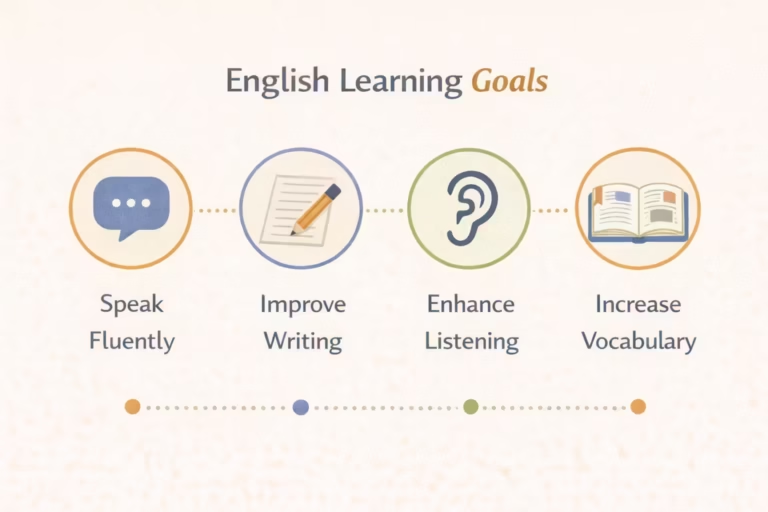
Learning to speak English confidently in daily life is not just about knowing grammar or vocabulary. It’s about practical conversation skills that help you interact with people smoothly (see EF English Resources for extra practice).
1. The Importance of Small Talk
Small talk is the foundation of daily English conversation. It is light, polite conversation that helps build connections with others. In the U.S., small talk often happens in workplaces, schools, public transport, or even in line at a café.
Common Small Talk Topics
-
The weather: “It’s a beautiful day today, isn’t it?”
-
Weekend plans: “Do you have any plans for the weekend?”
-
Food and drink: “Have you tried the new café nearby?”
-
Work or school: “How’s your project going?”
Small talk doesn’t have to be long. Even a few sentences can make interactions friendly and natural.
2. Talking About Your Job
One common small talk topic is your job. Talking about your work can help others understand you better and gives you a chance to practice everyday English.
-
“I work in marketing at a small company.”
-
“I am a teacher, and I enjoy working with children.”
-
“I just started a new job, and it’s very exciting.”
When someone asks more questions, you can give simple details without going too deep:
-
“I handle social media and online content.”
-
“I work from home a few days a week.”
For more detailed guidance on workplace conversations and phrases, check How to Talk About Your Job in English.
Tip: Focus on simple sentences and key words. You don’t need to explain everything. Just enough to keep the conversation going.
3. How to Start and End Conversations Politely
Knowing how to start and end conversations is important in daily English. It shows respect and keeps your interactions smooth.
Starting a Conversation
-
“Hi! How’s your day going?”
-
“Hello, do you have a moment?”
-
“Good morning! How’s everything?”
These greetings are polite and open the door for further conversation.
Ending a Conversation
Sometimes, you need to end a conversation politely without sounding rude. Examples:
-
“It was nice talking to you. I need to get back to work.”
-
“I have to go now, but it was great catching up.”
-
“Thanks for the chat. I hope you have a good day.”
For more tips on conversation flow, see How to Politely End a Conversation in English.
Tip: Ending politely leaves a good impression and encourages future conversations.
4. Expressing Feelings Naturally
Expressing feelings is part of real-life English. You might want to share happiness, worry, fear, or excitement. Using simple phrases makes your English sound natural.
For difficult words or expressions, you can check the Cambridge Dictionary to understand meanings and correct pronunciation.
Examples of Expressing Emotions
-
Happiness: “I’m so happy about my new job!”
-
Worry: “I’m a little nervous about my presentation.”
-
Fear: “I’m afraid of speaking in front of a large group.”
Learning to express fear is important because it’s common in everyday life and exams. For more phrases to talk about fear, see English Phrases to Express Your Fears.
Tip: Pair feelings with actions or situations:
-
“I’m nervous because I have a meeting with my manager.”
-
“I feel excited about the upcoming holiday.”
5. Practicing Conversation for Speaking Exams
If you are preparing for English speaking exams, daily conversation practice is extremely helpful.
Exams test your ability to speak naturally and answer questions clearly.
Tips for Exam Practice
-
Practice introducing yourself: “Hello, my name is [Name]. I’m from [City/Country].”
-
Talk about your daily life: “I usually wake up at 7 am and go for a walk.”
-
Describe your hobbies: “I enjoy reading books and watching movies.”
-
Answer questions with simple sentences first, then add details: “Yes, I like movies. My favorite is a comedy because it makes me laugh.”
For a structured guide, see How to Prepare for English Speaking Exams.
Tip: Daily small talk with friends or in language groups helps a lot. The more you speak, the more confident you become.
6. Practicing English in Daily Life
Practicing with real-life topics is key.
You can also use resources like the British Council Learn English for exercises and speaking practice.
Here are some simple ways:
-
Talk to friends or family in English, even for a few minutes a day.
-
Use public situations for practice, like ordering at a café or greeting a neighbor.
-
Record yourself speaking and listen to improve pronunciation.
-
Watch English shows or YouTube videos and repeat phrases.
Small steps every day make a big difference. Combining practice with learning workplace phrases, polite conversation skills, and emotion vocabulary will boost your confidence.
7. Examples of Daily English Conversations
Here are a few short dialogues you can practice:
At Work:
-
A: “Hi, how’s your day?”
-
B: “Good, thank you. How about yours?”
-
A: “Busy, but going well.”
Ordering Food:
-
A: “Hi, can I get a sandwich and a coffee?”
-
B: “Sure! Anything else?”
-
A: “No, that’s all. Thank you.”
Expressing Fear or Nervousness:
-
A: “I’m nervous about my meeting.”
-
B: “Don’t worry. You’ll do great!”
Ending a Conversation:
-
A: “I have to go now.”
-
B: “Okay, it was nice talking to you. See you soon!”
You can also refer to posts like How to Talk About Your Job in English, How to Politely End a Conversation in English, and English Phrases to Express Your Fears for more examples.
8. Key Phrases to Remember
Here’s a quick list of useful phrases for daily conversation:
-
“How’s it going?” → casual greeting
-
“I’m doing well, thank you.” → polite response
-
“Can you help me with this?” → asking for assistance
-
“I’m a little nervous about…” → expressing fear
-
“It was nice talking to you.” → polite ending
Using these phrases regularly will help you speak naturally and feel comfortable in any situation.
Conclusion
Mastering daily English conversation takes practice, patience, and confidence. Focus on small talk, workplace conversations, polite ways to start and end discussions, expressing feelings, and exam practice.
For more in-depth guidance, you can check these helpful posts:
By practicing these phrases daily and applying the tips in real-life situations, your English will become natural and confident. Start small, speak often, and you’ll see improvement quickly.
FAQs About Mastering Daily English Conversation
What is daily English conversation?
Daily English conversation refers to the English people use in everyday situations such as greeting others, talking about work, ordering food, expressing feelings, and having casual discussions.
Why is daily English conversation important?
Daily English conversation helps learners communicate naturally and confidently in real-life situations. It improves fluency, pronunciation, listening skills, and confidence.
How can I improve my English speaking skills daily?
You can improve your speaking skills by practicing conversations every day, learning useful phrases, speaking with others, watching English videos, and repeating common expressions.
What is small talk in English?
Small talk is light and friendly conversation about simple topics such as weather, weekend plans, food, work, or daily activities.
Why is small talk important?
Small talk helps build connections, start conversations naturally, and make interactions comfortable in social and professional settings.
What are common small talk topics?
Common small talk topics include:
- Weather
- Weekend plans
- Food and drinks
- Work or school
- Hobbies and interests
How can I start a conversation politely in English?
You can start a conversation politely by using greetings such as:
- “Hi! How’s your day going?”
- “Good morning!”
- “Hello, do you have a moment?”
How do I end a conversation politely?
Polite ways to end a conversation include:
- “It was nice talking to you.”
- “I have to go now.”
- “Thanks for the chat.”
How can I talk about my job in English?
Use simple and clear sentences such as:
- “I work in marketing.”
- “I am a teacher.”
- “I recently started a new job.”
What are some useful phrases for workplace conversations?
Useful workplace phrases include:
- “How’s your project going?”
- “I work from home.”
- “I handle online content.”
- “Can you help me with this?”
How can I express feelings naturally in English?
You can express feelings using simple phrases like:
- “I’m happy.”
- “I’m nervous.”
- “I’m excited.”
- “I’m worried about…”
Why is expressing emotions important in conversation?
Expressing emotions helps people understand your feelings and makes conversations more natural and meaningful.
How can I express nervousness in English?
You can say:
- “I’m nervous about my presentation.”
- “I’m a little worried.”
- “I feel anxious about the meeting.”
What are some useful daily English phrases?
Useful daily phrases include:
- “How’s it going?”
- “I’m doing well.”
- “Can you help me?”
- “It was nice talking to you.”
How can beginners practice English conversation?
Beginners can:
- Speak with friends
- Practice short dialogues
- Watch English videos
- Join speaking groups
- Repeat phrases aloud daily
Is speaking every day necessary for fluency?
Yes, regular speaking practice helps learners think in English, respond faster, and become more fluent naturally.
How does conversation practice improve pronunciation?
Daily speaking helps learners hear correct sounds, practice pronunciation, and become more comfortable speaking clearly.
What are some simple conversation practice ideas?
You can:
- Talk about your daily routine
- Order food in English
- Introduce yourself
- Describe your hobbies
- Practice role-play conversations
How can I practice English alone?
You can:
- Record your voice
- Speak in front of a mirror
- Repeat movie dialogues
- Read aloud
- Practice self-introductions
What are the benefits of learning everyday English phrases?
Everyday phrases help learners communicate naturally, understand native speakers better, and feel more confident in conversations.
How can I become more confident while speaking English?
You can build confidence by practicing regularly, focusing on communication instead of perfection, learning common phrases, and speaking without fear of mistakes.
What should I do if I forget words while speaking?
Stay calm, use simple words, explain the idea differently, or pause briefly to think. Communication is more important than perfect vocabulary.
How can watching English videos help conversation skills?
Watching English videos improves listening, pronunciation, vocabulary, and understanding of natural conversation patterns.
Are English speaking exams based on daily conversation?
Yes, many English speaking exams test your ability to communicate naturally about daily life, hobbies, work, and personal experiences.
How can I prepare for English speaking exams?
You can prepare by:
- Practicing introductions
- Talking about daily activities
- Answering common questions
- Improving fluency through daily conversations
What are some examples of polite English responses?
Examples include:
- “I’m doing well, thank you.”
- “That sounds great.”
- “I appreciate your help.”
- “Thank you for your time.”
Can daily conversation improve professional communication?
Yes, practicing daily English helps improve workplace communication, presentations, meetings, and interactions with colleagues or clients.
How long does it take to become fluent in daily English conversation?
Fluency depends on regular practice, consistency, and exposure to English. Speaking daily can lead to noticeable improvement within a few months.
What is the best way to remember English conversation phrases?
The best ways include repetition, real-life practice, writing phrases in a notebook, and using them regularly in conversations.
Can children learn daily English conversation easily?
Yes, children can learn conversational English quickly through games, speaking activities, storytelling, and daily practice.
📚 Continue Learning English
Choose your next lesson and keep improving your English skills with our free English learning resources.