Introduction: Why Most English Learners Give Up Too Soon
Have you ever started learning English with a lot of excitement, only to feel frustrated a few weeks later? You are not alone.
Table of Contents
ToggleEvery year, thousands of students, job seekers, and ESL learners set English learning goals like “I want to be fluent in three months” or “I will speak like a native speaker by next year.” These goals feel exciting at first. But soon, reality hits. Progress feels slow. Confidence drops. Many people quit.
The real problem is not motivation. The problem is unrealistic goal setting.
Learning how to set realistic English learning goals is one of the most important skills any language learner can develop. When your goals are clear, specific, and achievable, you make steady progress. You stay motivated. And you actually enjoy the journey.
I have been teaching English for over ten years — in classrooms, online, and in one-on-one coaching sessions. I have worked with school students, working professionals, homemakers, and complete beginners.
And I can tell you from experience: the learners who succeed are not always the most talented. They are the ones who set the right goals.
In this article, I will show you exactly how to do that.
Why Setting the Right English Goals Matters
Before we talk about how to set goals, let us understand why this step is so important.
When you have no clear goal, your learning becomes scattered. One day you watch YouTube videos. The next day you study grammar. Then you try a new app. You feel busy, but you are not really moving forward.
On the other hand, when you have a specific, realistic goal, everything changes. You know what to focus on. You know when you are making progress. And you have a reason to keep going, even on tough days.
Here is something I tell my students in every first class: “A vague goal gives you vague results. A clear goal gives you a clear path.”
Good goal setting helps with:
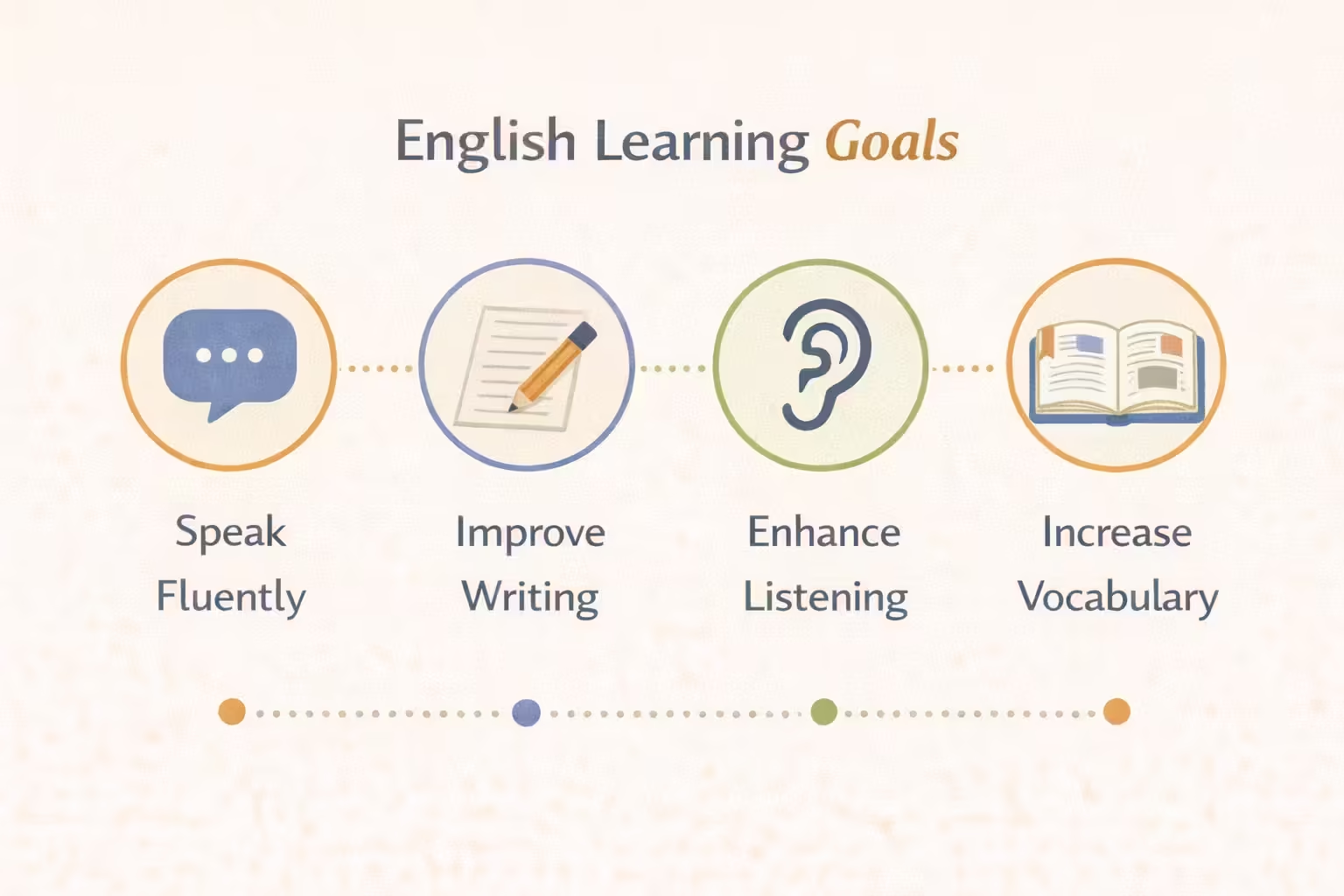
- Spoken English practice (knowing when and how to practice speaking)
- Vocabulary building (targeting the words you actually need)
- Listening skills (choosing the right content for your level)
- Confidence building (celebrating small wins regularly)
- Fluency development (tracking real improvement over time)
Common Mistakes English Learners Make With Goals
Over ten years of teaching, I have seen the same goal-setting mistakes come up again and again. Let us look at them honestly.
Mistake 1: Setting Goals That Are Too Big
“I want to be fluent in English in 30 days.”
This is the most common mistake. Fluency takes months — sometimes years — of consistent practice. When learners expect fluency in 30 days and do not get it, they feel like failures. But they are not failures. They just had an unrealistic timeline.
Mistake 2: Being Too Vague
“I want to improve my English” is not a goal. It is a wish. Goals need to be specific. What part of English do you want to improve? Speaking? Writing? Listening? Grammar?
Mistake 3: Ignoring Their Current Level
I once had a student — let us call him Ramesh — who came to me wanting to prepare for IELTS in two weeks. He was at a beginner level. Two weeks was simply not enough time. We had to have an honest conversation about where he was and what was actually possible.
Mistake 4: Not Tracking Progress
Many learners keep studying without ever checking: “Am I actually getting better?” Without tracking, it is hard to stay motivated.
Mistake 5: Copying Someone Else’s Goals
Your goals must match your life, your schedule, and your purpose. A university student’s goals are different from a working professional’s goals. One size does not fit all.
The SMART Method: A Simple Framework for English Goals
The best tool I have found for helping students set realistic English learning goals is the SMART framework. It is simple, practical, and it works.
SMART stands for:
- S — Specific
- M — Measurable
- A — Achievable
- R — Relevant
- T — Time-bound
Let me break each one down with English learning examples.
S — Specific
Do not say: “I want to improve my speaking.”
Say instead: “I want to be able to introduce myself and talk about my work in English without stopping.”
The more specific your goal, the easier it is to practice for it.
M — Measurable
How will you know you have achieved your goal? Add a number or a clear outcome.
Example: “I will learn 10 new words every week” or “I will have a five-minute English conversation without using my native language.”
A — Achievable
Your goal should stretch you a little — but not break you. Ask yourself: “Can I realistically do this given my schedule, level, and resources?”
If you study one hour a day, aiming for B2 level in six months might be achievable. Aiming for C2 level in six months is probably not.
R — Relevant
Your goal should connect to your real life. A student preparing for a job interview needs different English goals than someone moving to another country. Make sure your goal actually matters to you.
T — Time-Bound
Give your goal a deadline. “I will complete this by the end of the month” is much more powerful than “someday.”
Step-by-Step: How to Set Realistic English Learning Goals
Now let us build your goals from scratch. Follow these steps carefully.
Step 1: Know Your Current Level
Before you set a goal, you need to know where you are starting from. You cannot plan a journey without knowing your starting point.
Try these simple methods:
- Take a free online English level test (many are available on sites like Cambridge or British Council)
- Record yourself speaking for two minutes and listen back
- Write a short paragraph and check it for errors
- Ask a teacher or language exchange partner to evaluate you
Most English levels are described using the CEFR scale: A1 (beginner), A2, B1, B2, C1, C2 (advanced). Knowing your level helps you set goals that are truly achievable.
Step 2: Identify Your Purpose
Why do you want to learn English? Your answer will shape every goal you set.
Common purposes include:
- Passing an English exam (IELTS, TOEFL, Cambridge)
- Getting a job or promotion
- Studying abroad
- Traveling comfortably
- Communicating with family or friends
- Improving confidence in social situations
- Helping your children with their studies
Write down your real reason. Be honest with yourself. This “why” will keep you going when motivation dips.
Step 3: Break Big Goals Into Small Goals
Big goals feel overwhelming. Small goals feel doable.
Think of your big goal as the top of a staircase. Each small goal is one step. You do not jump to the top — you climb, one step at a time.
For example:
Big goal: “I want to speak English confidently in job interviews.”
Small goals (monthly):
- Month 1: Learn vocabulary related to my job field (50 key words)
- Month 2: Practice introducing myself and describing my experience in English
- Month 3: Do mock interviews with a friend or teacher
- Month 4: Record myself answering common interview questions and review
Suddenly, the big goal does not feel so scary.
Step 4: Build a Consistent Practice Routine
Goal setting without a practice routine is just dreaming. Consistency is everything.
You do not need hours every day. You need regular practice.
Here is what works well for my students:
- 15–30 minutes daily is better than 3 hours on weekends
- Mix different skills: listening one day, speaking the next, reading or writing after that
- Use real-life materials: podcasts, YouTube, English news, movies
- Practice in context, not just from textbooks
One of my online students — a mother of two with very little free time — improved her spoken English significantly in just four months. Her secret? Fifteen minutes every morning before her children woke up. Consistency always beats intensity.
Step 5: Track Your Progress Regularly
Every two weeks, check in with yourself. Ask:
- Am I meeting my small goals?
- What is improving?
- What still needs work?
- Do I need to adjust my plan?
Keep a simple journal. Write three sentences in English every day. Over time, this becomes a record of your growth.
Spoken English Practice: Setting Goals That Build Real Fluency
Many learners focus only on grammar and vocabulary. But spoken English practice is where real fluency is built.
Here are some specific goals you can set for your speaking skills:
- Beginner goal: “I will speak five sentences about my daily routine in English every morning.”
- Intermediate goal: “I will have a ten-minute conversation with a language partner twice a week.”
- Advanced goal: “I will give a two-minute presentation on a topic of my choice once a week.”
Do not wait until your English is “perfect” to start speaking. Your English will never be perfect — and that is completely fine. Fluency comes from practicing, making mistakes, and continuing anyway.
I always tell my students: “Speak bravely, not perfectly.”
Listening Skills and Pronunciation Goals
Listening and pronunciation are often ignored — but they are central to real communication.
For Listening Skills:
- Set a goal to listen to five minutes of English audio every day
- Choose content at your level (not too easy, not too hard)
- Try shadowing: listen to a sentence, pause, and repeat it exactly
For Pronunciation:
- Pick ten words you mispronounce and practice them daily for a week
- Record yourself and compare to native speakers
- Focus on word stress — this has the biggest impact on being understood
A practical activity: Choose one English word you struggle to pronounce. Find it in an online dictionary with an audio feature. Listen five times. Say it out loud five times. Use it in a sentence. Repeat every day for a week. You will be surprised how quickly it improves.
Building Confidence in English
Confidence is not something you wait for. It is something you build through action.
Here are confidence-building goals you can set:
- “I will answer at least one question in English every day, even if I make mistakes.”
- “I will watch one English video this week without subtitles for the first two minutes.”
- “I will send one email or message in English today.”
In my classroom, I use a technique called “3-Before-Me”: before asking me for help, students must try three times on their own. This builds problem-solving skills and confidence at the same time.
Small daily actions build big long-term confidence.
A Practice Plan You Can Start Today
Here is a simple weekly English practice plan for intermediate learners. Adjust it for your level and schedule.
Monday: Learn five new vocabulary words related to your goal. Write sentences using each one.
Tuesday: Listen to a five-minute English podcast or YouTube video. Write down three things you heard.
Wednesday: Practice speaking. Record yourself talking about your day for two minutes.
Thursday: Read one short English article or news story. Note any new words.
Friday: Review everything from the week. Rewrite your vocabulary words from memory.
Saturday: Have a conversation — with a friend, tutor, language partner, or even yourself.
Sunday: Rest and reflect. Write three sentences in your journal about your week in English.
This takes about 20–30 minutes a day. It is realistic, balanced, and covers all the main skills.
How Teachers and Parents Can Help
If you are a teacher or a parent supporting a child’s English learning, goal setting matters even more.
For teachers:
- Help students set individual goals, not just class goals
- Use portfolio-based assessment so students can see their own progress
- Celebrate small wins publicly — it builds motivation in the whole class
- Revisit goals every four to six weeks and adjust as needed
For parents:
- Ask your child: “What do you want to be able to do in English?”
- Create a low-pressure space for practice at home (movies, songs, conversations)
- Encourage effort, not just results
- Be patient — language learning is a long game
Conclusion: Start Small, Stay Consistent, See Results
Setting realistic English learning goals is not about limiting yourself. It is about giving yourself the best possible chance to succeed.
When you know your level, understand your purpose, break big goals into small steps, and practice consistently, something magical happens. You stop feeling overwhelmed and start feeling capable. You stop comparing yourself to others and start measuring your own growth.
I have watched hundreds of students transform their English — not because they were naturally gifted, but because they set the right goals and stuck with them.
Remember: how to set realistic English learning goals is a skill itself. And like all skills, it gets better with practice.
Start today. Set one small, clear, specific goal. Write it down. Take the first step.
Your journey to confident English starts right now.
FAQs: Setting Realistic English Learning Goals
Q1: How long does it take to become fluent in English?
There is no single answer — it depends on your current level, how much you practice, and what “fluency” means to you. Most learners at an intermediate level need one to two years of consistent, daily practice to reach conversational fluency. Setting clear goals and practicing regularly speeds up the process significantly.
Q2: How do I know if my English goal is realistic?
Ask yourself: “Can I achieve this within the time I have, given my current level and how much I can practice each day?” If the answer is yes, it is probably realistic. If you need to be perfect in two weeks, it probably is not.
Q3: Should I focus on speaking or grammar first?
This depends on your purpose. For most learners, especially those preparing for jobs or daily communication, spoken English practice should come early. Grammar improves naturally as you read, listen, and speak more. Do not wait for perfect grammar before you start speaking.
Q4: What is the most common reason English learners fail to reach their goals?
Inconsistency. Most learners do not fail because of lack of talent. They fail because they practice occasionally rather than daily. Even fifteen minutes a day, every day, will beat three hours once a week.
Q5: Can I improve my English without a teacher?
Absolutely. Many learners have improved dramatically through self-study using apps, YouTube, podcasts, and language exchange partners. However, a good teacher can identify your specific weaknesses and give you focused feedback, which often saves a lot of time. If possible, combine self-study with occasional teacher guidance.
Explore more English topics here:
- 100+ English Collocations to Sound More Fluent
- English Conversations About Personal Finance & Budgeting
- Spoken English Conversation at A Supermarket
- English Dialogues About Favorite Podcast
- Everyday English Expressions for Daily Use
Want to improve more? Explore our Spoken English Practice section for practical tips and lessons.
📚 Continue Learning English
Choose your next lesson and keep improving your English skills with our free English learning resources.