Introduction: Can Your English Be Holding You Back?
Imagine you have great skills. You can design, code, write, or translate beautifully. But when a client messages you in English, you freeze.
You spend 30 minutes writing one short reply. You worry it sounds wrong. So you lose the job to someone less skilled — but better at English.
Does this sound familiar?
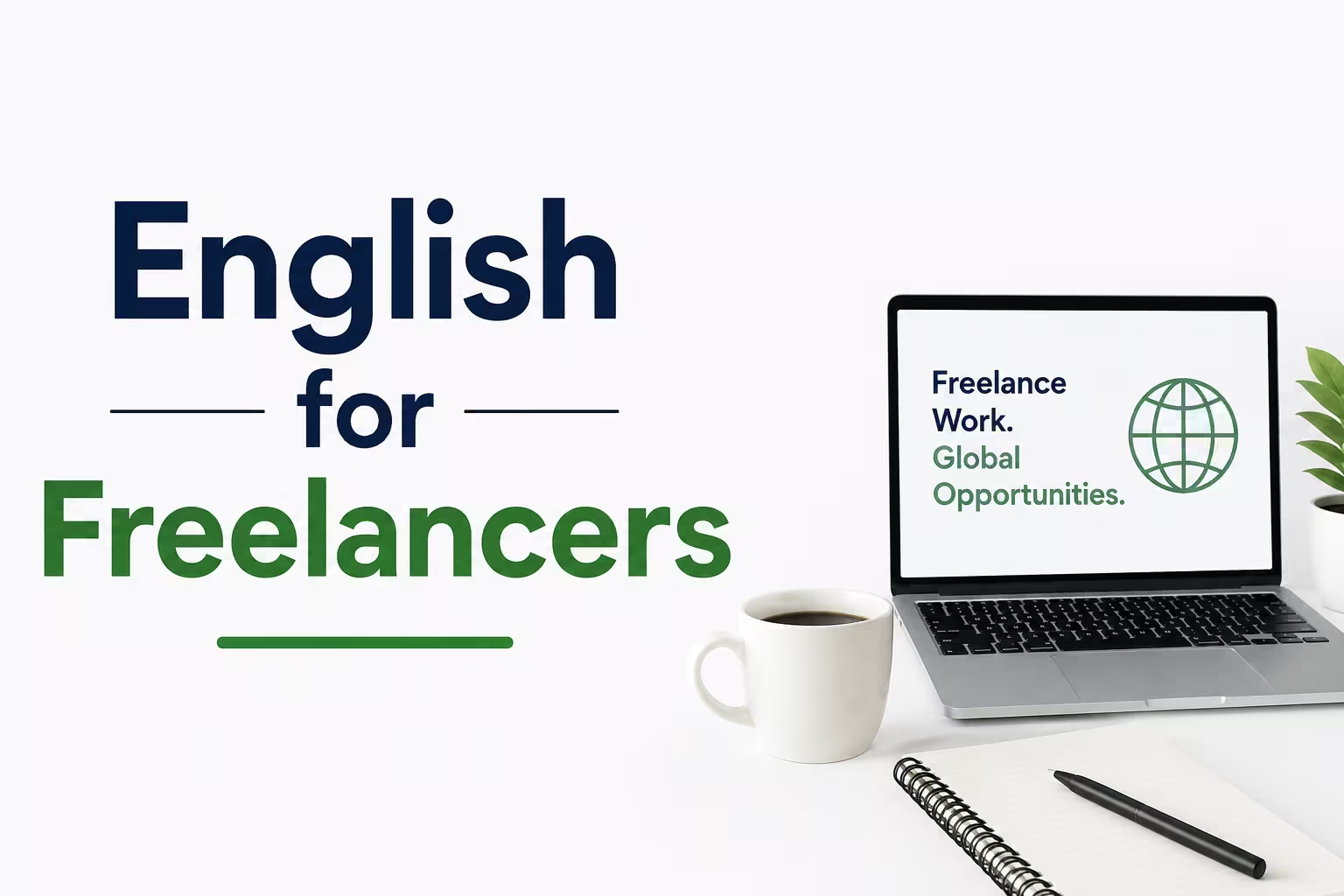
You are not alone. Millions of freelancers around the world face this exact problem. English for freelancers is not just about grammar. It is about communicating confidently, winning clients, and building a real career — no matter where you live.
The good news? You do not need to sound like a native speaker. You just need to sound professional and clear. And that is something you can learn.
I will show you exactly how.
What Is English for Freelancers?
English for freelancers is a practical set of language skills that help independent workers communicate in English. It covers everything you use in your daily freelance work:
- Writing proposals and cover letters
- Sending professional emails
- Creating a strong profile or bio
- Negotiating rates and deadlines
- Handling client feedback and revisions
- Asking for payment politely
- Managing disagreements or misunderstandings
It is different from the English you learn in school. You will not need to write essays about Shakespeare. Instead, you need short, clear, professional messages that get results.
Think of it as business English — but designed specifically for the freelance world.
Why English for Freelancers Is So Important
Here is a hard truth: English is the global language of business. On platforms like Upwork, Fiverr, Toptal, and Freelancer.com, most communication happens in English. Most high-paying clients speak English. Most job listings are written in English.
If your English is weak, you miss out on:
- Better-paying clients — Many top clients are from the US, UK, Canada, or Australia
- Higher-value projects — Complex, well-paid projects require strong communication
- Long-term relationships — Repeat clients come back when they trust your communication
- Positive reviews — Good reviews often mention clear and professional communication
- Global opportunities — Strong English opens doors far beyond your home country
A 2023 survey by Payoneer found that freelancers who work with international clients earn significantly more than those who work locally. Language skills are a big part of that difference.
Simply put, improving your English for freelancing is one of the highest-return investments you can make in your career.
Key English Skills Every Freelancer Needs
1. Writing a Winning Proposal
Your proposal is your first impression. Clients receive dozens of them. Yours needs to stand out — without being flashy or complicated.
A good freelance proposal in English should:
- Start by mentioning the client’s specific project (not a generic opener)
- Show that you understand their problem
- Explain how you will solve it
- Mention relevant experience briefly
- End with a clear call to action
Example of a weak opener: “Hello, I am a professional designer with 5 years of experience. I can do this job.”
Example of a strong opener: “Hi! I noticed you need a clean logo for your bakery business. I’ve helped three food brands create logos that customers immediately recognize and love. I’d love to do the same for you.”
See the difference? The second version speaks directly to the client’s need.
2. Writing Professional Emails
Emails are the backbone of freelance communication. Every email you send shapes how clients see you.
Key rules for professional freelance emails:
- Use a clear subject line (“Project Update — Homepage Design” not “Hey”)
- Keep it short — most clients are busy
- Be polite but direct
- Always proofread before sending
- End with a clear next step or question
Useful email phrases to know:
- “I wanted to follow up on…” (to check in)
- “Please find attached…” (when sending files)
- “Could you please clarify…” (when confused)
- “I look forward to hearing from you.” (professional closing)
- “Let me know if you have any questions.” (friendly and open)
3. Building a Strong Freelance Profile
Your profile is your online resume. It works for you even when you are sleeping. Writing it well in English is critical.
Tips for a strong English profile:
- Write in the first person (“I help businesses…” not “She helps businesses…”)
- Lead with your strongest skill and the value you offer
- Use simple, clear language — avoid jargon
- Include specific results if possible (“Helped 20+ clients increase website traffic”)
- End with a friendly call to action (“Let’s talk about your project!”)
4. Negotiating Rates and Deadlines
Talking about money feels awkward in any language. In English, there are polite ways to do it.
Asking for a higher rate: “Thank you for the offer. Based on the scope of the project, I typically charge $X. Is there flexibility in the budget?”
Negotiating a deadline: “I want to make sure I deliver the best quality work. Could we extend the deadline to Friday instead? That would give me enough time to do this properly.”
Notice how these phrases sound professional and reasonable — not pushy or rude.
5. Handling Revisions and Feedback
Clients will ask for changes. This is normal. How you respond matters a lot.
When you agree with the feedback: “Thank you for the feedback! I’ll make those changes right away and send the updated version by tomorrow.”
When you disagree politely: “I understand your concern. I chose this approach because [reason]. However, I’m happy to try your suggestion and see how it looks. What do you think?”
Always stay calm, professional, and solution-focused.
Common Mistakes Freelancers Make in English
Even advanced English learners make these mistakes. Watch out for them:
1. Being too informal
Saying “Hey!! What’s up? Here’s the file lol” sounds unprofessional. Keep a friendly but professional tone.
2. Being too formal
Using overly complex words makes you seem stiff. “I hereby submit the aforementioned document” is unnecessary. Just say “Here is the document.”
3. Sending messages with spelling errors
Always use a spell-checker. Tools like Grammarly are free and catch most errors quickly.
4. Writing too much
Long, complicated messages confuse clients. Say what you need to say in as few words as possible.
5. Avoiding difficult conversations
Many freelancers avoid asking about late payments or unclear briefs because they feel their English is not good enough. This leads to bigger problems later. Be direct and polite.
6. Copying and pasting generic proposals
Clients can tell instantly. Always personalize your proposals for each job.
Step-by-Step Tips to Improve Your English for Freelancing
Follow these steps to build your freelance English skills steadily:
Step 1: Learn the 50 most common freelance phrases
Focus on phrases you actually use — for proposals, emails, feedback, and invoices. Practice writing them until they feel natural.
Step 2: Read 3 client profiles or job posts every day
Notice the language clients use. Mirror their tone and vocabulary in your proposals.
Step 3: Study successful proposals in your niche
Search forums, Reddit, or freelance communities for sample proposals. Analyze what makes them effective.
Step 4: Use Grammarly or a similar tool
Install Grammarly on your browser. It checks grammar, tone, and clarity in real time.
Step 5: Practice writing one email or message per day
Even if it is not for a real project, write practice emails. Describe a fake project, write a proposal, or draft a revision response.
Step 6: Record yourself speaking
If you do video calls with clients, practice speaking. Record yourself answering common client questions. Listen back and improve.
Step 7: Get feedback from others
Join online communities for freelancers or ESL learners. Share your writing and ask for honest feedback.
Real-Life Situations and How to Handle Them
Situation 1: A client is unhappy with your work
“Thank you for letting me know. I’m sorry the first version didn’t meet your expectations. Could you share exactly what you’d like changed? I’ll revise it immediately.”
Situation 2: A client is not responding
“Hi [Name], I wanted to check in on my previous message. Have you had a chance to review the file I sent? Please let me know if you need anything else from me.”
Situation 3: A client asks you to lower your price significantly
“I appreciate the opportunity. Unfortunately, I’m not able to match that rate for this scope of work. I could offer a smaller version of the project at that price — would that work for you?”
Situation 4: You do not understand the brief
“Thank you for the project details! Before I start, could you clarify [specific point]? I want to make sure I deliver exactly what you need.”
Situation 5: Asking for a testimonial or review
“It was a pleasure working with you! If you’re happy with the results, I’d really appreciate a short review on [platform]. It helps me grow and find more great clients like you.”
Expert Tips for Freelancers Improving Their English
These tips come from experienced freelancers and language coaches:
- Consistency beats intensity. Practice a little every day instead of studying for hours once a week.
- Imitate professionals you admire. Find a successful freelancer whose profile or emails you like. Study how they write. Adapt their style.
- Templates save time — but personalize them. Create a base template for proposals and emails. Then customize each one for the specific client.
- Simplicity signals intelligence. Clear, simple English is more impressive than complicated sentences full of big words.
- Confidence grows with practice. The more you write in English, the less you will hesitate. Start now, even if it is not perfect.
- Use ChatGPT or AI to check your tone. Paste your email into an AI tool and ask: “Does this sound professional?” Use the feedback to improve.
- Learn from rejection. If a client does not respond, review your proposal. Could the language be clearer? More specific? More personalized?
Frequently Asked Questions About English for Freelancers
1. Do I need to be fluent in English to freelance internationally?
No. You need to be clear and professional, not perfect. Many successful freelancers work with international clients without being fluent. Focus on clarity over complexity.
2. What is the most important English skill for freelancers?
Writing skills are the most important. Most freelance communication happens through text — proposals, emails, messages, and profiles.
3. How can I sound more professional in English?
Use complete sentences. Avoid slang. Proofread everything. Keep your tone polite and direct. Use tools like Grammarly to catch errors.
4. What are the best tools to improve my freelance English?
Grammarly, Hemingway Editor, Google Docs spelling check, DeepL Translator, and language learning apps like Duolingo or Preply are all helpful.
5. How do I write a proposal in English if I am a beginner?
Start with a simple three-part structure: (1) Show you understand the project, (2) Explain how you will help, (3) Invite them to discuss it. Keep it short and specific.
6. Can I use AI to write my freelance emails?
Yes — as a starting point. But always review and personalize what AI writes. Clients connect with authenticity, not generic text.
7. How do I ask for payment politely in English?
“Hi [Name], I hope everything is going well! I wanted to follow up on the invoice I sent on [date]. Could you let me know the expected payment date? Thank you!”
8. How do I handle a difficult client in English?
Stay calm and professional. Acknowledge their concern. Offer a clear solution. Avoid emotional language. Example: “I understand your frustration. Let me fix this right away.”
9. Should I use British or American English?
Use whichever your client uses. Check their messages and mirror their spelling style. Consistency matters more than choosing one over the other.
10. How do I introduce myself as a freelancer in English?
Keep it short and value-focused. Example: “Hi, I’m [Name]. I’m a freelance graphic designer who helps small businesses create professional, eye-catching logos and branding.”
11. What phrases should I avoid in freelance English?
Avoid: “To be honest,” “No problem,” “ASAP,” “I think maybe,” and “As per my last email.” These can sound passive-aggressive, vague, or unprofessional.
12. How do I write a subject line for a freelance email?
Be specific and brief. Good examples: “Proposal for Your Website Redesign,” “Question About the Project Brief,” “Invoice #003 — Due Date Reminder.”
13. How long should a freelance proposal be in English?
Usually 150 to 300 words. Long enough to be specific, short enough to respect the client’s time. Quality beats quantity every time.
14. What is the best way to end a professional email?
Use closings like: “Best regards,” “Kind regards,” “Thank you,” or “Looking forward to hearing from you.” Always include your name.
15. How do I improve my English speaking for client video calls?
Practice out loud daily. Prepare answers to common questions. Slow down when speaking — clarity is more important than speed. Record yourself to identify areas to improve.
Summary and Key Takeaways
Here is a quick recap of everything covered in this guide:
- English for freelancers focuses on practical communication skills — not grammar theory
- The most important skills are: proposal writing, professional emails, profile creation, rate negotiation, and handling feedback
- Common mistakes include being too informal, sending unproofread messages, and writing overly long responses
- You can improve steadily by learning key phrases, practicing daily, using writing tools, and studying successful freelancers
- You do not need perfect English — you need clear, professional, and confident English
- Real-life situations have simple, polite English solutions that you can learn and reuse
Conclusion: Your English Skills Are Your Competitive Edge
The freelance market is competitive. Thousands of talented people compete for the same projects. But here is something most people overlook: communication skills can make or break your freelance career.
When you write a clear, confident proposal in English — when you respond to clients professionally and quickly — when your profile sounds polished and trustworthy — you immediately stand out from most of your competition.
You do not need to wait until your English is “perfect” to start. Start now. Practice every day. Use the phrases, templates, and tips in this guide. Get feedback. Improve a little at a time.
Every email you write is practice. Every proposal you send is a lesson. Every client conversation makes you stronger.
Ready to take the next step? Start with one small action today. Write a practice proposal for a fake job listing. Edit your freelance profile using the tips above. Or simply learn five new professional phrases this week.
Your English skills are not a limitation. With the right focus, they will become your biggest competitive advantage.
Found this guide helpful? Share it with a fellow freelancer or ESL learner who is building their career. And explore our other guides on business English, writing skills, and career development.
Recommended posts:
- Business English for Presentations: Useful Phrases & Tips
- How to Learn English for Career Growth
- English for Immigrants Working in the USA (Essential Communication Guide)
- Master English for Chefs and Kitchen Staff
- How To Become A Freelancer In 8 Steps: A Complete Guide
- Side Hustles That Actually Work in the U.S. & Canada (2026)
📚 Continue Learning English
Choose your next lesson and keep improving your English skills with our free English learning resources.