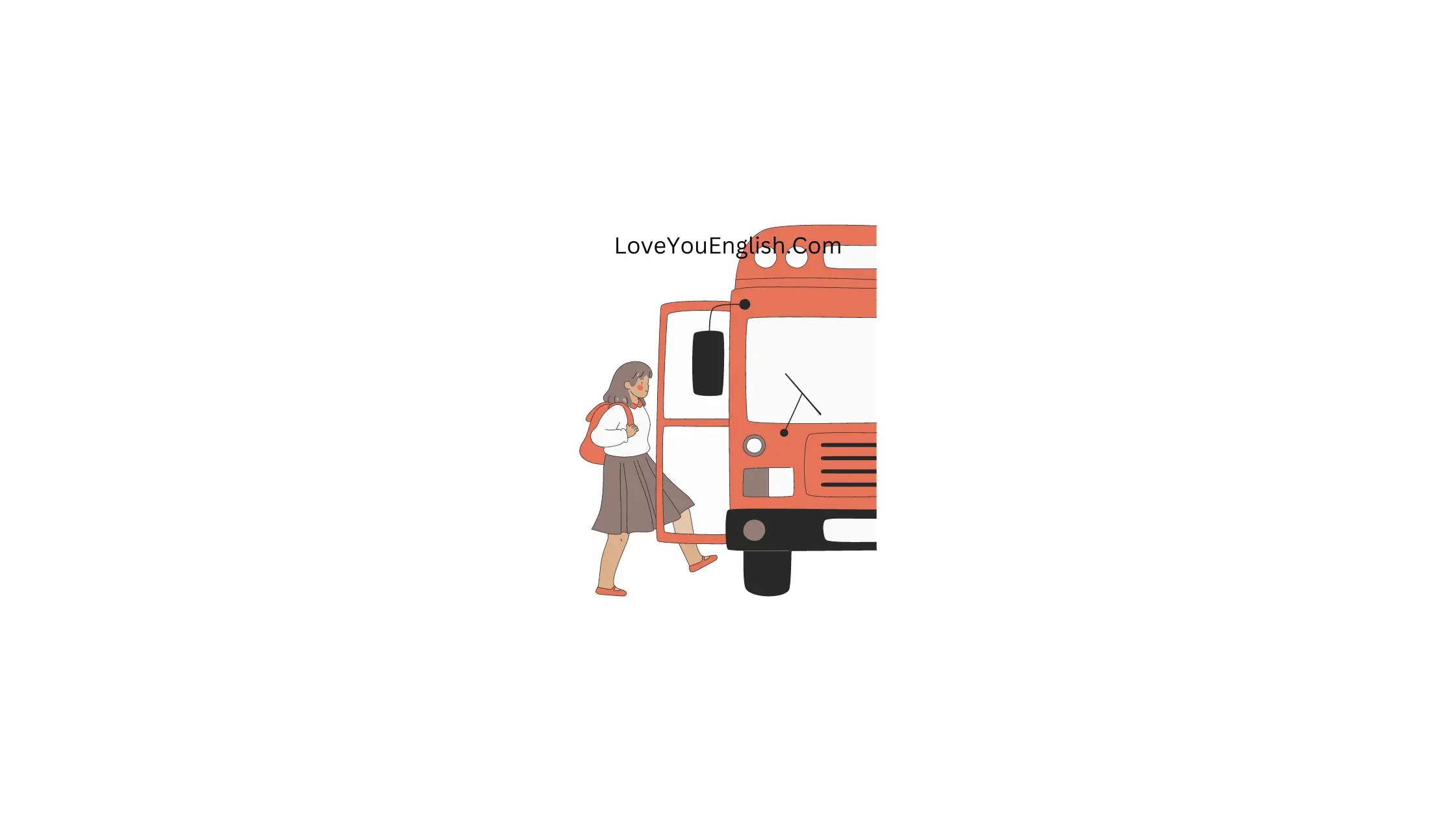
Waiting at a bus stop is a common daily situation where short and polite conversations often take place. People may talk about the bus schedule, delays, routes, weather, or their destination. For English learners, practicing such real-life conversations is an excellent way to improve spoken English and build confidence in everyday situations.
In this lesson, “English Conversation at a Bus Stop (Daily Use Dialogue),” you will learn a natural and easy-to-understand dialogue commonly used at bus stops. The conversation includes practical phrases and everyday vocabulary that help learners ask questions, give information, and respond politely.
Whether you are a student, commuter, or ESL learner, this daily-use English conversation will help you speak more naturally and feel comfortable using English in real-life situations.
English Conversation at a Bus Stop (Daily Use Dialogue)
Characters:
- Alex – A friend who recently read a short story called A Conversation at a Bus Stop.
- Jamie – A curious friend who hasn’t read it yet.
Scene: Two friends, Alex and Jamie, meet at a café.
Jamie: Hey, Alex! Long time no see. How’ve you been?
Alex: Not bad! Just been reading this really interesting short story. You might like it.
Jamie: Oh yeah? What’s it called?
Alex: A Conversation at a Bus Stop. It’s pretty short but really makes you think.
Jamie: Hmm, never heard of it. What’s it about?
Alex: Well, it’s literally just two strangers talking while waiting for a bus. But the way they talk—it’s kind of deep, you know?
Jamie: Really? Just a normal chat at a bus stop? That doesn’t sound like much of a story.
Alex: That’s what I thought at first! But the way it’s written, their conversation starts off super casual and then gets kind of… philosophical.
Jamie: Oh, like small talk that turns into big talk?
Alex: Exactly! At first, they’re just complaining about the bus being late, but then one of them starts asking weird questions.
Jamie: What kind of weird questions?
Alex: Stuff like, “Do you ever feel like life is just a series of waiting?”
Jamie: Woah, that’s deep for a bus stop.
Alex: Right? And then the other person actually thinks about it instead of just brushing it off.
Jamie: So, what do they say?
Alex: They kind of agree but in a funny way, like, “Yeah, and the bus is never on time, so what does that say about life?”
Jamie: (laughs) That’s actually kind of relatable.
Alex: Totally! And then they start talking about how people don’t really talk to strangers anymore, how everyone’s just on their phones.
Jamie: That’s so true. I mean, when was the last time you had a random conversation with someone at a bus stop?
Alex: Never! And that’s the point of the story, I think. It makes you realize how rare those little moments are.
Jamie: So, does anything actually happen in the story, or is it just talking?
Alex: (laughs) No, nothing happens—the bus comes at the end, and they say goodbye. But the whole thing feels meaningful, you know?
Jamie: Huh. Sounds like one of those stories where the meaning isn’t in the plot but in the ideas.
Alex: Exactly! It’s all about the conversation.
Jamie: So, who wrote it?
Alex: I’m not sure—I found it in this collection of modern short stories. The author’s name wasn’t super familiar.
Jamie: Well, now I kinda want to read it. Is it online?
Alex: Probably! I’ll send you the link.
Jamie: Cool, thanks! So, what else did they talk about?
Alex: Oh, at one point, they discuss whether people are really honest in small talk. Like, if someone asks “How are you?”, do they actually want to know?
Jamie: (snorts) No way. If I said “Actually, my life’s a mess,” people would freak out.
Alex: (laughing) Right? The story points out how weird it is that we just say “Fine, thanks” even if we’re not fine.
Jamie: That’s so true. We’re all just pretending.
Alex: Yeah! And then the characters admit they’re doing the same thing. It’s kind of funny but also sad.
Jamie: Man, I didn’t expect a bus stop chat to be so deep.
Alex: Me neither! That’s why I liked it. It takes something ordinary and makes you see it differently.
Jamie: Kinda like how some movies make you notice little things in real life.
Alex: Yeah! Like after watching a rom-com, you start noticing couples everywhere.
Jamie: (laughs) Exactly! So, would you recommend this story?
Alex: Definitely—especially if you like stories that make you think. It’s short, so it’s not a big time commitment.
Jamie: Perfect for my attention span.
Alex: (grinning) Same.
Jamie: Well, now I’m curious. Maybe I’ll read it tonight.
Alex: Let me know what you think!
Jamie: For sure. Hey, since we’re talking about stories, have you read anything else good lately?
Alex: Actually, yeah! There’s this other one…
(They continue chatting about books, coffee, and life—just like the strangers at the bus stop.)
Common English Phrases Used in the Conversation
Greetings & Small Talk
-
Long time no see – I haven’t seen you for a long time
-
How’ve you been? – How are you these days?
-
Not bad – I’m doing okay
-
What’s it called? – Asking for the name of something
-
Never heard of it – I don’t know about it
Showing Interest & Curiosity
-
Oh yeah? – Showing interest or surprise
-
What’s it about? – Asking for details
-
That doesn’t sound like much of a story – Expressing doubt
-
Really? – Showing surprise
-
What kind of…? – Asking for clarification
Giving Opinions
-
You might like it – Giving a recommendation
-
It really makes you think – It makes you reflect deeply
-
That’s what I thought at first – Expressing initial opinion
-
That’s the point of the story – Explaining the main idea
-
It feels meaningful – It has importance
Casual / Informal Expressions
-
Kind of deep – Somewhat thoughtful or serious
-
You know? – Used to check understanding
-
Stuff like… – Used to give examples
-
Totally! – Strong agreement
-
Kinda relatable – Easy to connect with
Talking About Thoughts & Ideas
-
Makes you realize – Helps you understand something
-
Brush it off – Ignore something
-
Think about it – Reflect on an idea
-
That’s so true – Strong agreement
-
That’s the point – Emphasizing meaning
Humor & Reactions
-
(laughs) – Showing amusement
-
Woah, that’s deep – Reacting to a serious idea
-
People would freak out – People would react strongly
-
That’s actually kind of funny – Finding humor in something
-
Perfect for my attention span – Light joke about focus
Recommendations & Plans
-
I kinda want to read it – Showing interest
-
Is it online? – Asking availability
-
I’ll send you the link – Offering help
-
Let me know what you think – Asking for feedback
-
I’d recommend it – Giving advice
Ending & Continuing Conversations
-
For sure – Definitely / yes
-
What else have you read lately? – Changing topic smoothly
-
They continue chatting… – Conversation goes on naturally
Practice more spoken English with these conversations:
- English Business Conversation: Friendly Business Meetings
- English Conversation at Doctor: English Speaking Practice
- English Dialogues: Friendly Conversation in a Retail Store
- English Conversation At Post Office
- Social Gathering English Conversation