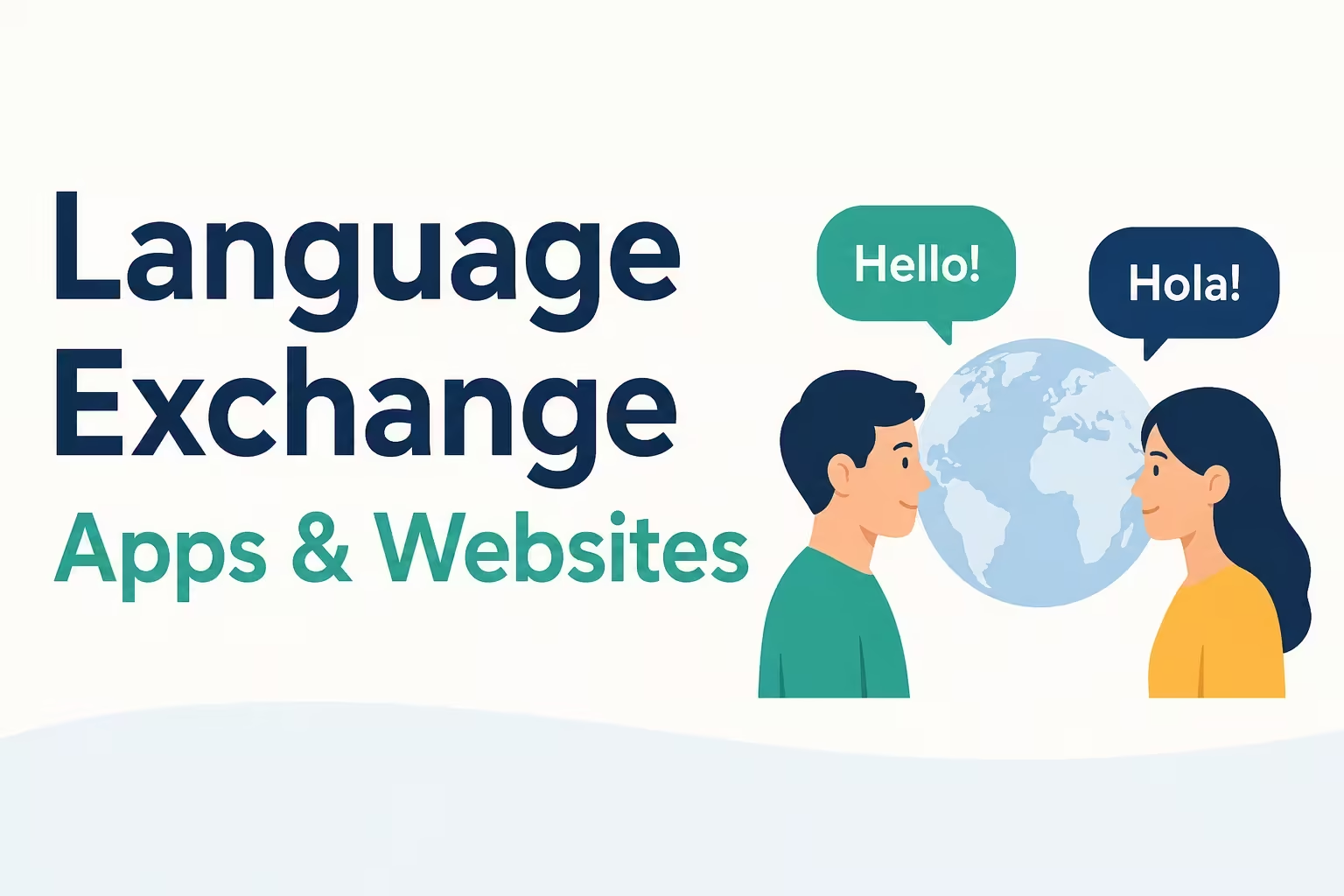
Textbooks can teach you grammar rules. They can’t teach you how a real person actually talks. That’s where language exchange comes in — you trade conversation time with a native speaker of the language you’re learning, and in return, you help them practice yours.
It sounds simple, and it is. But with dozens of apps and websites claiming to be “the best,” picking the right one can feel like its own homework assignment.
This guide cuts through the noise. You’ll learn what language exchange actually means, how to pick the right platform for your goals, and a full breakdown of the top apps and websites available right now — including who each one is best for, what it costs, and where it falls short. By the end, you’ll know exactly where to start.
What Is a Language Exchange App, Exactly?
A language exchange app connects you with someone who speaks the language you want to learn — and who wants to learn your native language in return.
Instead of one person teaching and the other paying, you both teach and both learn. It’s a two-way trade of time and knowledge.
This is different from tutoring apps like Preply or italki, where you pay a professional teacher for structured lessons.
Language exchange is peer-to-peer, usually free, and less formal. Think of it less like a classroom and more like making a pen pal who happens to speak a different language.
Common formats you’ll find:
- Text chat — messaging back and forth, often with built-in translation and correction tools
- Voice messages — short audio clips you send instead of typing
- Voice or video calls — live conversation practice, the closest thing to speaking in person
- Forums and pen-pal boards — slower-paced, written exchanges over days or weeks
Who Language Exchange Is Best For
Language exchange apps work well if you:
- Already know some basics and want real conversation practice
- Want free or low-cost speaking practice
- Enjoy meeting people from other cultures
- Are comfortable with some awkward, unstructured conversations
They’re less ideal if you’re a complete beginner with zero vocabulary, or if you need a structured curriculum with measurable progress — in that case, pairing an exchange app with a tutoring platform or a structured course works better.
How to Choose the Right App: 5 Questions to Ask First
Before you download anything, get clear on what you actually need.
- What’s your goal? Casual travel conversation, workplace fluency, exam prep, or just staying sharp in a language you already know?
- How much structure do you want? Some apps match you instantly and let conversations happen organically. Others require detailed profiles and formal onboarding.
- Text, voice, or video? If you’re shy about speaking out loud, start with text-based apps. If speaking is your weak point, prioritize apps built around calls.
- How rare is your target language? Popular languages (Spanish, English, Mandarin, French) have huge user pools on almost any app. Less common languages need platforms with a bigger overall user base, like HelloTalk, or dedicated forums like MyLanguageExchange.
- What’s your budget? Most exchange apps are free at a basic level, with paid tiers unlocking filters, unlimited translation, or ad-free browsing.
The Best Language Exchange Apps & Websites Compared
Here’s a quick side-by-side before we go deeper on each one.
| App/Website | Best For | Format | Free Tier | Approx. Paid Price |
|---|---|---|---|---|
| HelloTalk | Largest community, social-media feel | Text, voice, video | Yes, generous | ~$9.99/month (VIP) |
| Tandem | Serious, screened partners | Text, voice, video | Yes, more limited | ~$13.99/month (Pro) |
| Speaky | Fast, spontaneous matching | Text, video | Yes | Free-focused |
| Idyoma | Beginners and shy learners | Text | Yes | Low-cost premium |
| Lingbe | Spontaneous voice calls | Voice only | Yes | Free-focused |
| MyLanguageExchange | Long-term pen-pal style practice | Text (email-style) | Yes | Optional premium |
| Conversation Exchange | Structured, committed partners | Text, voice, video, in-person | Yes | Free |
| The Mixxer | Serious, low-distraction exchange | Text, video (Skype-based) | Yes | Free |
| Reddit language communities | Niche or rare languages | Text, community-based | Yes | Free |
| Polyglot Club | Group practice and forums | Text, group chats, local meetups | Yes | Optional premium |
Now let’s break each one down.
1. HelloTalk — Best for the Biggest Community
HelloTalk is the largest dedicated language exchange app, with tens of millions of members across more than 150 countries. If you’re learning a less common language, this sheer size matters — it’s much easier to find an active partner.
What it offers:
- Text chat with instant translation and grammar correction tools
- Voice messages, voice calls, and video calls
- A social “Moments” feed where users post updates in their target language
- Support for well over 100 languages
Pros: Huge user base, generous free features, feels social and low-pressure. Cons: Can feel crowded, occasional spam or low-effort messages, some features gated behind VIP.
Best for: Learners who want the widest pool of potential partners and don’t mind a busier, social-media-style interface.
2. Tandem — Best for Serious, Screened Partners
Tandem takes a more curated approach. New users go through a profile review before joining, which helps filter out spam and casual “hi, how are you” accounts. The result is a smaller but generally more committed community.
What it offers:
- Detailed profiles matched by learning goals and interests
- Text, voice notes, and video calls
- A built-in correction tool for gentle feedback during chats
- Optional paid tutoring marketplace
Pros: More serious user base, cleaner conversations, strong moderation. Cons: Smaller pool for rare languages, several useful features sit behind the Pro subscription.
Best for: Learners who want quality over quantity and are willing to wait a bit longer for the right match.
3. Speaky — Best for Instant, Spontaneous Chats
Speaky focuses on quick matching. You browse profiles and start chatting almost immediately, which suits learners who want low-pressure, on-the-spot practice rather than a long-term pen pal.
Best for: Casual learners who want to jump into a conversation without a lengthy setup process.
4. Idyoma — Best for Beginners and Shy Learners
Idyoma adds extra privacy and profile controls, making it a gentler entry point if you’re nervous about jumping into voice or video right away. Exchanges tend to be slower-paced and text-based.
Best for: Beginners, introverts, or anyone easing into language exchange for the first time.
5. Lingbe — Best for Building Speaking Confidence Fast
Lingbe is built entirely around spontaneous voice calls. There’s no lengthy profile-browsing — you get connected and start talking. It’s ideal once you have some vocabulary under your belt and want to push your speaking fluency.
Best for: Intermediate learners who want to build conversational confidence quickly.
6. MyLanguageExchange — Best for Long-Term, Pen-Pal Style Practice
This is one of the oldest language exchange platforms online, and the website design reflects that — but don’t let it put you off. It’s a straightforward database of profiles with detailed bios, and exchanges tend to move at a slower, more thoughtful pace, often continuing over email once you connect.
Best for: Learners who loved pen-pal programs and want a long-term study buddy rather than a quick chat.
7. Conversation Exchange — Best for Committed, Accountable Partners
Because it takes a bit more effort to write a profile and search actively, Conversation Exchange tends to attract learners who are genuinely serious about showing up consistently. It also supports finding in-person exchange partners in your local area.
Best for: Learners who want accountability and are open to meeting locally.
8. The Mixxer — Best for a Low-Distraction Exchange
Run in partnership with a university language program, The Mixxer connects learners for Skype-based video exchanges without a social feed or gamified extras. It’s a no-frills option focused purely on conversation practice.
Best for: Learners who want to avoid the social-media feel of bigger apps.
9. Reddit Language Communities — Best for Rare or Niche Languages
Subreddits dedicated to specific languages are a surprisingly effective way to find study partners, especially for less commonly taught languages where dedicated apps have thin user bases.
Best for: Learners of niche languages who haven’t found luck elsewhere.
10. Polyglot Club — Best for Group Practice
Instead of one-on-one matching, Polyglot Club leans into group chats, forums, and local meetups. If you find one-on-one conversation intimidating, practicing in a group setting can take the pressure off.
Best for: Learners who prefer group settings over one-on-one pressure.
HelloTalk vs. Tandem: The Two Biggest Names, Compared
Since these two dominate most “best app” searches, here’s a direct comparison.
| Feature | HelloTalk | Tandem |
|---|---|---|
| Community size | Larger | Smaller, more curated |
| Onboarding | Instant | Profile review required |
| Vibe | Social media-like | Focused, conversation-first |
| Free tier | More generous | More restrictive |
| Best strength | Volume of potential partners | Quality of individual conversations |
Bottom line: If you want more chances to talk and a bigger community, start with HelloTalk. If you want cleaner, more focused exchanges and don’t mind a smaller pool, try Tandem. Many learners end up using both — HelloTalk for daily texting practice, Tandem for a weekly speaking session.
Step-by-Step: How to Get Started With Language Exchange
- Pick one app to start with. Don’t try five at once — you’ll spread yourself thin.
- Write a specific profile. “I want to practice ordering food and small talk before my trip to Mexico” gets better matches than “I want to learn Spanish.”
- Message first, and be specific. Ask a real question tied to their profile instead of just “hi.”
- Set a recurring time. Partners who agree to a regular schedule are far less likely to disappear.
- Balance the exchange. Spend roughly equal time helping your partner and practicing yourself.
- Use correction tools, but don’t over-rely on them. Mistakes are part of learning — don’t let every sentence get rewritten for you.
- Move to voice or video once you’re comfortable with text. Speaking is the skill most learners actually need practice with.
Common Mistakes to Avoid
- Messaging dozens of people at once with a generic “hi.” It rarely gets a real reply. Personalized messages work much better.
- Only using text and avoiding voice or video. Reading and typing won’t build your spoken fluency.
- Treating it like a dating app. Most platforms explicitly ban this, and it gets accounts banned. Keep the focus on language.
- Giving up after one flaky partner. Not every match works out — expect to message several people before finding one who sticks around.
- Forgetting to reciprocate. Language exchange is a two-way trade. If you only talk about yourself and never help your partner, the relationship won’t last.
Quick Summary
Language exchange apps let you trade conversation practice with native speakers for free or low cost.
HelloTalk offers the biggest community, Tandem offers a more curated experience, and smaller platforms like Idyoma, Lingbe, and MyLanguageExchange serve specific needs — from shy beginners to long-term pen pals.
The best approach is usually to start with one main app, message with intention, and set a consistent schedule with a partner who sticks.
Frequently Asked Questions
1. Are language exchange apps free?
Most offer a solid free tier. Paid plans usually add extras like unlimited translation, ad-free browsing, or advanced filters — but you can practice effectively without ever paying.
2. Which app is best for complete beginners?
Idyoma or HelloTalk tend to work well for beginners, since both offer text-based, low-pressure exchanges and built-in translation support.
3. What’s the difference between a language exchange app and a tutoring app?
Exchange apps connect you with peers for free, mutual practice. Tutoring apps like Preply or italki connect you with paid, professional teachers for structured lessons.
4. Is HelloTalk or Tandem better?
HelloTalk has a larger community and more generous free features. Tandem offers a smaller, more screened community focused on serious learners. Many people use both.
5. How do I find a partner for a rare or less common language?
Try HelloTalk for its sheer size, or look for dedicated communities on Reddit and Polyglot Club, where niche language learners tend to gather.
6. Are these apps safe to use?
Reputable apps include blocking, reporting, and profile moderation. Still, treat online exchanges the way you would any online interaction — don’t share personal financial details, and be cautious about meeting in person until you’ve built trust.
7. Can I use a language exchange app to prepare for a trip?
Yes. Mention your trip and timeline in your profile so partners understand your goal, and focus conversations on practical topics like ordering food, directions, and small talk.
8. How often should I practice with a language exchange partner?
Once or twice a week with a consistent partner tends to work better than sporadic sessions with many different people.
9. What if my partner keeps canceling or disappearing?
It happens often, even on the best platforms. Set a specific recurring time upfront, and don’t be afraid to find a new partner if someone isn’t showing up.
10. Do I need to be fluent before starting language exchange?
No. Basic vocabulary and simple sentence structure are enough to start. Text-based apps are especially forgiving for lower levels.
11. Can language exchange replace a course or tutor?
It works best as a supplement. Exchange apps build real conversation skills, but they don’t usually teach grammar systematically the way a course or tutor does.
12. What’s the best format — text, voice, or video?
Text is a good starting point if you’re nervous. Voice and video build speaking fluency faster, so aim to move toward calls once you’re comfortable.
13. Are there language exchange options for kids or teens?
Most major apps are designed for adults and have age restrictions. Parents should look for school-based pen pal programs or classroom exchange initiatives instead.
14. How do I keep a language exchange conversation from going stale?
Bring specific topics, questions, or even short articles to discuss instead of relying on open-ended small talk every time.
15. Is it rude to end a language exchange partnership?
No. If the match isn’t working for either of you, it’s completely normal to move on. A polite message explaining you’re trying a different approach is enough.
Final Thoughts
The best language exchange app is the one you’ll actually use consistently.
Start with HelloTalk or Tandem if you want the largest, most active communities, and branch out to more specific platforms like Idyoma, Lingbe, or MyLanguageExchange as you figure out what kind of practice suits you best.
Real fluency comes from real conversations — awkward pauses, corrected mistakes, and all. Pick one app today, write a genuine first message, and give it a real shot. The right partner is likely just a few messages away.
Explore more topics here:
- How to Write an Essay: A Simple Guide for Beginners
- Fun Ways to Learn to Read and Write
- What Is Blogging? (Definition, Advantages and Tips)
- How to Use an English Dictionary to Learn English
Interested in more? Browse similar posts in our English Speaking Practice category.
📚 Continue Learning English
Choose your next lesson and keep improving your English skills with our free English learning resources.