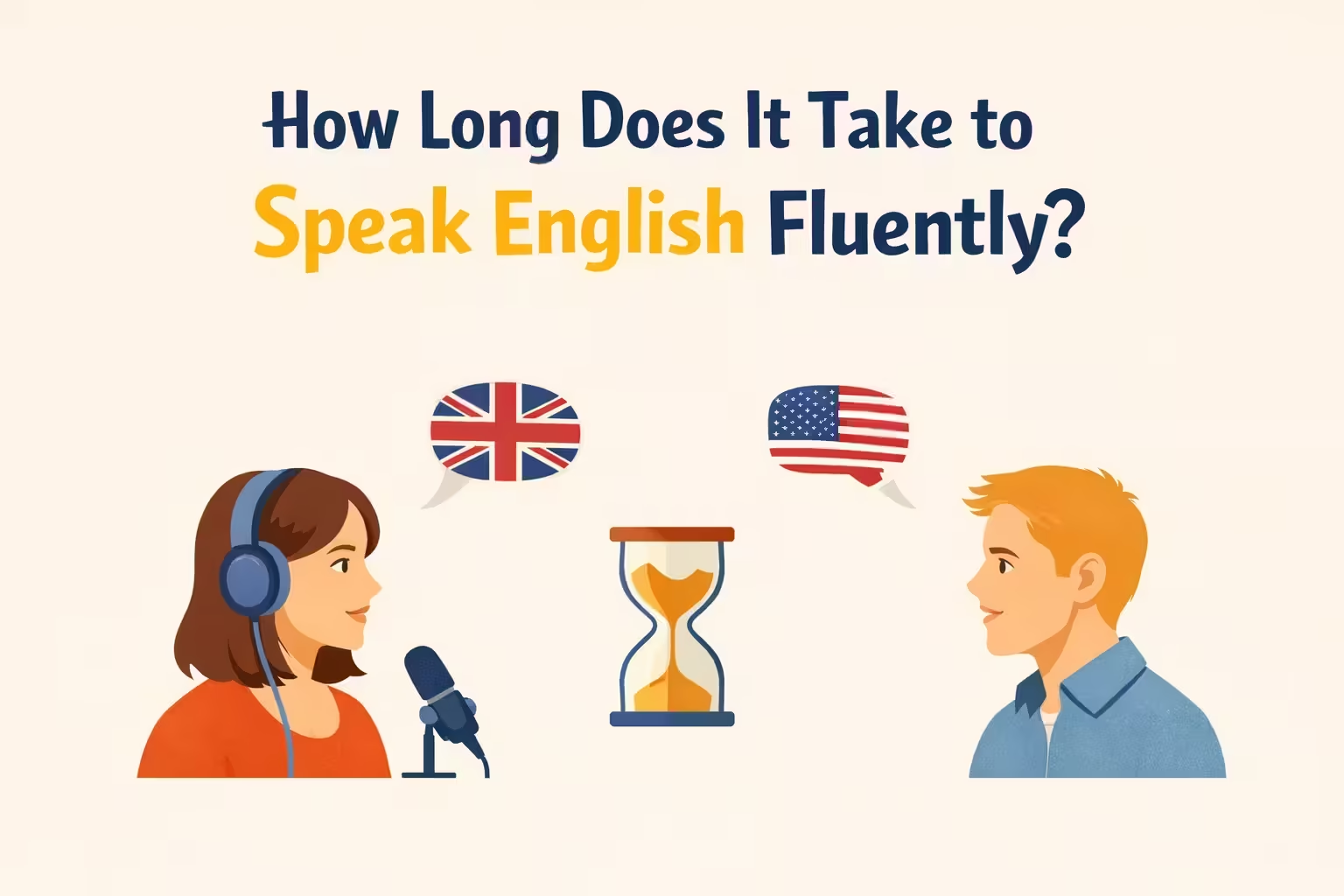
If you’re learning English, you’ve probably asked yourself this question many times: “How long will it take me to speak English fluently?” It’s one of the most common questions language learners ask, and the answer might surprise you.
The truth is, there’s no single answer that works for everyone. Some people reach fluency in one year, while others need three, five, or even ten years. But don’t worry—understanding the factors that affect your learning speed can help you create a realistic plan and reach your goals faster.
In this guide, we’ll explore what fluency really means, how long it typically takes, and what you can do to speed up your progress.
This topic is part of our Spoken English for English learners.
What Does “Fluent” Mean?
Before we talk about timelines, let’s define what we mean by “fluent.” This word can mean different things to different people.
Fluency is the ability to speak a language smoothly, naturally, and without constantly searching for words. A fluent speaker can:
- Hold conversations on everyday topics without struggling
- Understand most of what they hear or read
- Express their thoughts and feelings clearly
- Use the language comfortably in work, social, or academic settings
However, fluency doesn’t mean perfection. Even fluent speakers make mistakes sometimes. Native speakers make mistakes too! Fluency is about effective communication, not knowing every single word or grammar rule.
Many experts use the Common European Framework of Reference (CEFR) to measure language ability. This system has six levels:
- A1-A2: Beginner levels
- B1-B2: Intermediate levels
- C1-C2: Advanced levels
Most people consider B2 level as the beginning of fluency. At this level, you can work in English, travel confidently, and handle most daily situations. C1 and C2 levels represent near-native and native-like fluency.
How Long Does It Really Take?
Research from the Foreign Service Institute (FSI), which trains American diplomats, provides helpful estimates. According to their studies, English is a Category I language for speakers of languages like Spanish, French, or Portuguese. This means it’s relatively easy to learn.
However, if your native language is very different from English—like Chinese, Japanese, Arabic, or Korean—English falls into a more challenging category.
Here are general timeframes based on research and language teaching experience:
For Speakers of Similar Languages (Spanish, French, Italian, Portuguese)
- Basic conversational ability (A2): 6-12 months of consistent study
- Intermediate fluency (B1-B2): 1-2 years of regular practice
- Advanced fluency (C1): 2-4 years of dedicated learning
- Near-native fluency (C2): 5+ years with immersive practice
For Speakers of Different Languages (Chinese, Japanese, Arabic, Korean, Thai)
- Basic conversational ability (A2): 12-18 months
- Intermediate fluency (B1-B2): 2-3 years
- Advanced fluency (C1): 4-6 years
- Near-native fluency (C2): 7+ years
These estimates assume you study 3-5 hours per day or are immersed in an English-speaking environment. If you study less intensively—say, 1 hour per day—you should roughly double or triple these timeframes.
What Factors Affect Your Learning Speed?
Everyone learns at a different pace. Here are the main factors that influence how quickly you’ll become fluent:
1. Your Native Language
If your native language shares similarities with English—like vocabulary, grammar structure, or alphabet—you’ll learn faster. For example, Spanish speakers already know many English words that have Latin roots (like “hospital,” “important,” or “family”).
2. Study Time and Consistency
Studying 30 minutes every single day is more effective than studying 3.5 hours once a week. Consistency helps your brain retain information better. Think of language learning like exercise—regular practice builds strength over time.
3. Quality of Study Methods
Not all study methods are equal. Passive activities like watching TV help, but active practice—speaking, writing, and using the language—accelerates learning much faster.
4. Immersion and Exposure
Living in an English-speaking country can cut your learning time in half. When you’re surrounded by English all day, your brain absorbs the language naturally. But you don’t need to move abroad—you can create immersion at home through media, online friends, and English-only study time.
5. Age
Children often learn languages faster than adults because their brains are more flexible. However, adults have advantages too: better discipline, learning strategies, and motivation. Don’t let age discourage you—people successfully become fluent at any age.
6. Motivation and Goals
Why do you want to learn English? Strong motivation—like getting a better job, connecting with family, or pursuing education—keeps you going when learning feels difficult. Clear goals also help you measure progress and stay focused.
7. Previous Language Learning Experience
If you’ve learned another foreign language before, you already know strategies that work for you. This experience makes learning English easier and faster.
Practical Tips to Learn English Faster
Want to speed up your journey to fluency? Here are proven strategies that work:
For Beginners (A1-A2 Level)
Focus on high-frequency words. The most common 1,000 English words make up about 80% of everyday conversations. Start with these basics before learning rare vocabulary.
Practice pronunciation early. Good pronunciation habits prevent bad habits from forming. Use apps, YouTube videos, or language exchange partners to practice speaking from day one.
Master the present tense first. Don’t overwhelm yourself with all grammar rules at once. Focus on present tense, then gradually add past and future tenses.
Use spaced repetition. Apps like Anki or Quizlet help you remember vocabulary by showing words right before you forget them. This technique is scientifically proven to improve memory.
Think in English. Throughout your day, try to name objects you see in English or describe your actions mentally. This builds your thinking speed in English.
For Intermediate Learners (B1-B2 Level)
Consume authentic content. Watch TV shows, read blogs, listen to podcasts made for native speakers, not just for learners. This exposes you to real English.
Find a language partner. Regular conversation practice is essential at this level. Use platforms like iTalki, Tandem, or HelloTalk to find speaking partners.
Learn phrases, not just words. Native speakers use chunks of language like “on the other hand” or “I’d rather not.” Learning these phrases makes you sound more natural.
Keep a journal in English. Write about your day, your thoughts, or anything that interests you. Writing helps you organize your thoughts and improves grammar.
Join English communities online. Participate in Reddit discussions, Facebook groups, or Discord servers about your hobbies. Real communication motivates learning better than textbooks.
For Advanced Learners (C1-C2 Level)
Study different English varieties. Explore American, British, Australian, and other English accents and expressions. This makes you more versatile.
Read challenging materials. Tackle novels, academic articles, or professional materials in your field. This expands your vocabulary and comprehension.
Refine specific skills. Identify your weakest area—maybe it’s idioms, formal writing, or understanding fast speech—and focus on improving it.
Teach English to others. Explaining grammar or vocabulary to beginners reinforces your own knowledge and reveals gaps in your understanding.
Set professional or academic goals. Take English certification exams like TOEFL, IELTS, or Cambridge exams. These goals push you to master advanced skills.
Creating Your Personal Timeline
Now that you understand the factors and strategies, create your own realistic timeline:
- Assess your starting point. Take an online level test to know where you are now (A1, A2, B1, etc.).
- Set a clear goal. Define what fluency means for you. Do you need B2 for work? C1 for university? Be specific.
- Calculate available study time. Be honest about how much time you can dedicate daily. Remember, consistency matters more than quantity.
- Create a study plan. Mix different activities: vocabulary building, grammar study, listening practice, speaking practice, reading, and writing.
- Track your progress. Every three months, evaluate your improvement. Celebrate small wins and adjust your methods if needed.
- Be patient with yourself. Language learning isn’t linear. Some weeks you’ll feel amazing progress, other weeks you’ll feel stuck. This is completely normal.
The Bottom Line
So, how long does it take to speak English fluently? For most learners, reaching comfortable conversational fluency (B2 level) takes between 1-3 years with consistent daily practice. Advanced fluency (C1-C2) requires 3-7 years or more, depending on your background and dedication.
Remember, fluency is a journey, not a destination. Every day you practice, you’re getting closer to your goal. Focus on progress, not perfection. Enjoy the process of learning, celebrate small victories, and don’t compare yourself to others.
The most important factor isn’t your starting point or your native language—it’s your commitment to regular, active practice. With the right mindset and methods, you can achieve fluency faster than you think.
Start today, stay consistent, and before you know it, you’ll be speaking English with confidence!