Introduction: Is Content Writing the Right Career for You?
Imagine getting paid to write words. No office. No boss breathing down your neck. Just you, a laptop, and ideas that turn into income.
That’s the promise of a career in content writing — and for millions of people around the world, it’s completely real.
Whether you’re a student, a job seeker, a professional looking to switch careers, or an ESL learner who wants to use English skills to earn money, content writing is one of the most accessible careers you can start today.
But how exactly do you start a career in content writing — especially if you’ve never been paid to write before?
That’s exactly what this beginner guide is here to answer.
In this post, you’ll learn:
- What content writing actually is
- Why it’s such a valuable skill in today’s world
- The exact steps to go from complete beginner to working writer
- Common mistakes to avoid
- Real-life examples and expert tips
Let’s dive in.
What Is Content Writing?
Content writing is the process of creating written material for websites, blogs, social media, emails, and other digital platforms.
A content writer’s job is to inform, educate, entertain, or persuade readers — depending on what a business needs.
Here are some common types of content writing:
| Type | Example |
|---|---|
| Blog posts | “10 Tips for Better Sleep” |
| Website copy | Homepage, About page, product pages |
| SEO articles | Articles written to rank on Google |
| Social media content | Captions for Instagram, LinkedIn posts |
| Email newsletters | Weekly updates sent to subscribers |
| Product descriptions | Short descriptions for e-commerce stores |
| Case studies | Stories showing how a product solved a problem |
| White papers | In-depth reports for businesses |
Content writing is different from creative writing (like novels or poetry). It’s more practical and goal-focused. Most content writing is meant to attract readers, build trust, and ultimately help a business grow.
Why Starting a Career in Content Writing Is a Smart Move
You might be wondering — is content writing really worth it as a career? The answer is yes, and here’s why.
1. Demand Is Huge and Growing
Every website needs content. Every business needs a blog. Every brand needs words. According to the Content Marketing Institute, over 70% of businesses actively invest in content marketing — and that number keeps rising.
That means there are more opportunities for writers now than ever before.
2. You Can Work from Anywhere
Content writing is a remote-friendly career. All you need is:
- A computer or laptop
- A stable internet connection
- A way to communicate (email, Slack, etc.)
Many content writers work from home, cafes, or even while traveling.
3. It’s Great for ESL Learners and Non-Native English Speakers
You don’t need to be a native English speaker to become a content writer. What matters more is:
- Clear communication
- Good research skills
- Understanding your audience
- Consistent practice
Many successful content writers are ESL learners who built their skills through practice and feedback.
4. Low Barrier to Entry
Unlike many careers, you don’t need a degree or expensive certification to start content writing. You can build a portfolio, learn on the job, and grow over time.
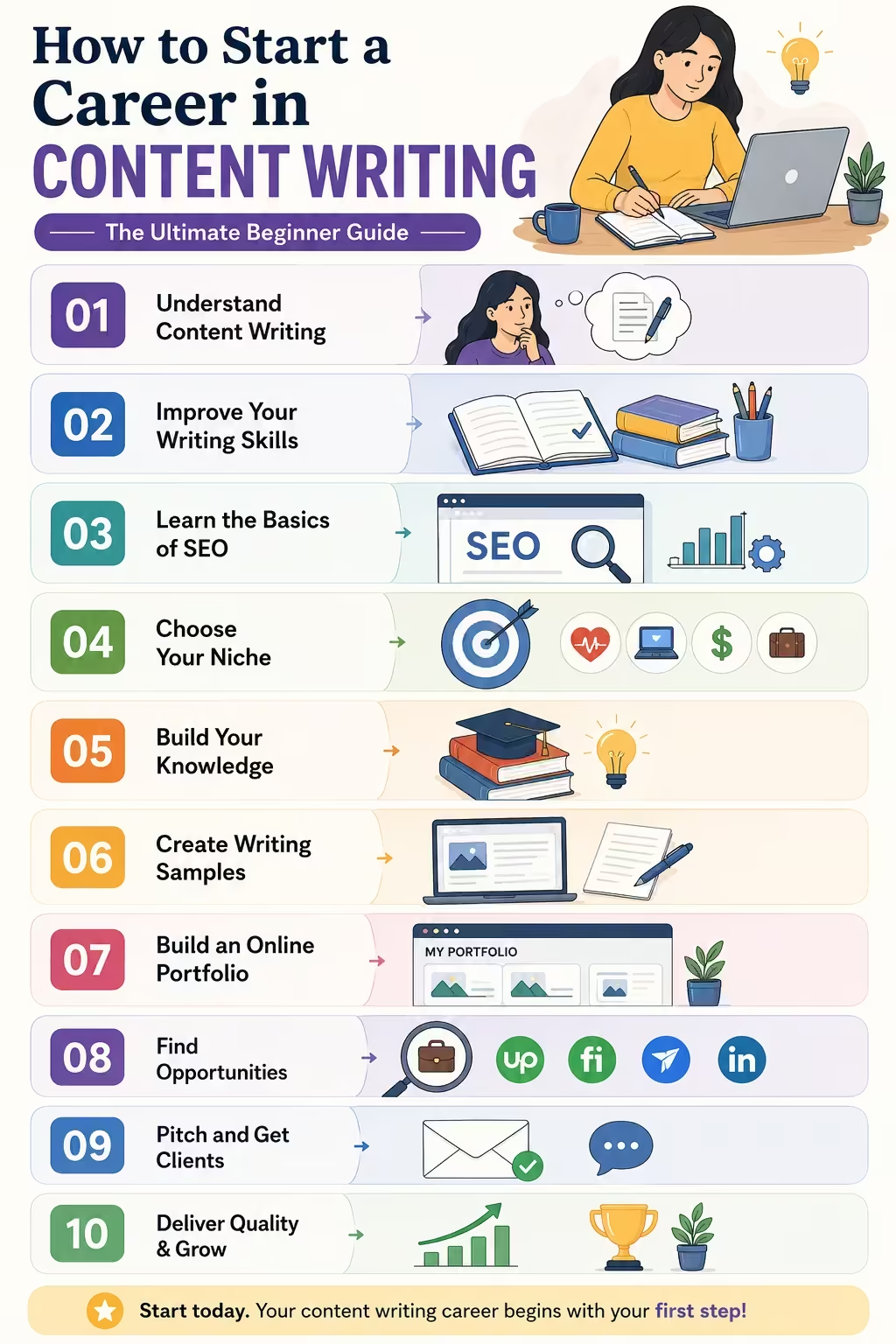
Step-by-Step Guide: How to Start a Career in Content Writing
Here is a clear, practical roadmap for beginners.
Step 1: Understand the Basics of Content Writing
Before you write a single word for a client, you need to understand what good content looks like.
Start by reading widely. Follow popular blogs in your area of interest. Notice:
- How writers structure their articles
- How they use headings and subheadings
- What makes some posts easier to read than others
- How they begin and end their writing
Some great blogs to study: HubSpot Blog, Neil Patel’s blog, Backlinko, and Copyblogger.
Tip: Read at least 3–5 blog posts per day for the first month. This alone will sharpen your writing instincts faster than any course.
Step 2: Choose Your Niche
A niche is a specific topic or industry you write about.
Picking a niche has huge advantages:
- You become known as an expert faster
- Clients pay more for specialized writers
- Writing becomes easier when you know the subject well
Popular content writing niches include:
- Health and wellness
- Personal finance and investing
- Technology and SaaS (Software as a Service)
- Digital marketing
- Travel and lifestyle
- Education and e-learning
- Real estate
- Food and nutrition
How to choose your niche:
- What topics do you already know or care about?
- Is there money in this niche? (Do businesses in this space spend on content?)
- Are you willing to keep learning about this topic long-term?
You don’t have to lock in forever. Many writers start with one niche and expand later.
Step 3: Learn Basic SEO (Search Engine Optimization)
If you want to get hired as a content writer, you must understand basic SEO. Most clients want content that ranks on Google — not just content that reads well.
Basic SEO concepts every content writer should know:
- Keywords: Words people type into Google. Writers include these naturally in their content.
- Search intent: Why someone is searching. Are they looking to learn? To buy? To compare?
- Meta descriptions: A short summary (150–160 characters) that appears under your title in Google search results.
- Headings (H1, H2, H3): Help readers and search engines understand your content structure.
- Internal links: Links to other pages on the same website. They help readers navigate and help Google understand your site.
- Readability: Easy-to-read content ranks better. Short sentences and simple words win.
Free tools to learn SEO:
- Google Search Console (free)
- Ubersuggest (free tier available)
- Google Keyword Planner
- Yoast SEO blog (great for beginners)
Step 4: Build a Writing Portfolio
A portfolio is a collection of your best writing samples. It’s the #1 thing clients look at before hiring you.
How to build a portfolio when you have no experience:
- Write sample articles — Pick 3–5 topics in your niche and write your best work. These don’t need to be published anywhere.
- Guest post on free blogs — Sites like Medium, LinkedIn, or even WordPress allow you to publish for free.
- Volunteer to write — Offer to write free content for a local non-profit, a friend’s business, or a small blog to get real samples.
- Create a simple portfolio website — Use free platforms like Journo Portfolio, Contently, or a basic WordPress site.
What to include in your portfolio:
- 3–6 writing samples in your niche
- A short bio explaining your background and focus
- Contact information or a contact form
Quality matters more than quantity. Two excellent articles beat ten average ones.
Step 5: Set Your Rates
One of the biggest questions beginners ask is: how much should I charge?
Here’s a simple starting guide:
| Experience Level | Typical Rate |
|---|---|
| Complete beginner | $0.03–$0.05 per word |
| 6–12 months experience | $0.06–$0.10 per word |
| 1–3 years experience | $0.10–$0.20 per word |
| Expert / Niche specialist | $0.20–$0.50+ per word |
You can also charge per article (e.g., $50 for a 1,000-word post) or per hour (e.g., $20–$50/hour as a beginner).
Important: Don’t undercharge just to get work. It sets a bad precedent and attracts low-quality clients.
Step 6: Find Your First Clients
This is where many beginners feel stuck. Here’s where to actually look:
Freelance platforms (great for beginners):
Job boards for content writers:
Cold outreach:
- Identify businesses in your niche that have blogs
- Check if their content is outdated or thin
- Send a short, friendly email offering your services
Your network:
- Tell friends, family, and former colleagues you’re a content writer
- Post on LinkedIn about your services
- Join Facebook groups and online communities in your niche
Step 7: Keep Learning and Improving
The best content writers never stop learning. Here’s how to keep growing:
- Read books: On Writing Well by William Zinsser (PDF Link), Bird by Bird by Anne Lamott
- Take online courses: Coursera, Udemy, and Skillshare have affordable options
- Join writer communities: Facebook groups
- Ask for feedback on your writing regularly
- Analyze your best-performing content and write more like that
Common Mistakes Beginner Content Writers Make
Avoid these errors — they’ll slow down your progress and cost you clients.
- Writing too formally — Most online content should feel like a friendly conversation, not an academic paper.
- Ignoring the target audience — Always ask: Who is this for? What do they need to know?
- Keyword stuffing — Using a keyword too many times makes writing feel robotic and hurts SEO.
- Skipping research — Great content is built on accurate information. Always verify your facts.
- Writing long paragraphs — Online readers skim. Keep paragraphs 2–4 sentences max.
- No clear call to action (CTA) — Every piece of content should guide the reader to a next step.
- Giving up too early — Most writers don’t land consistent work until 3–6 months in. Stick with it.
Practical Example: What a Typical Workday Looks Like
Let’s say you’re a freelance content writer specializing in personal finance. Here’s what a Tuesday might look like:
- 8:00 AM — Check emails and client messages
- 8:30 AM — Research keywords for a new article on “how to save money on groceries”
- 9:30 AM — Write the first draft (about 1,200 words)
- 11:00 AM — Edit and optimize for SEO (add keywords, check headings, improve readability)
- 12:00 PM — Submit the article to the client
- 1:00 PM — Lunch break
- 2:00 PM — Pitch two new clients via email
- 3:00 PM — Work on a second article outline
- 4:30 PM — Update portfolio and LinkedIn
That’s a full but manageable workday — and many writers do this part-time at first.
Expert Tips for Content Writing Success
Here’s what experienced content writers consistently recommend:
“Write every day, even if it’s just 200 words. Consistency builds skill faster than any course.”
- Specialize early. Generalist writers compete with everyone. Niche writers get paid more.
- Treat deadlines like gold. Missing deadlines kills client relationships and your reputation.
- Learn to take feedback. Clients will ask for revisions. It’s not personal — it’s part of the job.
- Build relationships, not just a client list. One loyal, repeat client is worth 10 one-off projects.
- Keep a swipe file. Save examples of great headlines, intros, and CTAs that you can reference later.
- Use tools smartly. Grammarly, Hemingway Editor, and Surfer SEO can improve your work significantly.
Real-Life Use Cases: Who Is Content Writing Perfect For?
Students: Write about topics related to your major. Build a portfolio before you graduate and enter the job market with real experience.
ESL Learners: Use content writing to practice English while earning. Start with simple topics you know well and build from there.
Stay-at-home parents: Content writing offers total flexibility. Write during nap times or evenings and scale up gradually.
Professionals changing careers: Use your existing industry knowledge as your niche. A former nurse can become a highly paid health content writer.
Job seekers: Add content writing to your CV. Even freelance samples demonstrate strong communication skills to employers.
Frequently Asked Questions (FAQs)
1. Can I start content writing with no experience?
Yes. Everyone starts with zero experience. Build free samples, offer guest posts, and grow your portfolio from there.
2. Do I need a degree to become a content writer?
No degree is required. Clients care about your portfolio and results, not your educational background.
3. How long does it take to start earning from content writing?
Most beginners earn their first income within 1–3 months. Consistent income usually takes 3–6 months.
4. Is content writing suitable for ESL learners?
Absolutely. Clear, correct writing matters more than a native accent. Many successful content writers are non-native English speakers.
5. What tools do content writers use?
Popular tools include Google Docs, Grammarly, Hemingway Editor, Surfer SEO, Ahrefs, and Canva (for visual content).
6. How much can a beginner content writer earn?
Beginners typically earn $300–$1,000/month starting out. With experience, $3,000–$8,000/month or more is achievable.
7. What is the difference between content writing and copywriting?
Content writing informs and educates (blogs, articles). Copywriting persuades readers to take action (ads, sales pages). Both skills are valuable.
8. Can I do content writing part-time?
Yes. Many writers start part-time while keeping their day job and transition to full-time when income allows.
9. What niches pay the most for content writers?
High-paying niches include finance, technology, healthcare, legal, and SaaS (software).
10. Do I need my own website to be a content writer?
A website helps but isn’t essential to start. A Contently or LinkedIn profile can work just as well in the beginning.
11. How do I improve my writing speed?
Practice daily, use templates for structure, outline before you write, and set timed writing sessions to build speed.
12. What if English is not my first language?
Focus on clarity and correctness rather than style at first. Use Grammarly and read extensively to improve. Many clients value clear, functional writing over flowery prose.
13. Should I write for free at first?
A limited amount of free writing (1–3 samples) to build a portfolio is fine. Avoid working for free indefinitely — it undervalues your work.
14. How do I avoid content writing scams?
Be cautious of clients who ask for a “test article” without pay. Use contracts, request partial payment upfront, and research clients before working.
15. What’s the best platform for beginner content writers to find work?
Upwork and Fiverr are the most beginner-friendly. LinkedIn is great for connecting with higher-paying clients as you grow.
Summary: Key Takeaways
Here’s everything you need to remember:
- ✅ Content writing is a real, in-demand career accessible to beginners
- ✅ You don’t need a degree — you need a portfolio
- ✅ Choose a niche to stand out and earn more
- ✅ Learn basic SEO — it’s non-negotiable for most writing jobs
- ✅ Build your portfolio with free samples, guest posts, or volunteer work
- ✅ Start on platforms like Upwork or Fiverr to find early clients
- ✅ Keep improving through reading, courses, and community feedback
- ✅ Avoid common mistakes like keyword stuffing, long paragraphs, and missing deadlines
- ✅ ESL learners and non-native speakers can absolutely succeed as content writers
Conclusion: Your Content Writing Career Starts Now
Starting a career in content writing doesn’t require luck, a fancy degree, or years of experience. It requires one thing: a decision to start.
Every professional content writer was once exactly where you are right now — wondering if this was really possible. The ones who succeeded simply took the first step, then the next, then the next.
You now have a complete beginner’s roadmap. You know what content writing is, why it matters, how to build your skills, where to find clients, and how to avoid the mistakes that slow beginners down.
So here’s your call to action:
Pick one step from this guide and do it today. Write your first sample article. Set up a Contently profile. Research one keyword in your niche.
Small steps, taken consistently, lead to big results.
Your writing career is one decision away. Make it today.
Found this guide helpful? Share it with a friend who’s thinking about starting their content writing journey — and explore more beginner guides on building your writing skills, improving your English, and earning online.
You may like these topics:
- How to Write a Social Media Post in English
- 100 English Sentences for Kids to Write and Speak
- What Is A Side Hustle? (With Advantages And Examples)
- How To Become A Freelancer In 8 Steps: A Complete Guide
- Writing Rubric Examples for ELA Teachers: A Practical Guide to Better Assessment
- Feedback Comments for Student Writing: The Complete Guide for Teachers and Learners
📚 Continue Learning English
Choose your next lesson and keep improving your English skills with our free English learning resources.