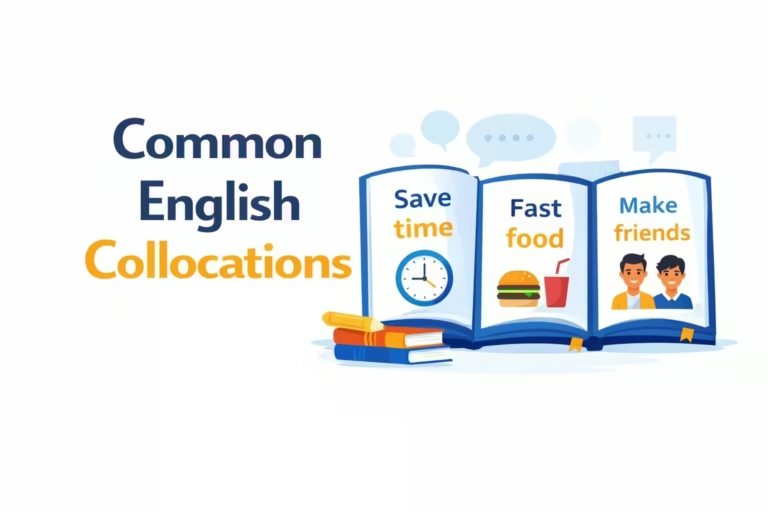
Collocations are an important part of natural English, and the verb “come” is one of the most frequently used words in everyday conversations.
Table of Contents
ToggleNative speakers regularly use collocations like come back, come across, come out, come into effect, and come up with while speaking, writing, and working.
Learning these collocations helps English learners sound more fluent and avoid unnatural expressions.
This collection of 100 sentences using collocations with “come” is designed to help learners understand real-life usage through clear examples.
By learning collocations in full sentences, students can improve spoken English, writing skills, vocabulary development, and overall fluency.
These sentences are especially useful for ESL learners, IELTS preparation, classroom teaching, and self-study.
This topic is part of our English Collocations for English learners.
100 English Sentences Using Collocations with “Come”
🔹 Come back / come home
-
He came back late last night.
-
Please come back soon.
-
She came home after a long trip.
-
They came back from the market.
-
I can’t wait to come home.
🔹 Come true
-
All her dreams came true.
-
I hope my wish will come true.
-
His prediction came true.
-
May your goals come true!
-
The worst fear came true.
🔹 Come to an end
-
The holiday came to an end.
-
The show finally came to an end.
-
Our friendship came to an end.
-
The meeting came to an end peacefully.
-
Their contract came to an end in May.
🔹 Come to a decision / conclusion
-
We came to a decision after much debate.
-
She came to the conclusion quickly.
-
They came to a decision together.
-
The jury came to a conclusion.
-
Let’s come to a decision today.
🔹 Come to life
-
The painting came to life.
-
The room came to life with music.
-
The festival came to life at night.
-
His story came to life in the movie.
-
The city comes to life every morning.
🔹 Come in handy
-
This tool will come in handy.
-
Your notes may come in handy for the test.
-
A map came in handy during our trip.
-
These tips can come in handy later.
-
That flashlight really came in handy!
🔹 Come across
-
I came across an old photo.
-
He came across as rude.
-
She came across a great idea.
-
I came across this article online.
-
We came across a hidden beach.
🔹 Come first / second / last
-
He came first in the race.
-
She always comes second to her sister.
-
Our team came last.
-
They came second in the contest.
-
You always come first in my heart.
🔹 Come under attack / pressure
-
The city came under attack at dawn.
-
He came under heavy pressure from the media.
-
The idea came under criticism.
-
The politician came under fire for his remarks.
-
The plan came under review.
🔹 Come prepared / ready
-
Please come prepared for the interview.
-
He came ready to fight.
-
The teacher came prepared with materials.
-
She came ready for the presentation.
-
I came prepared with all documents.
🔹 Come to terms with
-
He came to terms with the loss.
-
She is trying to come to terms with reality.
-
I’ve come to terms with the truth.
-
We must come to terms with our past.
-
It took time to come to terms with failure.
🔹 Come naturally
-
Singing comes naturally to her.
-
Kindness comes naturally to him.
-
Speaking English didn’t come naturally to me.
-
For some, math comes naturally.
-
It doesn’t come naturally to everyone.
🔹 Come to mind
-
Nothing comes to mind right now.
-
Her name came to mind immediately.
-
A funny memory came to mind.
-
When you say “hero”, his name comes to mind.
-
That image comes to mind often.
🔹 Come along
-
Come along with us!
-
She asked me to come along.
-
We came along for the ride.
-
He came along just in time.
-
You’re welcome to come along.
🔹 Come apart / undone / loose
-
The toy came apart in my hands.
-
Her dress came undone.
-
The knot came loose.
-
The handle came off.
-
The box came apart during shipping.
🔹 Come clean
-
It’s time to come clean about everything.
-
He came clean about his mistake.
-
She refused to come clean.
-
You should come clean if you lied.
-
I came clean and felt better.
🔹 Come close
-
We came close to winning.
-
He came close to telling the truth.
-
The team came close but lost.
-
I came close to missing the bus.
-
She came close to tears.
🔹 Come down with (illness)
-
I came down with the flu.
-
He came down with a fever.
-
She came down with a cold.
-
They came down with food poisoning.
-
Many people came down with the virus.
🔹 Come forward
-
No one came forward with information.
-
He came forward to admit guilt.
-
A witness came forward.
-
She came forward bravely.
-
Please come forward if you know anything.
🔹 Come up (in conversation / life / work)
-
Your name came up yesterday.
-
A new problem came up at work.
-
That topic came up during lunch.
-
Something came up, so I had to leave.
-
An opportunity came up, and I took it.
Conclusion:
Mastering collocations with “come” is a powerful way to improve your natural English communication.
When you study collocations through complete sentences, you learn not only the meaning but also how to use them correctly in real situations.
These 100 sentences help learners feel more confident while speaking and writing English.
Regular practice with collocations will strengthen your vocabulary, reduce common mistakes, and make your English sound more fluent, clear, and native-like.
Try using these sentences in daily conversations or writing practice to see steady improvement in your English skills.
Frequently Asked Questions
What are collocations with “come”?
Collocations with “come” are common word combinations like come back, come across, and come up that native speakers use naturally.
Why are collocations important in English?
Collocations help learners sound more natural, improve fluency, and avoid unnatural word combinations.
What does “come across” mean?
“Come across” can mean finding something by chance or creating a particular impression.
What does “come true” mean?
“Come true” means something hoped for or expected actually happens.
How can collocations improve speaking skills?
Learning collocations helps learners speak more smoothly and use vocabulary more naturally in conversations.
What does “come up” mean in English?
“Come up” usually means something happens unexpectedly or appears during discussions.
Why should learners practice collocations in sentences?
Practicing full sentences helps learners understand meaning, grammar, and real-life usage together.
What is the meaning of “come to terms with”?
It means accepting a difficult situation or reality after some time.
How can students remember collocations more easily?
Students can practice them daily, create example sentences, and use them in conversations.
Are collocations useful for exams like IELTS?
Yes, collocations improve vocabulary range, speaking fluency, and writing quality, which are useful for English exams.